




Nigeria installed 803MW of solar in 2025 — a 141% surge that made it Africa’s second-largest solar installer. The Middle East crisis did not create that story. But it has given it a global strategic frame that Abuja can no longer afford to ignore.
BizWatch Nigeria Analysis | March 5, 2026
Key points
- Brent crude surged 11% following military strikes on Iran before reversing below pre-conflict levels. The brief spike was enough to rattle global energy markets and reinforce the strategic case for distributed renewable energy that cannot be blockaded or sanctioned.
- Solar and wind energy are estimated to have saved European consumers nearly €100 billion during the Russia-Ukraine energy crisis — a figure now widely cited in policy circles as the clearest financial argument for renewable investment as the Middle East crisis deepens.
- Gulf states are accelerating their own renewable transitions at historic scale: Saudi Arabia is targeting 130GW of capacity by 2030, while Abu Dhabi’s Masdar has launched the world’s first gigascale 24/7 solar-plus-storage project — 5.2GW of solar paired with 19GWh of battery storage.
- Nigeria installed 803MW of solar capacity in 2025 — a 141% year-on-year increase — making it Africa’s second-largest solar installer behind only South Africa, according to the Global Solar Council’s Africa Market Outlook 2026–2029.
- Nigeria’s solar surge is backed by a $750 million World Bank-funded DARES programme — the largest single distributed energy project in World Bank history globally — targeting electricity access for 17.5 million Nigerians and the replacement of 280,000 diesel generators.
- Nigeria is also positioning itself as a regional manufacturing hub: a 1GW solar panel factory is under development through a public-private partnership, alongside plans for a 1.2GW module assembly plant and an 800MW PV factory.
- The energy transition is not linear: peak global oil demand is not expected until around 2030, and energy insecurity has historically accelerated coal consumption — a pattern that could repeat if the Middle East crisis disrupts gas supply chains.
A brief oil shock, a lasting strategic lesson
When military strikes on Iran sent Brent crude climbing 11% almost overnight, energy traders held their breath. A full-blown Strait of Hormuz shutdown combined with Houthi attacks in the Red Sea — the feared worst-case scenario — could have driven prices up by as much as 35%. It did not happen. But the world got a stark reminder: the fossil fuel-dependent global economy remains deeply vulnerable to the geopolitics of a volatile region.
What followed has been a fascinating and contradictory set of market reactions. Renewable energy, often discussed in the abstract language of climate policy, is now being aggressively reprioritised in the very concrete language of energy security. The message from global boardrooms and government ministries is increasingly aligned: diversify or remain exposed.
The precedent from Europe is instructive. Solar and wind energy are estimated to have saved European consumers nearly €100 billion during the Russia-Ukraine energy crisis. With Middle East conflict now reprising similar fears, that number is being widely cited in policy circles as the clearest financial case for renewable investment. The logic is straightforward: distributed, domestic clean energy cannot be blockaded, sanctioned, or disrupted by a conflict thousands of miles away.
Investment freeze at the frontlines of conflict
Not all market reactions have been bullish for green energy. Closer to the conflict zone, the instability has created a chilling effect on investment pipelines. Abu Dhabi National Oil Company (ADNOC) froze negotiations on a proposed stake in the Leviathan gas field — a significant signal that even the deep-pocketed sovereign wealth vehicles of the Gulf are reassessing regional deal-making risk.
More broadly, areas like the Sinai Peninsula and the West Bank — which analysts note carry considerable renewable energy potential given their solar irradiance profiles and geography — remain effectively locked out of meaningful investment. Political and security barriers are not merely obstacles: they are deal-killers. Until a credible peace framework emerges, renewable energy developers cannot responsibly commit capital to projects in these zones.
This represents a significant lost opportunity. The Middle East and North Africa (MENA) region is arguably the world’s best-endowed zone for solar energy, with average annual solar irradiation levels among the highest globally. The conflict is, in effect, keeping some of the world’s most productive potential clean energy real estate off the market.
The Gulf paradox: Oil producers racing towards solar
Perhaps the most striking market reaction is unfolding inside the Gulf states themselves. Countries built on petroleum wealth are accelerating their own renewable energy transitions — partly because they read the same security logic as everyone else, and partly because burning oil domestically has a steep opportunity cost when they can export it instead.
Saudi Arabia has set a target to source at least 50% of its electricity from renewables by 2030, underpinned by a goal of 130GW of installed capacity — the most ambitious commitment among all GCC countries. The kingdom is pursuing this through aggressive partnerships, notably with Chinese manufacturers and developers who have emerged as the dominant force in global solar supply chains.
In Abu Dhabi, ambition has already translated into action. In January 2025, Masdar and EWEC jointly launched what is being described as the world’s first 24/7 solar PV and battery storage gigascale project — a 5.2GW solar plant paired with a 19GWh battery storage system. For context, 19GWh of battery storage could power a mid-sized African city for several days. This is not incremental development; it is a structural transformation of regional energy architecture.
Brent crude spike: 11% surge following Iran strikes; reversed below pre-conflict levels
Worst-case scenario: Strait of Hormuz shutdown could have driven prices up ~35%
EU savings from renewables: ~€100bn saved during Russia-Ukraine crisis via solar and wind
Saudi Arabia 2030 target: 130GW renewables capacity; 50% of national power mix
Abu Dhabi Masdar project: 5.2GW solar + 19GWh battery — world’s first gigascale 24/7 project
Battery storage cost decline: $144/kWh in 2023 to $112/kWh in 2025 across Africa
Nigeria’s solar surge: Africa’s quiet frontrunner
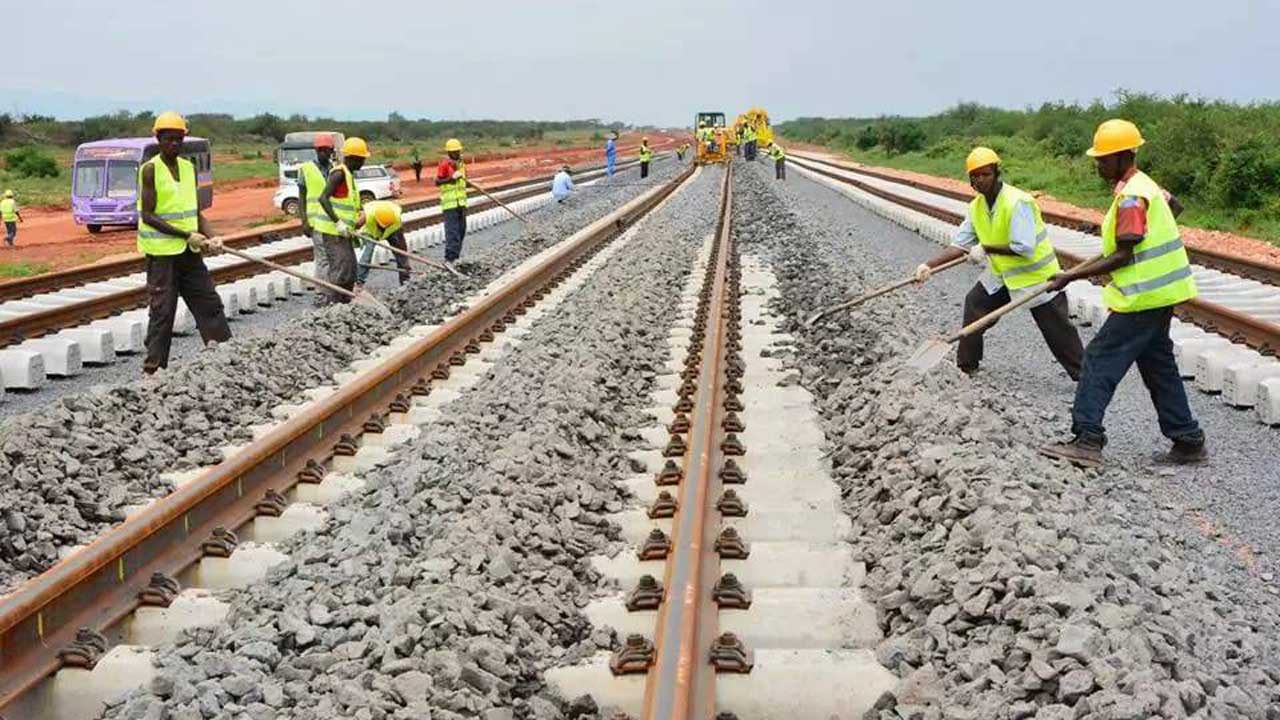
While the global energy conversation has focused on Gulf state transitions and European security imperatives, one of the most significant renewable energy stories of 2025 unfolded closer to home. Nigeria installed 803MW of solar capacity in 2025 — a 141% year-on-year increase from the 63.5MW added in 2024 — making it Africa’s second-largest solar installer, behind only South Africa’s 1,602MW, according to the Global Solar Council’s Africa Market Outlook 2026– 2029.
The scale of the leap is worth pausing on. In 2024, Nigeria’s total installed solar capacity stood at 385.7MW. By the end of 2025, the country had added more than double that figure in a single year. Nigeria now accounts for 17% of all solar capacity installed across Africa in 2025 — a continent that itself recorded its strongest-ever year for solar deployment, adding 4,498MW in total, a 54% increase on 2024.
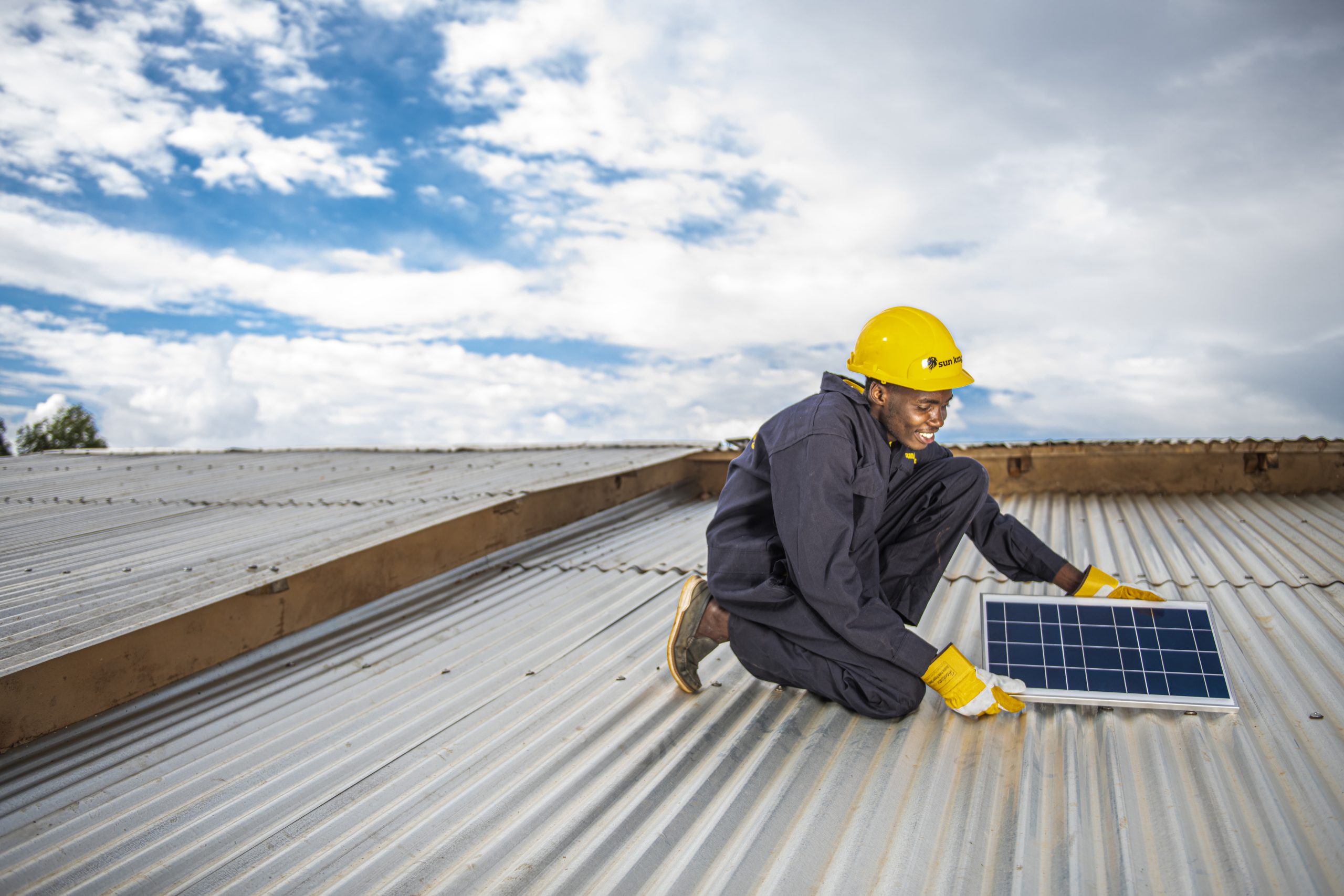
The Global Solar Council’s report attributed Nigeria’s emergence to four converging drivers: rapid expansion in distributed solar systems, persistently high energy prices making solar economically competitive, policy concerns over potential import restrictions that accelerated procurement, and the rollout of the DARES programme — the policy anchor that has transformed Nigeria’s renewable ambition from aspiration into execution.
The DARES Programme: The policy engine behind the numbers
The Nigeria Distributed Access through Renewable Energy Scale-up (DARES) programme is the largest single distributed energy project in World Bank history globally. Financed by a $750 million International Development Association credit and designed to leverage over $1 billion in private capital, DARES is co-funded by the Japan International Cooperation Agency ($200 million), the Global Energy Alliance for People and Planet ($100 million), USAID, the German Development Agency (GIZ), SEforAll, and the African Development Bank.
Its targets are concrete and measurable. The programme aims to provide over 17.5 million Nigerians with new or improved electricity access through solar mini-grids and standalone solar home systems. It will replace more than 280,000 diesel and petrol generator sets — a direct substitution of fossil fuel consumption with clean energy — and provide up to 237,000 MSMEs with reliable electricity for productive use.
DARES builds on the foundation laid by the Nigeria Electrification Project (NEP), which established 125 mini-grids, deployed over one million solar home systems, provided electricity access to more than 5.5 million Nigerians, and created over 5,000 private-sector green jobs. The Rural Electrification Agency, which administers both programmes, estimates that at least 5 million off-grid solar systems are still required to serve underserved communities — the addressable market for this programme is enormous.
“Nigeria’s clean energy transition must create jobs at home. Every panel we assemble here, every inverter we manufacture locally, strengthens our economy, builds skills for our youth, and ensures that we are not just consumers of technology but contributors to the global renewable energy value chain.” — REA Official, 2025 Nigeria Renewable Energy Innovation Forum
Manufacturing ambition: From installer to producer
Nigeria is not content to remain a consumer of solar technology. The country is positioning itself as a regional manufacturing hub for the West African solar market. A 1GW solar panel manufacturing facility is being established through a public-private partnership — the largest in West Africa. Additional plans include a 1.2GW module assembly plant and an 800MW PV factory, coordinated as part of a deliberate industrial strategy to build domestic supply chain capacity.
LONGi Green Energy, one of the world’s largest solar panel manufacturers, has entered a partnership to establish a 500MW to 1GW production facility in Nigeria. The Nigerian Electricity Regulatory Commission (NERC) has also proposed rules allowing solar users to sell excess electricity back to the national grid — a net metering framework that would fundamentally improve the economics of rooftop solar for commercial and residential users and accelerate the transition away from diesel dependency.
The ₦100 billion National Public Sector Solarisation Initiative, announced in 2025, is a further signal of policy intent: government buildings, schools, and health facilities are being targeted for solar conversion, creating an anchor demand base for the domestic manufacturing ecosystem that is being built.
The long game: Why peak oil optimism may be premature
Despite these bullish signals for renewables, a note of caution is warranted. The prediction that the global energy transition will neutralise the strategic relevance of Middle East oil may prove premature. Global peak oil demand is not expected until around 2030, and with output from major non-Gulf fields in structural decline, Persian Gulf producers are expected to play an expanded — not diminished — role in the global oil market over the coming decade.
There is also the uncomfortable dynamic that energy insecurity has historically accelerated coal consumption. When natural gas shortages hit during the Russia-Ukraine crisis, multiple European governments temporarily reversed coal phase-out timelines. A similar pattern, driven by Middle East disruption, could undermine climate commitments and redirect capital away from clean energy at precisely the wrong moment.
Africa’s own solar trajectory, while impressive, carries a financing caveat that the Global Solar Council’s report is candid about: for solar to reach its full potential across the continent, developers need single-digit interest rate debt and leverage ratios of 70% or higher to keep energy prices below 10 cents per kWh. Nigeria’s banking recapitalisation — which is building institutions large enough to finance infrastructure at scale — is directly relevant to this constraint. The energy transition and the financial sector reform are not separate stories.
What this means for Nigeria: Sitting at the intersection
For Nigerian businesses and policymakers, the global energy market’s response to the Middle East conflict carries several direct implications. Nigeria sits at a uniquely complex intersection: an oil exporter benefiting from elevated crude prices, an economy with a persistent electricity deficit that solar is beginning to close, and an emerging manufacturing player in the very technology that the world is racing to deploy.
On the revenue side, any sustained oil price spike provides Nigeria with fiscal breathing room. But the more durable lesson is strategic: the countries that will prosper in the next energy cycle are those that use the oil revenue window to build domestic renewable capacity rather than remaining tethered to volatile commodity revenues indefinitely. Nigeria’s 2025 solar performance suggests that this transition is not merely planned — it is underway.
The comparison with Gulf states is instructive and available to Nigeria for the first time. If Saudi Arabia, with far greater fossil fuel wealth, is investing in 130GW of renewable capacity, the case for Nigerian acceleration becomes harder to argue against. The Middle East conflict has not created this argument. It has dramatically sharpened it — and Nigeria’s own data now gives it the credibility to make the case from a position of demonstrated delivery rather than aspiration.
Africa installed 4,498MW of solar in 2025. By 2029, the continent is projected to install more than 33GW annually — over six times the 2025 total. Nigeria, with its 141% growth rate, its manufacturing ambitions, and its DARES infrastructure, is positioned to capture a disproportionate share of that trajectory. The question is not whether the opportunity exists. It is whether the policy discipline, financing architecture, and grid integration investment can keep pace with the installation momentum that is already building.
What’s being said
John Van Zuylen, CEO of the Africa Solar Industry Association, on the continent’s solar momentum:
“Solar energy has moved beyond a handful of early adopters to become a broader continental priority. What we are seeing is not temporary. It is policies aligning with market dynamics.”
Shubham Chaudhuri, World Bank Country Director for Nigeria, on the DARES programme:
“We are committed to expanding clean energy-based access in Nigeria, with the $750 million Nigeria DARES project being the largest ever single distributed energy project of the World Bank globally. It will benefit over 17.5 million unserved, underserved, rural, and remote Nigerians.”
Abba Abubakar Aliyu, Managing Director of the Rural Electrification Agency, on the scale of Nigeria’s electricity access challenge:
“Between 80 and 90 million Nigerians remain without reliable access to power. Our mission is to close that gap through decentralised solutions that make sense for our communities.”
REA official at the 2025 Nigeria Renewable Energy Innovation Forum, on the manufacturing ambition:
“Nigeria’s clean energy transition must create jobs at home. Every panel we assemble here, every inverter we manufacture locally, strengthens our economy and ensures that we are not just consumers of technology but contributors to the global renewable energy value chain.”
What’s next
- Africa is projected to install more than 33GW of new solar capacity by 2029 under a medium-growth scenario — a compound annual growth rate of 21%. Nigeria’s trajectory positions it to be a significant and growing share of that total.
- The DARES programme’s 17.5 million beneficiary target and the 237,000 MSME connections it is designed to enable will be the key performance indicators to track over the next 24–36 months. Execution, not policy, is now the test.
- Nigeria’s 1GW solar panel manufacturing facility, alongside the 1.2GW module assembly plant and 800MW PV factory, would — if completed — fundamentally change Nigeria’s position in the African solar value chain from consumer to producer. Progress on these facilities in 2026 is a critical watch point.
- NERC’s proposed net metering rules, if passed, would unlock rooftop solar economics for businesses and households and create a distributed generation base that reduces grid dependency without requiring further central grid investment.
- Battery storage costs across Africa fell from $144 per kWh in 2023 to $112 per kWh in 2025. Continued decline — driven primarily by Chinese manufacturing scale — will determine how quickly solar-plus-storage reaches economic viability at the community and household level across Nigeria.
- The Middle East conflict’s ultimate energy legacy will depend on its duration. A short, contained crisis accelerates renewable investment globally. A prolonged conflict risks redirecting capital into fossil fuel security infrastructure, slowing the transition at exactly the wrong moment in the deployment curve.
The bottom line
The Middle East conflict has acted as a geopolitical accelerant for the global energy transition — not uniformly, and not without contradictions, but unmistakably. Oil price volatility is reinforcing the energy security case for renewables. Gulf states are racing to build clean energy capacity at historic scale. And Nigeria — the country most often discussed as a fossil fuel story — has quietly become Africa’s second-largest solar installer, backed by the largest distributed energy project in World Bank history and a manufacturing ambition that could make it a regional supplier rather than just a consumer. For business leaders and investors monitoring global markets from Lagos, the signal is clear. The world is not abandoning oil tomorrow. But a Nigeria that is installing 803MW of solar in a single year, planning gigawatt-scale panel factories, and targeting 17.5 million new electricity connections through renewable energy is not waiting for the world to make up its mind either.