




By Annette Ikponmwonba | September 21, 2026
Key Points

· Vice President Kashim Shettima says Nigeria will be guided by national interest and multilateralism at the 81st UN General Assembly
· He arrived in New York on Monday to lead Nigeria’s delegation and represent President Tinubu
· Shettima says Nigeria will push Tinubu’s call for reforms to global institutions to reflect current economic and demographic realities
· He is expected to deliver Nigeria’s national statement during the General Debate, covering peace, security, development and global cooperation
· Nigeria plans to advance positions on financial architecture reform, climate finance, technology access and stronger African representation globally
· Shettima arrived alongside Rivers State Governor Fubara and other senior officials, and was received by Lagos Governor Sanwo-Olu and top federal officials
Main Story
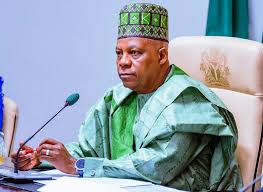
Vice President Kashim Shettima says Nigeria will be guided by its national interest and commitment to multilateralism as it engages world leaders at the 81st session of the United Nations General Assembly in New York. Shettima stated this after arriving in New York on Monday to represent President Bola Tinubu and lead Nigeria’s delegation to the high-level gathering.
He said Nigeria would also use the platform to advance the President’s call for reforms to global institutions, arguing that these institutions need to reflect contemporary economic and demographic realities rather than outdated structures. “Our message in New York is clear. Nigeria believes in multilateralism, but the institutions that govern our world must become more representative, equitable, and responsive to the realities of today,” Shettima said.
The Vice President added that Nigeria would approach its international engagements firmly from the standpoint of national interest, while simultaneously advocating for a stronger voice and fairer opportunities for developing countries more broadly.
The Issues
Shettima’s remarks tap into a long-running global debate about the adequacy of existing multilateral institutions, many of which were established decades ago under very different economic and demographic conditions than those prevailing today. Nigeria’s push for reform reflects a broader coalition of developing countries that have consistently argued that bodies like the UN Security Council, international financial institutions and other global governance structures remain skewed toward the interests of a smaller group of established powers.
This positioning also reflects a balancing act familiar to many middle power nations at the UN: engaging constructively within existing multilateral frameworks while simultaneously pushing to reshape those same frameworks to be more representative. Nigeria’s specific emphasis on reform of international financial architecture, climate finance access and stronger African representation in global decision-making suggests a fairly comprehensive reform agenda rather than a narrow, single-issue push.
The scale of Nigeria’s delegation, spanning senior federal officials, a state governor and multiple ministers, also signals the importance Abuja is placing on this year’s General Assembly as a platform for advancing these positions on a global stage.
What’s Being Said
Shettima was direct about Nigeria’s dual approach to the engagements, describing a strategy that would firmly prioritize Nigeria’s own national interest while simultaneously advancing President Tinubu’s broader call for a global system that gives developing countries a stronger voice and a fairer opportunity to prosper.
According to the State House, Nigeria intends to use its various engagements at the General Assembly to specifically advance its positions on reform of the international financial architecture, sustainable development, climate finance, technology access and stronger African representation in global decision-making, laying out a fairly wide-ranging set of policy priorities for the delegation’s time in New York.
What’s Next
During the General Debate, Shettima is expected to deliver Nigeria’s national statement, outlining the country’s positions on international issues relating to peace and security, development, economic growth and global cooperation. He is also scheduled to participate in high-level meetings and bilateral engagements with world leaders, international organisations and development partners on the sidelines of the Assembly.
Attention will likely turn to the specific content of Nigeria’s national statement once delivered, as well as any concrete outcomes or commitments emerging from Shettima’s bilateral meetings with other world leaders and development partners during the gathering.
Bottom Line
Shettima’s remarks position Nigeria as an active advocate for reforming global governance structures at this year’s UN General Assembly, framing the country’s engagement as both a defense of its own national interests and part of a broader push for developing countries to gain a stronger and fairer footing within international institutions.