






By Annette Ikponmwonba | September 15, 2026
Key Points
· Dangote Industries President Aliko Dangote says petrol smuggling to neighbouring countries is partly to blame for high domestic prices
· He says petrol in neighbouring countries sells for 30 to 50 per cent more than in Nigeria
· He specifically cited Niger, where petrol allegedly sells at a 20 to 25 per cent premium over Nigeria
· Dangote warned that beyond pricing, the Middle East crisis could soon threaten petrol availability rather than just cost
· He assured Nigerians that the Dangote refinery will continue meeting domestic demand without shortages or queues
· His comments came as the N2.15tn IPO of Dangote Petroleum Refinery and Petrochemicals officially opened on the Nigerian Exchange
Main Story
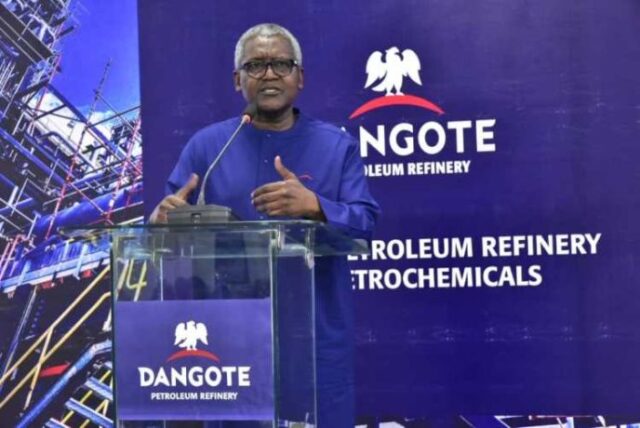
Aliko Dangote, President of Dangote Industries Limited, has attributed Nigeria’s high petrol prices partly to ongoing smuggling of the commodity to neighbouring countries, where it sells for significantly more. Speaking in an interview aired on Arise TV, he said petrol prices in Nigeria cannot be assessed in isolation from prices across the border, He explained that petrol in neighbouring countries is typically 30 to 50 per cent more expensive than in Nigeria. That gap, he said, creates a strong financial incentive for traders to divert product meant for domestic consumption and sell it across the border instead. “I don’t know if you know that there’s still a lot of smuggling of the same petrol we are producing to our neighbouring countries,” he said, Using Niger as an example, Dangote noted that petrol there sells at a premium of 20 to 25 per cent compared to Nigeria. He questioned what legitimate business could offer that kind of immediate return, describing how petrol nominally destined for cities like Sokoto could instead be redirected to border towns like Ilela and sold across the frontier.
The Issues
Dangote’s remarks point to a structural tension in Nigeria’s downstream fuel sector. Even as the country ramps up domestic refining capacity, price disparities with neighbouring countries continue to undermine efforts to stabilize supply and keep product available for Nigerian consumers. The smuggling dynamic he describes suggests that pricing policy in Nigeria cannot be considered independently of regional market conditions, since arbitrage opportunities will persist as long as significant price gaps exist.
There is also a broader question raised by his comments about how Nigerians perceive fuel costs. Dangote pushed back on the idea that petrol is simply expensive, arguing that public understanding often ignores the comparative regional context, and that what looks like a high price domestically is, in his view, a bargain relative to what neighbouring markets pay, Layered on top of the pricing debate is a fresh concern tied to global instability. Dangote flagged the crisis in the Middle East as a potential threat not to price, but to supply itself, a distinction that could carry more serious consequences for the Nigerian market if disruptions to global energy flows intensify.
What’s Being Said
Dangote was blunt in framing the price debate as one of perception versus reality, suggesting that much of the frustration around petrol costs stems from not comparing Nigerian prices against what obtains next door. “What they need to do is ask, what is the neighbour’s price?” he said, He was equally direct about the mechanics of smuggling, describing a pattern where product ostensibly bound for domestic destinations is instead funnelled toward the border for resale at a markup, On the question of supply security, Dangote sought to project confidence, telling Nigerians there would be no shortages or queues, and pledging that the Dangote refinery would keep satisfying the market regardless of external pressures. “We will deliver to Nigeria. Nigerians don’t need to worry,” he said.
What’s Next
The Middle East crisis remains the variable to watch, given Dangote’s warning that it could shift from a pricing issue to an availability issue for petroleum products more broadly. How that situation develops globally could have ripple effects on Nigeria’s fuel supply chain in the months ahead, Domestically, attention will likely turn to whether authorities take any fresh steps to curb cross-border smuggling, given that the price gap Dangote described shows no immediate sign of closing, Meanwhile, the Dangote Petroleum Refinery and Petrochemicals IPO, which opened on the Nigerian Exchange with 4.1 billion ordinary shares priced at N525 each, is scheduled to close on October 13, 2026. As the first petroleum refinery ever offered to investors on the NGX in its 66-year history, investor response over the coming weeks will be closely watched.
Bottom Line
Dangote is reframing Nigeria’s petrol price debate around regional comparison and smuggling incentives rather than domestic supply chain failure, while simultaneously flagging a bigger looming risk: that global instability could soon make availability, not price, the real concern for Nigerian consumers.