






Key Points
- Rising petrol, diesel, transport and cooking-energy costs are squeezing household incomes and making cleaner energy alternatives harder to afford.
- High upfront costs, limited technical support and financing gaps continue to constrain household adoption of solar and other renewable technologies.
- Lagos is expanding renewable-energy, mini-grid and cleaner transport initiatives, but stakeholders say the transition must become more affordable and locally supported.
Main Story
Rising energy and transportation costs are putting increasing pressure on household incomes in Lagos, making it harder for many residents to shift from conventional fuels to cleaner energy.
Residents, workers and renewable-energy operators who spoke to the News Agency of Nigeria (NAN) said the rising cost of keeping homes and businesses powered was competing with other essential expenses, including transport, food and housing.
Mr Cyprian Udoh, a civil servant, said increasing energy costs were leaving workers with little disposable income, while Mrs Ogonna Igwe, a trader, said higher transport fares were reducing business profits.
For Mr Moses Alabi, a Lagos Island worker, expensive commuting had become severe enough to push some workers towards accommodation closer to their workplaces in order to reduce transportation expenses.
The pressure extends to households using petrol generators to supplement electricity supply. Petrol prices at some Lagos filling stations reached about N1,310 per litre by late August, compared with around N1,205 per litre, while some outlets sold above N1,400 per litre. Depot prices stood at about N1,200 per litre on Aug. 28.
Higher fuel costs also affect households without generators, as businesses facing increased operating expenses pass some of the costs to consumers through higher prices of goods and services.
Diesel, Liquefied Petroleum Gas and kerosene prices have similarly influenced household energy choices and affordability.
The resulting pressure has turned energy expenditure into a competition among household needs rather than simply a choice of fuel.
For residents considering solar power as an alternative, however, the cost of making the switch remains a major obstacle.
Mr Charles Ogidi, a solar-panel installer, said solar installations remained unaffordable for many residents seeking alternatives.
Mrs Joy Ijeneme, Chief Executive Officer of Zamar Solutions, said the transition also required Nigeria to develop local capacity to install, maintain and repair renewable-energy technologies.
She noted that some imported renewable-energy products lacked adequate local technical support when they developed faults.
The Issues
Nigeria’s Energy Transition Plan targets net-zero emissions by 2060 and projects renewables to account for 82 per cent of installed electricity generation capacity by 2050, including 209 gigawatts of solar photovoltaic capacity. However, the country is starting from a relatively low renewable-energy base, with the International Renewable Energy Agency putting installed solar photovoltaic capacity at 197 megawatts. The gap between the transition targets and household affordability means financing, technical support and reliable after-sales services remain critical to wider adoption.
What’s Being Said
Prof. Abubakar Sambo, Chairman, Board of Trustees, Renewable Energy and Energy Efficiency Associations-Alliance, said, “Energy is too large for any single institution, sector or stakeholder to solve alone. It demands concerted action.”
Ijeneme said the clean-energy transition should include developing local technical capacity to install, maintain and repair renewable-energy technologies, particularly as some imported equipment lacks adequate local support.
What’s Next
Lagos has strengthened its renewable-energy framework through the Lagos State Electricity Law 2024, which provides for renewable energy, energy efficiency, demand-side management and certification of renewable-energy installers.
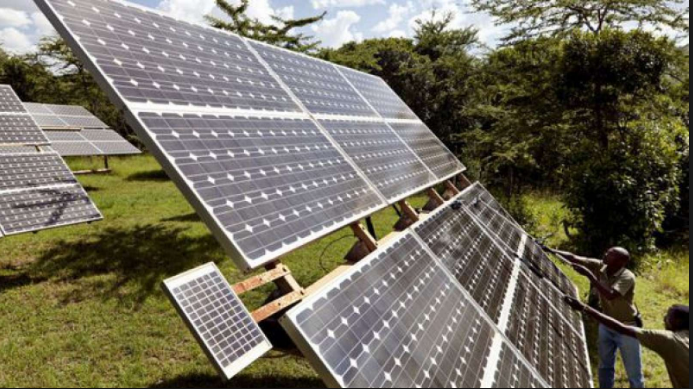
The Rural Electrification Agency has also commissioned a 505-kilowatt-peak interconnected solar mini-grid serving five communities in Epe: Odogbawojo, Odoshiwola, Odoayan, Ora and Ibowon. The project is designed to supply households, businesses, public institutions and productive users.
Cleaner transport is also being pursued through plans involving Compressed Natural Gas and electric buses, as the state seeks to reduce dependence on petrol.
Industry stakeholders are expected to continue pushing for investment, workforce development, energy efficiency, financing and clean-energy technologies as part of the wider transition.
The Bottom Line: Lagos is expanding its clean-energy infrastructure, but rising household energy and transport costs could limit adoption unless renewable technologies become more affordable, accessible and easier to maintain.