










Key points
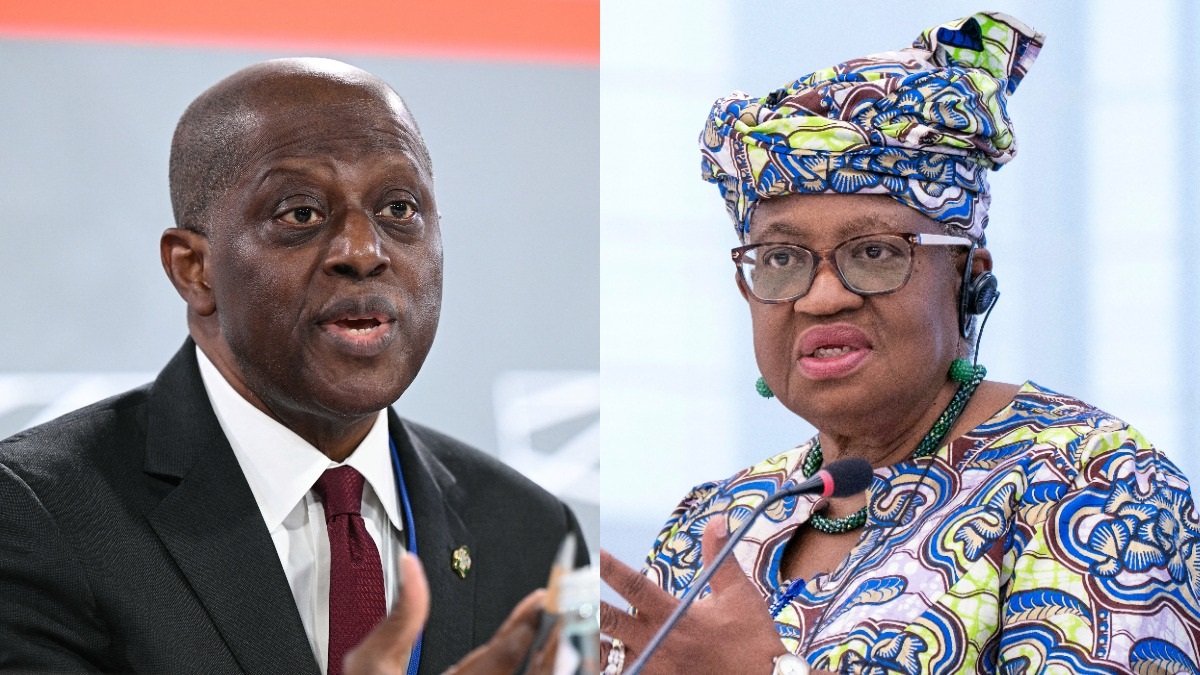
- CBN Governor Olayemi Cardoso and WTO Director-General Ngozi Okonjo-Iweala will headline the 7th Africa Emerging Markets Forum.
- The forum will take place in Abuja from July 29 to July 30.
- Discussions will focus on building resilient African economies amid global economic uncertainty.
- Policymakers will examine issues including inflation, regional integration, AI, fintech and cross-border payments.
Main story
The Central Bank of Nigeria (CBN) will host a high-level fireside dialogue between its Governor, Mr Olayemi Cardoso, and the Director-General of the World Trade Organisation (WTO), Dr Ngozi Okonjo-Iweala, at the 7th Africa Emerging Markets Forum (EMF).
According to the apex bank, the forum, scheduled for July 29 and July 30, is being organised in collaboration with the EMF and the Centre for the Study of the Economies of Africa (CSEA).
The event, themed “Building Resilience Amidst Geoeconomic Uncertainties,” will bring together senior policymakers, central bankers, ministers, development partners, private sector leaders and economists from Africa and beyond to examine policy responses to an increasingly uncertain global economy.
The Cardoso-Okonjo-Iweala fireside dialogue will serve as the forum’s headline session, focusing on how African economies can strengthen resilience, sustain economic reforms, deepen regional integration and unlock long-term growth amid growing global fragmentation.
The forum will also feature keynote addresses by the Minister of Finance and Coordinating Minister of the Economy, Mr Taiwo Oyedele, and the Minister of Science, Technology and Innovation, Dr Kingsley Udeh.
According to the organisers, the participation of both ministers highlights the need for coordinated fiscal, monetary and innovation policies to drive Africa’s economic transformation.
Other speakers include the World Bank Group’s Chief Economist and Senior Vice President for Development Economics, Mr Indermit Gill, EMF Founder and Chief Executive, Mr Harinder Kohli, and the Vice-Chancellor of Ahmadu Bello University, Prof. Adamu Ahmed.
Over the two-day event, participants will discuss macroeconomic stability, regional economic integration, cross-border payments, financial technology, infrastructure development, foreign direct investment, technology transfer and artificial intelligence.
Deliberations will also cover food price volatility, inflation and the effectiveness of monetary policy in fragile and post-crisis economies.
The organisers said the forum is designed to promote open dialogue on issues affecting emerging markets while identifying practical policy solutions that can be adapted to the specific needs of African economies.
They added that the event reflects a shared commitment by the CBN and its partners to strengthen regional cooperation, promote evidence-based policymaking and support sustainable, inclusive economic growth.
The issues
African economies continue to face mounting challenges from global trade tensions, inflation, geopolitical risks and slowing growth. Policymakers are increasingly seeking coordinated strategies that improve resilience while accelerating regional integration and long-term economic transformation.
What’s being said
“The dialogue will explore how African economies can build resilience, sustain reform momentum, deepen regional integration and unlock long-term growth amid an increasingly fragmented global economy.” — Central Bank of Nigeria.
What’s next
The forum will convene policymakers and development partners on July 29 and July 30 to discuss policy options aimed at strengthening Africa’s economic resilience and fostering sustainable growth.
Bottom line
The Africa Emerging Markets Forum provides a platform for African policymakers and global economic leaders to develop coordinated responses to evolving global economic challenges while advancing reforms that strengthen the continent’s long-term growth prospects.







 will host a high-level fireside dialogue between its Governor, Mr Olayemi Cardoso, and the ...)