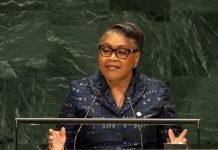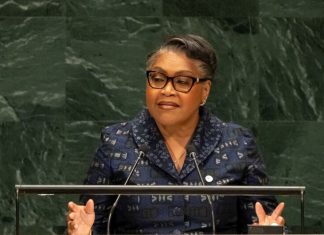







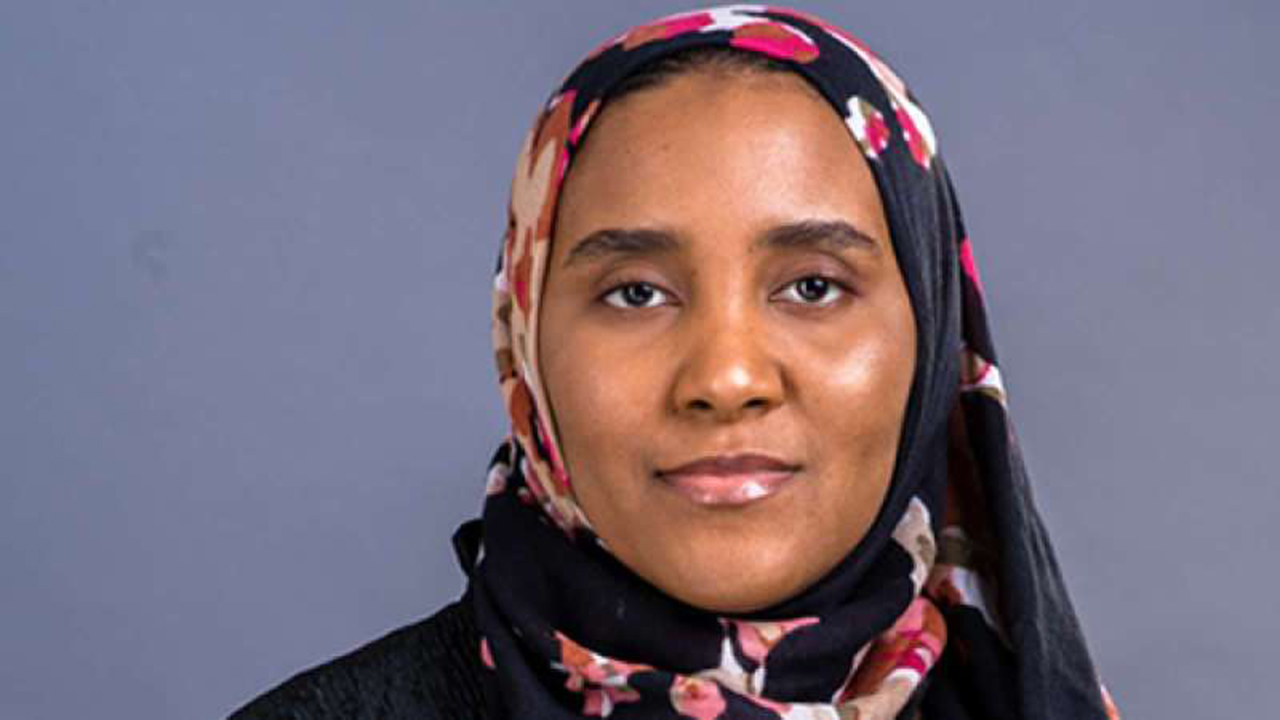
Fatima Dangote, Executive Director for Oil and Gas at Dangote Group, has described the coming Dangote Petroleum Refinery listing, not as a stock sale but as a story the continent needed to tell about itself. “We’re selling a story that Africa is able to industrialize at scale,” she said in a recent Bloomberg interview, “not just at scale, but at a global scale.” That framing has just fueled more public excitement about the coming IPO, with the refinery’s recent $2.5 billion private placement now giving the story hard numbers to match the ambition.
On July 23, 2026, the refinery confirmed it had closed a $2.5 billion private placement, oversubscribed nearly four times over and the clearest signal yet that when this listing lands, likely within weeks, it will be one of the defining capital markets events in African history, and one that Nigerians, Africans on the continent, and the diaspora will all be able to own a piece of.
The scale: what’s actually being sold
The Dangote Petroleum Refinery and Petrochemicals FZE, sited in the Lekki Free Trade Zone, is the world’s largest single-train refinery and Africa’s largest refining complex by capacity. It took nearly a decade to build, at a cost of roughly $20 billion, and was commissioned in May 2023 before moving into full operations in early 2024. On February 11, 2026, it hit its full nameplate capacity of 650,000 barrels of crude oil per day and became the first single-train refinery of its scale in the world to do so – that figure now anchors every valuation model attached to the listing.
The export numbers are what investors will find hardest to ignore. The refinery now supplies roughly 92% of Nigeria’s petrol and ships fuel to Ghana, Cameroon, Togo, Tanzania and parts of Europe. Jet fuel exports alone grew 770% between April 2024 and April 2026, from about 18,000 barrels a day to a record 158,000 bpd, with Europe now receiving roughly 70,000 bpd, partly to offset Middle East-driven shipping disruption. This has already become an operating business generating foreign currency income, which is precisely why the private placement that just closed came in at 3.7 times oversubscribed, resulting in the issuance of approximately $2.5 billion in new equity.
The private placement as dress rehearsal
For months, every estimate of what the refinery might be worth or raise has moved around, a sign of how fluid, and how large, this transaction has been. Becoming Africa’s largest publicly disclosed primary equity private placement, and the refinery’s first capital raise involving outside investors beyond its existing shareholder base.
The details matter. Dangote sold a stake of up to 6% of the refinery – part of a roughly 10% stake the group has signaled it intends to sell in total, priced to value the whole company at about $40 billion and the offer was 3.7 times oversubscribed relative to its initial size, with shares carrying a 365-day lock-up. That takes the $40 billion valuation out of the realm of analyst modelling and turns it into something priced by real institutional money, under real demand pressure, days ago rather than months ago – a dress rehearsal for the public listing, and a very successful one.
The offer: what’s left for the public, and why that’s the better story
With institutional appetite largely satisfied privately, what remains for the public listing is smaller than earlier headlines suggested, and arguably more interesting. Reports point to an IPO as early as September 2026, targeting an additional $1.5 to $2 billion on the Nigerian Exchange. That’s the remainder of a roughly 10% stake, sized against the refinery’s $40 billion valuation.
That’s good news for the part of this story that matters most to ordinary Nigerians: access. Retail investors are expected to buy shares through fintech apps, mobile phones and POS terminals using nothing more than a Nigerian BVN, with participation reportedly open to Nigerians with a BVN anywhere in the world – made newly possible for the diaspora by the CBN/NIBSS Non-Resident BVN (NRBVN) platform, which lets Nigerians abroad enroll remotely without visiting a bank in Nigeria. That’s a deliberate democratization of ownership, turning what could have been a transaction reserved for institutional capital into one where anyone living in any part of Nigeria and a diaspora Nigerian across the globe are, in principle, buying the same asset on the same terms.
Timing has firmed considerably. Dangote confirmed in June 2025 that the original 2025 target had moved to 2026, to give production time to reach levels that would support a credible valuation. By May 2026, he was targeting a September IPO, with a roadshow running May through July. The completed private placement removes one of the last major uncertainties – management let the asset prove itself operationally, then let institutional investors prove the valuation, before asking the retail public to price it. That’s a far more conservative, credibility-building sequence than most mega-project listings attempt.
Why now: the case for the industry and the moment
Nigeria’s core energy paradox – Africa’s largest crude producer for decades having to import the refined fuel it consumes, is precisely the imbalance this refinery was built to close, and its export data suggests it’s already doing so at scale: import substitution and foreign exchange generation happening simultaneously, large enough to matter at the balance-of-payments level.
The market backdrop makes the case even stronger. As of July 2026, Nigeria’s benchmark index has delivered roughly a 68% return in dollar terms for the year, narrowly overtaking South Korea’s KOSPI (66%) to become the best-performing stock market of 92 tracked globally by Bloomberg, a reversal that came as the KOSPI slid into a technical bear market on cooling AI-stock sentiment. Unlike Seoul’s rally, Nigeria’s has no AI exposure at all; it’s built on financial-sector re-rating, a naira that has firmed roughly 4% since January, and reform momentum. Insurer Fortis Global Insurance alone has returned close to 1,400% in dollar terms this year, and S&P Dow Jones Indices has placed Nigeria on its 2027 watchlist for a possible upgrade from standalone to frontier-market status, a reclassification that would unlock a further layer of index-tracking foreign capital.
NGX chief executive Temi Popoola has called the prospective refinery listing a “landmark moment” for the exchange and one that could show international investors Nigeria’s capital market can support complex, globally significant transactions. Analysts keep reaching for the same comparison: Saudi Aramco’s 2019 listing, the last time global markets watched a dominant national energy asset open to public ownership after decades in private hands.
A market coming of age: banks, foreign capital, and the FX crossover
The refinery listing is not arriving in a vacuum. It’s arriving at the exact moment Nigeria’s capital markets are having a coming-of-age story of their own and the timing is doing as much work for the pitch as the refinery’s own numbers.
Start with the banks, between March 2024 and March 2026, the CBN ran the most demanding recapitalisation exercise in the sector’s history, forcing commercial banks with international licences to lift minimum paid-up capital tenfold, from ₦50 billion to ₦500 billion. By the March 31 deadline, 33 of 37 banks had cleared the new bar, mobilising ₦4.65 trillion (about $3.4 billion) in fresh capital. What matters most: 27.45% of that capital came from foreign investors, drawn by a straightforward bet that Nigerian balance sheets were becoming investable again.
Read together – a recapitalised banking sector, an exchange outrunning Seoul, a firming naira, and now a $2.5 billion private placement proving institutional appetite at a $40 billion valuation are the conditions under which portfolio investors stop treating Nigeria as a frontier curiosity and start treating it as an allocation.
The cement precedent: what Dangote has already proven
If the refinery listing needs a reference case for why “African-built, globally competitive” isn’t just marketing language, Dangote Cement is Exhibit A. It listed in Lagos in 2010 as a domestic producer. Today it operates in 11 African countries, with revenues exceeding $3 billion in 2025 and installed capacity of up to 55 million tonnes per annum. Growth has continued into 2026: Q1 revenue rose 20.4% year-on-year to ₦1.198 trillion, EBITDA grew 22.8% to ₦567.1 billion, and profit before tax climbed 35% to ₦421.1 billion, while cement and clinker exports grew 71.6%. Full-year 2025 results showed group revenue up 20% to ₦4.307 trillion and net profit surging 102% to ₦1.015 trillion, on the back of which shareholders approved a record ₦45-per-share dividend at the company’s 17th AGM in July 2026, a 50% increase on the prior year.
At that AGM, shareholders formally endorsed a secondary listing on the London Stock Exchange or another recognized international exchange, to sell roughly a 10% stake, and management set a target of 80 million tonnes of annual capacity by 2030, up from 55 million today, with new operations planned in Botswana and Zimbabwe. This is proof that a Nigerian-born industrial champion can graduate to international capital markets on its own timeline and it comes as the group visibly plans for succession, with Aliko Dangote’s daughter Mariya joining the board alongside sisters Halima and Fatima, each positioned across the wider group.
That trajectory is the template the refinery listing is compressing into a far shorter timeframe, at a much larger scale, and as a first listing rather than a secondary one. Cement took a decade of steady execution to earn a market cap that has since climbed to roughly ₦17.7 trillion (about $12.9 billion) as of July 2026, up from ₦10.2 trillion at year-end 2025, before international investors were seriously courted. The refinery has already banked $2.5 billion in institutional conviction before its shares have even reached the public market – a bolder bet, built on a bigger asset, by a group that has already shown it can deliver one industrial giant to public markets and grow it patiently for fifteen years.
The outlook: what this means for the business, and for everyone watching
For Dangote Group, a successful listing does more than raise cash. It converts a privately-financed, privately-risked mega-project into a permanently capitalised platform, one that can fund the next phase of expansion, including plans to more than double refining capacity to 1.4 million bpd by 2028 and quadruple fertiliser output. It also gives the group a second globally recognisable, exchange-listed flagship alongside Dangote Cement, each reinforcing the other’s credibility in future capital raises.
For investors, the pitch now splits cleanly along two lines. Institutional and international capital has already spoken, in the form of a $2.5 billion placement, 3.7 times oversubscribed, at a $40 billion valuation. What’s left is the retail opportunity which the trader, the civil servant, professionals and the diaspora Nigerian with a BVN can buy a direct, low-friction stake in an asset of genuinely global scale, on an exchange that is right now delivering some of the best returns anywhere in the world.
If the cement story is any guide, patient shareholders who bought early and held through the growth phase were rewarded as capacity, exports and profitability compounded year on year. The refinery offers the same wager, at a scale and speed cement never had the chance to move at, with institutional investors having just put their money where the story is, days before the public gets its chance.
Whether the final public raise lands at $1.5 billion or $2 billion on top of the $2.5 billion already banked, the substance won’t change: a Nigerian-built, single-train refinery reached full global-scale capacity, started exporting fuel to Europe, closed the largest private equity placement in African corporate history and is now inviting the world, and its own citizens, BVN in hand, to own a piece of what comes next.