










Key points
- Environmental experts called for an urgent review of Nigeria’s Environmental Impact Assessment (EIA) Act and environmental governance framework.
- They said the 1992 law is no longer adequate to address climate change and renewable energy challenges.
- The experts advocated stronger community participation, improved enforcement and better institutional coordination.
- They also urged Nigeria to develop policies for recycling renewable energy infrastructure such as solar panels and batteries.
Main story

Environmental experts have called for an urgent review of Nigeria’s Environmental Impact Assessment (EIA) Act and the country’s broader environmental governance framework to support a just energy transition and strengthen environmental protection.
The call was made on Tuesday at a two-day Policy Laboratory Workshop on Strengthening the Environmental and Social Impact Assessment (ESIA) Framework in Nigeria, organised by the Clean Foundation in Port Harcourt.
The Programme Director of the Clean Foundation, Dr Salaudeen Hashim, said Nigeria’s existing EIA framework had become outdated and could no longer adequately address emerging environmental challenges associated with the transition to renewable energy.
Hashim said the policy laboratory was designed to generate research-based recommendations to guide government in reforming environmental governance and strengthening legal and institutional frameworks for sustainable development.
According to him, the initiative will identify gaps in the current EIA regime, validate research findings with stakeholders and recommend practical interventions for policy reforms.
“We cannot continue to do the same thing and expect different results.
“Countries across the world are decarbonising, and Nigeria must ensure that its transition is both green and just,” he said.
Hashim said a just energy transition should guarantee community participation, inclusiveness, affordability and equitable access to renewable energy while protecting vulnerable populations.
He expressed concern over the environmental and health impacts of decades of fossil fuel exploitation in the Niger Delta, adding that weak legal provisions, poor institutional capacity and inadequate enforcement continued to undermine environmental protection.
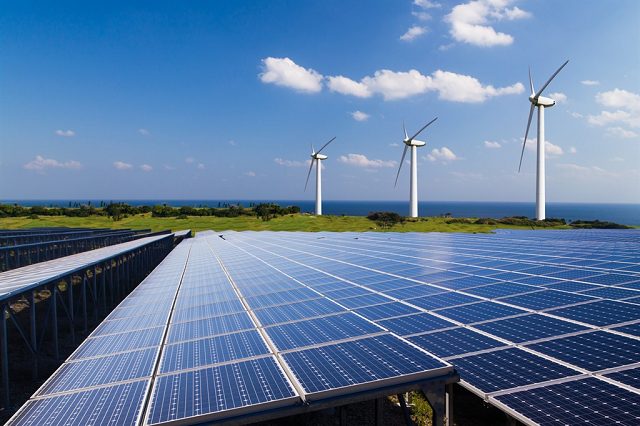
Hashim also noted the absence of national policies and recycling facilities for the disposal of renewable energy infrastructure, such as solar panels and batteries, warning that the country could face new environmental challenges without adequate safeguards.
He further called for stronger protection of mangrove forests, describing them as critical natural carbon sinks that should not be subjected to indiscriminate logging.
Also speaking, Dr Kabari Sam, Senior Lecturer in Environmental Systems at the University of Portsmouth, United Kingdom, said the EIA Act of 1992 no longer reflected present-day realities of climate change and renewable energy development.
Sam said an assessment of the legislation revealed significant gaps in climate change integration, institutional coordination, community participation, accountability and governance.
He advocated greater involvement of host communities in environmental assessment processes and urged the Federal Ministry of Environment to coordinate environmental management functions currently spread across different agencies.
According to him, centralising environmental regulatory responsibilities under the ministry would strengthen monitoring, enforcement and accountability.
In his remarks, Prof. Mbalisi Onyeka of the University of Port Harcourt described the review of the 1992 EIA Act as timely, saying the legislation required comprehensive amendments to address emerging environmental and social issues.
He added that projects requiring environmental and social impact assessments should not commence without proper evaluation of their environmental and social implications.
Onyeka also advocated incorporating economic impact assessments into the proposed ESIA framework to provide a more comprehensive evaluation of development projects and enable communities to make informed decisions.
The issues
Nigeria’s current Environmental Impact Assessment Act was enacted in 1992, before climate change, renewable energy deployment and just energy transition became central environmental policy issues. Experts argue that modernising the legal framework is essential to balance economic development with environmental sustainability.
What’s being said
“Countries across the world are decarbonising, and Nigeria must ensure that its transition is both green and just.” — Salaudeen Hashim, Programme Director, Clean Foundation
What’s next
Recommendations from the policy laboratory workshop are expected to inform the proposed Environmental and Social Impact Assessment (ESIA) Bill and broader reforms aimed at strengthening Nigeria’s environmental governance framework.
Bottom line
Experts say Nigeria’s environmental laws must evolve to address the realities of climate change and renewable energy, ensuring that the country’s transition to a low-carbon economy is environmentally sustainable, socially inclusive and effectively regulated.









 Act and the country's broader ...)