








Key points
- Residents of Epe say improved electricity supply has boosted businesses and reduced operating costs.
- The Federal Government recently inaugurated the 505-kilowatt Epe Mini-Grid Project under the Rural Electrification Fund.
- The project provides electricity to five underserved communities in Epe Local Government Area.
- Beneficiaries say reliable power has improved productivity, food preservation and household incomes.
Main story
Residents of Epe in Lagos State have commended the improved electricity supply in their communities, saying it has boosted commercial activities, reduced business costs and enhanced living standards.
The residents, who spoke with the News Agency of Nigeria (NAN) on Tuesday, said the steady power supply had particularly improved value addition in agriculture and strengthened local economic activities.
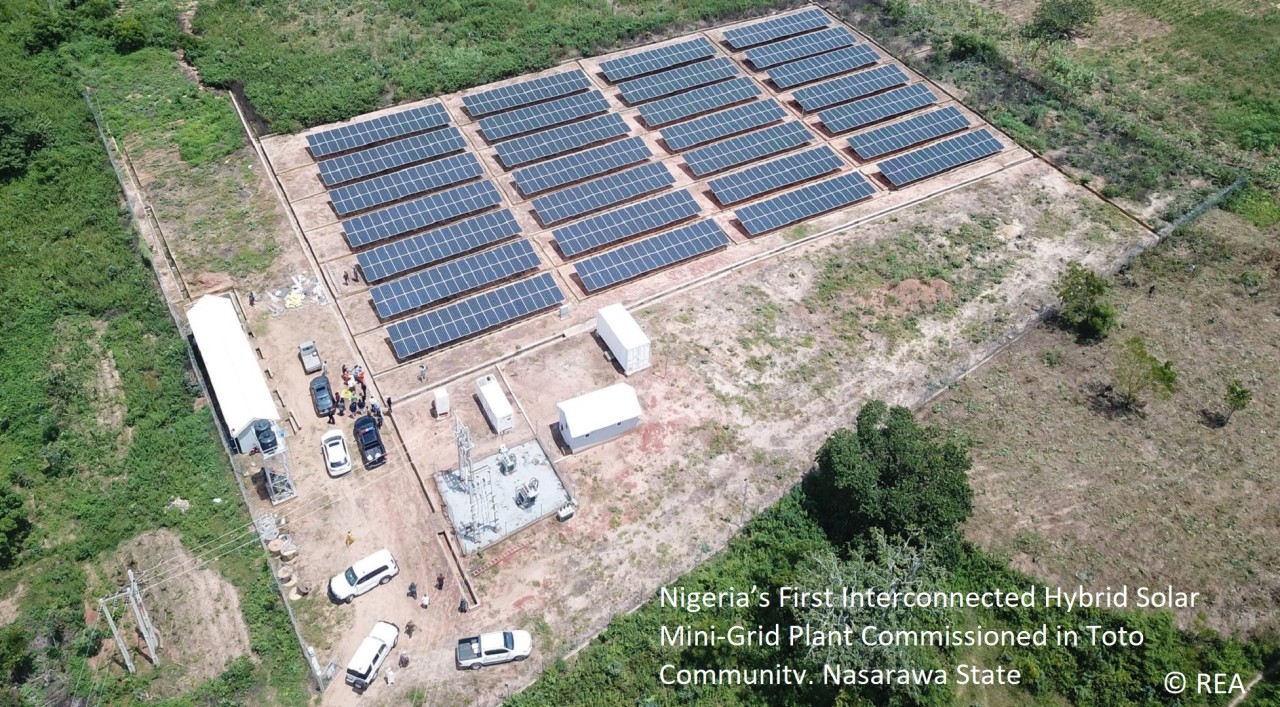
The Federal Government recently inaugurated the 505-kilowatt Epe Mini-Grid Project under the Rural Electrification Fund (REF) to improve access to electricity in underserved communities.
The project, implemented under the Interconnected Mini-Grid Acceleration Scheme (IMAS), provides reliable and sustainable electricity to five communities in Epe Local Government Area of Lagos State.
The benefiting communities are Odogbawojo, Odoshiwola, Odoayan, Ora and Ibowon, with the project expected to support businesses, households and broader socio-economic development.
The mini-grid was implemented by the Rural Electrification Agency (REA) and co-financed by the European Union, the German Government and the German Agency for International Cooperation through the Nigerian Energy Support Programme (NESP).
Reacting to the development, a flour miller, Mr Jacob Ajibade, said the improved electricity supply had enabled him to expand his business beyond maize processing into other profitable ventures.
“Unlike before, when I restricted my business to processing only corn flour, I can now process plantain flour and other products because of regular electricity supply,” Ajibade said.
“I am happy with the steady power because it enables me to meet customers’ demands without interruption and increase my income to better support my family.”
He said reliable electricity had improved productivity and reduced the challenges previously associated with unstable power supply.
A fish trader at Ayetoro Market, Mrs Boseade Kaka-Ajila, said the reliable electricity supply had significantly improved fish preservation and reduced losses previously caused by poor storage conditions.
According to her, she stores her fish at home in Ora before transporting them to the market, making reliable electricity essential for maintaining product quality.
“The regular electricity at home has given me peace of mind because I no longer worry about my fish spoiling or losing value due to poor preservation,” she said.
Another resident, Mr Ishaka Lawal, a barber, said the steady power supply had eliminated his dependence on petrol-powered generators and significantly reduced his operating expenses.
“I no longer spend money on fuel to run my barbing salon and I still charge N700 for a haircut, the same amount as before,” Lawal said.
“I now make more profit. However, our association will meet on Saturday to decide whether to reduce the price.
“Even if prices are reviewed downward, we will still be better off because we are no longer spending heavily on fuel.”
The issues
The 505-kilowatt Epe Mini-Grid Project forms part of the Federal Government’s efforts to expand electricity access to underserved communities through decentralised renewable energy solutions. Implemented under the Rural Electrification Fund and the Interconnected Mini-Grid Acceleration Scheme, the project is expected to improve electricity reliability, support small businesses, reduce dependence on petrol-powered generators and stimulate socio-economic development in beneficiary communities.
What’s being said
“I can now process plantain flour and other products because of regular electricity supply.” — Jacob Ajibade, Flour Miller
“The regular electricity at home has given me peace of mind because I no longer worry about my fish spoiling or losing value due to poor preservation.” — Boseade Kaka-Ajila, Fish Trader
What’s next
The mini-grid is expected to continue supplying reliable electricity to the five beneficiary communities, supporting businesses, households and economic activities while advancing the Federal Government’s rural electrification objectives.
Bottom line
Residents say the Epe Mini-Grid Project is already improving livelihoods by providing reliable electricity that lowers business costs, boosts productivity and supports local economic growth.