By Boluwatife Oshadiya │ June 30, 2026
KEY POINTS
- FEC approves Nigeria’s first comprehensive NYSC overhaul since the scheme was founded in 1973
- Orientation camp is extended from three weeks to six, split into three distinct two-week phases
- Corps members must now choose one of 11 specialised career streams at registration
- NYSC leadership will shift from military to civilian control; military retains security responsibilities
- The Passing Out Parade is scrapped; a graduation ceremony and redesigned uniform will replace it
MAIN STORY
Nigeria’s National Youth Service Corps has undergone its most sweeping restructuring in more than five decades. The Federal Executive Council, meeting on Monday, June 29, 2026, in Abuja under President Bola Tinubu, approved a comprehensive reform of the 53-year-old scheme — one that introduces specialised career streams, extends orientation camp duration, changes who runs the institution, and overhauls nearly every operational layer of the programme.
The approvals were announced by Minister of Youth Development Ayodele Olawande and the Special Adviser to the President on Policy Coordination, Hadiza Bala Usman, who both briefed State House correspondents after the FEC session. Olawande described it as the first holistic review of NYSC since Decree No. 24 of May 22, 1973 established the scheme in the aftermath of the Nigerian Civil War.
Established originally to promote national unity and reconciliation, the NYSC has for decades deployed graduates to states outside their regions of origin for a compulsory one-year service period. The scheme requires graduates of universities and other eligible tertiary institutions below the age of 30 to participate. Over time, it has attracted criticism over insecurity, inadequate welfare, poor camp infrastructure and a growing mismatch between graduates’ academic qualifications and where they are posted — concerns the reform directly addresses.
The reform package covers registration procedures, deployment modalities, security considerations, orientation camp structure, leadership governance, uniforms, post-service ceremonies and skills recognition — in other words, virtually everything.
THE ISSUES
The case for reform had been building for years. The review committee set up in 2025 — comprising the Federal Ministry of Youth Development, the Federal Ministry of Education and the Office of the Special Adviser on Policy Coordination — produced findings that were, by the government’s own admission, blunt. It identified outdated laws, a weak link between what graduates study and jobs available to them, and persistent safety concerns as the three core structural failures of the scheme as it existed.
Security has become one of the most pressing pressure points. In recent years, several corps members have been caught up in violence in deployment areas, raising questions about whether the scheme’s posting logic adequately accounts for ground-level security realities. The reform’s introduction of ‘risk-sensitive deployment’ acknowledges this gap directly, though the government has yet to publish operational guidelines defining how security risk will be assessed.
There is also the infrastructure problem. NYSC orientation camps across Nigeria have long been criticised for inadequate accommodation, water supply, sanitation and general facilities. Doubling the orientation period from three weeks to six now places direct pressure on those same facilities — a tension the reform attempts to resolve through a new national grading and certification system for camps, with state governments expected to meet defined standards. Whether that system will be operational before the extended camp kicks in remains an open question.
On the economic logic, the administration frames the entire reform as a human capital play for its $1 trillion economy target. Bala Usman described the need to build the skill sets of Nigerian youth to support the government’s economic ambitions as the foundational rationale for the reform. Whether matching corps members to career streams during orientation translates into measurable employment outcomes will depend heavily on the quality and relevance of training delivered during the final two-week block.
11 KEY CHANGES — WHAT THE REFORM ACTUALLY MEANS
Here is a breakdown of every significant element of the approved reform:
1. Orientation Camp Doubles in Length — From Three Weeks to Six
The orientation programme has been extended from three to six weeks, restructured into three distinct two-week phases. The first two weeks focus on civic responsibility, national values and leadership development. The second two weeks cover career mapping, basic accounting and financial literacy, business planning and access to finance, with a structured Career Day programme connecting corps members with employers, government agencies and industry professionals. The final two weeks are dedicated to stream-specific training aligned with each corps member’s chosen career path, academic background and skill profile.
2. Every Corps Member Must Now Pick One of 11 Specialised Streams
Upon registration and acceptance into the scheme, every corps member will be required to select one of 11 specialised career streams. Once chosen, the corps member will be identified, trained and recognised under that stream throughout their service year. The streams are designed to align graduates’ academic backgrounds, career interests and the workforce needs of Nigeria’s economy. A medical graduate, for instance, will be classified as a Medical Corps member and receive targeted training for that stream. The 11 streams are listed below.
3. Agric Corps
For graduates in agriculture, food science, animal science, fisheries, agribusiness and related disciplines. This stream targets Nigeria’s vast agricultural sector, which employs the largest share of the country’s workforce. Corps members in this stream will receive training tied to practical agricultural productivity, farm enterprise development and agribusiness.
4. Medical Corps
For graduates in medicine, pharmacy, nursing, dentistry, medical laboratory science, physiotherapy and health-related fields. Given Nigeria’s persistent shortage of healthcare workers in underserved communities, this stream is designed to channel medical graduates into structured service with relevant training, rather than the current practice of deploying them without regard for their professional training.
5. Education Corps
For graduates in education, teaching disciplines and subject areas commonly taught in secondary schools. Education Corps members will be trained and deployed in ways that directly leverage their academic preparation, addressing one of the longest-running frustrations of the scheme — the posting of education graduates to placements entirely disconnected from teaching or learning.
6. Tech and Digital Corps
For graduates in computer science, software engineering, information systems, data science, cybersecurity and related technology fields. This stream reflects the government’s recognition of the digital economy as a critical growth sector. Tech Corps members will receive training oriented toward practical deployment in technology roles.
7. Legal Corps
For law graduates. Legal Corps members will be trained for service in roles where legal knowledge can be directly applied — including public interest law, access to justice initiatives, legal aid and regulatory support.
8. Public Service Corps
For graduates from social sciences, public administration, economics, political science and related disciplines. This stream channels graduates into structured public service roles with training relevant to governance, administration and policy execution.
9. Infrastructure Corps
For engineering graduates — civil, structural, mechanical, electrical and related disciplines. Infrastructure Corps members will be trained and deployed in ways that connect their technical skills to Nigeria’s infrastructure development priorities.
10. Green Corps
For graduates in environmental science, forestry, climate science, geography and sustainability-related fields. This stream reflects growing global and domestic pressure around environmental sustainability, natural resource management and climate adaptation.
11. Enterprise Corps
For graduates with business, management, economics, accounting, marketing and commerce backgrounds. Enterprise Corps members will receive entrepreneurship training designed to support business creation, SME development and economic productivity.
12. Creative Economy Corps
For graduates in the arts, media, design, fashion, film, music and creative industries. This stream acknowledges the significant economic contribution of Nigeria’s creative sector — one of the fastest-growing in Africa — and provides formal structure for corps members in this space.
13. Paramilitary and Security Corps
For graduates from relevant disciplines who have chosen service-oriented or security-related career paths. This stream provides structured training aligned with Nigeria’s public safety and security institutions.
MORE CHANGES: LEADERSHIP, DEPLOYMENT AND FACILITIES
Beyond the streams and the extended camp, the FEC approved a broader cluster of reforms that touch nearly every operational layer of the scheme:
Civilian leadership replaces military command. For the first time since the scheme’s founding, NYSC will be headed by a civilian Director-General. The military will continue to provide security for corps members nationwide but will no longer hold operational command of the institution. Bala Usman described this as reflecting the administration’s broader push to build the human capital needed for a $1 trillion economy. The serving NYSC Director-General at the time of the announcement was Brigadier General Olakunle Nafiu.
Risk-sensitive deployment. The reform introduces a formal security review layer into the posting process. Where corps members have historically been deployed based primarily on administrative considerations and geographic distribution, postings will now factor in prevailing security conditions across states — a direct response to years of concern about corps members being posted into volatile areas. The government has not yet released the operational criteria for how security risk will be assessed and weighted against other deployment factors.
Technology-driven registration and call-up. The reforms include full digitalisation of the NYSC’s operations, including the registration and call-up process, with the stated goal of improving transparency and reducing the irregular practices that have long been associated with the posting system.
Skills-based primary assignments. Rather than posting corps members to generic placements, the reformed system will align primary assignments with corps members’ academic qualifications, professional competencies and chosen career streams. If implemented effectively, this would address one of the most persistent complaints about the scheme — the mismatch between what graduates studied and where they end up serving.
A national grading system for orientation camps. Camp facilities nationwide will be subjected to a formal national grading and certification framework, with state governments expected to meet defined standards of accommodation, services and infrastructure. This is intended to create uniform baseline conditions across all NYSC camps in the country.
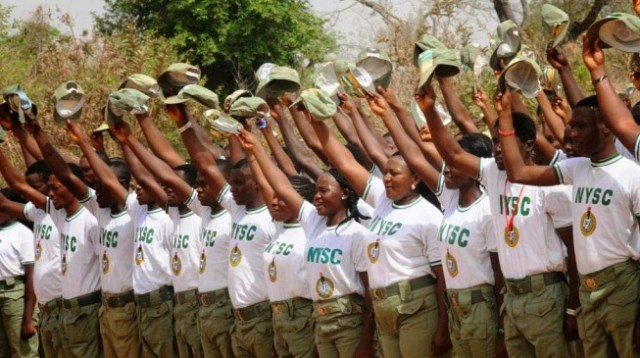
A new NYSC uniform. The current uniform — which corps members have worn since the scheme’s creation in 1973 — will be replaced with a redesigned outfit described as reflecting professionalism and national pride. The new uniform has not yet been publicly revealed.
Graduation ceremony replaces the Passing Out Parade. The traditional Passing Out Parade that has marked the end of service for over five decades will be replaced by a formal graduation ceremony, in line with the scheme’s rebranding as a skills-oriented and productivity-driven institution.
WHAT’S BEING SAID
Government officials were emphatic about the reform’s significance and ambition.
“This is more than a reform of an institution. It is an investment in Nigeria’s greatest asset, our young people. The future of the NYSC begins now, and it is brighter, more relevant and more impactful than ever.” — Ayodele Olawande, Minister of Youth Development
“Mr President, in his usual bold and courageous way, has taken on this holistic reform of the NYSC, which has never been done in the last 53 years of its establishment. NYSC will be civilian-led with clarity of the fact that we need to build the skill set of our youth to enable them function and support the government in building a $1 trillion economy.” — Hadiza Bala Usman, Special Adviser to the President on Policy Coordination
“For over five decades, the NYSC has remained a powerful symbol of national unity and service. Today, we have taken a bold step to preserve that legacy while preparing it for the future.” — Ayodele Olawande, Minister of Youth Development
Public reaction, particularly on social media, has been mixed. Some Nigerians welcomed the emphasis on career development and financial literacy.
“Imagine if nearly 500,000 graduates entering the workforce every year were fully financially literate. That’s a massive economic shift… The ₦77,000 allowance is nice, but let’s be honest, without financial literacy, thousands of corpers will finish NYSC without saving a single kobo.” — Mazi Ndu (@maziNdu4Real), X (formerly Twitter)
“The six weeks could be dedicated to preparing graduates for entry-level professional examinations of bodies such as ICAN, NIPR, NSE and other relevant professional associations.” — gauzu zamani (@asunkybobo), X
“If the additional weeks added are truly invested in entrepreneurship, digital skills, leadership and career development, thousands of young Nigerians could leave camp better equipped for the future. However, the success of the reform will depend on the quality of training and not just the extra weeks.” — Obagbemi Fadumo Yemisi Loveth, Facebook
Critics raised sharper concerns — particularly around infrastructure readiness and the logic of keeping graduates in camp longer.
“No offense but this is why we need young people in places of power. A 25-28 year old who did NYSC between 2022 and now won’t suggest half of these things, and they’re in a better position to suggest reforms. It’s only someone who hasn’t been to camp recently that’ll suggest that people should be there for six weeks.” — Oserin (@DamilohunA), X
“Do they even consider the infrastructural deficits that have long plagued the NYSC scheme? Take Iyana Ipaja camp in Lagos, for example. How can anyone reasonably be expected to remain in such an environment for six weeks? If reforms are truly the goal, addressing these should come first.” — Nigerian social media commenter
“You will finish studying medicine, pharmacy, law, engineering and other professional courses, then you will go to camp for six weeks to learn skill acquisition. Complete waste of time.” — CHAOS RISING (@geraldpeterr), X
“The only reason NYSC has maintained consistency is because the army has been handling it. Hand it over to civilians and watch them bastardise the whole system.” — Social media commentator, X
Policy observers raised the implementation question most directly.
“A reform can sound beautiful in Abuja and still fail inside a crowded camp in Iyana Ipaja, Kubwa, Awgu or Katsina. Policy is not judged by the grammar of its announcement. Policy is judged by what happens when it meets water shortage, bad hostels, weak budgets, insecurity and Nigerian reality.” — TFKay (@TFKay_), policy analyst, X
WHAT’S NEXT
The approved reforms do not take immediate legal effect. Several elements — including the civilian leadership structure — require amendments to the NYSC Act, which was established by Decree No. 24 of 1973. The FEC has directed the Attorney-General of the Federation, working jointly with the Federal Ministry of Youth Development, to commence those amendments. Until the Act is formally amended, the existing legal framework remains in force.
The government has not yet published a timeline for when the new camp structure, the 11 streams, the civilian leadership appointment or the new uniform will take effect. Corps members currently undergoing service will not be affected by the changes; the reforms are expected to apply to incoming batches. No date has been set for when the new system will be operationalised.
Camp upgrade implementation will also depend on state government cooperation, since state governments are expected to provide facilities that meet nationally defined certification standards. The process by which camps will be graded, and what remediation is required for camps that fall below standard, has not yet been detailed publicly.
BOTTOM LINE
The Bottom Line: The federal government has approved changes that, if implemented as described, would represent the most significant overhaul of NYSC since its founding — moving it from a broadly uniform national mobilisation exercise into a differentiated, skills-oriented institution with genuine career logic. The policy architecture is coherent. The harder question, which the announcement in Abuja did not answer, is whether Nigeria’s orientation camps, state government partners and federal budget can support a six-week programme with stream-specific training at the quality level the reform envisions. The gap between what FEC approves and what corps members actually experience has historically been wide. This reform will be judged not in the State House briefing room but in the camps in Katsina, Awgu, Iyana Ipaja and every other orientation site across the country.