





Key points
- Federal Government pledges to sustain Nigeria’s mangrove ecosystem through multi-stakeholder collaboration and climate-resilient initiatives.
- UK PACT-FAO project in Cross River trained 4,827 beneficiaries, with women accounting for 66 per cent of participants.
- Government and development partners seek to leverage blue economy opportunities, carbon markets and community-led conservation efforts.
Main story
The Federal Government has reaffirmed its commitment to protecting Nigeria’s mangrove ecosystem and expanding the country’s blue economy through sustainable environmental management and climate-resilient livelihoods.
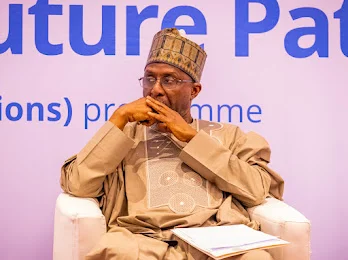
The Minister of Environment, Balarabe Lawal, committed at a workshop marking the final evaluation and closure of the UK PACT-United Nations Food and Agriculture Organisation (FAO) project in Abuja.
The workshop, themed “Sustaining Integrated Mangrove Ecosystem Management in Nigeria: From Achievements to Future Pathways,” marked the conclusion of a project focused on restoring mangrove forests, strengthening social protection systems and improving livelihoods for fisheries and forest-dependent communities in Cross River State.
Lawal described the project as a significant intervention that contributed to climate resilience, biodiversity conservation and sustainable economic opportunities for vulnerable coastal communities.
He stressed that while the project had formally ended, efforts would now shift towards consolidating and scaling up its achievements through stronger community participation, expanded restoration programmes and the promotion of alternative livelihood opportunities.
According to the minister, the government intends to harness emerging opportunities within the blue economy and global carbon markets while strengthening Nigeria’s environmental commitments under international frameworks.
Cross River State Governor, Bassey Otu, represented by Deputy Governor Dr Peter Odey, praised the project’s impact on local communities and the state’s economy.
He noted that despite mounting environmental challenges, including climate change and unsustainable resource exploitation, the initiative had demonstrated that environmental conservation and socio-economic development could be pursued simultaneously.
The governor said the project had facilitated mangrove restoration, capacity building, alternative livelihood support, institutional strengthening and biodiversity conservation efforts across participating communities.
Also speaking, Dr Hussein Gadain, FAO Representative to Nigeria and ECOWAS, described the project as evidence of what could be achieved through collaboration among governments, communities and development partners.
He noted that the initiative had established a strong foundation for sustainability through the registration of 50 cooperatives and alignment with Nigeria’s climate, environmental and social protection priorities.
The issues
Nigeria’s mangrove forests, among the largest in Africa, face increasing threats from deforestation, oil pollution, coastal erosion, overexploitation of natural resources and climate change.
The degradation of these ecosystems threatens biodiversity, fisheries, coastal protection and the livelihoods of millions of people living in coastal communities.
As global attention shifts towards climate adaptation and nature-based solutions, preserving mangrove ecosystems is increasingly viewed as a critical strategy for environmental sustainability, carbon sequestration and economic development through the blue economy.
What’s being said
The Federal Government says sustaining the gains of the project will require stronger community ownership, continued restoration efforts and investments in climate-smart livelihood opportunities.
Cross River State believes the intervention has proven that environmental protection and economic development can coexist when supported by effective policies and partnerships.
FAO maintains that collaboration among governments, communities and development partners remains essential for achieving long-term sustainability and resilience.
What’s next
Stakeholders are expected to focus on scaling up mangrove restoration programmes, strengthening community-based conservation efforts and expanding access to climate-smart agricultural, forestry and fisheries practices.
There are also plans to explore opportunities in carbon markets and the broader blue economy to create sustainable income streams for coastal populations while protecting critical ecosystems.
The lessons and institutional structures developed under the project are expected to serve as a model for future environmental and climate resilience interventions across Nigeria.
Bottom line
The conclusion of the UK PACT-FAO mangrove project marks the end of a successful intervention but also the beginning of a new challenge: ensuring that the gains achieved are sustained and expanded. For Nigeria, safeguarding its mangrove ecosystems is not only an environmental necessity but also an economic opportunity that can drive climate resilience, community development, and growth within the emerging blue economy.