




For years, Nigeria’s solar conversation revolved around one central question: does solar actually work?
Today, that question is fading.
Across homes, small businesses and professional workplaces, the conversation is becoming far more practical. Nigerians are no longer simply trying to test whether solar can provide electricity. Many are now trying to determine what kind of system can realistically support the way they live, work and consume power.
That shift is quietly changing the structure of Nigeria’s solar market.
Instead of treating solar as an experimental alternative, customers are beginning to view electricity as something that must be dependable, predictable and financially manageable over the long term. Rising fuel prices, unstable grid supply and increasing dependence on electricity for productivity are forcing households and businesses to think differently about energy.
For Light House Inverters founder Obafemi Osunniyi, those changes are becoming visible in the kinds of conversations customers now bring to installers.
“People are no longer asking whether solar works,” Osunniyi said during an interview with BizWatch Nigeria. “Now they are trying to understand which solution works best for them.”
According to him, that evolution reflects a market slowly moving away from curiosity and toward calculation.
Solar adoption is increasingly being driven by economic pressure
Osunniyi believes one of the strongest forces pushing Nigerians toward solar today is not environmental consciousness or interest in renewable energy. It is economic survival.
As fuel prices continue to rise and grid reliability worsens, electricity has become directly tied to productivity. For many professionals, business owners and remote workers, unreliable power now translates into lost income, interrupted operations and reduced efficiency.
“You cannot get the best from any productive system if the power sector is bad,” he said. “Energy is the driving force of every productive economy.”
According to him, many customers who previously delayed solar adoption are now reaching a point where continuing to depend on petrol generators no longer feels sustainable financially.
He explained that the market is seeing more people make unusually serious financial decisions in order to secure stable electricity.
One customer, he recalled, abandoned plans to buy a car and instead invested approximately ₦7.6 million into a residential solar system that included an 8kVA inverter, roughly 20 kilowatt-hours of battery storage and more than 20 high-capacity solar panels.
The client worked in the technology sector and depended heavily on electricity to remain productive from home.
“For him, reliable electricity became more important than buying a car,” Osunniyi explained. “He understood that if he had stable power, he could continue working and earning.”
That shift captures a larger reality unfolding within Nigeria’s energy landscape. Solar is no longer being viewed simply as backup power for convenience. Increasingly, it is becoming infrastructure for daily living and economic continuity.
According to Osunniyi, rising transportation costs and the growing popularity of remote work are also strengthening that transition. Many professionals now spend significantly more time at home, increasing their dependence on reliable electricity throughout the day.
“A lot of people are now working remotely or in hybrid systems,” he said. “Once you stay home more, energy becomes even more important.”
Nigerians are becoming more conscious of how they consume electricity
Beyond adoption itself, Osunniyi says another major transformation is happening quietly inside Nigerian households: people are becoming more aware of how they use electricity.
Unlike grid power, solar systems force users to think actively about energy consumption. Customers begin paying attention to what appliances consume the most power, how long batteries can realistically last and how sunlight availability affects daily energy planning.
According to him, many users who previously consumed electricity carelessly become significantly more disciplined after installing solar systems.
“With solar, people begin to understand energy differently,” he said. “They now know they cannot just leave everything running all day without thinking about it.”
That awareness, he explained, resembles the behavioral shift introduced years ago by prepaid electricity meters. Once consumers began paying more directly for each unit of electricity consumed, they became more conscious of waste.
The same mentality is now appearing in solar adoption.
Customers increasingly plan household activities around energy efficiency. Some schedule energy-intensive chores during peak sunlight hours when solar production is strongest. Others become more strategic about air conditioning usage, appliance management and battery conservation.
According to Osunniyi, this gradual shift toward energy discipline is one of the less discussed changes happening inside Nigeria’s renewable energy market.
“It changes behavior,” he said. “People begin managing electricity instead of just consuming it.”
Technology improvements are reshaping what solar systems can do
At the same time, Osunniyi says solar technology itself is evolving rapidly.
While many Nigerians still associate solar systems with basic rooftop panels and small inverters, the equipment entering the market today is becoming far more advanced, more intelligent and more adaptable to different environments.
One major improvement, according to him, is the growing development of anti-shading solar panels. Traditional panels lose efficiency once shadows partially cover the surface. Anti-shading systems, however, are designed to continue generating electricity even when sections of the panel experience reduced sunlight.
That innovation could become particularly useful in dense urban environments where nearby buildings regularly cast shadows across rooftops.
“We are beginning to see technologies that solve problems installers used to struggle with before,” he explained.
Osunniyi also pointed to improvements in inverter systems. Older inverters were often heavy, difficult to install and limited in their monitoring capabilities. Newer systems are becoming lighter, more powerful and more intelligent.
Some modern inverters now allow remote monitoring through digital dashboards, enabling users to track battery performance, power generation and energy consumption from virtually anywhere.
“You can now monitor your inverter remotely and see what the system is producing or consuming,” he said.
Battery technology is also changing quickly.
According to him, the market is gradually moving away from traditional lead-acid batteries toward lithium-based systems with longer life cycles, faster charging capability and improved safety features.
Newer lithium systems also integrate more effectively with inverters through battery management systems that allow equipment to communicate and optimize performance automatically.
At the installation level, Osunniyi says aesthetics and design quality are also becoming more important to customers. Installers are increasingly expected not only to deliver reliable systems but to ensure cleaner layouts, better cable management and more visually appealing installations.
Trust remains one of the industry’s biggest weaknesses
Despite the market’s growth, Osunniyi believes customer trust remains fragile.
According to him, repeated reports of poorly installed systems, inferior products and solar-related fires have damaged confidence across parts of the market.
“I’ve met customers who say they do not want solar panels at all because they are afraid,” he said.
Some customers, he explained, now request only batteries and inverters while avoiding rooftop panels completely due to fears of fire outbreaks.
That distrust has forced many installers to spend increasing amounts of time educating customers before projects even begin.
Osunniyi believes much of the problem comes from low-quality components, poor electrical practices and inexperienced technicians entering the market without adequate technical training.
“The installation quality matters just as much as the equipment,” he said.
He explained that professional installers are now incorporating additional safety measures into projects, including improved cable sizing, protective enclosures and integrated fire protection systems.
At the same time, customers themselves are becoming more selective about brands and equipment quality.
According to Osunniyi, experienced installers increasingly avoid low-grade products in favor of internationally recognized manufacturers with stronger warranties and better long-term reliability.
The market is becoming more ambitious
Perhaps the clearest sign of how far Nigeria’s solar market has evolved can be seen in the type of projects customers are now requesting.
According to Osunniyi, one of his most significant recent installations involved a homeowner seeking a fully off-grid energy system capable of powering an entire residence while also charging an electric vehicle.
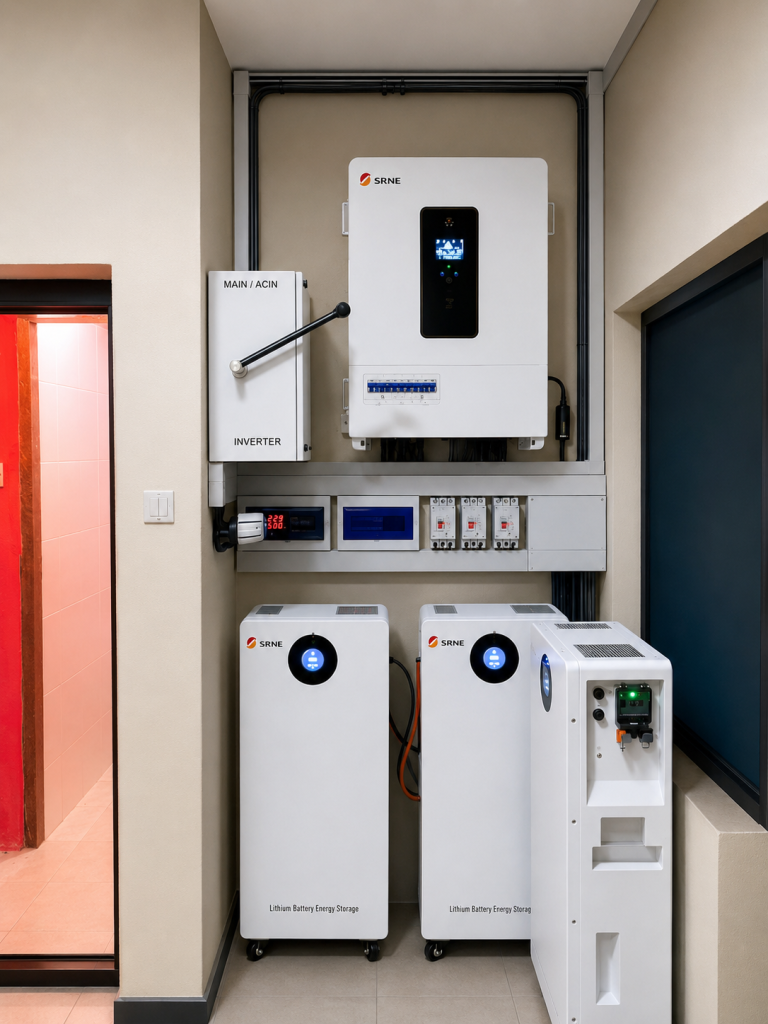
The project included a three-phase 20kW inverter, approximately 48 kilowatt-hours of lithium battery storage and a large solar setup designed to support both household consumption and EV charging.
The total installation cost approached ₦20 million.
Yet according to Osunniyi, the customer viewed the investment as financially worthwhile because it significantly reduced dependence on petrol and public electricity supply.
“He drives the electric vehicle every day and charges it from the solar system,” Osunniyi said. “For him, it has been completely worth it.”
Projects like that, he believes, signal that parts of Nigeria’s solar market are beginning to move beyond simple backup power solutions toward full energy independence.
Nigeria’s solar market is entering a more mature phase
For installers working directly with customers, the biggest shift may not simply be adoption itself, but the sophistication of the conversations now happening around energy.
A few years ago, much of the market focused on convincing people that solar technology was legitimate.
Today, customers are increasingly asking more technical questions about battery chemistry, system sizing, long-term economics, safety standards, remote monitoring and future scalability.
That transition suggests a market slowly becoming more informed, more demanding and more performance-driven.
And while affordability remains a major barrier for many households and businesses, Osunniyi believes worsening grid instability and rising fuel costs will continue pushing more Nigerians toward alternative energy systems.
“The energy need is the biggest factor,” he said. “People need reliable power to live and to work.”
ABOUT OBAFEMI OSUNNIYI
Obafemi Osunniyi is the founder of Light House Inverters, a Nigerian solar installation company focused on residential and commercial energy systems. His work spans solar installations, inverter systems, battery storage and energy optimization projects. Through his installations and customer engagements, Osunniyi has developed experience in system sizing, load management, lithium battery systems and off-grid power solutions, including projects involving electric vehicle charging infrastructure. He frequently speaks on the economics of solar adoption, energy reliability and the evolving realities of Nigeria’s renewable energy market.