Key points
- Femi Fani-Kayode says President Bola Tinubu has approved his redeployment as Nigeria’s Ambassador-Designate to South Africa.
- The former minister stated that he personally requested the redeployment from Germany for “personal and ideological reasons.”
- He denied reports claiming Germany rejected his appointment and threatened legal action against an online publication over alleged defamation.
Main story
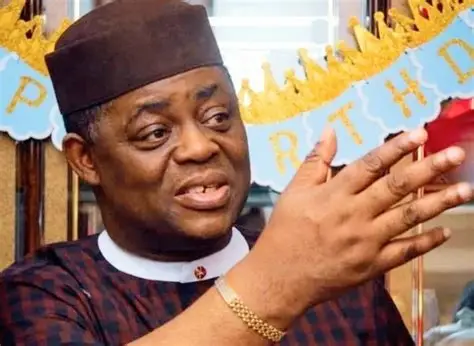
Former Minister of Aviation, Femi Fani-Kayode, has announced that President Bola Ahmed Tinubu has approved his posting as Nigeria’s Ambassador-Designate to South Africa.
Fani-Kayode disclosed that the development followed his earlier posting to Germany, which he said he requested to be changed for personal reasons and due to his preference for serving in South Africa.
According to him, he formally approached former Minister of Foreign Affairs, Yusuf Tuggar, explaining that having spent most of his life in Europe, he preferred a diplomatic assignment in South Africa — a country he described as politically and ideologically aligned with some of his views on African affairs and Pan-Africanism.
Fani-Kayode stated that the request was favourably considered by Tuggar and subsequently approved by President Tinubu.
He also expressed appreciation to Senator Sam Enang, who was originally designated for South Africa but reportedly agreed to a swap that saw him posted to Germany instead.
Addressing reports that Germany rejected his nomination, Fani-Kayode dismissed the claims as false and malicious.
He accused an unnamed online publication of spreading fabricated reports aimed at damaging his reputation, embarrassing the federal government, and undermining President Tinubu’s administration.
The former minister revealed that petitions had been submitted to relevant security agencies and that his legal team had been instructed to commence civil defamation proceedings against those behind the publication.
According to him, the reports falsely interpreted diplomatic communication sent to South Africa on March 13 as evidence of rejection by Germany.
The issues
The controversy highlights the sensitivity surrounding diplomatic appointments and the growing role of online media in shaping political narratives.
The allegations also raise broader concerns about misinformation, verification standards in digital journalism, and the legal implications of publishing unverified claims involving public officials.
Diplomatic postings are often subject to both domestic political scrutiny and international diplomatic procedures, making public communication surrounding such appointments particularly significant.
What’s being said
Fani-Kayode maintained that his redeployment to South Africa was entirely voluntary and not the result of any diplomatic rejection.
“I once again confirm that this was my choice and that Germany never rejected me,” he stated.
He further challenged those behind the reports to provide documentary evidence supporting their claims.
The former minister also urged media organisations to exercise professionalism and caution in reporting sensitive diplomatic matters.
What’s next
Fani-Kayode is expected to proceed with formal diplomatic processes related to his appointment as Ambassador-Designate to South Africa.
Legal action against the online publication accused of disseminating the reports may also advance in the coming weeks.
Observers will meanwhile watch developments surrounding Nigeria’s diplomatic appointments and bilateral relations with both South Africa and Germany.
Bottom line
Femi Fani-Kayode says his appointment as Nigeria’s Ambassador-Designate to South Africa was based on personal preference and presidential approval, firmly rejecting reports that Germany declined his nomination while warning against what he described as malicious and defamatory journalism.