






By Boluwatife Oshadiya | August 31, 2026
Key Points
- Nigerian equities ended a punishing 11-session losing run with a 0.81% weekly gain, driven by FTSE Russell’s confirmation that Nigeria will return to Frontier Market status on September 21, 2026
- University Press Plc led all gainers with an 18.75% surge to N5.70, while Seplat Energy’s 10% rise carried significant market-capitalisation weight and powered the Oil & Gas index to a 4.54% weekly gain
- Market capitalisation rose by 0.84% to close at N155.826 trillion, even as overall trading activity slowed due to the Eid el Maulud public holiday on Tuesday, August 25
Main Story
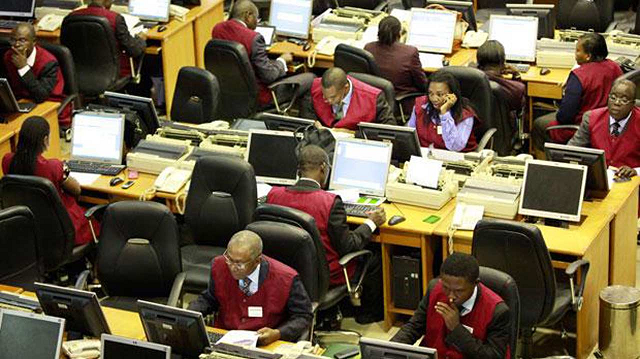
After 11 consecutive sessions of losses that weighed heavily on investor sentiment across August, Nigerian equities staged a meaningful rebound in the four-day trading week ended Friday, August 28, 2026. The benchmark NGX All-Share Index (ASI) gained 1,947.31 points — or 0.81% — to close at 241,298.47 points, up from 239,351.16 points the previous week.
The catalyst that unlocked the rally was unmistakable. On Thursday, August 27, FTSE Russell issued a market notice confirming Nigeria’s reclassification from “Unclassified” to “Frontier Market” status, effective from the open of trading on Monday, September 21, 2026. The announcement triggered renewed buying interest in oil & gas, banking and value stocks, reversing weeks of selling pressure in a session. By the close of trading on Friday, market capitalisation had appreciated 0.84% to N155.826 trillion. The year-to-date return held firm at +55.06%, while the quarter-to-date return stood at +5.18%.
Despite the relief rally, the market ended August still in negative territory for the month — down 1.62%. And the week’s trading was shortened by the Eid el Maulud public holiday on Tuesday, August 25, which compressed activity into just four sessions.
University Press Plc emerged as the week’s standout performer, surging 18.75% to close at N5.70 from N4.80. At the opposite end of the board, International Energy Insurance Plc led all losers, tumbling 26.61% following a major share listing that dramatically expanded its share capital.
The full picture of the week’s ten best-performing stocks — and the context behind each move — is set out below.
The Issues
Why this week matters beyond the numbers
The rebound was not merely a technical correction after a prolonged losing run. Three structural developments shaped the week’s trading and carry implications well beyond the August close.
First, the FTSE Russell reclassification ends a nearly three-year exclusion that began in September 2023, when Nigeria was removed from the Frontier Market index over persistent difficulties with foreign exchange execution and capital repatriation. The return follows sustained improvements in Nigeria’s market infrastructure — particularly the shift to a T+1 settlement cycle from June 1, 2026, which made Nigeria the first African market to settle securities one business day after the trade date. However, the T+1 transition initially raised fresh concerns from international institutional investors about pre-funding requirements. An extended round of engagements between NGX Group, the Securities and Exchange Commission (SEC), and global custodians ultimately satisfied FTSE Russell that no material operational or funding issues had emerged.
Second, S&P Dow Jones Indices has separately placed Nigeria on its Watch List for potential reclassification to Frontier Market status as part of its 2027 Country Classification Annual Review — signalling that international recognition of the market’s progress is not limited to FTSE Russell alone.
Third, the week’s breadth data revealed an improving but still uneven market. Only 24 equities appreciated versus 55 that declined, even as the headline index posted a positive weekly return. The rally was concentrated in large-cap names — particularly banking and energy — rather than broad-based participation across all sectors. Investors should note that a positive index return can mask significant stock-specific losses, as International Energy Insurance’s 26.61% collapse demonstrates.
The 10 Best-Performing Stocks: Week Ended August 28, 2026
1. University Press Plc — Up 18.75% to N5.70
University Press delivered the week’s strongest percentage gain, closing at N5.70 from an opening position of N4.80 — an 18.75% advance. For a company whose core business is educational publishing, the move stood out against a market backdrop largely dominated by financial services and energy narratives. The stock’s surge made it the week’s standout regardless of sector, and it held that position on the final trading day of Friday, August 28, when it gained a further 8.57% to close at N5.70. There was no significant corporate action disclosed by the company during the week to explain the sharp move, suggesting it was driven by speculative buying and position-building in a thin trading environment.
2. FirstHoldCo — Up 11.58% to N145.00
First HoldCo Plc, the holding company for First Bank of Nigeria, rose 11.58% to close at N145.00 during the week — making it the second-best performer and one of the most significant contributors by value to the week’s rally given its market capitalisation. FirstHoldCo was among the top three equities by traded volume for the week, with its shares accounting for a significant share of the 793.104 million combined volume posted by the week’s three most active stocks. The advance reinforced the banking sector’s broader recovery, with the NGX Banking Index gaining 2.89% for the week and standing at +67.89% year-to-date — its position as one of the market’s strongest-performing sector indices for the year.
3. Seplat Energy — Up 10.00% to N12,320.60
Seplat Energy’s 10% gain — the maximum single-week move permitted under NGX rules — carried a weight that went far beyond its percentage. As one of the most valuable stocks on the exchange, Seplat’s move added N1,120 per share and was a primary driver of the NGX Oil & Gas Index’s 4.54% weekly advance, which pushed the index to 5,185.35 points and kept it as the strongest-performing sector index year-to-date at +94.19%. The gain was consistent with strong underlying fundamentals: Seplat’s first-half 2026 results showed a 30% revenue increase and strong cash flow, with production recovering after Q1 disruptions. The stock has gained approximately 95% year-to-date, and Citi had previously raised its price target to 665 GBp with a Buy rating on the London-listed shares.
4. Red Star Express — Up 9.86% to N16.15
Red Star Express, the logistics and courier services company, advanced 9.86% to close at N16.15. The stock’s rise placed it fourth on the week’s gainers list. Red Star operates in the Services sector, which itself ranked second in the week’s trading activity with 148.226 million shares worth N7.252 billion traded in 10,638 deals. While no specific corporate action was disclosed for the company during the week, the stock benefited from increased investor interest in value plays — a pattern that emerged as the broader FTSE-driven sentiment improvement encouraged rotation into less-covered names.
5. Transcorp Hotels — Up 9.76% to N265.50
Transcorp Hotels continued to attract investor attention, posting a 9.76% gain to close at N265.50 from N241.90. The hospitality group’s stock has been one of the exchange’s more watched names in 2026, and Friday’s session alone saw it rise sharply, confirming that the week’s buying interest was sustained rather than one-day speculation. Transcorp Hotels sits within the consumer-adjacent space that investors have increasingly viewed as a domestic growth play, riding on improvements in corporate travel and hospitality demand.
6. Access Holdings — Up 9.26% to N29.50
Access Holdings, the parent company of Access Bank, gained 9.26% to close at N29.50 — reinforcing the banking sector’s status as one of the week’s primary recovery engines. The stock’s advance, alongside FirstHoldCo’s, underscored a theme that has dominated the NGX in 2026: banking sector earnings strength. Nigerian banks have been reporting record profits driven by elevated interest rates and foreign exchange gains, with sector-wide performance supporting the NGX Banking Index’s near-68% year-to-date advance. Access Holdings’ gain was also consistent with the broader pattern of buying in large, liquid names that index-tracking funds would need to hold as Nigeria’s Frontier Market reclassification nears.
7. Cornerstone Insurance — Up 9.18% to N5.35
Cornerstone Insurance’s 9.18% advance to N5.35 was notable precisely because it came in the same week that the insurance sector as a whole declined. The NGX Insurance Index fell 0.63% for the week and remains the market’s worst-performing major sector index year-to-date at -9.23%. Cornerstone’s rise against that sector backdrop highlights the sharp divergence between individual insurance stocks. While Cornerstone gained, International Energy Insurance fell 26.61% and Veritas Kapital Assurance dropped 10.77% — demonstrating that sector-level data can obscure dramatically different outcomes for individual names. The insurance sector’s ongoing weakness is partly structural, reflecting the difficult underwriting environment and the overhang from recent share capital expansions.
8. UPDC — Up 5.97% to N3.55
UPDC Plc, the real estate arm of UAC of Nigeria, gained 5.97% to close at N3.55. The stock’s inclusion among the week’s top performers reflects continued interest in real estate and property plays on the exchange, a sector that has attracted renewed attention as inflationary pressures have moderated somewhat in 2026. Nigeria’s headline inflation declined to 15.43% at end-July 2026, down sharply from 24.94% a year earlier — a macro backdrop that tends to support property valuations and encourage longer-duration asset holdings.
9. Omatek Ventures — Up 5.63% to N1.50
Omatek Ventures, the Nigerian computer hardware and technology company, rose 5.63% to close at N1.50. Omatek’s move placed it in the top ten for the week and was reflected in Friday’s session data, which showed the stock gaining 9.49% on the final trading day alone. While Omatek is a smaller, lower-priced stock, its price-percentage move contributed to the week’s broader positive breadth picture. The ICT sector ranked third for the week in overall trading activity, with 117.982 million shares worth N8.635 billion changing hands in 21,639 deals.
10. Abbey Mortgage Bank — Up 5.59% to N8.50
Abbey Mortgage Bank rounded out the week’s top ten performers with a 5.59% gain to close at N8.50. The mortgage lender’s advance was consistent with broader financial services buying — the Financial Services sector dominated the week’s activity, accounting for 78.87% of total volume and 58.08% of total value. Abbey’s gain was modest by comparison with the week’s headline performers but reflected a broad sweep of buying activity across financial names of varying sizes as the FTSE reclassification news improved sentiment.
What’s Being Said
“This is an important moment for Nigeria’s capital market. But the real significance of returning to Frontier Market status is the opportunity it creates for the next phase of our market’s development. We have to turn greater international visibility into broader participation, deeper liquidity and more capital for Nigerian businesses,” said Temi Popoola, Group Managing Director/Chief Executive Officer, NGX Group.
“We see this as a milestone, not a destination. Our ambition remains to build a capital market that is deep, liquid and competitive enough to earn Emerging Market status in the near term,” said Taiwo Oyedele, Minister of Finance and Coordinating Minister of the Economy, in a statement issued on Friday, August 28, 2026.
FTSE Russell confirmed, in the same market notice, that “no material settlement, operational or funding issues had been observed since the implementation of the T+1 settlement cycle” — a finding that cleared the final hurdle for the reclassification to proceed on schedule.
What’s Next
- September 2, 2026: FTSE will begin publishing the annual indicative review files for the FTSE Frontier Index Series for September 2026, which will formally reflect Nigeria’s reclassification and signal to index-tracking funds how much Nigerian exposure they must build.
- September 21, 2026: Nigeria’s reclassification from “Unclassified” to “Frontier Market” status takes effect at the open of trading — the most consequential single date for Nigerian equities in the current market cycle, as index-tracking funds benchmarked to the FTSE Frontier Index begin to adjust their portfolios.
- October 2026: The Nigerian equities market will face a critical test of whether the FTSE-driven sentiment improvement translates into sustained foreign capital inflows or remains a domestic-investor-led rally.
Bottom Line
The Bottom Line: Nigeria’s return to FTSE Frontier Market status has given the NGX its most significant sentiment catalyst of 2026, snapping an 11-session losing run and concentrating buying into the large-cap banking and energy names most likely to attract index-tracking capital. But the week’s data — 55 decliners versus 24 gainers, a Consumer Goods index still near flat for the year, and an insurance sector down nearly 10% — is a reminder that reclassification is a floor, not a ceiling. The real test of this moment is whether September 21 becomes the starting point for structural foreign participation, or merely a brief reprieve in a market that still needs deeper liquidity and broader institutional engagement to sustain the gains it has made.