Key Points
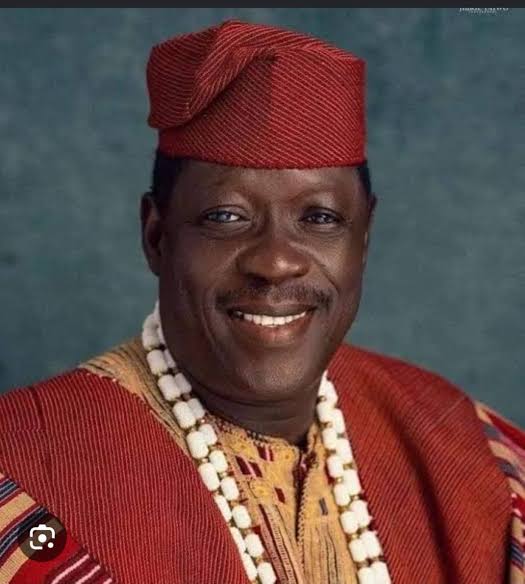
- Veteran Nollywood actor Taiwo Hassan, popularly known as Ogogo, died at 66 after battling stage-four cancer.
- His career spanned more than four decades and included over 100 film productions.
- Ogogo rose from working as a Lagos mechanic to becoming one of the most recognisable figures in Yoruba cinema.
- His career extended beyond acting into writing and film production.
- His breakthrough came with Owo Blow in 1995, which earned him the Best Actor of the Year award at the 1997 THEMA Awards.
- Other notable films in his career include Agbelebu, Danfo Driver, Ekun-Ayo, Okan Soso, Omin, Elewon and Omo Ghetto.
- His role as Alaafin Ademuyiwa in Aníkúlápó introduced him to a wider international audience.
- He reprised the role in Aníkúlápó: Rise of the Spectre in 2024, one of his final major productions.
- His career reflects the evolution of Yoruba cinema from the home-video era to modern streaming productions.
- Ogogo leaves behind a lasting legacy in Nigerian and African cinema.
Main Story
Veteran Nollywood actor Taiwo Hassan, popularly known as Ogogo, died on Sunday, August 23, 2026, at the age of 66 after a prolonged battle with stage-four cancer, bringing to an end a career that spanned more than four decades and produced over 100 films. His family confirmed the news in a statement shared on social media, announcing his burial in accordance with Islamic rites at the Pavilion in Ilaro, Ogun State, on Monday, August 24.
Born on October 31, 1959, in Ilaro, Ogun State, Hassan came to acting not through formal training but through sheer determination. He completed primary education at Christ Church School in Ilaro, attended Gazikia College in Lagos for secondary education — though financial difficulties prevented him from finishing — and later studied at a technical college before spending roughly 13 years working as an automobile mechanic at a water corporation. He began his acting career in 1981, and within a little over a decade had become one of the most recognisable faces in Yoruba cinema.
His death came only days after his daughters, Kira and Lima Taiwo, had made an emotional public appeal on Instagram, revealing that doctors had told the family they could no longer administer chemotherapy. The disclosure prompted a wave of donations and support from politicians, colleagues, and fans, but the interventions were not enough to reverse his condition.
From those who knew him on set to those who grew up watching him on screen, the tributes that followed his death were a testament to both the scale of his influence and the depth of his character. As his body was laid to rest in his hometown — in the presence of Jide Kosoko, Dele Odule, Yinka Quadri, Mr Latin, Olaiya Igwe, Femi Adebayo, and Ireti Osayemi, among others — an industry paused to reflect on what his career had meant.
From his 1995 breakthrough in Owo Blow to his role in the 2024 Netflix sequel Aníkúlápó: Rise of the Spectre, here are the 10 films that defined the legendary journey of Taiwo Hassan Ogogo.
The Films
1. Owo Blow (1995)
If there is a single film that turned Taiwo Hassan into a household name, it is Owo Blow. Directed by Tade Ogidan, the film cast him as Wole Owolabi in a story that explored corruption and societal vices with unflinching urgency. The performance was a revelation — demonstrating not merely that Ogogo could act, but that he could carry a film of serious moral weight on his shoulders. The industry agreed. At the 1997 THEMA Awards, he was named Best Actor of the Year for the role, a recognition that cemented his status almost overnight and announced the arrival of a talent the Yoruba film industry would not soon forget.
2. Agbelebu (1995)
Released the same year as Owo Blow, Agbelebu was part of the remarkable run of films that defined the earliest, most romantic phase of Ogogo’s career. At this moment, he was regarded as one of Yoruba cinema’s most charismatic leading men — a screen presence that combined physical intensity with emotional depth. Agbelebu belongs to that first wave of films in which audiences discovered what Ogogo could do and found themselves unable to look away.
3. Danfo Driver (1995)
In Danfo Driver, Ogogo stepped into the role of a street-smart Lagos bus driver and made it entirely his own. The film blended comedy with sharp, precise characterisation in a way that revealed an important dimension of his ability — he was not simply a dramatic actor, he was a performer who understood texture and timing. The role demonstrated that Ogogo could be funny without being cheap, and human without being sentimental. It became one of his early trademarks, and the character left an impression that lingered long after the film ended.
4. Ekun-Ayo (1996)
Ekun-Ayo was not simply another film on Ogogo’s growing résumé — it was an early declaration of creative ambition. Beyond acting, he wrote and produced the film, marking the beginning of his multi-hyphenate career as a director, screenwriter and producer. At a time when many actors were content to perform, Ogogo was already thinking about the industry as a whole and about the kind of stories he wanted to tell and shape. Ekun-Ayo is the clearest early evidence that his influence was always going to extend beyond the screen.
5. Okan Soso (2004)
Nearly a decade into a career that showed no signs of slowing, Ogogo delivered Okan Soso, a Yoruba classic co-starring Bukky Wright, Kola Oyewo, and Yemi Solade. The film remains one of the titles fans most frequently revisit when celebrating his body of work. By this point in his career, he had evolved from the charismatic romantic lead of his early years into something more complex — an actor whose presence carried history as well as drama, and whose performances had developed the kind of layered authority that only experience can produce.
6. Omin (2008)
Playing Adesina in Omin, Ogogo continued a gradual but unmistakable career shift. The romantic leads and street-level characters of the 1990s were giving way to more authoritative, father-figure roles — the kind of parts that require not just performance but presence. Omin is a landmark in that transition, a film in which his maturity as an actor was as visible as his talent. It reflected an industry that had grown alongside him, and a filmmaker who understood exactly what Ogogo had become.
7. Elewon (2009)
In Elewon, Ogogo starred as Yomi and also helped produce the film — a pairing that had by this point become characteristic of how he operated. The role and the production credit together tell the same story: this was an actor who had long since moved beyond simply showing up on set. He was shaping the material, investing in the process, and ensuring that the work he was associated with reflected not just what he could do in front of a camera but what he believed cinema should be. Elewon is one of several titles from this period that mark the full maturity of that vision.
8. Omo Ghetto (2010)
Omo Ghetto, directed by Funke Akindele, gave Ogogo a different kind of visibility. Playing the D.P.O., he appeared in a contemporary Nollywood production that introduced him to a newer, more mainstream audience far beyond his traditional Yoruba-language fan base. It was a reminder that great performance is not confined by genre or language — that audiences who had never seen Owo Blow or Okan Soso could encounter Ogogo here and understand immediately why he mattered. The film expanded his reach without diluting what made him distinctive.
9. Aníkúlápó (2022)
Kunle Afolayan’s Netflix epic Aníkúlápó was many things at once: a major artistic statement, a commercial triumph, and a global introduction to Yoruba cinema for audiences who had never engaged with it before. Ogogo’s role as Alaafin Ademuyiwa placed him at the centre of that achievement, acting alongside Kunle Remi, Bimbo Ademoye, and Sola Sobowale in a film that received 16 nominations at the 2023 Africa Magic Viewers Choice Awards. His performance earned him a Best Supporting Actor nomination — not a consolation recognition, but a genuinely competitive one that reflected how fully he inhabited the role. For a new generation watching on Netflix, Aníkúlápó was the film that made them go looking for everything else he had ever done.
10. Aníkúlápó: Rise of the Spectre (2024)
Ogogo reprised his role as Alaafin Ademuyiwa in the sequel series, and in doing so marked one of the final major chapters of a career that had by then spanned more than 40 years. There is something fitting about the fact that his last significant role came not in a twilight performance but in a continuation — in a story that had not yet finished, much like the impact of the man himself. Rise of the Spectre was not a valediction. It was simply another chapter, and the fact that there would be no chapter after it is, perhaps, the most honest measure of what has been lost.
The Issues
Ogogo’s career reflects the evolution of Yoruba cinema from the traditional home-video era to contemporary theatrical and streaming productions, His early roles established him among the leading actors of the 1990s, while his later performances demonstrated his ability to transition into mature and character-driven roles.
His career also illustrates the increasingly broad responsibilities undertaken by Nigerian filmmakers, with Ogogo developing experience in acting, writing and producing, For an actor whose career began decades before streaming platforms became a major force in African entertainment, his appearance in Aníkúlápó represented a significant bridge between different generations of Nigerian cinema.
What’s Being Said
Tributes following Ogogo’s death have focused on his longevity, talent and contribution to Yoruba-language cinema, Colleagues and fans have continued to remember him not only for individual performances but also for his broader contribution to an industry that has produced generations of Nigerian actors, filmmakers and producers, His extensive body of work means that audiences can continue to encounter his performances through older Yoruba productions as well as newer titles available through digital and streaming platforms.
What’s Next
Following his death, attention is likely to shift towards preserving and celebrating Ogogo’s extensive film legacy, His more than four decades in the industry produced a body of work spanning several generations of Nigerian filmmaking, As older Yoruba productions continue to circulate through digital platforms and streaming services, younger audiences will have opportunities to discover the performances that established Ogogo as a major figure in Nigerian cinema, His career will also continue to form part of the broader history of veteran actors who helped build the foundations of modern Nollywood.
Bottom Line
Taiwo Hassan’s career was defined by longevity, versatility and an ability to remain relevant as Nigerian cinema changed, From Owo Blow and Danfo Driver in the 1990s to Aníkúlápó and Aníkúlápó: Rise of the Spectre in the streaming era, Ogogo successfully navigated different generations of Nigerian filmmaking.
His journey from a Lagos mechanic to one of Yoruba cinema’s most recognisable actors is part of the larger story of Nollywood itself, The films he left behind will continue to preserve the legacy of a performer who spent more than four decades entertaining Nigerian audiences.