






Hello, my fellow Fan-Blade Forensic Auditors, Sweat-Towel Strategists, and Hydration-Level Accountants. Welcome back to our weekly sanctuary! Today is Thursday, October 29, 2026. If you woke up this week feeling like someone accidentally left the oven door of the universe wide open over your neighborhood—or if you spent last night standing in front of an open refrigerator for five solid minutes just to remind your body what cold air feels like—pull up an ergonomic plastic chair. You are in the safest, most sweat-free room on the internet.
Forget workplace debates, grid blinks, or badagry synthetic juice panics; today, we are auditing the single most inescapable, shirt-soaking, and universally uncomfortable phenomenon dominating our group chats, weather apps, and daily commutes: The Great El Niño Heatwave and the Physics of Nigerian Weather Economics!
Earlier this week, meteorologists and climate agencies released fresh warnings about extended global temperature spikes driven by the ongoing El Niño cycle. But long before the official press releases hit the news, everyday urban Nigerians had already diagnosed the situation with a simple, three-word consensus: “The heat is heating!”
Let’s break down the explicit details, hilarious street realities, and survival physics behind our daily battle with the weather.
If you listen to news anchors or academic geographers talk about El Niño, they will start bombarding you with terms like “sea surface temperature anomalies in the central Pacific Ocean” and “atmospheric circulation shifts.”
Let’s translate that into street-level English for a 15-year-old student or a busy executive:
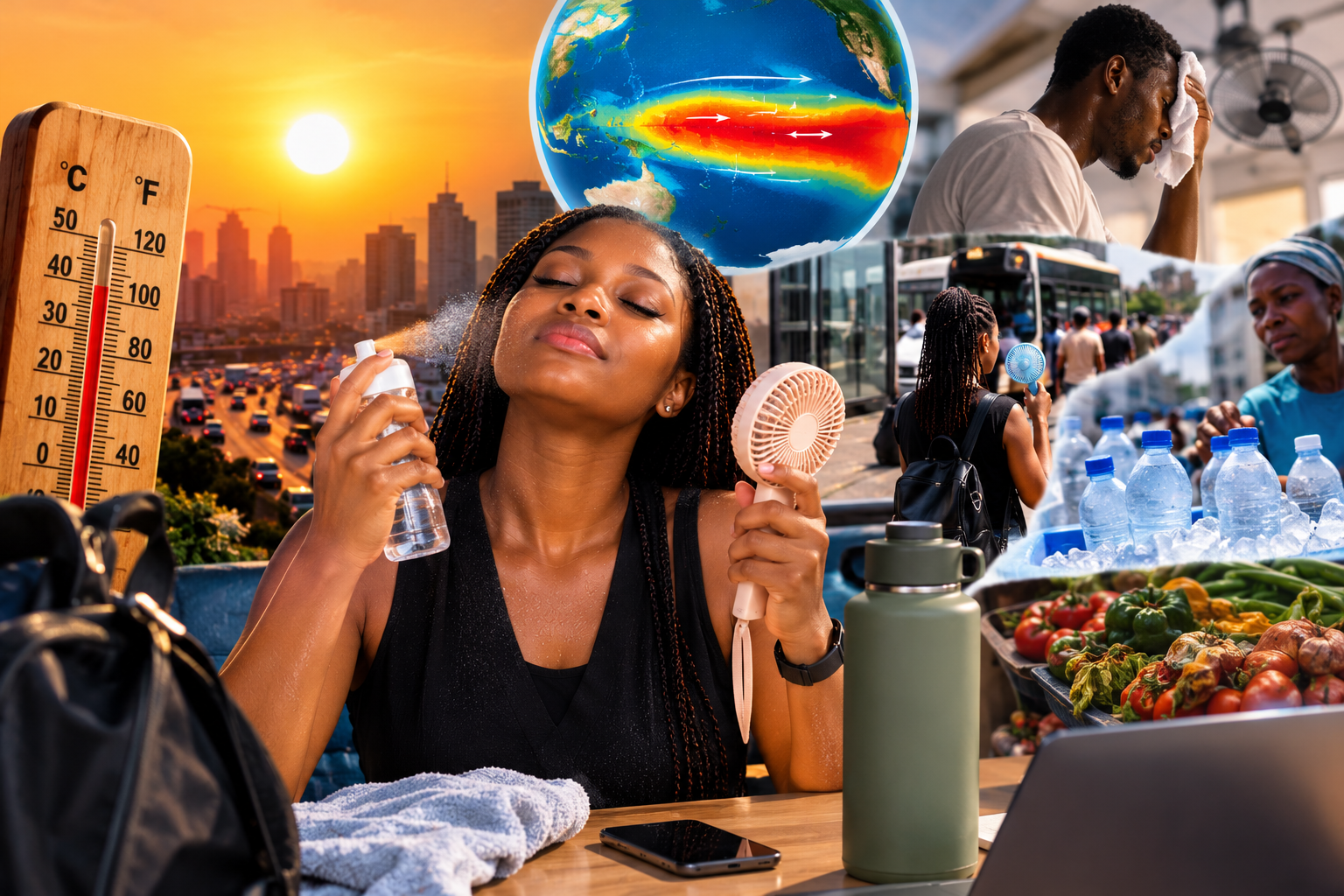
Imagine the Pacific Ocean is a giant pot of water sitting on a natural stove. Normally, strong trade winds push the warmest water over toward Asia and Australia, keeping things relatively balanced. But during an El Niño event, those winds weaken. The warm water sloshes back toward the Americas, dumping massive heat energy into the atmosphere.
Think of it as Earth’s home air conditioner breaking down, forcing the entire planet to rely on a noisy ceiling fan that is only blowing warm air back into your face!
Because weather systems across the globe are interconnected, this ocean warming trickles down to West Africa. The result? Unpredictable rainfall patterns, prolonged dry spells, and heatwaves intense enough to make your smartphone throw up a “Device Overheating” warning just from sitting on your dashboard!
To understand how urban citizens cope when atmospheric temperatures rise, you only have to look at the daily adjustments happening across our homes and offices:
The “Double Bath” Strategy: Taking a shower at 7:00 AM used to guarantee freshness until at least lunch. In this El Niño season, by the time you walk from your front door to the estate gate to catch a bus, your body has already reset to default factory sweat mode.
The Ceiling Fan Betrayal: Fans are supposed to be our trusted friends. But when room temperatures cross a certain threshold, turning on a high-speed ceiling fan stops cooling the room and starts circulating pure, roasted hot air—essentially turning your bedroom into a warm convection oven!
The Power-Bank Fan Craze: Mini rechargeable USB fans have officially surpassed luxury watches as the ultimate street status symbol. If you step onto a public bus or sit in a waiting room with a fully charged handheld fan, people look at you like you hold the keys to the central bank!
Behind the hilarious social media memes lies a serious economic impact that touches everyone’s wallet:
Food Preservation Crises: Heat accelerates food spoilage. When high temperatures collide with erratic power supply, market women lose fresh produce faster, and household soup pots turn sour overnight if not re-boiled immediately.
The Cold Water Surge Index: Pure water hawkers and sachet water distributors become real-time commodities traders. The price of “ice-cold water” vs. “ordinary cold water” suddenly carries a market premium because keeping ice solid in 35°C weather costs real energy.
Workplace Productivity Drain: High ambient heat causes heat fatigue, which dampens cognitive focus and increases irritability. That corporate argument in your 2:00 PM strategy meeting might not actually be about company KPIs—it might just be that the office AC compressor gave up 30 minutes ago!
Lessons to Carry into the Weekend
Hydrate Intentionally (Not Just When Thirsty): Don’t wait until your mouth feels like sandpaper to drink water. Keep a refillable bottle close by, and prioritize plain water over sugary soda drinks that end up dehydrating you faster.
Protect Your Electronics & Vehicles: High heat ruins lithium-ion phone batteries and increases car tire pressure. Avoid leaving phones, laptops, or pressurized cans in direct sunlight inside parked vehicles.
Practice Heat Empathy: Recognize that high temperatures make everyone a little more stressed and short-tempered. A little extra patience with customer service reps, drivers, and colleagues goes a long way when the weather is testy.
Stay cool out there, keep your water bottles filled, seek shade whenever possible, and don’t let the heatwave humble your shine. See you next Thursday!