Key Points
- Students of Yaba College of Technology unveiled an electric tricycle and AI-powered food delivery platform.
- The electric tricycle reduces fuel use and promotes clean energy.
- The AI platform improves food delivery speed and customer experience.
- Projects aim to solve Nigeria’s transport, energy, and logistics challenges.
- School leadership says innovation is key to economic growth.
Main Story
Students of Yaba College of Technology have developed two innovative solutions aimed at tackling some of Nigeria’s biggest everyday challenges transport, energy costs, and food delivery inefficiencies.
The projects were presented during an innovation showcase held at the institution, where students displayed practical solutions designed to address real-life problems in society.
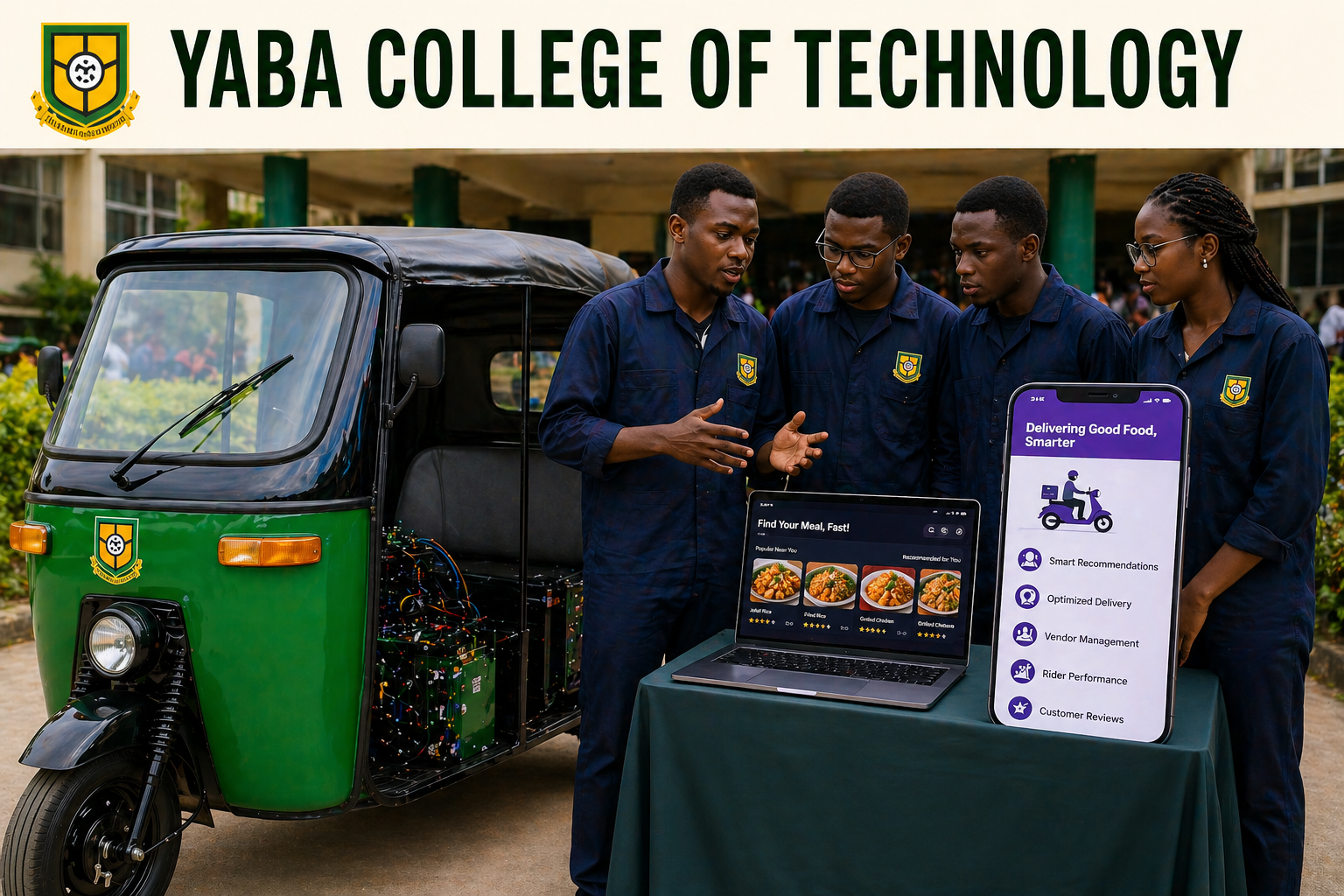
One of the standout innovations was an electric tricycle built by Higher National Diploma Mechanical Engineering students, led by Chukwuma Chisom. The project was named the overall best at the event.
According to the school’s Deputy Registrar, Adekunle Adams, the tricycle was created by converting a petrol-powered TVS tricycle into a fully electric vehicle.
The goal is simple reduce dependence on fuel, cut transportation costs, and promote cleaner, eco-friendly mobility.
The students replaced the traditional engine with a 72-volt, 4-kilowatt electric motor, along with a smart controller and lithium battery system. This upgrade not only improves energy efficiency but also reduces noise and lowers maintenance needs.
The current prototype can travel about 45 kilometres on a single charge. However, the team plans to develop a commercial version that can cover up to 200 kilometres daily, making it suitable for public transport and delivery services within cities.
Another major highlight was an AI-powered food delivery platform developed by student innovator Uba Mathew.
The platform uses artificial intelligence to recommend meals to users, improve delivery routes, and help vendors manage orders more efficiently.
It also includes features such as customer reviews, demand prediction, and performance tracking for delivery riders. These tools aim to reduce delays, improve service quality, and create a better experience for both customers and vendors.
The Issues
Nigeria continues to face serious challenges in transportation and logistics. Rising fuel costs have made daily commuting expensive, while inefficient delivery systems often lead to delays and poor customer satisfaction.
Many small businesses, especially food vendors, struggle with visibility and order management, limiting their ability to grow.
At the same time, there is a growing need for cleaner energy solutions to reduce environmental impact and dependence on fossil fuels.
These challenges highlight the importance of practical innovations like those developed by the YABATECH students.
What’s Being Said
Adekunle Adams said the projects show the institution’s commitment to hands on learning and real-world problem-solving.
He noted that students are encouraged to go beyond theory and create solutions that can make a difference in society.
The Rector of the institution, Ibraheem Abdul, also praised the students and urged young people to embrace creativity and technology.
He stressed that innovation is essential for economic growth and encouraged students to align their ideas with both national needs and global trends.
What’s Next
The next step for these projects is further development and possible commercialisation.
The electric tricycle could be introduced into public transport systems, offering a cheaper and cleaner alternative for commuters.
Meanwhile, the AI food delivery platform may be expanded to support more vendors and improve logistics in urban areas.
With the right support, both innovations have the potential to scale and create real impact.
Bottom Line
The work done by YABATECH students shows how local innovation can address everyday challenges.
By combining technology with practical thinking, these young innovators are not just solving problems they are helping shape the future of transport and digital services in Nigeria.