



KEY POINTS
- Minister of Works David Umahi conducted an inspection of ongoing federal road projects in Afikpo, Ebonyi State, emphasizing their role in President Tinubu’s broader national transport agenda.
- A key section of the project, valued at ₦454 billion, spans 125.5 kilometers and serves as a critical link to the Lagos–Calabar Coastal Highway.
- The Federal Government has already released 30% of the funding for this section, which utilizes an Engineering, Procurement, Construction, and Finance (EPC+F) model.
- Construction has transitioned entirely to reinforced concrete pavement, a technology the Minister guarantees will extend road lifespans to 100 years.
MAIN STORY
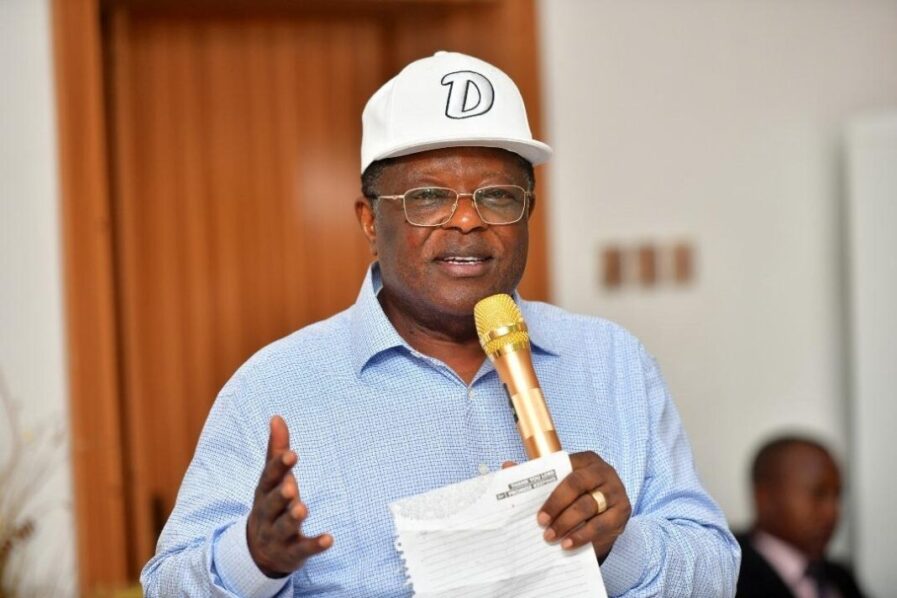
The Federal Government’s ambition to create a seamless transport loop across Nigeria reached a milestone this Saturday as Minister of Works David Umahi inspected the Ebonyi axis of the trans-regional highway system.
The road, which begins in Calabar, traverses Ndibe Beach, Afikpo, Amasiri, and Onueke, is designed to eventually link agricultural and industrial zones in the Southeast directly to Abuja and the Lagos–Calabar Coastal Highway.
A focal point of the inspection was the 1.5-kilometer bridge at Ndibe Beach. The Minister expressed satisfaction with the use of a “sophisticated launching system,” where cranes move from pier to pier to position beams, significantly accelerating the construction of the superstructure. This bridge is expected to be a game-changer for riverine communities, providing an easy route into Cross River State and fostering regional trade.
Umahi reaffirmed the administration’s “Concrete Revolution” policy. By moving away from asphalt and adopting concrete pavement, the Ministry aims to eliminate the cycle of frequent road failures. “Use of concrete for road construction has come to stay,” Umahi stated, noting that the material’s durability is essential for the heavy-duty traffic expected on these major economic corridors.
WHAT’S BEING SAID
- “This road project will connect to Lagos–Calabar Coastal Highway, creating a continuous route that will significantly improve transportation,” stated Sen. David Umahi, Minister of Works.
- On the choice of materials: “We have fully adopted concrete pavement… the material is more durable and can last up to 100 years.”
- Regarding the Ndibe Beach bridge: “The bridge, when completed, will bring easy transportation route for riverine communities connecting easily to Cross River State.”
WHAT’S NEXT
- Dual Carriageway Procurement: While the current phase focuses on the first carriageway, the Ministry is preparing to procure the second carriageway to complete the dualization of the corridor.
- Onueke Concrete Plant: Contractors have been directed to establish an additional concrete production plant at Onueke to create multiple construction fronts and speed up delivery.
- 36-Month Timeline: The official completion period for Section 1 remains 36 months, though the Minister hinted that the current pace could see the project finished earlier.
BOTTOM LINE
The Bottom Line is that the Ebonyi road projects are not isolated local works but are the “connective tissue” of a 465-kilometer legacy corridor. By prioritizing concrete technology and securing 30% mobilization, the Tinubu administration is attempting to build a high-durability transport network that links the deep-sea ports of the south to the political and commercial heart of the north.