






KEY POINTS
- President Bola Tinubu has submitted a revised ₦65.18 trillion 2026 budget to the House of Representatives, down from the initially approved ₦68.32 trillion.
- Projected federal revenue stands at ₦33.72 trillion, while the fiscal deficit remains ₦31.46 trillion, including project-tied loans.
- The government has retained its planned new borrowing of ₦29.22 trillion.
- The revised spending plan provides ₦26.23 trillion for capital expenditure, with priority given to existing commitments and critical projects.
MAIN STORY
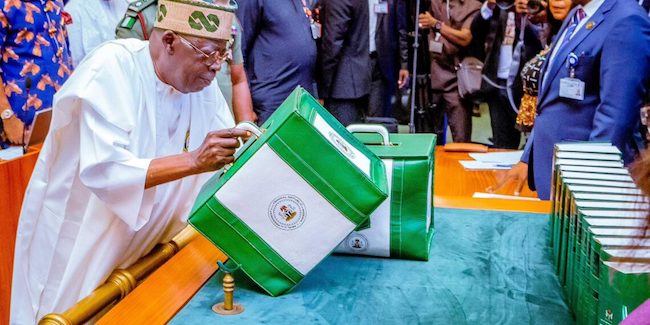
President Bola Tinubu has submitted a revised ₦65.18 trillion 2026 budget to the House of Representatives, reducing the initial spending plan by approximately ₦3.15 trillion while retaining the government’s borrowing target and fiscal deficit.
In a letter dated November 20, 2026, addressed to Speaker Tajudeen Abbas and read on the floor of the House on Tuesday, the President said the adjustments were intended to align government spending with existing obligations and available resources.
The revised budget puts aggregate expenditure at ₦65.176 trillion, compared with ₦68.323 trillion in the approved budget. Projected Federal Government revenue, including earnings from government-owned enterprises, is estimated at ₦33.720 trillion.
Despite the reduction in expenditure, the fiscal deficit, including project-tied loans, remains at ₦31.457 trillion, equivalent to 5.64% of gross domestic product.
The government also retained its planned new borrowing of ₦29.218 trillion, comprising ₦18.428 trillion in domestic borrowing and ₦10.790 trillion in foreign borrowing.
Tinubu said the revision would address several outstanding government obligations, including Nigerian National Petroleum Company Limited (NNPCL) expenditures incurred on behalf of the Federation, underprovided debt-service obligations, issued capital warrants and supplementation commitments.
The adjustments will also provide for refunds to Ministries, Departments and Agencies (MDAs) and Special Accounts.
According to the President, most MDA capital provisions in the revised budget relate to amounts already warranted, while a limited number of new capital and overhead allocations have been included for priority national interventions.
These interventions include completing critical road projects, protecting agricultural production, reducing production costs, improving farm yields and market access, and addressing water vulnerability.
The revised framework provides ₦26.232 trillion for aggregate capital expenditure.
On foreign borrowing, Tinubu said the proposed $7.7 billion, equivalent to approximately ₦10.368 trillion at an exchange rate of ₦1,346.50 to the dollar, would finance the existing foreign borrowing provision without increasing the overall borrowing envelope.
THE ISSUES
The reduction in the budget does not translate into a smaller fiscal deficit or a lower borrowing target. This is because the government has reduced planned expenditure while retaining its revenue projections and financing requirements.
The revised ₦65.18 trillion spending plan is still substantially larger than projected revenue of ₦33.72 trillion. The resulting gap, including project-tied loans, remains ₦31.46 trillion.
This means the government will continue to depend heavily on borrowing to finance its expenditure. The retention of ₦29.22 trillion in planned new borrowing also means that the budget adjustment does not provide immediate relief from the government’s financing needs.
The revision also places emphasis on meeting existing obligations rather than introducing extensive new spending commitments. By providing for previously warranted capital projects, debt-service obligations and NNPCL expenditures incurred on behalf of the Federation, the government is seeking to improve the credibility and implementation of the budget.
For contractors, businesses supplying government agencies and other beneficiaries of public spending, the inclusion of existing obligations could help address delayed payments and support project execution. However, actual benefits will depend on the release of funds and the government’s ability to meet its commitments.
WHAT’S NEXT
The revised budget requires consideration and approval by the House of Representatives as part of the repeal and reenactment process.
Tinubu has urged lawmakers to expedite passage of the bill to enable orderly implementation of the revised spending plan and settlement of outstanding obligations.
BOTTOM LINE
Tinubu has reduced the 2026 budget by ₦3.15 trillion but has not lowered the government’s planned borrowing or fiscal deficit. The central test will be whether the revised allocations improve budget execution and enable the government to meet existing commitments without increasing pressure on public finances.