





Hello, my fellow Kitchen Mathematicians, Budget-Balancers, and Solar-Panel Watchers. Welcome back to our weekly sanctuary! Today is Thursday, July 23, 2026. If you spent your morning calculating how a single exam registration almost cost a small fortune, or if you caught yourself balcony-counting your neighbor’s new solar panels to see if they just upgraded their setup, pull up a plastic chair. You are in the safest room on the internet.
This week, the Nigerian digital space across X, TikTok, and family WhatsApp groups is serving up a top-tier cocktail of street-level economic survival, civic victories, and pure neighborhood comedy. Let’s break down the major waves making our country bubble this week.
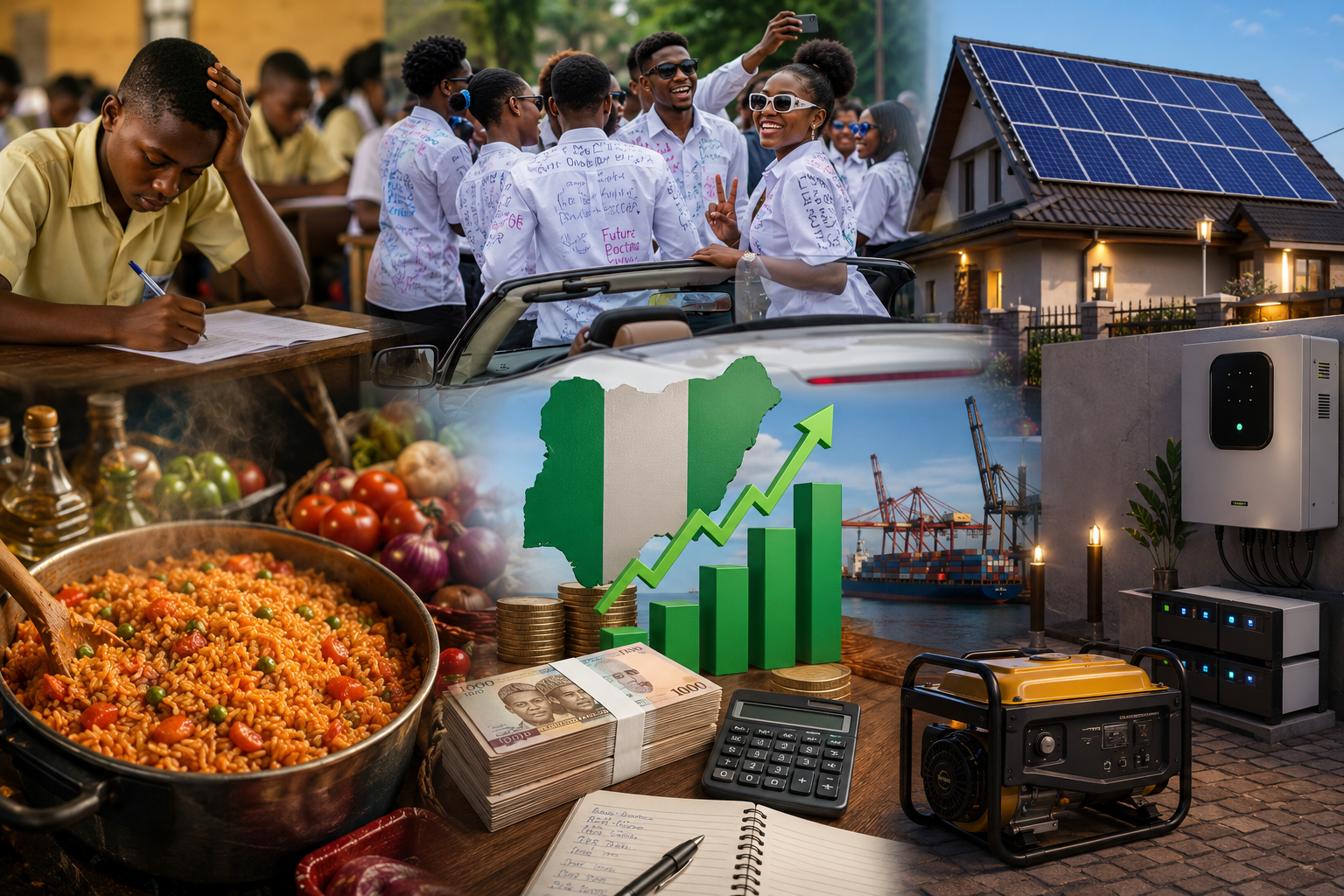
If you are a parent or guardian, your WhatsApp groups were likely on fire earlier this month when word broke that national examination bodies were proposing a massive fee review pushing candidate registration close to ₦50,000 per student. Parents immediately went into emergency accounting mode, trying to figure out how to balance school fees against market runs.
Then came the plot twist: the power of public feedback. Following widespread outcry across the country, the Federal Ministry of Education officially stepped in to suspend the proposed fee review to allow for broader stakeholder consultations. It stands as a brilliant civic win—proof that when citizens speak up constructively, policy can shift to protect the public interest.
While parents were celebrating this policy victory, 16-year-old SSS3 students were busy creating their own economic spectacle: The Secondary School Sign-Out Culture.
High school completion has officially turned into the Met Gala. Teenagers across Lagos, Abuja, and Port Harcourt were seen hiring professional videographers, wearing custom designer white shirts, and even arriving in rented luxury convertibles just to sign autographs on each other’s backs after writing their last paper!
My father almost passed out when I asked for ₦2,000 for secondary school sign-out ten years ago. Today, a teenager is asking for ₦50,000 for ‘Graduation Aesthetics’ after their parents just fought to keep exam fees down!
If you opened any data blog this week, you likely saw the latest quarterly Jollof Index report by SBM Intelligence. The numbers dropped like a heavy pot lid: preparing a standard, family-sized pot of Jollof rice across Nigerian markets now averages ₦29,578 (and hits over ₦30,000 in major metropolitan markets).
For our internal historical auditors, that same pot cost roughly ₦4,000 a decade ago. We have officially transitioned from “cooking for the vibes” to practicing Surgical Culinary Engineering.
In 2016, you could throw five big tomatoes into the blender without counting. In July 2026, you look a single tomato in the eye, negotiate with it, and ask: Are you really necessary for this stew, or can tinned puree carry the team?
While households were running forensic audits on their grocery lists, the Central Bank dropped a massive headline: Nigeria’s gross external reserves crossed $52.5 billion—hitting a multi-year high!
The online reaction was an immediate masterclass in street-level economic analysis.
The Educational Takeaway: This paradox highlights a core economic rule: Macroeconomic recovery always lags behind micro-level relief. Foreign exchange buffers stabilize the national currency against external shocks, but it takes time for those big numbers to trickle down into cheaper retail markups at your local market.
Step off the timeline and into residential compounds, where a quieter, highly competitive transition is taking place. With electricity tariffs keeping household budgets on high alert, Nigerian homes are aggressively migrating to hybrid solar inverters and lithium battery setups.
Neighborhoods have developed a brand-new audio and visual flex hierarchy:
Level 1: The roaring generator shaking the compound fence at 10:00 PM.
Level 2: The sudden silence when the grid trips, followed by the soft, dignified beep of a hybrid inverter picking up the load.
Level 3 (The Ultimate Flex): The neighbor who has so many solar panels on their roof that their house looks like a satellite launching pad for NASA!
On a serious note, consumer credit initiatives like CREDICORP are helping democratize access to clean energy loans, allowing households to transition away from expensive fuel reliance toward sustainable power.
Lessons to Carry into the Weekend
Civic Engagement Matters: The suspension of the exam fee review shows that organized, peaceful public feedback produces results. Stay active in public policy conversations!
Practice Bulk Group-Buying: Pool funds with trusted neighbors or relatives to buy kitchen staples directly from wholesale markets to beat retail inflation.
Audit Your Power Needs: Before jumping into the solar flex, conduct a proper energy audit of your home appliances to avoid overspending on inverter capacity.
See you next Thursday—hopefully with constant light, affordable market runs, and zero timeline drama!