










Key points
- Nigerian Shippers’ Council mandates consultations before implementing approved 30% tariff increase.
- Shipping firms initially proposed hikes of up to 200%, but regulator capped it to protect the economy.
- Stakeholders support increment but demand transparency and inclusive engagement process.
Main story
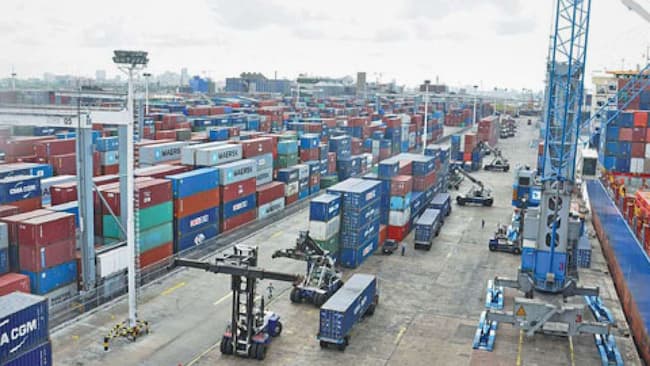
The Nigerian Shippers’ Council (NSC) has reiterated that no new shipping tariff will be implemented without comprehensive consultations across the maritime value chain, following a high-level stakeholders’ meeting in Lagos.
Speaking at a one-day forum on the proposed tariff increment, the Executive Secretary/CEO of the Council, Akutah Pius, said the earlier suspension of the tariff in March 2026 was a strategic move to allow for wider engagement with industry players.
He explained that implementation of the new tariff regime would only proceed after shipping companies conclude discussions with importers, exporters, freight forwarders, and clearing agents.
“The suspension of the tariff implementation created room for us to interact with stakeholders and address key concerns,” he said.
According to him, the approved 30 per cent increase represents a ceiling rather than a fixed rate, allowing shipping companies to implement lower increments—such as 10 or 20 per cent—based on outcomes of consultations.
Akutah noted that the Council intervened after shipping firms proposed increases ranging between 150 and 200 per cent, describing the approved rate as a compromise aimed at balancing industry sustainability with economic stability.
The issues
The proposed tariff hike comes amid rising inflation, increased operational costs, and currency pressures affecting Nigeria’s maritime sector.
However, concerns persist over the potential impact on import costs, manufacturing output, and overall economic stability, particularly in a trade-dependent economy.
Stakeholders have also raised issues around transparency and the need for inclusive decision-making, warning that abrupt tariff adjustments could disrupt supply chains and increase the cost of goods.
What’s being said
Akutah Pius maintained that the tariff adjustment is not intended for excessive profit-making but to ensure the long-term viability of the shipping industry.
“We need shipping companies to operate efficiently, but we cannot allow increases that could strain the entire system. The goal is to maintain balance,” he said.
Stakeholders, however, emphasised due process.
President of the National Shippers’ Association of Nigeria, Dr. Jamilu Umar, said the issue was not the increment itself but the process leading to it.
“We are not against the increase, but due process must be followed. There must be proper consultation,” he said.
Similarly, the Manufacturers Association of Nigeria (MAN) called for mandatory stakeholder engagement before any implementation.
On the part of shipping companies, President of the Shipping Association of Nigeria, Boma Alabi, argued that the approved 30 per cent increase falls below industry expectations, citing rising operational costs, including wage adjustments.
“The 30 per cent approved is not entirely commercial… but reflects current realities,” she said, adding that operators had initially proposed over 100 per cent increase.
What’s next
The NSC is expected to monitor ongoing consultations between shipping companies and stakeholders before granting final approval for implementation.
Gradual rollout of the tariff adjustment is anticipated, depending on the outcome of engagements across the sector.
Further regulatory oversight is also expected to ensure compliance and prevent arbitrary increases.
Bottom line
The Shippers’ Council’s insistence on stakeholder engagement signals a cautious approach to tariff reforms in Nigeria’s maritime sector. While the approved increase aims to sustain industry operations, its success will depend on transparency, phased implementation, and balancing economic realities with stakeholder interests.










 has reiterated that no new shipping tariff will be implemented without comprehensive consultations...)