






By Boluwatife Oshadiya | November 3, 2026
Key Points
- Lagos Governor Babajide Sanwo-Olu has urged banks to deploy capital raised through recapitalisation towards industrial financing, business expansion and job creation
- Nigerian banks raised ₦4.65 trillion during the 24-month recapitalisation programme, with 33 banks meeting the revised capital requirements
- CIBN says the next phase should focus on productive lending and plans to hold an MSME Forum on December 1, 2026
Main Story
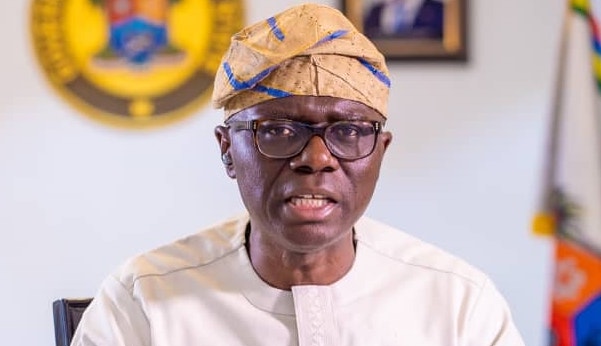
Lagos State Governor Babajide Sanwo-Olu has urged Nigerian banks to convert the ₦4.65 trillion raised through recapitalisation into productive lending, industrial expansion and employment opportunities.
Sanwo-Olu made the call on Saturday, October 31, 2026, at the Chartered Institute of Bankers of Nigeria (CIBN) 2026 Fellowship Investiture Ceremony at Harbour Point Events Centre, Victoria Island, Lagos.
He said the stronger capital base should enable lenders to provide businesses with affordable, long-term financing, particularly for manufacturers, agricultural processors and growing enterprises that need funds to expand operations.
“The true measure of success will be how effectively that capital supports productive enterprises, industrial expansion and economic opportunities for Nigerians,” Sanwo-Olu said.
The CIBN ceremony recognised 755 recipients: 18 Honorary Fellows, 460 Elected Fellows and 277 Honorary Senior Members. CIBN President and Chairman of Council, Dele Alabi, said the recapitalisation had shifted attention towards how banks deploy their additional capital to support productive sectors.
The Central Bank of Nigeria introduced the recapitalisation programme in March 2024, requiring lenders to meet revised minimum capital thresholds within a 24-month compliance period ending March 31, 2026. The CBN announced on April 1, 2026, that 33 banks had met the requirements after raising a combined ₦4.65 trillion.
Domestic investors provided 72.55 per cent of the capital, while international investors contributed 27.45 per cent, according to the CBN.
Despite the stronger capital base, access to affordable credit remains a constraint for smaller businesses. Data cited by the National Credit Guarantee Company in July 2025 indicated that about 80 per cent of Nigerian MSMEs remained outside formal credit channels.
What’s Being Said
“Nigeria now has a historic opportunity to deploy this enhanced capital towards manufacturing, agriculture, infrastructure, energy, technology, and other productive sectors. The true measure of recapitalisation will not be the size of balance sheets, but the scale of economic transformation it enables,” said Dele Alabi, CIBN President and Chairman of Council.
The supplied event report also records Sanwo-Olu’s call for banks to finance productive enterprises. It does not include an independent analyst’s assessment of how quickly lenders can expand affordable credit.
What’s Next
- CIBN is scheduled to hold its MSME Forum on December 1, 2026, to discuss practical approaches to improving access to finance and supporting enterprise growth.
- The institute says it is advocating the establishment of SME Hubs across Nigeria to provide businesses with financing, capacity development, digital tools and market access.
The Bottom Line:
The recapitalisation exercise has increased banks’ capacity to absorb shocks and undertake larger transactions, but the amount raised is not, by itself, evidence of improved access to credit. The next test is whether stronger bank balance sheets translate into financing that businesses can afford and use to expand production and employment.