





Key points
- Sahara Group has called for a practical, Africa-focused approach to energy transition, infrastructure financing and energy journalism.
- Stakeholders said attracting long-term investment depends on stronger governance, bankable projects and investor confidence.
- Experts urged journalists to produce more investigative and solutions-driven reporting on the energy sector.
- Sahara Group unveiled the Asharami Square Energy Reporting Fellowship to strengthen energy journalism across Africa.
Main story
Sahara Group has called on governments, investors, policymakers and the media to adopt a more practical approach to Africa’s energy transition, infrastructure financing and energy journalism.
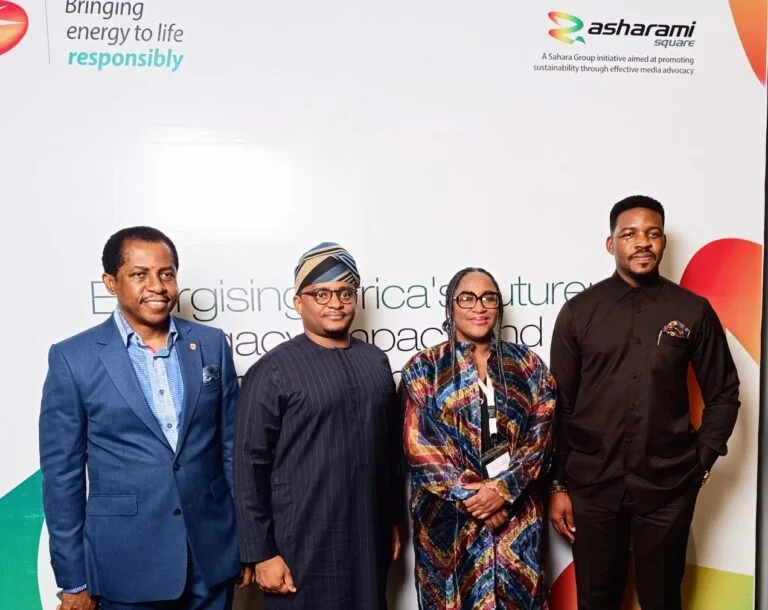
The call was made on Wednesday in Lagos during the third edition of Asharami Square, the company’s thought leadership platform, themed “Energising Africa’s Future: Legacy, Impact and Transformation.”
Speaking at the event, Sahara Group’s Director of Governance and Sustainability, Mr Ejiro Gray, said the company’s Beyond XXX vision is focused on shaping Africa’s future through innovation, collaboration and sustainable development.
Gray said Africa’s energy transition must reflect the continent’s unique realities and be supported by balanced, evidence-based journalism.
“Effective journalism should not only tell us what happened; it should help us understand why it matters, whose interests are affected and what perspectives are missing from the conversation,” she said.
Delivering the keynote address, the Special Adviser to the President on Power Infrastructure, Mr Sadiq Wanka, said ongoing reforms in Nigeria’s electricity sector were creating investment opportunities in embedded generation, mini-grids, renewable energy, transmission infrastructure and industrial power.
According to him, the major challenge facing the sector is no longer technology but mobilising long-term capital.
“The issue is no longer technology. The real challenge is mobilising capital at scale, structuring bankable opportunities and creating an ecosystem that attracts long-term financing,” Wanka said.
He also encouraged journalists to pay greater attention to energy reforms and their implications for economic development.
Also speaking, Prof. Abigail Ogwezzy-Ndisika, Director of the Institute of Continuing Education at the University of Lagos, called for more investigative and solutions-driven reporting on the energy sector.
She said journalists should move beyond reporting announcements by examining evidence and explaining how energy policies affect communities and everyday life.
The Chief Executive Officer of the Lagos State Electricity Regulatory Commission (LASERC), Mr Temitope George, said investors were more likely to support projects that are properly structured and investment-ready.
Similarly, the Managing Director of Investment Banking at Chapel Hill Denham, Ms Kemi Awodein, identified good governance as a key factor in attracting investment into infrastructure projects.
She said Nigeria had demonstrated that domestic capital could finance large-scale infrastructure where governance, transparency and value creation were prioritised.
During the event, Sahara Group unveiled the Asharami Square Energy Reporting Fellowship Judging Panel, an initiative designed to strengthen energy journalism across Africa.
The company’s Head of Corporate Communications, Mr Bethel Obioma, said the fellowship would equip journalists with deeper knowledge of the technical, commercial, environmental and policy issues shaping the energy sector.
He said the programme aligned with Sahara Group’s Beyond XXX vision of investing in people and platforms that would help shape Africa’s future.
Panelists at a discussion titled “Who is Financing Africa’s Energy Future?” agreed that sufficient capital exists to finance infrastructure development but stressed that stronger governance, investor confidence and well-prepared projects are needed to unlock funding.
The issues
Africa’s energy transition requires significant investment, but experts say financing will depend on stronger governance, investment-ready projects and credible policy frameworks, alongside better public understanding of energy issues.
What’s being said
“The issue is no longer technology. The real challenge is mobilising capital at scale, structuring bankable opportunities and creating an ecosystem that attracts long-term financing.” — Sadiq Wanka, Special Adviser to the President on Power Infrastructure
What’s next
The Asharami Square Energy Reporting Fellowship is expected to begin training journalists, while stakeholders continue to advocate stronger collaboration to attract investment and accelerate Africa’s energy transition.
Bottom line
Stakeholders say Africa has the resources and investment potential to transform its energy sector, but success will depend on stronger governance, practical policies, quality journalism and projects that inspire investor confidence.