





Home Blog Page 97

Cristiano Ronaldo’s Al Nassr Contract 2025: Full $650M Deal Details Revealed

Hey, football fans – especially you Ronaldo die-hards and sharp-eyed Nigerian analysts who’ve been tracking his every move since that World Cup magic. You know, the kind where he defies age like it’s just a number? Well, buckle up. Cristiano Ronaldo, the GOAT himself, has just penned a fresh two-year extension with Al Nassr, keeping him in Saudi Arabia until 2027.

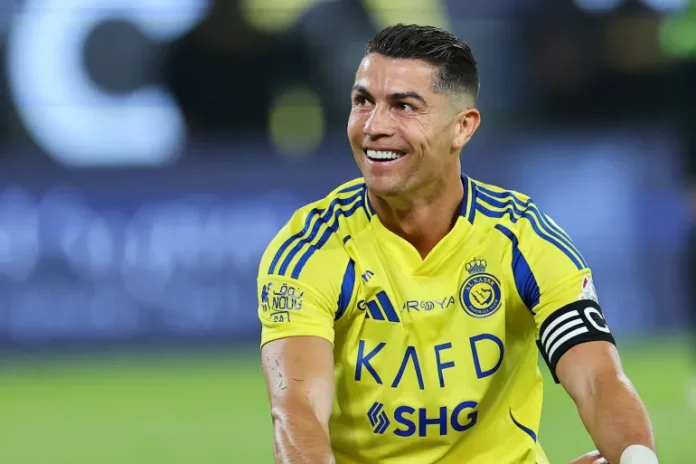
This isn’t your average contract renewal; it’s a blockbuster that’s got everyone buzzing, from Lagos lounges to global group chats. Announced in a slick Sky Sports reel that dropped like a mic – showing CR7 in his element, grinning with that trademark swagger – the deal screams ambition. But what’s really under the hood? Let’s unpack it all in this listicle-style breakdown, complete with a table to lay it all bare, because honestly, the numbers are wild enough to make your head spin.

Picture this: Ronaldo, at 40, still smashing records in the Saudi Pro League, and now he’s locked in for more. It’s like he’s saying, “Retirement? Not on my watch.” Drawing from fresh reports, including that viral Sky Sports clip on Instagram and digs into the fine print, here’s the full scoop on what this contract covers. We’ll hit the highlights, throw in some context for us fans who live for the drama, and yeah, maybe geek out a bit on how this stacks up for a legend like him. Plus, we’ve got a table to make sense of the mind-boggling figures and perks, now converted to US dollars for clarity.

1. The Timeline: Two More Years of Ronaldo Magic in Yellow and Blue

First off, the basics – this extension keeps Ronaldo at Al Nassr through 2027, pushing him well past his 42nd birthday. Signed in late June 2025, it picks up right where his current deal leaves off, squashing those whispers of him jetting back to Europe or even hanging up the boots. Remember those tense weeks of speculation? Clubs were circling like sharks, but Al Nassr pulled out all the stops to keep their star man. As Ronaldo posted on X after the ink dried: “A new chapter begins. Same passion, same dream. Let’s make history together.” It’s a smart move for the club too – he’s not just a player; he’s the face of the league, drawing eyes from everywhere, including our vibrant Nigerian football scene where Ronaldo’s flair inspires the next gen of Super Eagles hopefuls.

Why two years, you ask? It gives him time to chase that elusive Saudi Pro League title and maybe even add to his trophy haul. Short enough to keep things flexible, long enough to build a legacy. For fans, it means more of those gravity-defying headers and post-match celebrations. Exciting, right?

2. The Eye-Watering Base Salary: $615 Million Over Two Years

Okay, let’s talk money – the kind that makes even oil tycoons blink. The basic package? A staggering $615 million spread across the two years, breaking down to about $610,000 a day. That’s millionaire status every other day, folks. To put it in perspective, it’s like earning the average Nigerian footballer’s annual wage in a single afternoon nap. Reports vary a tad – some peg his yearly wages at $222.5 million – but the total figure screams “most lucrative sports deal ever.” No wonder Al Nassr was sweating bullets over losing him; he’s box office gold.

But here’s the thing: this isn’t just about the paycheck. It’s Ronaldo investing in a league that’s exploding with talent, much like how African stars are lighting up Europe. For analysts back home, it’s a reminder of how global football’s shifting sands – Saudi cash meeting Portuguese precision.

3. Signing Bonus: $30.625 Million Upfront

Nothing says “welcome aboard” like a fat signing bonus, and Ronaldo’s getting $30.625 million just for putting pen to paper. But wait, there’s more – if he opts into that second year, it bumps up to $47.5 million. It’s like a loyalty reward baked right in, encouraging him to stick around and dominate. Imagine that as your hello gift; it’s the stuff of dreams for any baller.

This clause adds a layer of intrigue, doesn’t it? It’s not locked in stone – Ronaldo holds the cards on extending, which keeps the pressure on Al Nassr to deliver wins. For Ronaldo lovers, it’s pure genius, ensuring he stays motivated while raking it in.

4. Goal-Scoring Incentives: $100,000 Per Net-Buster

Ronaldo lives for goals, and this contract rewards that fire. He’s set to pocket $100,000 for every goal he scores, with a 20% hike in the second year – that’s $120,000 a pop if he stays on. Last season, he bagged 25 in the league alone; do the math, and it’s a bonus bonanza. Plus, there are extras for snagging the Golden Boot ($5 million) or lifting the Saudi Pro League trophy ($10 million), potentially pushing his earnings north of half a billion dollars by the end.

It’s clever stuff – tying pay to performance, just like how top clubs motivate strikers. For Nigerian fans, think of it like Osimhen’s clauses at Napoli; it fuels that competitive edge we adore in our heroes. Who wouldn’t love seeing CR7 chase those bonuses with his trademark celebrations?

5. Ownership Stake: 15% Slice of Al Nassr, Valued at $41.25 Million

Here’s where it gets business-savvy: Ronaldo snags a 15% ownership stake in the club, worth around $41.25 million. He’s not just playing; he’s part-owner now, with a say in the future. It’s like Beckham’s Miami gig, blending athlete and exec. This perk cements his legacy beyond the pitch, turning him into a stakeholder in Saudi football’s rise.

For analysts, this is huge – it aligns interests, much like how African investors are eyeing club ownerships. Ronaldo’s move could inspire more stars to think long-term, adding depth to his already iconic career.

6. Lavish Perks: Private Jet Credits, Full Staff, and Ambassador Duties

The luxuries? Off the charts. Al Nassr’s footing the bill for 16 full-time staff – think drivers, housekeepers, chefs, gardeners, and security – costing $1.75 million. Then there’s $5 million earmarked for private jet use, keeping him flying in style. And get this: he’s the “dream ambassador” for Saudi Arabia, which could net him even more through sponsorships worth up to $75 million from local brands.

It’s royal treatment, fitting for a king of the game. You know what? This setup lets him focus purely on football, family, and that relentless drive. For fans, it’s a peek into the elite life – glamorous, sure, but earned through decades of sweat.

7. The Contract Breakdown: Every Detail in One Place

To make this crystal clear, here’s a table summarizing every juicy detail of Ronaldo’s new Al Nassr contract, with all amounts converted from pounds to US dollars (using an approximate exchange rate of £1 = $1.25 for consistency). It’s like a cheat sheet for the biggest deal in sports history.

Contract ElementDetails
DurationTwo-year extension, until June 2027
Base Salary$615 million over two years (~$610,000/day or $222.5 million/year)
Signing Bonus$30.625 million upfront, increases to $47.5 million if second year is triggered
Goal Bonus$100,000 per goal (increases to $120,000 in year two)
Assist Bonus$50,000 per assist (increases to $60,000 in year two)
Golden Boot Bonus$5 million for winning Saudi Pro League top scorer
League Title Bonus$10 million if Al Nassr wins the Saudi Pro League
AFC Champions League Bonus$8.125 million if Al Nassr wins the AFC Champions League
Ownership Stake15% of Al Nassr, valued at $41.25 million
Private Jet Credits$5 million for full use of private jet expenses
Personal Staff16 full-time staff (drivers, housekeepers, chefs, gardeners, security), costing $1.75 million annually
Sponsorship DealsUp to $75 million from Saudi and Asian brand partnerships
Ambassador Role“Dream ambassador” for Saudi Arabia, tied to Vision 2030 and potential World Cup 2034 bid
Total Potential EarningsOver $650 million with all bonuses and perks

8. The Bigger Picture: Clauses, Impact, and What It Means for Football

Tying it all together, the contract includes those performance clauses we mentioned, plus the option for Ronaldo to activate year two. No major escape hatches reported, but it’s clear Al Nassr’s betting big on him leading them to glory. Overall, this deal could top $625 million with bonuses and extras, making it the richest in sports history.

But beyond the bucks, it’s about evolution. Ronaldo’s stay boosts the Saudi league’s cred, attracting more talent and eyes – even from Nigeria, where we’re seeing our players head east. Is this the future of football? Maybe. For Ronaldo fans, it’s just more fuel for the legend. He’s not slowing down; he’s leveling up.

There you have it – Ronaldo’s new Al Nassr contract, dissected and delivered in one neat package. Whether you’re analyzing tactics or just cheering from the stands, this deal’s a game-changer. What’s your take? Will he bag another Ballon d’Or out there? Drop your thoughts; the conversation’s just heating up.

5 Lifestyle Choices Silently Keeping Young Nigerians Broke

Nigerians To Pay More For Data, Call As Union Proposes 40% Hike

You know what? It’s easy to feel like you’re doing okay financially, only to check your account and wonder where all your money went. For a lot of young Nigerians, it’s not always the big, flashy expenses that hurt—it’s the small, sneaky habits that pile up, quietly eating away at your cash.

These choices blend into daily life, fueled by social vibes, easy credit, and the pressure to live fast. Let’s break down five lifestyle traps draining your pockets and how to plug those leaks without losing your spark.

1. Chasing the Upgrade Life

Got a raise or a new gig? Awesome! But here’s the thing: upgrading your phone, moving to a fancier apartment, or signing up for that premium Netflix plan feels great—until it doesn’t. Each small upgrade seems harmless, but together, they raise your baseline spending. Suddenly, your new income isn’t extra; it’s just enough to cover your new lifestyle. And when life throws a curveball—like a job loss or a car repair—you’re stuck.

What to do instead: Stash at least 20% of any raise into a savings account automatically. Apps like PiggyVest or Cowrywise make this a breeze. Also, try the 30-day rule: wait a month before buying anything nonessential. You’d be surprised how many “must-haves” you forget about.

2. Spending to Keep Up Appearances

Ever felt the pressure to show up looking like you’ve made it? Maybe it’s rocking the latest Air Jordans, buying rounds at the club, or hosting a big birthday bash. In Nigeria, where community and status matter, this can hit hard. One big night out turns into a habit, and soon, your friends expect it. But keeping up is like running on a treadmill—you’re exhausted, but you’re not going anywhere.

Fix it like this: Next time you’re invited to a pricey hangout, say you’re on a “spending detox” and suggest something cheaper—like a game night at home or a picnic at Freedom Park. Bring a dish or offer to snap Insta-worthy photos. Setting polite boundaries saves your wallet and keeps your squad tight.

3. Leaning on Credit for Everyday Stuff

Buy-now-pay-later deals and quick loans from apps like Carbon or FairMoney are tempting. Need new kicks? Pay in installments. Groceries running low? There’s a loan for that. But here’s the catch: those small interest rates and fees add up, chipping away at your future income. You’re not just spending money—you’re borrowing tomorrow’s cash to live today.

How to break free: Freeze new credit for basics until you clear one existing plan. Start small by saving a one-month buffer for essentials like food and transport. Paying cash feels empowering, and you’ll avoid those sneaky 5% fees that sound small but sting over time.

4. Letting Small Leaks Drain Your Cash

Ever checked your bank statement and spotted random charges? That Spotify subscription you forgot about, daily coffee runs, or those in-app purchases for games—they’re like tiny holes in your pocket. Individually, they’re no big deal, but together? They’re bleeding you dry. A ₦2,000 monthly subscription here and a ₦1,500 coffee there can easily eat up ₦20,000 a month.

Plug the leaks: Tonight, grab your phone and audit your bank app. Look for recurring debits—those sneaky charges you barely notice. Cancel anything you don’t use, like that gym app you swore you’d try. Set a weekly cash limit for small treats, like ₦5,000 for snacks or rides. Cutting just two subscriptions could free up enough for a rainy-day fund.

5. Betting Against Your Future

Skipping health insurance, ignoring retirement savings, or not setting aside cash for taxes might feel okay when you’re young and healthy. But life’s unpredictable. One hospital visit or a surprise tax bill from FIRS can wipe out months of hustle. I know, saving for “future you” sounds boring when you’re trying to live now, but isn’t peace of mind worth it?

Protect yourself: Automate a small transfer—say, ₦5,000 a month—to an emergency fund. Check out affordable health plans from providers like AXA Mansard or Leadway. If you’re freelancing, set aside 10% of every payment for taxes. These small moves build a safety net, so one bad day doesn’t derail your grind.

Small Changes, Big Wins

Here’s the beauty of it: you don’t need to overhaul your life to stop these leaks. One tiny shift—like canceling an unused subscription, saying no to a pricey outing, or automating savings—can snowball into real financial freedom. It’s not about depriving yourself; it’s about choosing what matters. So, what’s one habit you’re ready to tweak today? Your future self will thank you.

Interbank Rates Stay Mixed Despite Robust Liquidity In Nigerian Financial System

Names Of Forex Policy Defaulters Will Be Published, Banks Tell Customers

Nigeria’s interbank money market rates reflected mixed patterns on Thursday as liquidity in the financial system remained strong, even after the Central Bank of Nigeria (CBN) deployed measures aimed at tightening the funding environment.

The apex bank conducted two open market operations (OMO), offering a total of N700 billion worth of bills to investors. Both auctions attracted strong interest from market participants, and allotments were debited directly from system balances.

According to figures from AIICO Capital Limited, system liquidity declined to N1.428 trillion on Thursday from N2.578 trillion the previous day, representing a sharp intraday outflow of about N1.150 trillion. Despite this, funding conditions remained robust enough to reduce activity at the CBN’s Standing Lending Facility (SLF), where deposit money banks typically access short-term loans. Borrowing at the SLF window eased due to the absence of significant funding pressure.

Trading in the interbank market stayed subdued, with minimal flows reported. As a result, interbank rates held steady at 26.5%, and analysts expect rates to remain around that level unless substantial funding pressures develop.

Meanwhile, the Nigerian Interbank Borrowing Rate (NIBOR) showed a largely downward trajectory across tenors, though the Overnight (OVN) rate rose slightly by 0.13%. In the money market, the Open Repo Rate (OPR) was unchanged at 26.50%, while the Overnight rate ticked up by 8 basis points to 26.96%.

Yields in the Nigerian Treasury Bills (NT-Bills) market recorded mild gains across most maturities. The 3-month tenor rose by 5 basis points, while both the 6-month and 12-month tenors advanced by 6 basis points each. The 1-month tenor, however, held firm at 16.21%.

Overall, the average NT-Bills yield climbed by 16 basis points to 18.81%, reflecting persistent weak investor appetite and negative sentiment in the secondary market.

Treasury Bills Yields Surge To 18.81% As Investors Lock In Profits

Investors in Nigeria’s Treasury Bills (NT-Bills) secondary market continued to book profits across the short, medium, and long ends of the curve, fueling a sell-off that pushed yields higher.

Data from CardinalStone Securities Limited revealed that yields advanced by 18 basis points at the short end, 1 basis point at the mid-segment, and 23 basis points at the long end of the curve. Consequently, the overall average yield rose to 18.81%, underscoring ongoing fragile sentiment and subdued investor confidence in the NT-Bills market.

Market dealers noted that there was mild buying interest in the 20-Aug NTB, quoted around 17.35%/17.10%, although stronger activity centered on OMO bills maturing on 18-Nov, 23-Dec, and 7-Apr. However, wide bid-ask spreads continued to dampen trading volumes, according to commentary from AIICO Capital Limited, which added that sessions are expected to maintain a similar pattern.

Analysts believe that yields could retreat in the near term, suggesting that the current bearish tone may be driven by banks strategically selling positions to take advantage of higher returns at the CBN’s OMO auctions.

The Central Bank of Nigeria has been offering attractive yields at its OMO bill sales, particularly to foreign portfolio investors and banks—the primary eligible participants. This has triggered portfolio adjustments as investors rotate assets to capture more lucrative returns, amid mixed expectations over monetary easing and ongoing disinflation trends.

Fresh figures from the National Bureau of Statistics (NBS) show Nigeria’s headline inflation slowed slightly to 21.88% in July 2025 from 22.22% in June. However, month-on-month inflation accelerated to 1.99% in July, compared to 1.68% in the previous month, highlighting that consumer prices are still rising at a faster pace despite the marginal drop in headline inflation.

NNPC Explores Refinery Partnership To Resolve Nigeria’s Fuel Woes

The Nigerian National Petroleum Company (NNPC) Limited has disclosed plans to collaborate with an experienced refinery operator as part of efforts to revive the country’s struggling refining sector.

Group Chief Executive Officer, Mr. Bayo Ojulari, revealed this during a meeting with members of the National Executive Council (NEC) of the Petroleum and Natural Gas Senior Staff Association of Nigeria (PENGASSAN) at the NNPC Towers, Abuja.

Ojulari explained that the company had completed technical assessments on Nigeria’s three refineries and concluded a commercial review of the Port Harcourt Refinery, which underscored the need for a fresh operational model.

“The solution being proposed aligns with our current strategy. We have finalized the technical review of the refineries, and from the commercial review of Port Harcourt, it became evident that we need a professional refinery partner to ensure efficiency and sustainability,” he said.

According to him, years of neglect and poor maintenance had left the refineries unprofitable, with the facilities recording monthly losses of between N300 million and N500 million.

“We were supplying around 50,000 barrels of crude daily but achieving less than 40 percent output. To avoid continuous losses, we suspended operations to seek a viable path forward,” Ojulari added.

He emphasized that President Bola Tinubu had not interfered politically in the process, stressing that all efforts were geared towards building a long-term sustainable system.

Ojulari also addressed calls for his removal and protests within the company, noting: “There is a coordinated effort to discredit me, and staff morale has been affected. However, our focus remains on delivering our mandate.”

On his part, PENGASSAN President, Festus Osifo, commended NNPC’s progress in pipeline security and oil production growth under Ojulari’s leadership. He noted that Nigeria is currently producing 1.8 million barrels per day, with a target of 2.6 million barrels by 2026 once non-producing oil fields are revived.

Investors Lose N438bn As Dangote Sugar, GTCO Drag Nigerian Stock Market

Stock Exchange Closes Trading Week With N30bn Gain

The Nigerian equities market closed on a bearish note on Thursday, with investors losing an estimated N438 billion following sell-offs in major stocks, including Dangote Sugar Refinery and Guaranty Trust Holding Company (GTCO).

Data from the Nigerian Exchange (NGX) showed that market capitalization dipped by N437.54 billion to close at N88.93 trillion, while the All-Share Index fell by 691.52 points, representing a 0.49% decline, settling at 140,557.24.

Sell pressure was concentrated in large and mid-cap stocks such as DANGSUGAR, GTCO, WAPCO, and ELLAHLAKES, dragging the market breadth into negative territory with 38 losers against 19 gainers.

Despite the decline in index performance, trading activity increased, with transaction volume rising by 29.60% and value up by 27.35%. A total of 885.02 million shares valued at N28.30 billion were exchanged across 26,163 deals.

CHAMPION led the activity chart in volume, accounting for 22.75% of total trades, followed by ACCESSCORP (11.56%), GTCO (10.91%), STERLINGNG (10.28%), and FIRSTHOLDCO (5.23%). In terms of value, GTCO topped the chart with 31.48% of total transactions.

On the gainers’ chart, SCOA rose by 10%, trailed by RTBRISCOE (+9.80%), NEM (+7.96%), and NGXGROUP (+7.94%). Meanwhile, INTENEGINS led the losers with a -9.62% decline, followed by ELLAHLAKES (-8.49%), DANGSUGAR (-5.54%), HONYFLOUR (-4.44%), and GTCO (-3.11%).

Sectoral performance was largely negative, with Banking (-1.41%), Consumer Goods (-0.92%), Industrial (-0.45%), and Oil & Gas (-0.02%) all declining, while Insurance gained 0.44%.

Dangote Group, Ethiopia Ink $2.5bn Deal For Mega Fertilizer Plant

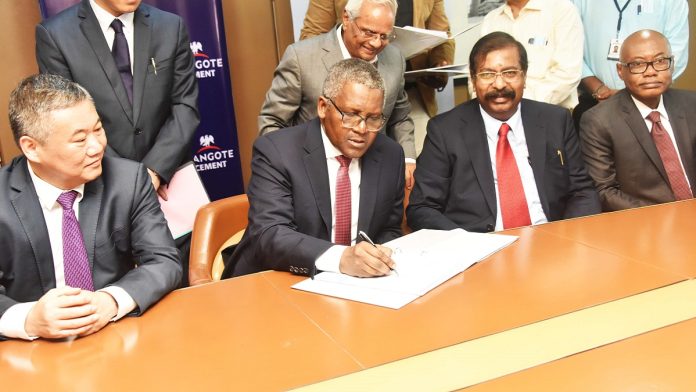
The Dangote Group has entered into a landmark partnership with Ethiopian Investment Holdings (EIH) to establish a $2.5 billion urea fertilizer production plant in Gode, Ethiopia, in what is set to become one of Africa’s largest industrial investments.

Under the agreement, Dangote Group will hold a 60% stake in the project, while EIH, the government’s strategic investment arm, will retain 40%. The fertilizer complex will have a production capacity of three million metric tons annually, positioning it among the five largest globally.

The partnership covers the design, construction, operation, and financing of the state-of-the-art facility, including infrastructure such as gas pipelines from Ethiopia’s Hilal and Calub reserves, storage depots, logistics networks, and export hubs.

The $2.5 billion project, expected to be completed within 40 months, will also create thousands of direct and indirect jobs and significantly reduce Ethiopia’s reliance on imported fertilizers.

Aliko Dangote, President of Dangote Group, described the venture as a milestone in Africa’s quest for industrialization and food security. “The location of Gode and Ethiopia’s vast gas resources provide the perfect foundation for a project of this scale. We are confident this plant will transform agricultural productivity across East Africa,” he said.

Dr. Brook Taye, CEO of EIH, said the deal represents a turning point for Ethiopia’s agricultural and industrial development. “This project aligns with our national priorities and positions Ethiopia as a regional fertilizer hub,” he stated.

The facility will support Ethiopia’s agricultural sector, which employs more than 70% of the population, by providing high-quality fertilizer at competitive prices. It will also enhance regional trade and integration by supplying neighboring countries with affordable fertilizer.

Naira Strengthens To N1,535 Amid Rising Dollar Supply And Oil Gains

Federation Account Amasses Over ₦5trn In 6months- RMAFC

The Nigerian naira gained ground against the U.S. dollar on Thursday at the official foreign exchange market, buoyed by increased dollar supply and easing demand pressures.

Data from the Central Bank of Nigeria (CBN) showed that the local currency closed at ₦1,535.47/$, appreciating by 0.10% compared to the previous day’s rate. During intraday trading, the naira touched a high of ₦1,538.54/$ but recovered on stronger liquidity inflows.

Market analysts attributed the appreciation to Nigeria’s rising external reserves, which climbed to $41.244 billion as of August 27, 2025, representing a $23.70 million increase from the previous day.

Oil prices also supported the naira, with Brent crude gaining 0.8% to settle at $68.62 per barrel, while U.S. West Texas Intermediate rose 0.7% to $64.60. The rebound came after U.S. President Donald Trump expressed dissatisfaction over Russian missile strikes in Ukraine, sparking renewed market concerns.

Meanwhile, gold prices reached a five-week high at $3,416.14 per ounce as investors sought safe-haven assets amid uncertainties around U.S. monetary policy and global geopolitical tensions.

Analysts forecast that the naira will likely remain stable in the near term, provided Nigeria’s external reserves continue to grow and oil prices sustain their upward trajectory.

Asian Markets Mixed As Wall Street Extends Record Rally

NGX Records N60bn Trading

Asian stock markets ended mixed on Friday following Wall Street’s latest record highs, while European shares slipped in early trade. The Dow and S&P 500 closed at new peaks on Thursday, supported by an upward revision of US second-quarter GDP growth to 3.3 percent from 3.0 percent, alongside strong earnings from AI chipmaker Nvidia. The GDP upgrade reflected stronger consumer spending and investment.

“After the initial release, there were concerns that the US economy was slowing quite sharply,” said Richard Flax of Moneyfarm. “But these latest data suggest the economy is a bit stronger than initially feared.” Investors are now focused on Friday’s US inflation data and its implications for Federal Reserve policy.

In Asia, Tokyo’s Nikkei 225 closed down 0.3 percent, weighed by weak industrial output, while Seoul also dipped. Shanghai gained 0.4 percent, and Hong Kong rose 0.8 percent ahead of results from Alibaba and BYD.

Japanese industrial production fell 1.6 percent in July, driven by a 6.7 percent slump in vehicle output, which analysts linked to the impact of US tariffs. “That fall echoes the big drop in motor vehicle exports last month and suggests that US tariffs are starting to bite,” said Marcel Thieliant of Capital Economics.

In Europe, London, Paris, and Frankfurt slipped in early trading after the Paris market rebounded on Thursday from earlier political concerns over France’s budget shortfall.

Oil prices edged lower, with Brent crude down 0.7 percent at $68.17 per barrel and West Texas Intermediate also down 0.7 percent at $64.17.

Key Figures

  • Tokyo – Nikkei 225: DOWN 0.3% at 42,718.47 (close)
  • Hong Kong – Hang Seng Index: UP 0.8% at 25,189.34 (close)
  • Shanghai – Composite: UP 0.4% at 3,857.93 (close)
  • London – FTSE 100: DOWN 0.1% at 9,210.71
  • New York – Dow: UP 0.16% at 45,636.90 (close)
  • New York – S&P 500: UP 0.32% at 6,501.86 (close)
  • Euro/dollar: $1.1664, down from $1.1680
  • Pound/dollar: $1.3485, down from $1.3508
  • Dollar/yen: 147.13 yen, up from 146.97

FG, ASUU In Fresh Dispute Over 2021 Agreement

The Academic Staff Union of Universities (ASUU) on Thursday faulted claims by the Minister of Education, Dr. Tunji Alausa, that the Federal Government never signed any binding agreement with the union. Speaking at a press briefing in Abuja, Alausa maintained that the documents often cited by ASUU were only proposals presented during negotiations and not executed agreements.

“The 2021 agreement was not executed by the government. ASUU might have the impression that they have an agreement with government, but there was no signed agreement. What we are working on now is a clean, actionable, and sustainable document that can be implemented within the framework of our constitution,” he said.

The minister added that President Bola Tinubu’s administration was committed to resolving long-standing disputes with the union, citing the release of ₦50 billion earlier in the year to settle earned academic allowances.

He explained that a high-level technical team—comprising representatives from the Ministries of Education, Labour, Justice, the Budget Office, the National Universities Commission, and the Salary and Wages Commission—had been set up to harmonize government proposals before they are forwarded to the Yayale Ahmed Committee for presentation to ASUU.

However, ASUU President, Prof. Chris Piwuna, dismissed Alausa’s assertion, insisting that previous negotiations produced agreements which government had failed to honour.

“The government is very poor at keeping records. Sometimes, you wonder if there is a proper handover from one officer to another,” Piwuna said.

The disagreement underscores ongoing tensions between the government and the academic union, which continues to demand improved salaries, better conditions of service, increased university funding, autonomy, and a review of laws governing tertiary education.

NLC Demands ₦150,000 Minimum Wage For Lagos Workers

The Lagos State Chapter of the Nigeria Labour Congress (NLC) has called on the state government to raise the minimum wage for workers from the current ₦85,000 to ₦150,000 in line with prevailing economic realities. Chairperson of the chapter, Mrs. Funmi Sesi, made the demand on Thursday while reacting to the recent wage increases by the Imo and Ebonyi State governments.

Sesi noted that the cost of living in Lagos—covering accommodation, transportation, feeding, and utilities—was significantly higher than in other states, making a wage review imperative.

“The time has come for an upward review of the minimum wage in Lagos. At least someone has taken the bull by the horn and opened the space. No one can blame Governor Sanwo-Olu now if he implements a higher wage for Lagos workers, because we deserve decent work conditions commensurate with the economic realities in the state,” she said.

She added that the labour movement was eager to engage the government to secure an improved welfare package for workers.

The call follows Governor Hope Uzodimma’s approval of a new minimum wage of ₦104,000 for Imo State civil servants, up from ₦76,000, as announced during a meeting with labour leaders in Owerri on Tuesday. Similarly, the Ebonyi State Government increased its workers’ minimum wage from ₦70,000 to ₦90,000, according to Commissioner for Information and Orientation, Chief Ikeuwa Omebe, during a press briefing on Thursday.

Sesi commended both states for the move, expressing hope that other governments would follow suit.

NCC Steps Up Cybersecurity Efforts To Guard Telecom Systems

How To Protect Your Phones From Fraudsters -NCC

The Nigerian Communications Commission (NCC) is advancing work on a comprehensive cybersecurity framework aimed at protecting critical digital infrastructure and improving online safety for telecom consumers in Nigeria.

The framework, expected to be finalized by the third quarter of 2025 and implemented by telecom licensees from early 2026, is designed to tackle the security challenges posed by emerging technologies while strengthening Nigeria’s digital economy.

Speaking during the second phase of the cybersecurity framework development meeting with stakeholders in Abuja on Wednesday, NCC’s Executive Commissioner for Technical Services, Abraham Oshadami, highlighted the urgency of building a robust and adaptive system to counter rising cyber threats.

“With the growing digitalization of services and the sophistication of modern cyberattacks, cybersecurity has gone beyond confidentiality, integrity, and availability. It now includes human safety, as attacks on communications infrastructure increasingly threaten lives and critical national systems,” he said.

Oshadami noted that the telecommunications sector, being the backbone of Nigeria’s digital economy, remains a strategic asset and a prime target for state and non-state actors engaged in coordinated cyber and physical attacks.

The stakeholder session, which follows an initial meeting earlier this year, reviewed progress made so far, refined key components of the proposed framework, and sought further validation of its design principles and implementation strategies.

Dr. Kazeem Durodoye, Chief Executive Officer of CyberNover—the consulting firm engaged by the NCC—presented details of the framework, while Babagana Digima, NCC’s Head of Cybersecurity and Internet Governance, disclosed that the project is supported by the World Bank.

Digima added that the implementation phase will begin in early 2026 after the framework is finalized next year.

The forum also provided stakeholders across the telecom and digital economy ecosystem with an opportunity to align on strategic priorities for strengthening cybersecurity resilience and sector preparedness.

NNPC Moves To Seal Refinery Deal To Address Fuel Challenges

EU Seeks Stronger Partnership With NNPC

The Group Chief Executive Officer of the Nigerian National Petroleum Company (NNPC) Limited, Mr. Bayo Ojulari, has disclosed plans to partner with a professional refinery operator as part of efforts to resolve Nigeria’s protracted refining challenges. Ojulari made this known on Thursday while hosting members of the National Executive Council (NEC) of the Petroleum and Natural Gas Senior Staff Association of Nigeria (PENGASSAN) at the NNPC Towers in Abuja.

He explained that NNPC had completed technical assessments of the country’s three refineries and recently concluded a commercial review of the Port Harcourt Refinery, which underscored the need for a sustainable business model.

“The solution you are proposing is the same one we are working on. We have now completed the technical review of the three refineries, and from the commercial review of Port Harcourt, it’s clear we need to bring in a true professional refinery company to partner with us,” Ojulari said.

He noted that years of neglect and poor maintenance had rendered the refineries commercially unviable, resulting in losses of between ₦300 million and ₦500 million monthly.

“We were pumping around 50,000 barrels of crude daily into the refinery but getting less than 40 percent output. Rather than continue to incur losses, we halted operations to pursue a viable, profitable model,” he explained.

Ojulari stressed that President Bola Tinubu had not pressured NNPC to resume refinery operations prematurely, noting that all decisions taken so far were geared towards long-term sustainability.

He also addressed recent protests and alleged moves to oust him, describing them as distractions.

“There is a formidable plan to remove me, and staff morale has taken a hit. But we remain focused on delivering our mandate,” he said.

PENGASSAN President, Festus Osifo, commended the NNPC leadership for improved pipeline performance and higher oil output since Ojulari’s appointment. He assured the union’s support in achieving energy stability.

“We are currently producing about 1.8 million barrels per day, and our target is 2.6 million barrels by 2026 by reviving non-producing fields,” Osifo stated.

Ebonyi State Raises Minimum Wage To ₦90,000

The Ebonyi State Government has increased the minimum wage for civil servants from ₦70,000 to ₦90,000, with immediate effect. Commissioner for Information and Orientation, Chief Ikeuwa Omebe, announced the decision on Thursday while briefing journalists on the outcome of the State Executive Council (EXCO) meeting.

Omebe explained that the upward review was aimed at improving workers’ welfare, stressing that the government was committed to fulfilling its obligations.

“We want to state categorically that this is not a political statement, as this government does not toy with workers’ welfare. The government has offset the pensions and gratuities of state retirees from 1996 to date. The verification process for retirees at the local government level is ongoing, after which payments will be made,” he said.

The commissioner added that the administration’s action reflected its people-centered governance philosophy, anchored on the “people’s charter of needs” mantra.

In addition, the EXCO approved the implementation of the eight-year tenure policy for directors, which will see the immediate retirement of affected permanent secretaries and directors who have served the stipulated period in the same cadre.

Nigerian Immigration Service Raises Passport Application Fees To N100,000 And N200,000

Immigration Service Reopens Passport Application Portal

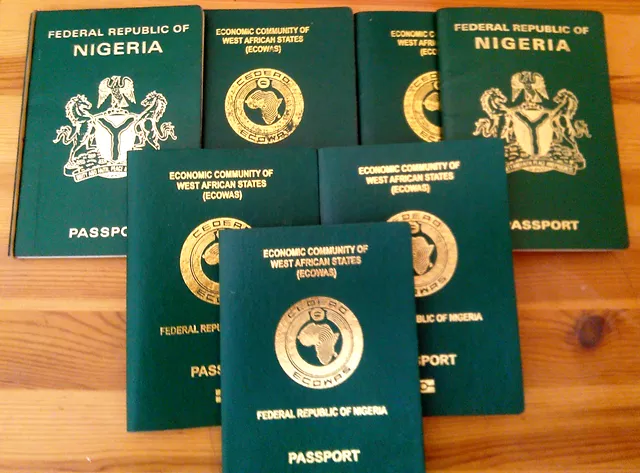
The Nigeria Immigration Service (NIS) has officially announced a fresh increase in the cost of obtaining Nigerian passports, with the new pricing structure set to take effect from September 1, 2025.

In a statement issued on Thursday by the Service Public Relations Officer, ACI AS Akinlabi, the revised rates will apply exclusively to passport applications processed within Nigeria.

Under the new arrangement, applicants will now pay ₦100,000 for the 32-page passport booklet with a five-year validity period, while the 64-page passport booklet with a 10-year validity period will now cost ₦200,000.

“The revised fees, which apply only to applications made in Nigeria, are aimed at sustaining the production quality and security integrity of the Nigerian passport while ensuring availability for citizens,” the statement read.

The Service clarified that the charges for Nigerians in the diaspora remain unchanged. Applicants outside the country will continue to pay $150 for the 32-page, five-year validity passport, and $230 for the 64-page, 10-year validity passport.

This increment marks the second consecutive adjustment within two years. The previous upward review was approved by the Federal Government in August 2024, which came into effect on September 1, 2024. At that time, the 32-page passport booklet was increased from ₦35,000 to ₦50,000, while the 64-page booklet with 10-year validity rose from ₦70,000 to ₦100,000.

Explaining the rationale behind the adjustment, the Immigration Service emphasized that the fee hike is necessary to uphold the international standard of the Nigerian passport, improve service delivery, and ensure that the booklet remains technologically secure and globally acceptable.

The NIS also reassured Nigerians that despite the new pricing, efforts are ongoing to streamline the passport issuance process, reduce bottlenecks, and minimize delays in application approvals.

Thursday Chronicles: Why Do We Keep Romanticizing The ‘Talking Stage’?

Welcome back to Thursday Chronicles, the only place where we drag love, life, and Lagos without shame or makeup. If you’re currently in a talking stage that has lasted longer than a master’s degree, or you’ve memorized someone’s favorite color, food, trauma and Netflix password — yet you’re still not “dating” — please, this one is for you. Grab chinchin and face front.

These days, it seems like the talking stage is the new relationship. People spend 3 months, 5 months, even a full year talking to each other like they’re trying to win a visa lottery, only to end up saying, “We’re just vibing.” Vibing to where? Ibadan?

The talking stage used to be a short bridge between “hello” and “I like you.” Now it’s a whole express road, with no fuel, no direction, and no plan to reach destination. You’re talking every day, sending memes, dropping “good morning baby” texts, doing FaceTime with bonnet and wrapper, but if anyone asks what’s going on, you clear throat and say,

“Ehn… we’re just getting to know each other.”
Getting to know what? The person’s great-grandfather?

You’ll start exchanging voice notes, analyzing each other’s childhood traumas, bonding over who also had strict parents and who was beating cerelac in 2004. You’ll give emotional support, offer soft advice, do morning prayers together. But still, no relationship. Just “vibes and inshallah.”

And let’s not lie, some of us romanticize the talking stage because it feels safe. No commitment, no label, no pressure. You enjoy the attention, the intimacy, the butterflies, without the responsibility. You get to post cute quotes like “he makes me smile” while still saying “I’m single” with your full chest.

But guess what? Talking stage is a dangerous place to build castles. Because once you start catching feelings in a situation where only one person knows the agenda, heartbreak is lurking in the corner like a hungry mosquito. The moment you ask, “So what are we?” the vibe changes. Next thing, they start replying slowly, using “bro” in sentences, or hitting you with:

“Let’s not rush things.”
Rush? We’ve been talking since Buhari was in power.
The truth is, the talking stage is now used as a hideout. A soft place for emotionally unavailable people to enjoy relationship benefits without signing the contract. It’s “try-before-you-buy”, but some people never buy. They just keep trying until your battery dies.

And it’s even more annoying when you finally leave the talking stage, thinking you’ve moved on, and the person resurfaces like a Nollywood ghost:

“I miss what we had.”
What we had? We had confusion and data wastage.
But let’s be honest, it’s not always evil. Sometimes the talking stage helps you spot red flags early. You learn who’s unserious, who’s manipulative, who’s boring, and who still types “are you home” at 11:47pm. It gives you time to breathe. To observe. To choose wisely. The problem is staying there too long and calling it “love.”

If you’re in a talking stage right now, my dear, just ask the question. Don’t be afraid of clarity. If the answer sounds like “let’s see how it goes”, start going. Carry your heart and go in peace. Because if you don’t define the relationship, the relationship will define you. And sometimes, it will define you as “just friend that’s emotionally available.”

And for those who enjoy the talking stage because commitment scares you, please go and heal. Love is not a group project. If you want soft life, you must do the hard thing of being honest about your intentions. Stop dragging people into talking marathons with no finish line. It’s not NYSC.

Thanks for joining this week’s episode of Thursday Chronicles, where we talk about modern love with modern confusion and ancient wisdom.
Whether you’re freshly out of a talking stage or still knee-deep inside one, remember: you deserve clear intentions, real effort, and love that doesn’t come with “I’m not ready” disclaimers.

See you next Thursday, same gist corner, same emotional rollercoaster, same drama with better lighting. Until then, ask questions, collect answers, and stop calling confusion “vibe.”

Apple’s September 9 Event: iPhone 17 Launch And What To Expect

Apple has officially set September 9 as the date for its highly anticipated annual product launch, according to invitations sent to media outlets on Tuesday. The event, scheduled to take place at the company’s Apple Park headquarters in Cupertino, California, is expected to feature the unveiling of the iPhone 17 lineup, new Apple Watches, and potentially other devices.

The invite carries the tagline “Awe dropping”, signaling what could be a pivotal moment for the tech giant. Since 2012, Apple has consistently revealed its new iPhone models in September, making the event one of the most important on the company’s calendar. This year, anticipation is especially high as the company looks to reassert its dominance in a market increasingly shaped by artificial intelligence innovations.

A High-Stakes Launch for Apple

Apple’s iPhone remains its most profitable product, but the launch comes at a time when global consumer spending is tight and smartphone upgrades are less frequent. Wall Street is closely watching the announcements, viewing them as a test of Apple’s ability to maintain its reputation as a market innovator, particularly as rivals like Google accelerate their AI offerings.

The pressure is heightened after Apple delayed a major overhaul of Siri, its digital assistant, which was expected to better compete with advanced AI systems such as OpenAI’s ChatGPT and Google’s Gemini. Despite this setback, Apple’s July earnings report surprised investors with stronger-than-expected iPhone sales, reinforcing the brand’s resilience.

iPhone 17: A Slimmer, Sleeker Design

Industry insiders suggest this year’s star attraction will be an ultra-slim iPhone, described as the “MacBook Air of smartphones.” According to Bloomberg, Apple’s design overhaul could deliver a sleeker build, though possibly at the cost of battery performance and camera functionality.

Such a redesign may help reinvigorate consumer interest in smartphones at a time when most buyers only replace their devices when necessary. While competitors like Samsung and Huawei have embraced foldable phones, Apple has largely stuck to incremental updates in design over the past several years.

Previous attempts to diversify with varying sizes have not been overwhelmingly successful. The iPhone Mini was discontinued after two generations, while the iPhone 16 Plus accounted for just 5–10% of shipments by mid-2024. Renowned Apple analyst Ming-Chi Kuo has forecast that the Plus model will be phased out entirely in 2025.

Apple is expected to introduce multiple iPhone 17 models at the event, including the standard edition and the Pro versions. As in past years, the standard model will likely feature a processor upgrade and camera refinements, while the Pro models will continue to differentiate with superior cameras, larger displays, titanium frames, and enhanced performance.

Apple Intelligence and the AI Race

Apple emphasized in 2024 that the iPhone 16 was “built for Apple Intelligence,” hinting that this year’s models may deepen integration with AI-powered features. This comes as competitors increasingly position AI as a core part of their ecosystems. Analysts say the iPhone 17 could be central to Apple’s strategy to catch up in this space.

Tariffs, Trade, and Apple’s Global Strategy

This year’s showcase also unfolds against a backdrop of international trade tensions. CEO Tim Cook revealed in July that Apple expects $1.1 billion in tariff-related expenses for the September quarter due to policies under President Donald Trump.

To mitigate these pressures, Apple has shifted a significant portion of its iPhone production for the U.S. market to India, reducing reliance on China. Although tariffs on many Indian exports are set to rise to 50% this week, smartphones remain exempt.

In addition, Trump has suggested Apple may avoid the impending 100% tariff on semiconductors, given the company’s commitment to expanding U.S. manufacturing. Earlier this month, Apple announced a $600 billion investment aimed at strengthening its domestic chip supply chain and expanding operations within the country.

Looking Ahead

As the countdown to September 9 begins, Apple’s upcoming event is shaping up to be one of its most consequential in recent memory. The launch of the iPhone 17, coupled with updates to Apple Watch and other potential product reveals, will test whether Apple can maintain its allure with consumers and investors alike in an increasingly competitive technology landscape.

CDS Stresses Border Management, Regional Cooperation To Combat Terrorism And Banditry

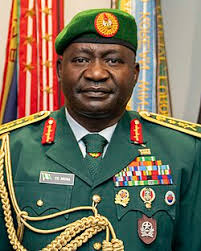
Nigeria’s Chief of Defence Staff (CDS), General Christopher Gwabin Musa, has underscored the importance of effective border management and regional cooperation in tackling terrorism, trafficking, and armed banditry across Africa.

Speaking at the closing session of the maiden African Chiefs of Defence Staff Summit in Abuja, Musa said Africa’s porous borders remain a major enabler of insecurity, stressing that integrated security frameworks are critical for peace and stability on the continent.

He highlighted the need for intelligence sharing, joint operations, and coordinated counter-radicalisation efforts among African states, describing them as “non-negotiable” in the fight against terrorism.

“Terrorism anywhere on our continent is a threat to peace everywhere in Africa,” the CDS said. “Our exploration of artificial intelligence and emerging technologies has shown the crucial role of innovation in strengthening early warning systems, enhancing institutional awareness, and disrupting hostile networks.”

On defence financing, Musa emphasised the need for sustainable resourcing through public-private partnerships while urging African nations to reduce dependence on external support by investing in indigenous industries and fostering innovation.

“The summit reinforced the reality that Africa’s collective security does not rest in the strength of any one nation but in the synergy of all. Africa’s strongest defence is strategic collaboration,” he noted.

He added that Africa must prioritise defence collaboration, intelligence sharing, joint training, indigenous technologies, and youth engagement to build resilience and secure the continent’s future.

On maritime security, Musa pointed to the vulnerabilities in Africa’s waters, including the Gulf of Guinea, the Indian Ocean, and the Mediterranean Coast. He stressed that securing these vital maritime routes requires not only naval capacity but also robust regional partnerships.

The CDS expressed satisfaction that African Defence Chiefs had made commitments during closed-door sessions to strengthen collaboration, urging participants to ensure summit recommendations are translated into actionable policies and strategies.

“As we draw to a close, I implore us to depart with a renewed conviction that Africa’s peace, security, and prosperity are not distant aspirations but attainable realities if we unite, work together, and transform commitments into action,” Musa said.

He concluded with a call for solidarity across the continent: “Our borders may divide us, but our destiny binds us. A secure Africa is a prosperous Africa — and a prosperous Africa is a beacon to the world.”

Toke Makinwa Welcomes Baby Girl

Media personality Toke Makinwa has announced the birth of her first child, a baby girl, describing the experience as the happiest moment of her life.

In a heartfelt statement shared on Instagram on Thursday, the 40-year-old wrote:

“I’m a mommy. This is the happiest I’ve ever been. My precious daughter, the love I never knew existed, my heart in another human being. I have seen the goodness of God in my lifetime. It ended in praise — my miracle is here.”

She revealed that her daughter has been named Yakira Eliana Olakitan Iyanuoluwa Ikeoluwa Adunola, adding that her arrival is a testimony of God’s faithfulness.

“Yakira Eliana, Olakitan, Iyanuoluwa, Ikeoluwa, Adunola — my purpose, my reason, my evidence. Thank you for choosing me, thank you for making me a mother. My heart overflows with gratitude. God heard, God answered. Every single detail, down to your fingers and toes — He heard my prayers. Meet my miracle, Yakira Eliana — precious, beloved, of great worth. My God has answered.”

Earlier this month, Makinwa unveiled her baby bump, confirming that she was expecting. She has previously spoken openly about her longing for motherhood, even considering options such as surrogacy.

Reflecting on her journey, she described her pregnancy as the most significant chapter of her life.

The media star had once joked in a video with Afrobeats artiste Falz that she might opt for surrogacy because she did not want to “ruin her shape.”

Air Peace To Begin Construction Of Lagos MRO Facility In September

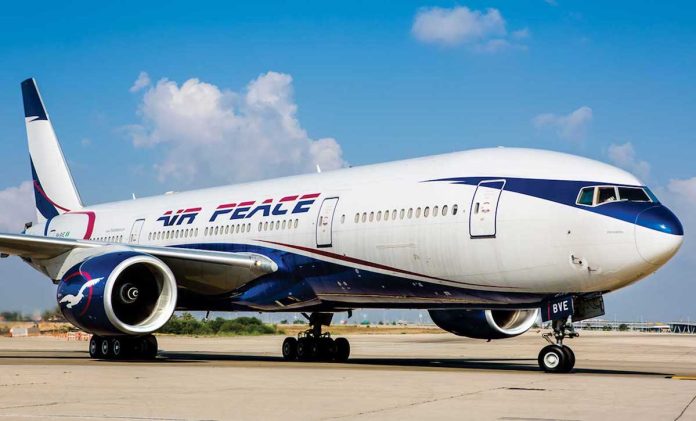
Nigeria’s largest carrier, Air Peace, will in September commence the construction of a Maintenance, Repair and Overhaul (MRO) facility in Lagos, a project expected to be completed within 12 to 15 months. The development is set to significantly strengthen the country’s aviation sector by reducing reliance on overseas maintenance.

The Chairman of Air Peace, Allen Onyema, disclosed this on Wednesday after returning from Brazil, where he accompanied President Bola Tinubu on an official visit that included the signing of a direct air service agreement between Nigeria and Brazil.

“We are increasing our partnership with Embraer. By September 17, we are going to inaugurate the commencement of construction of our new MRO, and Embraer will operate maintenance for Embraer jets. By God’s grace, we will lay that foundation here in Lagos,” Onyema said.

He explained that the facility will eliminate the need to send Embraer aircraft abroad for servicing, saving both time and cost. “You will now be able to do it here, and people will also come to Nigeria to do the same,” he added. The MRO is being developed in partnership with Brazilian aircraft manufacturer Embraer.

Onyema stressed that Air Peace’s approval to operate the Nigeria-Brazil route was not simply a result of its investment in Embraer aircraft but a recognition of the airline’s proven capacity and readiness. The new route is expected to launch in the third quarter of 2025, with official endorsements from both President Tinubu and Brazilian President Luiz Inácio Lula da Silva.

“In Brazil, they signed several MoUs, but what really impressed me was their partnership approach, one that respects our sovereignty and is mutually beneficial,” Onyema noted. “President Lula’s warmth showed a genuine eagerness to work with Nigeria.”

Minister of Aviation and Aerospace Development, Festus Keyamo, commended President Tinubu’s role in advancing the bilateral agreement, highlighting its economic importance.

“Brazil is the biggest economy in South America, and Nigeria is considered the biggest economy in Africa. Connecting these two economies was very key to both presidents,” Keyamo said.

He observed that trade between the two countries had fallen sharply over the past decade, from $10bn to $2bn, and described the new flight connection as a crucial step toward reversing that decline.

BizWatchNigeria.Ng
Privacy Overview

This website uses cookies so that we can provide you with the best user experience possible. Cookie information is stored in your browser and performs functions such as recognising you when you return to our website and helping our team to understand which sections of the website you find most interesting and useful.