Now you can find the Week 13 pool fixtures 2025: pool fixtures for this week, this week pool fixtures, football pools results and fixtures, pool fixtures this week, classic pool fixtures, Aussie pool fixtures, UK pool fixtures, advance pool fixtures, Australia pool fixtures, pool panel results, pool result today Saturday, pool results and fixtures this week, fortune soccer pool fixtures.
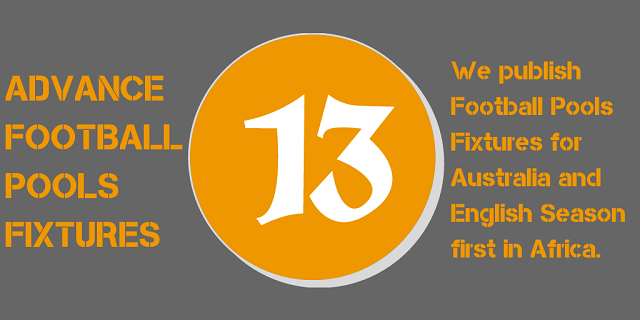
Find all the Week 13 pool fixtures on Bizwatchnigeria.ng as soon as they are released by the FPA (Football Pools Authority).
Pool Fixtures For This Week: 13; SEASON: UK 2025/2026
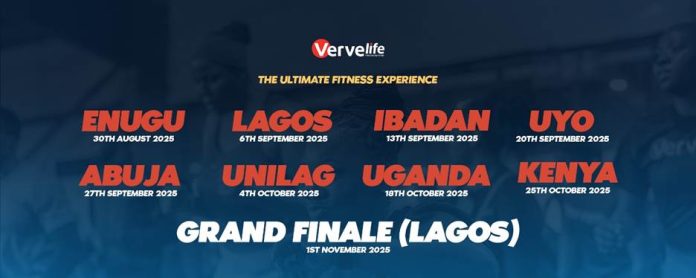
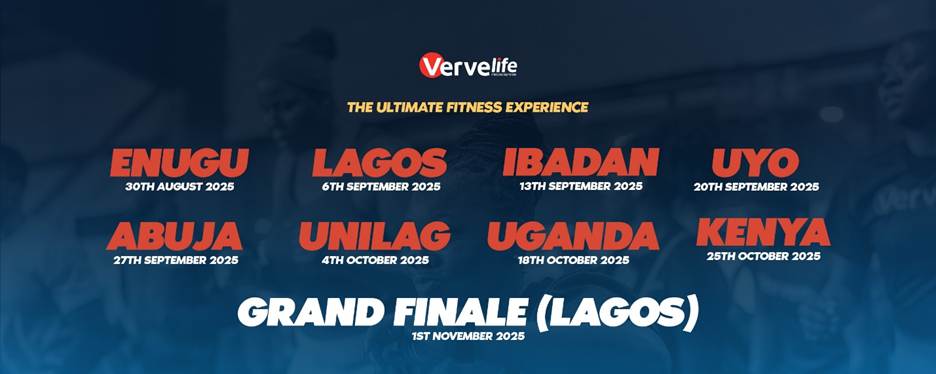
VerveLife, Africa’s Biggest Fitness Platform, championed by Verve, the leading domestic payments card and token brand, has announced an exciting calendar of fitness events in the build-up to the highly anticipated Vervelife Grand Finale, scheduled to hold on November 1st, 2025, at the prestigious Eko Convention Centre in Lagos.
The Vervelife satellite events will kick off in Enugu on August 30th, followed by Vervelife Abuja on September 27th. The movement will then extend beyond Nigeria’s borders with Vervelife Nairobi and Vervelife Kampala events both taking place in October, further reinforcing VerveLife’s multinational footprint.
With this year’s theme, Elev8, VerveLife is set to deliver a richer, more immersive experience that extends beyond fitness to embrace wellness, entertainment, and lifestyle. Each satellite event will feature a holistic mix of high-energy workouts and thrilling music by renowned and well-trained fitness trainers.
Speaking on the upcoming events, Tomi Ogunlesi, Divisional Head for Brands, Communications and CSR at Interswitch stated:
“Vervelife has grown beyond a fitness event, into a movement that inspires healthier lifestyles, fosters community, and celebrates African vibrancy. This year, we are also elevating the entire Vervelife experience with new venues, designated masterclasses, and an expanded Pan-African presence.
Our satellite events in Enugu, Abuja, Nairobi, and Kampala will set the tone for an unforgettable grand finale in Lagos, where our teeming community will come together to celebrate life, wellness, and culture.”
Beyond the satellite events, Vervelife will also be present at other key fitness events across Nigeria, including Tabata Fest Ibadan on September 13; the Uyo Fit Fest on the 20th of September , and 6000 Secs at the University of Lagos on the 4th of October, further cementing VerveLife’s positioning as the heartbeat of fitness and lifestyle communities across Africa.
The climax of the season will be the VerveLife Grand Finale on November 1st, 2025, at the Eko Convention Centre, Victoria Island, Lagos, featuring stellar trainer workout sessions, exciting masterclasses and an electrifying afterparty.
For more information on VerveLife 8.0, the full calendar of satellite events, and partner updates, visit myverveworld.com/life or follow VerveLife on Instagram, TikTok and Twitter, @Vervelife_
Global oil prices edged higher on Tuesday as renewed geopolitical tensions between Russia and Ukraine triggered concerns over supply disruptions, while investors awaited fresh direction from the upcoming OPEC+ policy meeting.
Brent crude futures advanced by 0.5% to $68.35 per barrel, compared with the previous settlement of $68.04. Similarly, U.S. benchmark West Texas Intermediate (WTI) crude gained 0.5% to $64.73 from $64.41 in the earlier session.
The ongoing conflict in Eastern Europe continues to weigh heavily on energy markets. Russia and Ukraine have intensified aerial assaults in recent weeks, targeting critical transport and energy infrastructure. Ukraine reported that a wave of overnight Russian drone strikes left parts of the southern city of Odesa without power.
According to Ukraine’s Air Force, its defense systems intercepted 126 out of 142 drones launched by Russian forces overnight. In response, U.S. Treasury Secretary Scott Bessent signaled that Washington could impose fresh sanctions, stressing that “all options are on the table” amid Moscow’s unrelenting strikes.
Fears of prolonged hostilities and possible new sanctions on Russia have compounded concerns over tighter global oil supplies, lending further support to prices.
Market participants are closely watching the OPEC+ meeting scheduled for September 7. At its last session, the alliance — comprising Saudi Arabia, Russia, Iraq, the UAE, Kuwait, Kazakhstan, Algeria, and Oman — approved a production hike of 547,000 barrels per day (bpd) for September.
The group highlighted a stable global economic outlook and strong market fundamentals, reflected in low stockpiles, as reasons for the adjustment. However, OPEC+ also noted that voluntary cuts could be paused or reinstated, depending on evolving market conditions.
The Debt Management Office (DMO) has called on Nigerian state governments to adopt more responsible borrowing practices and ensure efficient use of loans in order to sustain long-term economic growth.
DMO Director-General, Patience Oniha, delivered the charge at a World Bank-supported workshop on “Borrowing Guidelines for Top Policy Makers” held in Lagos on Tuesday.
She explained that Nigeria operates a single economy where fiscal actions at the state level directly impact the federal balance sheet. Oniha emphasized the need for states to strictly follow existing borrowing laws and prioritize productive investments.
“Borrowed funds must be put to good use. Debt should be managed in a sustainable manner to avoid the mistakes of the past. Nigeria has experienced debt crises before, and everything must be done to prevent another,” Oniha cautioned.
The DMO boss urged states to diversify their financing models by exploring Public-Private Partnerships (PPPs) for infrastructure development. According to her, PPPs attract private capital and technical expertise, reducing the government’s financial burden while creating jobs and delivering better-quality services.
She also stressed the importance of improving tax administration to enhance fiscal revenues. “Efficient tax collection boosts government resources without raising rates. It reduces leakages, combats corruption, and ensures more funds are available for investment in health, education, and infrastructure,” she added.
Speaking at the event, Lagos State Commissioner for Finance, Abayomi Oluyomi, echoed the call for prudent borrowing. He said responsible debt management is essential to meet the social contract between governments and citizens.
Oluyomi noted that while Lagos is committed to sustainable fiscal policies, exchange rate volatility has significantly raised its debt service costs. The workshop was aimed at equipping policymakers with legal frameworks and best practices for effective debt governance.
The Bureau of Public Enterprises (BPE) has revealed plans to list two electricity distribution companies (DisCos) and one generation company (GenCo) on the Nigerian Stock Exchange through Initial Public Offerings (IPOs).
BPE Director-General, Ayodeji Gbeleyi, disclosed this during a press briefing in Abuja on Tuesday. While declining to name the firms for confidentiality reasons, he confirmed that shareholder loan agreements had already been finalized for 10 of the 11 DisCos, with disbursements expected soon.
He also noted that the privatization of five GenCos remains suspended due to challenges posed by exchange rate volatility and limitations within the transmission network, which have restricted participation in the eligible customer scheme.
Gbeleyi further explained that the bureau is supporting the Federal Government’s energy sector agenda by accelerating key projects, including the Distribution Sector Recovery Programme (DISREP), Afam III Fast Power Project, and the Makurdi Hydropower Plant.
As part of its economic diversification drive, BPE is also working on commercialising strategic agencies such as the National Parks Service, Nigeria Film Corporation, Federal Mortgage Bank of Nigeria (FMBN), and Federal Housing Authority (FHA).
Additionally, plans are underway for the concession of five airports and the revitalisation of the Baro Inland Port in partnership with the Ministry of Marine and Blue Economy.
Despite progress, Gbeleyi highlighted obstacles such as limited PPP legal frameworks, resistance to reforms by some ministries and agencies, inadequate funding, and legacy litigations. He said the bureau is collaborating with the Ministry of Budget and Economic Planning to strengthen the pipeline of PPP projects.
The United Kingdom has committed $7.5 million to Nigerian agricultural technology company Babban Gona, in a move aimed at enhancing food security and climate resilience for smallholder farmers in northern Nigeria.
The British Deputy High Commissioner in Lagos, Jonny Baxter, announced the investment on Tuesday, stating that it would address long-standing barriers such as limited access to finance, poor-quality farm inputs, inadequate training, and unreliable markets.
Although northern Nigeria accounts for 60% of the country’s maize output, productivity levels remain low due to climate-related risks including drought and flooding. Post-harvest losses have been estimated at up to 30%.
Babban Gona’s AI-powered platform seeks to resolve these challenges by providing farmers with access to financing, improved seeds, agronomic training, storage facilities, and market linkages.
Baxter noted that the organisation’s franchise model enables top farmers to operate micro-enterprises, distributing inputs and securing funding from local banks. By 2029, the initiative is expected to benefit around 140,000 smallholder farmers.
UK Trade Envoy to Nigeria, Florence Eshalomi, described the investment as a milestone in the UK-Nigeria partnership, saying it would accelerate inclusive agricultural growth and climate adaptation.
Babban Gona’s Managing Director, Kola Masha, expressed gratitude to the UK, recalling that British institutions were the company’s first institutional investors in 2013. He added that the renewed commitment underscores shared goals of transforming rural livelihoods through sustainable agriculture.
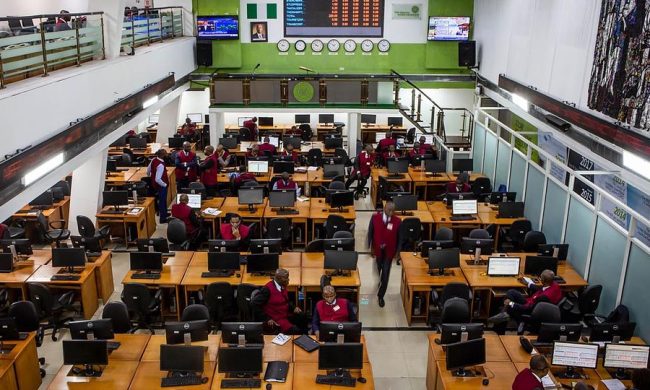
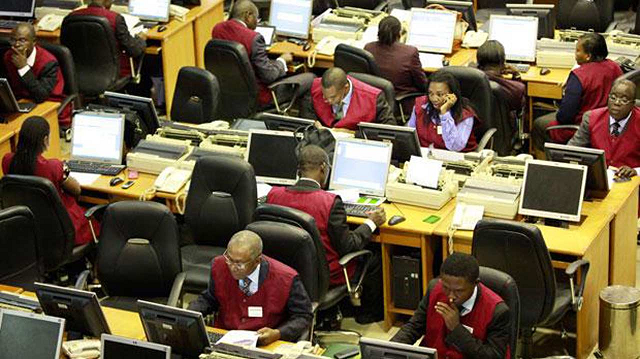
The Nigerian Exchange (NGX) witnessed a significant downturn on Tuesday as selloffs in large-cap stocks wiped off approximately N596 billion from investors’ wealth.
Market capitalisation dropped by 0.67% to close at about N87.81 trillion, while the All-Share Index fell to 138,780.55 points. Year-to-date gains moderated to 34.83%. Heavy losses in Lafarge Africa (-9.9%), Transcorp (-4.3%), Dangote Sugar (-5.2%), and GTCO (-1.7%) drove the bearish session. Cadbury Nigeria also faced sell pressure.
Trading activity slowed as total volumes declined by 0.1% to 407.57 million units, valued at N39.87 billion across 31,406 deals. GTCO was the most traded stock by volume (32.61 million units), while Seplat Energy led in value terms with N28.45 billion.
Sector performance reflected widespread weakness, with Insurance (-2.2%), Industrial Goods (-1.5%), Consumer Goods (-1.4%), and Banking (-0.6%) all closing in the red. Oil & Gas was the only gainer, posting a marginal 0.1% rise on buying interest in Oando (+1.04%).
Market sentiment remained broadly negative, with 46 losers compared to just 11 gainers. Wema Bank, AIICO, and Prestige Assurance all fell by 10% each, while NCR and Austin Laz posted the day’s maximum gains at 10%.
Analysts attributed the slump to weak investor confidence and persistent volatility across key sectors.
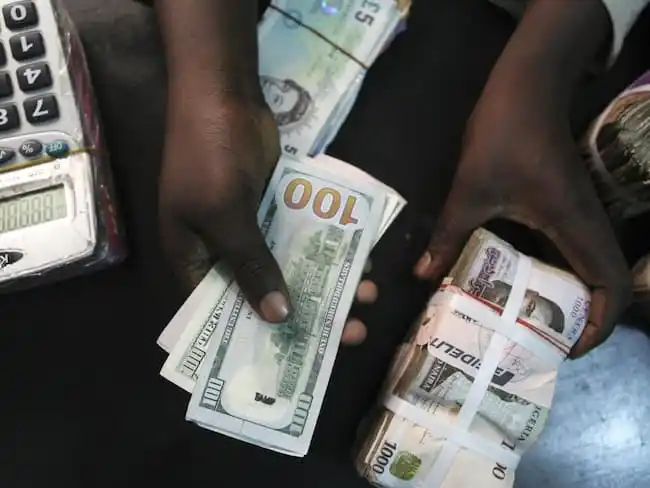
The exchange rate between the Naira and the US dollar, according to the data released on the FMDQ Security Exchange, the official forex trading portal, showed that the naira closed at 1527.00 per $1 on Tuesday, Septewmber 1st , 2025. The naira traded as high as 1525.00 to the dollar at the investors and exporters (I&E) window on Sunday.
Dollar to naira exchange rate today black market (Aboki dollar rate):
The exchange rate for a dollar to naira at Lagos Parallel Market (Black Market) players buy a dollar for ₦1540 and sell at ₦1524 on Monday 1st September, 2025, according to sources at Bureau De Change (BDC).
Please note that the Central Bank of Nigeria (CBN) does not recognize the parallel market (black market), as it has directed individuals who want to engage in Forex to approach their respective banks.
Dollar to Naira Black Market Rate Today
Dollar to Naira (USD to NGN)
Black Market Exchange Rate Today
Buying Rate
₦1540
Selling Rate
₦1524
Dollar to Naira CBN Rate Today
Dollar to Naira (USD to NGN)
CBN Rate Today
Highest Rate
₦1531
Lowest Rate
₦1527
Please note that the rates you buy or sell forex may be different from what is captured in this article because prices vary.
The Nigerian Exchange Limited (NGX) has suspended trading in the shares of three insurance companies for failing to file their audited financial statements for the year ended December 31, 2024.
The affected firms are Regency Alliance Insurance Plc, International Energy Insurance Plc, and Universal Insurance Plc. The suspension, effective September 1, 2025, was carried out in line with NGX’s Rules for Filing of Accounts and Treatment of Default Filing.
According to the Exchange, issuers that fail to submit their accounts within the regulatory cure period are issued a second deficiency notification, suspended from trading, and reported to the Securities and Exchange Commission (SEC) within 24 hours.
“Consequently, trading in the shares of Regency Alliance Insurance Plc, International Energy Insurance Plc, and Universal Insurance Plc has been suspended from the facilities of the Nigerian Exchange Limited, effective Monday, September 1, 2025, for not filing their audited financial statements for the year ended December 31, 2024. The suspension will be lifted once the outstanding financial statements are submitted,” NGX said in a statement.
The Exchange added that the action was necessary to protect investors and uphold market integrity. The SEC has been formally notified, while trading in the affected securities will remain suspended until the firms comply with their filing obligations.
Stakeholders have cautioned that Nigeria’s aspiration to build a $1 trillion economy will remain elusive unless deliberate investments and policy reforms are directed towards unlocking the potential of micro, small, and medium enterprises (MSMEs).
The warning was issued at the Africa Global Economic Forum, held in Lagos over the weekend, where government officials, business leaders, and economic players emphasized the central role of MSMEs in driving sustainable growth.
Accounting for 96 per cent of all businesses, contributing nearly half of Nigeria’s GDP, and employing more than 80 per cent of the workforce, MSMEs were described as the backbone of the economy. Yet, participants noted, most remain underfinanced and underserved, curtailing their ability to scale and compete globally.
“What you need to be able to provide is access, instant credit, digital savings capabilities and value-added services. Most of the microfinance banks that are actually thriving also incorporate things like financial literacy,” said Eric Ntumba, Chief Executive Officer of Baobab.
Echoing this, Executive Director of Keystone Bank, Nnenna Okoro, identified access to finance as a critical bottleneck. She called for more innovative credit assessment models, including the use of SMEs’ digital footprints, cash flows, and business histories.
Participants also highlighted that across Nigeria, traders and young entrepreneurs possess the skills and creativity to thrive globally, but limited access to loans, modern markets, and business support systems continues to stifle growth.
Beyond financing, the forum emphasised the need for comprehensive policy reforms, structured mentorship programmes, and improved infrastructure to help MSMEs expand.
Speakers stressed that strengthening the MSME sector goes beyond business development—it is a strategic pathway to realising Nigeria’s trillion-dollar economy target, ensuring job creation, innovation, and inclusive growth.
As Africa’s largest economy grapples with global headwinds, the forum concluded that MSMEs must remain at the heart of the nation’s long-term economic transformation agenda.
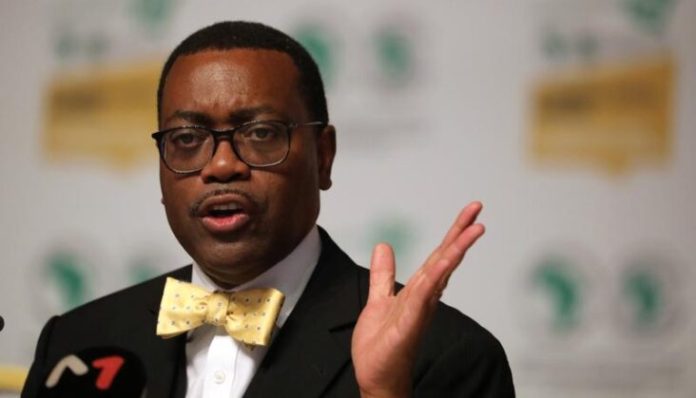
The African Development Bank Group (AfDB) yesterday witnessed a historic transition of leadership as Dr Akinwumi Adesina stepped down after 10 years at the helm, handing over to Mauritanian economist Dr Sidi Ould Tah, the institution’s 9th President.
The swearing-in ceremony, held at the Bank’s headquarters in Abidjan, Côte d’Ivoire, was attended by finance ministers and central bank governors from its 81 member states. Presiding over the event was Ludovic Ngatsé, Chair of the Board of Governors and Congo’s Minister of Finance.
For many, the event marked more than a routine change of leadership. It underscored continuity, renewal, and the resilience of Africa’s foremost development finance institution.
Adesina, visibly emotional in his farewell remarks, described his tenure as “the greatest honour and privilege” of his professional career.
“Ten years ago, we embarked on a journey together—a journey of transformative growth for our Bank and for our continent,” he said.
Under his stewardship, AfDB’s capital base grew from $93 billion to $318 billion, while its programmes reached more than 565 million people across Africa. The Bank’s “High 5” strategic priorities—Light Up and Power Africa, Feed Africa, Industrialise Africa, Integrate Africa, and Improve the Quality of Life for the People of Africa—became a continental blueprint for inclusive growth.
The impact was wide-ranging: powering homes and industries, boosting agricultural output, enhancing healthcare, opening trade corridors, and expanding access to clean water. The Bank also strengthened Africa’s economic integration by supporting the African Continental Free Trade Area.
Adesina leaves behind an institution that not only scaled up infrastructure financing—exceeding $55 billion—but also preserved its coveted triple-A credit rating, bolstering its standing as one of the most trusted development financiers globally.
As the mantle passes to Dr Tah, stakeholders expressed optimism that the AfDB will sustain its momentum and continue shaping Africa’s development trajectory in the years ahead.
The Nigerian Association of Resident Doctors (NARD) has issued a 10-day ultimatum to the Federal Government and relevant agencies to meet its welfare demands or face a nationwide strike.
In a communiqué signed by its President, Dr. Tope Osundara; General Secretary, Dr. Oluwasola Odunbaku; and Publicity Secretary, Dr. Omoha Amobi, the association said the decision followed an Extraordinary National Executive Council (E-NEC) meeting held virtually on Sunday.
NARD recalled that it had earlier given a three-week ultimatum in July, later extending it by another three weeks “in the interest of industrial harmony.” However, it said the government failed to honour its promises.
The doctors condemned the non-payment of the 2025 Medical Residency Training Fund (MRTF) to many members, as well as outstanding five-month arrears from the 25–35 per cent salary review under the Consolidated Medical Salary Structure (CONMESS). They also cited the non-payment of the 2024 Accoutrement Allowance and other outstanding salary arrears.
The communiqué further decried the “unjust downgrading” of postgraduate membership certificates of the West African Colleges of Physicians and Surgeons by the Medical and Dental Council of Nigeria, and the persistent delay in issuing certificates by the National Postgraduate Medical College of Nigeria.
NARD also criticised the Kaduna State Government for failing to implement agreements reached with its members at Barau Dikko Teaching Hospital and faulted the Oyo State Government for neglecting challenges facing doctors at LAUTECH Teaching Hospital, Ogbomosho, despite an ongoing strike there.
While commending states that have paid the 2025 MRTF, the doctors demanded immediate payment of all outstanding allowances, restoration of postgraduate certificate recognition, and resolution of welfare issues in Kaduna and Oyo states.
“The E-NEC extends the ultimatum by a final 10 days to all relevant government agencies to meet these demands. Failure to do so within this period, expiring on Wednesday, September 10, 2025, will leave the NEC with no other option than to embark on a nationwide strike,” the communiqué warned.
Gold prices soared to an all-time high on Tuesday, climbing above $3,500 per ounce as investors flocked to safe-haven assets in response to mounting global economic uncertainty.
The precious metal touched $3,501.59 an ounce during early Asian trading, surpassing its previous peak of $3,500.10 set in April.
The rally comes against the backdrop of a weaker US dollar and growing speculation that the Federal Reserve may soon cut interest rates. However, concerns over persistent inflation and the central bank’s policy independence have unsettled markets.
On Friday, Wall Street retreated from record highs after a key US inflation gauge accelerated, narrowing the Fed’s room for manoeuvre. Political pressure has further complicated the outlook, with former President Donald Trump recently threatening to dismiss Fed Governor Lisa Cook over allegations of mortgage fraud.
Adding to market unease, a US appeals court ruled that many of Trump’s tariffs—which have reshaped global trade—were unlawful. Nevertheless, the court allowed the duties to remain in place temporarily, leaving investors bracing for a potential Supreme Court battle.
With uncertainty clouding both economic and political horizons, gold’s historic rise underscores its enduring appeal as a hedge against volatility.
Stanbic IBTC Pension Managers, a subsidiary of Stanbic IBTC Holdings PLC, successfully hosted its two-day high-level virtual Employers Forum recently; attracting a diverse mix of professionals, thought leaders and policymakers to discuss the theme, ‘The pension journey: Collaborating for a secure tomorrow.’
The well-attended event created a platform for robust discussion with key stakeholders from the public and private sectors to explore innovative strategies for enhancing pension administration, simplifying remittance processes, and improving access to pension benefits.
In his keynote address, Olumide Oyetan, Chief Executive of Stanbic IBTC Pension Managers, highlighted the need for enhanced partnership across diverse employer sectors and key stakeholders. He said, ‘Our theme, The pension journey: Collaborating for a secure tomorrow, captures the essence of our shared belief – that retirement security is a collective endeavour. It begins with trust, strengthens through partnership, and thrives on shared responsibility.’
The two-day event featured panel discussions and expert insights on recent regulatory updates, navigating pension benefits with ease and a live demonstration of the new payment platform designed to streamline pension remittances and eliminate reconciliation challenges. Participants were encouraged to use the organisation’s self-service channels – Interactive Voice Response (IVR), web portal (MyPension portal), Short Code 30388 or the Mobile App to engage with their relationship managers and perform other critical activities.
In closing, Nike Bajomo, Executive Director, Business Development at Stanbic IBTC Pension Managers expressed gratitude to all partners and participants stating, “It is often said that the strength of any system lies not just in its design, but in the people who uphold it. Today, you reminded us about why this partnership is so vital. You asked insightful questions, shared your challenges openly, and reaffirmed your commitment to a better future.”
As a forward-thinking business, Stanbic IBTC Pension Managers remains committed to walk the pension journey with its partners, ensuring that every Nigerian retires with dignity, security, and peace of mind.
The conversation continues beyond the event, as Stanbic IBTC Pension Managers invites all Nigerians, from salaried employees to entrepreneurs, to build stronger partnerships and take active steps toward building secure futures.
For more insights into the event or to learn about Stanbic IBTC Pension Managers’ pension solutions, visit www.stanbicibtcpension.com .
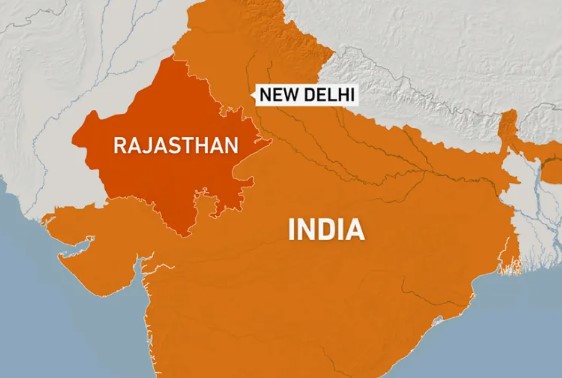
India will begin large-scale semiconductor production by the end of 2025, Prime Minister Narendra Modi has announced, positioning the country as a future global hub for chip design and innovation.
Speaking at the opening of the annual Semicon India conference in New Delhi on Tuesday, Modi disclosed that test chips from technology giants Micron and Tata were already being produced, marking significant progress in the nation’s semiconductor roadmap.
“Commercial chip production will begin this year. This reflects how rapidly India is advancing in the semiconductor sector,” the Prime Minister said.
India’s semiconductor market, valued at $38 billion in 2023, has expanded to between $45 billion and $50 billion in 2024–2025. Government projections place the sector at $100–110 billion by 2030. Currently, 10 semiconductor projects worth $18 billion are underway, including two state-of-the-art 3-nanometre fabrication facilities in Noida and Bengaluru.
“Our journey began late, but nothing can stop us now,” Modi declared, underscoring India’s competitive edge in semiconductor equipment production, critical material supplies, and services spanning research and development, artificial intelligence, big data, and cloud computing.
Highlighting the country’s talent pool, Modi noted that India contributes nearly 20 percent of the global semiconductor design workforce.
The announcement comes on the heels of Japan’s pledge to scale up investments in India to 10 trillion yen ($68 billion), covering semiconductor and artificial intelligence cooperation, during Modi’s recent visit to Tokyo.
As the world’s fifth-largest and fastest-growing major economy, India is seeking new drivers of growth amid global trade headwinds and shifting supply chains. With international chip demand surging and production concentrated in a few regions, India aims to build a comprehensive ecosystem covering design, manufacturing, and packaging to enhance both self-reliance and global competitiveness.
“Today’s India inspires confidence in the world. When the chips are down, you can bet on India,” Modi added.
The Federal Government has attributed the sharp rise in diaspora remittances to recent reforms in the financial sector, describing the development as a sign of renewed confidence in the Nigerian economy.
According to figures from the Central Bank of Nigeria (CBN), remittance inflows have grown from an average of $200 million to about $600 million monthly in the last two months—a 200 per cent increase.
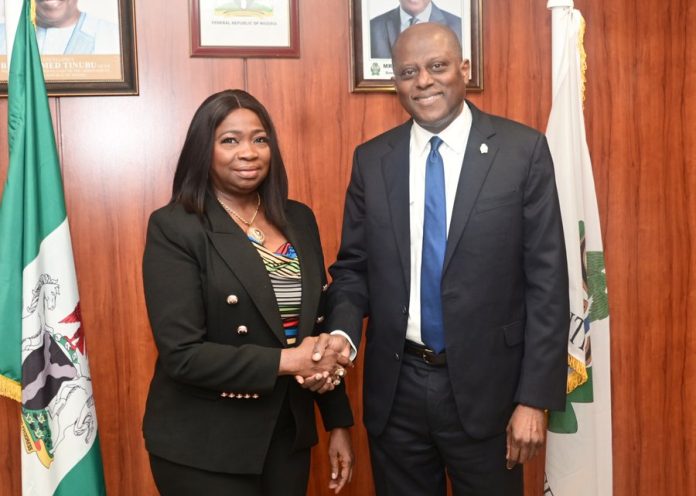
The Chairman of the Nigerians in Diaspora Commission (NiDCOM), Mrs Abike Dabiri-Erewa, welcomed the surge, saying it reflected the impact of key CBN policy measures. In a statement by NiDCOM’s Head of Media and Public Relations, Abdur-Rahman Balogun, she praised the reforms introduced by CBN Governor, Mr Olayemi Cardoso, including the Non-Resident Bank Verification Number (BVN) and a more competitive exchange rate regime.
“These policies have encouraged Nigerians abroad to use official channels to remit funds, boosting confidence and transparency in the system,” Dabiri-Erewa said, noting that the inflows could climb to $1 billion monthly by 2026 if current trends continue.
She also reiterated NiDCOM’s commitment to strengthening diaspora engagement through initiatives such as the Nigerian Diaspora Investment Summit, National Diaspora Day, and the Diaspora Youth Summit. While commending the patriotism and trust of Nigerians in the diaspora, she assured that President Bola Tinubu’s administration remained dedicated to the welfare of citizens at home and abroad.
Meanwhile, speaking at the Delta State–Brazil Business and Investment Roundtable in São Paulo, CBN Governor Cardoso confirmed that the reforms were yielding results.
“Our exchange rate is becoming a lot more competitive. Those who previously sought other channels to send money home no longer have to do so,” Cardoso said, stressing that the improved inflows underscored growing trust in the economy.
The Federal Government has called on traditional medicine practitioners in Nigeria to subject their products and practices to rigorous scientific evaluation to ensure safety, efficacy, and wider acceptance.
Minister of State for Health, Dr Adekunle Salako, made the appeal in Abuja during the commemoration of the 2025 African Traditional Medicine Day. He emphasised that research and clinical studies remain critical to dispelling doubts surrounding traditional medicine and to paving the way for its integration into the national healthcare system.
“Evidence is the bridge between belief and policy. It is what will allow traditional medicines to move from the periphery to the mainstream of healthcare delivery, not just in Nigeria, but also across the continent,” Salako stated. “Our goal is to promote documentation and standardisation of practices, and ultimately achieve full integration of evidence-based traditional medicine into our health system.”
The minister recalled that long before the introduction of modern medical systems, Nigerian communities relied on herbal remedies, spiritual healing, and indigenous knowledge to manage diseases. He noted that traditional medicine continues to serve as the primary and sometimes the only source of healthcare for millions of Nigerians, particularly those in rural and underserved communities.
Salako further observed that the COVID-19 pandemic underscored the need for resilient and diversified health systems while reigniting global interest in natural and indigenous remedies. He urged African nations to seize this renewed momentum to project traditional medicine onto the global stage, with scientific evidence as the key to credibility.
He stressed that Nigeria’s traditional medicine sector holds vast potential to contribute to the Federal Government’s agenda of unlocking the healthcare value chain through local manufacturing, job creation, economic growth, and improved healthcare access.
Running a small business in Nigeria isn’t for the faint-hearted. One week, sales are booming, and you’re feeling unstoppable; the next, you’re staring at bills and wondering how the numbers will add up. Profit, when it comes, feels great—but keeping it consistent? That’s the real challenge.
The truth is, sustaining profit goes beyond pushing sales. It’s about smart money management, steady customer relationships, and making small but strategic choices that compound over time. Let’s walk through 10 practical ways to keep your business not just afloat, but thriving.
1. Know Your Numbers
If you don’t know what’s coming in and what’s going out, you’re basically flying blind. Every small business owner needs to track their finances closely.
Keep tabs on three key things:
Revenue: the money flowing in from sales.
Expenses: rent, staff salaries, supplies, utilities—everything you spend to keep the lights on.
Profit margin: what’s left after covering costs.
Here’s the thing—if you sell ₦500,000 in a month but spend ₦400,000 on expenses, that’s ₦100,000 profit, or 20%. If that dips to 10%, you’ve got a problem to fix quickly.
💡 Pro tip: Platforms like Moniepoint Business Account let you track income and expenses in real time, so you’re never guessing.
2. Control Your Costs
More sales don’t automatically equal more profit if your expenses keep ballooning. Cutting costs doesn’t mean cutting corners—it means being intentional.
Some practical moves:
Negotiate with suppliers for better deals.
Buy in bulk when demand justifies it.
Watch out for waste—unused stock, electricity left running, unnecessary staff hours.
Outsource when full-time hires don’t make sense.
Think of a bakery buying flour directly from wholesalers. That one decision could slash 15% off costs and bump up profit without touching prices.
3. Price Smartly
Many small businesses fall into the trap of underpricing just to “keep customers.” But if your prices barely cover costs, you’re digging your own hole.
To price better:
Know the actual cost of production.
Add a healthy but fair margin.
Focus on the value you provide, not just the number.
Imagine this: it costs ₦3,000 to make a pair of shoes. Selling at ₦3,200 nets only ₦200 profit. But by packaging them well, branding them stylishly, and selling at ₦3,800, you not only make more profit but also position your product as premium.
4. Diversify Your Income
Relying on one product or client is risky business. If demand dips, your profit takes a direct hit.
Ways to spread the risk:
Add related services or complementary products.
Run seasonal offers.
Offer subscription or delivery add-ons.
Take a laundry service as an example—adding ironing or pickup/delivery services creates extra streams of income without massive costs.
5. Build Strong Customer Relationships
Here’s a truth many forget: retaining a customer is far cheaper than finding a new one. Loyal customers buy repeatedly, spend more, and often refer friends.
To build loyalty:
Keep your service consistent.
Reward regular customers.
Stay in touch—SMS, WhatsApp updates, or email newsletters go a long way.
A salon offering “every 5th haircut free” gives customers a reason to keep coming back, while also spreading word-of-mouth.
6. Manage Cash Flow Wisely
Even profitable businesses collapse when cash dries up. Profit is theory, but cash flow is survival.
Ways to stay safe:
Send invoices fast, chase late payments.
Avoid tying up money in slow-moving stock.
Always prepare for seasonal slumps.
Think of a caterer who requests 70% upfront before an event—no scrambling for funds to buy ingredients, no debt stress.
7. Invest in Marketing
If people don’t know about your business, they can’t patronize you. Marketing isn’t optional—it’s your growth engine.
Budget-friendly moves include:
Setting up active social media profiles.
Sharing customer reviews and testimonials.
Running small, targeted ads during peak demand.
A boutique posting daily Instagram updates with fresh arrivals, combined with exclusive follower discounts, keeps buyers engaged and loyal.
8. Keep Improving Your Products or Services
Markets shift, customers evolve, and competitors adapt. If you’re not improving, you’re losing.
Ways to stay ahead:
Ask customers what they want.
Keep an eye on industry trends.
Test new ideas with a small group before going full scale.
Picture a café adding sugar-free drinks after customers ask for healthier options. That tiny tweak can open the door to a whole new customer segment.
9. Use Technology to Work Smarter
Technology isn’t just for big corporations—it’s a lifeline for small businesses.
Moniepoint’s POS systems, for instance, let you accept payments instantly, track sales trends, and access funds without hassle. That’s less stress and more focus on growing.
10. Plan for the Long Term
Quick wins are nice, but sustaining profit is a marathon, not a sprint.
Steps that pay off:
Set annual financial goals and check progress.
Build an emergency cushion for rainy days.
Reinvest a portion of profits into better equipment, staff training, or marketing.
Think of a printing shop using its profits to buy a high-end machine. Suddenly, it can take on bigger contracts, scale faster, and earn more.
With Moniepoint’s POS and business banking solutions, you get:
A simple app to track income and expenses.
Transparent charges—no hidden surprises.
Easy savings and cash management tools.
Your small business doesn’t have to just scrape by—it can grow, thrive, and leave a legacy. Start small, stay consistent, and watch your profit story unfold.
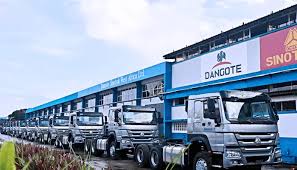
The Dangote Petroleum Refinery has ramped up fuel exports to international markets as major refining plants across the Middle East face extended shutdowns for maintenance.
Industry insiders confirmed on Monday that the $20 billion refinery, located in Lekki, Lagos, has been exporting significant volumes of Premium Motor Spirit (PMS), aviation fuel (Jet A1), and Automotive Gas Oil (diesel) in recent weeks.
According to a refinery official who spoke on condition of anonymity, “We are currently exporting PMS, AGO, and Jet A1 to different countries, taking advantage of the gaps created by refinery closures in the Middle East Gulf.”
Reports from Argus Media indicate that Dangote’s refinery delivered two long-range shipments to the Gulf region between June and July. With Saudi Aramco and other operators preparing to shut down more facilities later in the year, the Gulf gasoline market is expected to tighten even further in the final quarter of 2025.
Saudi Arabia has already halted operations at two of its plants and is preparing to take additional refineries offline. Aramco’s 460,000 barrels per day (bpd) Satorp refinery in Jubail is scheduled for a two-month maintenance shutdown in November and December, while its Riyadh refinery will undergo repairs during the same period. Other plants, including the 400,000 bpd Jizan refinery and the Yasref facility in Yanbu, have also been operating at reduced capacity.
Elsewhere in the region, Kuwait National Petroleum Company is preparing to halt several units at its 490,000 bpd Mina Abdullah refinery for a month-long maintenance starting October 1. India, meanwhile, is expected to increase domestic consumption following the end of the monsoon season, further reducing its export volumes.
This supply squeeze has forced the Gulf to increase gasoline imports, with shipments rising to a seven-month high in July. Data from Vortexa revealed that imports surged to 1.03 million tonnes in July, up 35% from June, marking the highest since January. Saudi Arabia imported 478,000 tonnes of gasoline in July alone, more than triple its June figure, while the United Arab Emirates brought in 864,000 tonnes in August.
Although reports suggested Dangote Refinery faced some operational challenges in August, the company dismissed such claims, stating that it was on track to reach 700,000 bpd output capacity by December.
The export momentum is not entirely new. Earlier this year, Dangote announced that it had successfully sold two cargoes of aviation fuel to Saudi Aramco, while in June and July, the refinery exported around 1 million tonnes of PMS to multiple countries.
Aliko Dangote, President of the Dangote Group, said the refinery is steadily meeting its ambitious goals. “We have now positioned Nigeria as a net exporter of refined petroleum products. Between early June and July 22, we exported nearly 1 million tonnes of PMS within just 50 days,” he stated.
With refinery shutdowns across the Middle East Gulf expected to continue in the short term, analysts believe that Nigeria’s Dangote Refinery is strategically positioned to capture an even larger share of the export market.
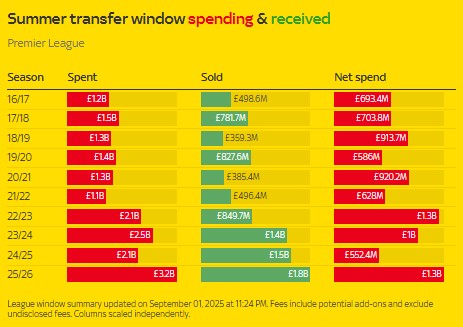
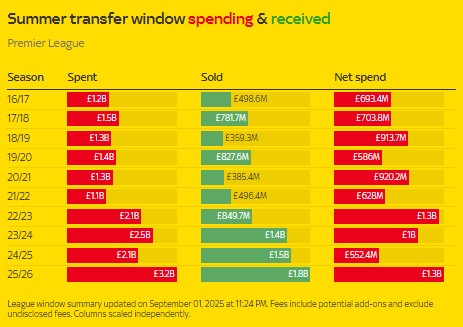
The 2025 Premier League transfer window didn’t just raise eyebrows—it smashed records and rewrote the rules of squad building. With total spending crossing the £3 billion mark, this was a summer where strikers were suddenly back in fashion, mid-table clubs were raided, and player power reared its head once again.
So, what exactly went down? Let’s break it all down—seven big storylines that made this transfer window unforgettable.
1. The £3 Billion Barrier Gets Blown Apart
Clubs didn’t just spend big; they obliterated previous records. The £2.44bn benchmark set in 2023 suddenly looked modest compared to this year’s £3bn spree. On top of that, clubs managed to cash in like never before, banking £1.8bn from sales.
That left us with a net spend of around £1.2bn—a number that makes even the most seasoned accountants wince. It’s a stark reminder that in football finance, sustainability rules may be in place, but ambition often overshadows caution.
2. Liverpool’s Record-Breaking Outlay
If there was one club splashing the cash louder than anyone else, it was Liverpool. They spent a jaw-dropping £446.5m, topping the charts for total outlay. But when you zoom in, it was Arsenal who recorded the highest net spend at £257m, edging past Liverpool’s £218.4m.
On the other end of the spectrum? Bournemouth walked away with £65.8m in profit after shipping off a cluster of their best defenders. It’s a reminder that while some clubs go shopping, others make a living off being the supermarket.
3. The Return of the No. 9
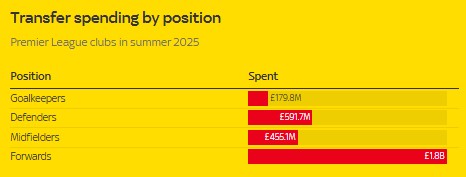
Remember when pundits were saying the traditional striker was extinct? Well, this summer proved the reports were greatly exaggerated. The market went crazy for forwards, and suddenly, every top club wanted a proper No. 9 again.
Liverpool: Alexander Isak (£125m) and Hugo Ekitike (over £80m combined)
Chelsea: Joao Pedro and Liam Delap (£90m)
Arsenal & Man United: Viktor Gyokeres (£63.5m) and Benjamin Sesko (£73.7m)
Spurs: Randal Kolo Muani (loan from PSG)
Even further down the league, Wolves, Brighton, and Everton all snapped up target men. Clearly, the striker renaissance is real.
4. Isak to Liverpool: The Blockbuster Move
The single biggest headline-grabber was Alexander Isak’s £125m switch from Newcastle to Liverpool. For months, Newcastle had resisted, but financial fair play realities eventually forced their hand.
The Swede wanted Champions League football and wasn’t shy about voicing his frustrations. Newcastle’s response? “No promises were broken.” In the end, though, Liverpool got their man, and Isak got his stage.
5. Player Power Still Packs a Punch
Isak wasn’t alone in flexing his influence. Yoane Wissa pushed hard for a move away from Brentford, making public statements about “broken promises” and lack of trust. Eventually, he too got his transfer.
Not everyone was so lucky, though. Wolves striker Jorgen Strand Larsen also hoped for a big move—this time to Newcastle—but stayed put after refusing to force the issue. His professionalism may be admirable, but in today’s game, quiet loyalty doesn’t always get rewarded.
6. Mid-Table Clubs Raided, Agai
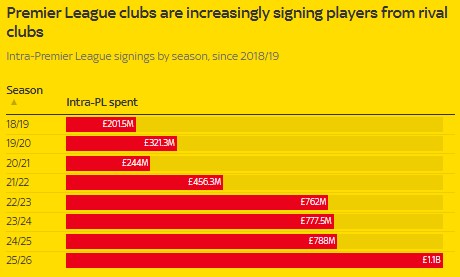
If you’re a Brentford, Brighton, or Bournemouth fan, this summer might have felt like déjà vu. Once again, the so-called “middle-class” clubs became shopping grounds for Europe’s elite.
Bournemouth lost Huijsen, Kerkez, and Zabarnyi—nearly £150m worth of defensive talent.
Brentford cashed in on Bryan Mbeumo and Yoane Wissa for £120m+.
Brighton sold Joao Pedro to Chelsea for £60m.
Wolves waved goodbye to Cunha and Rayan Ait-Nouri (£95.8m combined).
For these clubs, the strategy remains the same: recruit smart, sell high, and hope the cycle can be sustained without falling into a relegation scrap.
7. The New Premier League Reality
So, what’s the big takeaway from this record-breaking window? In a way, the financial gaps feel bigger than ever—Liverpool, Arsenal, and Chelsea are playing in a different economic universe compared to the likes of Crystal Palace or Brentford.
Yet, the middle-tier clubs aren’t doomed. They’ve mastered the art of reinvestment, constantly scouting the next big thing before the giants swoop in. It’s a high-risk model, sure, but it keeps the league unpredictable—and isn’t that why we love it?
Final Whistle
This transfer window wasn’t just about the money (though the numbers are dizzying); it was about shifts in power, changing strategies, and the return of the classic striker. Alexander Isak’s move may go down as the symbol of this summer, but the story is much bigger.
From Liverpool’s lavish spending to Wolves’ reluctant compromises, the 2025 window tells us something clear: the Premier League is evolving, fast—and everyone’s scrambling to keep up.