






Home Blog Page 74

Nigerian Stock Market Falls By 0.15% Amid Profit Taking

Stock Market Maintains Downward slope, Investors Lose N20 Billion

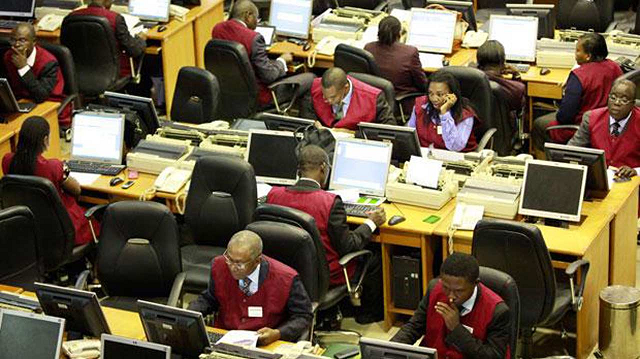
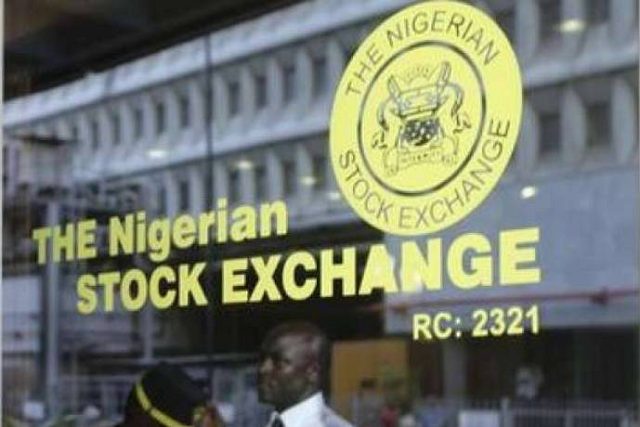
The Nigerian equities market ended in the red on Wednesday as profit-taking activities in mid and large-cap stocks dragged the market performance indices lower by 0.15 per cent.

Data from the Nigerian Exchange (NGX) showed that the market capitalisation declined by N135 billion, settling at N89.063 trillion compared with Tuesday’s N89.198 trillion. Similarly, the All-Share Index dropped by 213.50 points to close at 140,716.10.

The day’s trading session recorded 29 losers against 23 gainers, reflecting a negative market breadth. Top decliners included Deap Capital Management, which dipped 9.42 per cent to close at N1.73; Legend Internet, which lost 9.26 per cent to end at N4.90; and RT Briscoe, which shed 8.16 per cent to close at N3.60. WAPIC Insurance and May & Baker also recorded losses of 8.75 per cent and 7.14 per cent, closing at N2.92 and N16.25 per share, respectively.

On the other hand, Dangote Sugar topped the gainers’ chart, appreciating by 10 per cent to N59.40 per share. Mecure Industries rose by 9.95 per cent to N23.75, while Cornerstone Insurance gained 8 per cent to close at N6.48. Secure Electronic Technology and UPDC also advanced by 8 per cent and 5 per cent, finishing at 81k and N7.35 per share, respectively.

Market activity analysis showed declines in deals, volume, and value. A total of 442.6 million shares worth N16.9 billion were exchanged in 21,684 transactions, compared with 759.1 million shares valued at N25.7 billion traded in 23,657 deals on Tuesday.

Zenith Bank dominated both volume and value with 68.9 million shares worth N4.8 billion. Access Corporation followed with 47.3 million shares valued at N1.2 billion, while FirstHoldCo recorded 46.1 million shares worth N1.4 billion. Fidelity Bank traded 42.3 million shares valued at N868 million, while GTCO transacted 22.9 million shares worth N2.1 billion.
CBN Injects $52m Into Banks To Stabilize Naira Exchange Rate

CBN Lifts Ban On Aboki FX, 439 Other Accounts

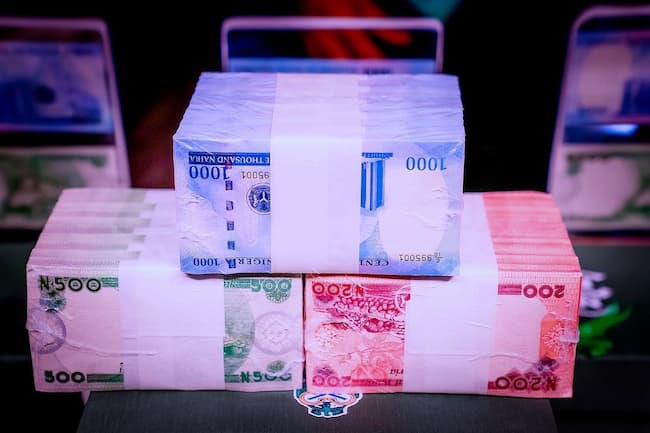
The Central Bank of Nigeria (CBN) has intervened in the foreign exchange (FX) market with a sale of $52 million to authorized dealer banks in a bid to strengthen naira stability and improve dollar liquidity.

Fresh spot FX data revealed that the local currency gained ground following the intervention, as increased supply of the U.S. dollar helped ease market pressure. Analysts at AIICO Capital Limited confirmed that the $52 million injection was executed between ₦1,482.55/$ and ₦1,486.10/$ during Wednesday’s trading session.

The naira appreciated by eight basis points, closing at ₦1,487.3651 to the dollar, supported by lower demand and additional inflows from export proceeds. The exchange rate fluctuated between ₦1,482.55 and ₦1,495.00 within the trading window.

Official figures from the CBN also showed that Nigeria’s foreign reserves climbed to $42.14 billion as of September 22, 2025, reflecting an increase of $104.11 million from the previous day’s level.

Analysts believe the naira is likely to maintain its current levels in the short term, citing the strength of external reserves as a key support factor.

Meanwhile, global commodity markets saw a positive shift as oil prices climbed more than $1 per barrel following stalled talks over resuming oil exports from Iraq’s Kurdistan region. Brent crude surged by $1.88 or 2.85% to settle at $67.85 per barrel, while U.S. WTI crude rose by $1.34 or 2.15% to $63.62.

Gold also rallied to a new all-time high as investors sought safe-haven assets amid geopolitical tensions and expectations of additional rate cuts from the U.S. Federal Reserve. Spot gold gained 0.44% to trade at $3,764.29 per ounce, while December gold futures closed 0.38% higher at $3,782.15.

Market watchers predict oil prices could remain under pressure in the coming weeks as the anticipated restart of the Iraq–KRG pipeline adds fresh supply into the global market.

House Of Reps Launches Oversight Committee On Naira-For-Crude Oil Policy

Bill For State Police Scales Second Reading In The House of Reps

The Speaker of the House of Representatives, Tajudeen Abba, has formally inaugurated an Ad hoc Committee tasked with supervising the implementation of the Federal Government’s Naira-for-Crude Oil policy.

Speaking during the inauguration ceremony on Wednesday, Abba described the initiative as a milestone in ensuring transparency and accountability in Nigeria’s oil and gas sector. According to him, the committee’s mandate will focus on examining the effectiveness, inter-agency coordination, and long-term viability of the new policy.

“The responsibility before this ad-hoc committee demands diligence, integrity, and a sense of national duty,” the Speaker stated. “Your findings and recommendations will not only shape the success of this policy but also influence the future well-being of millions of Nigerians.”

Abba emphasized that the Naira-for-Crude Oil policy is central to Nigeria’s economic stability, revenue generation, and energy security. He added that the 10th House of Representatives remains committed to supporting President Bola Tinubu’s Renewed Hope Agenda, particularly in addressing the economic burdens facing citizens.

The Speaker also called on the committee to prioritize stakeholder engagement, stressing the importance of involving government agencies, oil industry operators, civil society groups, and financial institutions to deliver a holistic outcome.

In his response, Committee Chairman Rep. Boniface Emerengwa (PDP–Rivers) expressed appreciation to the leadership of the House for entrusting them with the assignment. He acknowledged Nigeria’s vast oil reserves but lamented that the sector has not always delivered maximum value to citizens due to challenges such as FX volatility and dollar dependence.

Emerengwa outlined the committee’s mandate to include assessing the feasibility of the policy, identifying risks and opportunities, and engaging with both domestic and international stakeholders to shape evidence-based recommendations.

“History has shown that nations thrive when they embrace bold reforms,” he said. “We will work with transparency, diligence, and inclusivity to ensure this initiative strengthens our economy and safeguards Nigeria’s future.”

The committee pledged to consult widely, deliberate thoroughly, and put national interest above all other considerations as it embarks on its assignment.

NGX Declines As Investors Lose ₦135bn Amid Persistent Selloffs

NGX Records N256bn Loss Last Week

The Nigerian Exchange (NGX) closed in negative territory on Wednesday as sustained selloffs erased ₦135.13 billion in market value, extending the bearish momentum that has gripped equities in recent sessions.

The All-Share Index (ASI) dropped by 0.2% to settle at 140,716.10 points, with losses in major stocks such as MTN Nigeria (-4.8%), Jaiz Bank (-4.4%), and Wapic Insurance (-8.8%) contributing significantly to the decline. The year-to-date return on the NGX slipped further to 36.72% as investors engaged in profit-taking ahead of third-quarter earnings releases.

Market activity was mixed, with trading volume falling by 6.16% to 431 million units while the total value of trades climbed to ₦16 billion across 20,849 deals. Zenith Bank led both the volume and value charts, accounting for 68 million shares and ₦4.7 billion worth of transactions.

Investor sentiment tilted bearish, with 28 equities closing lower against 23 gainers, translating into a negative market breadth of 0.8x. Deap Capital (-9.4%) and Legend Int’l (-9.3%) led the day’s laggards, while Dangote Sugar (+10.0%) and Mecure (+10.0%) topped the gainers’ chart.

Sectoral performance was mixed. Banking stocks advanced by 1.29%, followed by Consumer Goods (+0.55%) and Industrial Goods (+0.25%). However, Insurance declined by 0.25%, Oil & Gas shed 0.05%, while the Commodities sector closed flat.

Further breakdown showed weaker market activity compared to previous sessions, with total transaction value dropping by 34.04% to ₦16.97 billion, while the number of deals slipped by 8.34% to 21,684.

At the close of trading, the overall market capitalization dropped to ₦89.06 trillion, representing a decline of ₦135.13 billion.

Interbank Rates Fall Below 25% Amid Strong Liquidity After CBN Policy Adjustment

Funding costs in Nigeria’s interbank money market dropped below 25 percent on Wednesday as improved liquidity conditions eased pressure on short-term rates, following policy adjustments by the Central Bank of Nigeria (CBN).

Analysts observed that recent inflows from maturing Open Market Operations (OMO) bills have significantly boosted liquidity, allowing commercial banks to maintain stronger funding positions. As a result, many deposit money banks have continued to park excess cash with the CBN’s Standing Deposit Facility (SDF), earning returns higher than prevailing Treasury bill yields.

Market data from AIICO Capital revealed that financial system liquidity increased by ₦587 billion to reach ₦3.825 trillion midweek. This surge was supported by a massive ₦978.6 billion placement into the SDF, driven by changes in the asymmetric corridor of the Monetary Policy Rate (MPR).

At its most recent meeting, the CBN adjusted the corridor around the MPR from +500/-100 basis points to +250/-250 basis points. The move implies that commercial banks can now borrow funds from the CBN at 29.5 percent, while deposits with the apex bank will earn 24.5 percent.

The robust liquidity position pushed benchmark interbank rates lower. The Open Repo Rate (OPR) declined by 100 basis points to 24.50 percent, while the Overnight Rate (OVN) fell 104 basis points to 24.88 percent. Analysts expect further declines in interbank rates barring new funding pressures, especially with an additional ₦201.4 billion expected from the maturity of Treasury bills on September 25, 2025.

In the secondary Treasury bills market, yields showed mixed performance. The Nigerian Interbank Treasury Bills True Yield (NITTY) reflected increases of 5 basis points, 12 basis points, and 13 basis points on the 1-month, 3-month, and 12-month papers respectively. Conversely, the 6-month tenor yield dropped by 13 basis points. On average, however, Treasury bill yields edged lower by one basis point to settle at 18.36 percent, indicating improved investor sentiment despite the uneven performance across maturities.

Naira Weakens Against Dollar As Analysts Project Stronger External Reserves

Federation Account Amasses Over ₦5trn In 6months- RMAFC

The Nigerian currency, the naira, extended its decline against the United States dollar at the official foreign exchange (FX) market midweek, following a $52 million intervention sale by the Central Bank of Nigeria (CBN).

The trading trend showed heightened demand for the greenback at the Investors’ and Exporters’ window, with CBN’s direct intervention helping to moderate volatility in the exchange rate. Analysts noted that participants in the official FX market remain largely dependent on dollar supply from the apex bank to meet eligible demand. However, limited inflows from exporters and the absence of open market operations to attract fresh foreign capital have left FX liquidity stretched.

According to the latest spot data from the CBN, the naira depreciated by 0.08 percent to close at ₦1,488.56 per U.S. dollar, signaling sustained pressure on the currency. In intraday trading, the exchange rate reached a high of ₦1,498 per dollar, weaker than the previous peak of ₦1,495. On the lower band, the naira touched ₦1,481 compared to ₦1,482.55 earlier, further highlighting the imbalance in dollar supply.

At the parallel market, the local currency also slipped, closing at an average of ₦1,518 per dollar, according to checks with traders.

In a research note, analysts at TrustBanc predicted that Nigeria’s foreign reserves could rise to $45 billion before the year ends, supported by crude oil inflows, diaspora remittances, and external borrowings. The firm disclosed that the nation’s reserves have already climbed to $42.14 billion, the highest level in six years, recovering from a low of $37.18 billion in July. This represents a 13 percent increase, boosting investor confidence in Nigeria’s debt cover and FX market stability.

However, the outlook for reserves will depend heavily on oil production levels, policy consistency, and steady foreign investment flows.

Meanwhile, in the global oil market, crude prices advanced as U.S. inventory data showed a surprise drawdown, alongside disruptions in exports from Iraq, Venezuela, and Russia. Brent crude futures rose by 94 cents, or 1.4 percent, to $68.57 per barrel, while West Texas Intermediate (WTI) crude gained 97 cents, or 1.5 percent, to settle at $64.38 per barrel.

E1 Lagos GP Announces Sponsorship Lineup, With First Bank Of Nigeria At The Helm

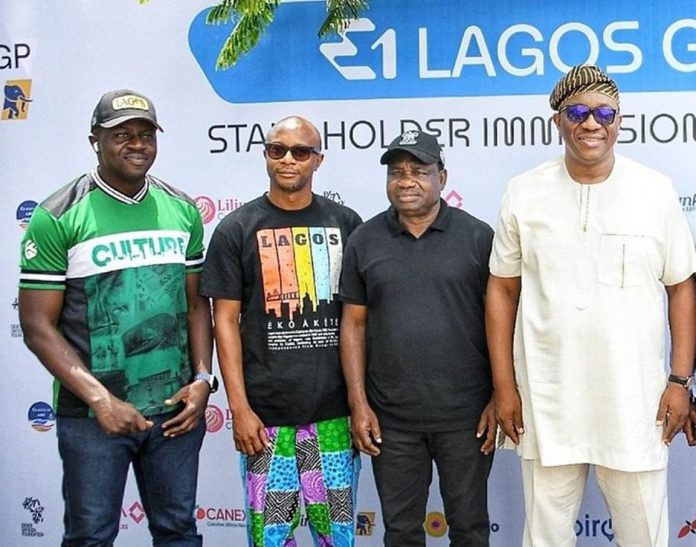
From L-R: Mr. Jubril A. Gawat (Senior Special Assistant to the Governor of Lagos on New Media), Olayinka Ijabiyi - Group Head, Marketing and Corporate Communications First Bank, Mr Gbenga Omotosho - Commissioner of Information and Strategy, Lagos State, Mr Samuel Egube - Deputy Chief of Staff/E1 Lagos GP LOC Chairman

The Local Organising Committee of the E1 Lagos GP is proud to announce its sponsorship lineup for Africa’s first all-electric powerboat race, taking place from October 2–5, 2025, on the Lagos Lagoon.

The announcement was made at the Stakeholder Immersion Session, convened to ensure that every stakeholder – from sponsors and the media to creators and influencers – carries a unified understanding of the E1 Lagos GP’s identity, communication standards, and positioning. It was a unique platform to deepen stakeholder awareness of what the E1 Series represents globally and how Lagos is preparing to host its maiden edition on African waters. The session also featured opening remarks by Mr. Gbenga Omotosho, Honourable Commissioner for Information and Strategy in Lagos State, a presentation from the Lagos State Waterways Authority on established safety protocols, and guidance from the Teksight Edge team on proper brand use and communications guidelines.

Speaking at the session, Mr. Samuel Egube, Deputy Chief of Staff to the Governor of Lagos State and Chairman of the E1 Lagos GP LOC, said: “Today marks not only an affirmation of our sponsors’ commitment, but a promise that we will uphold clarity, professionalism, and integrity in how Lagos tells its story on the global stage. We are proud to stand with First Bank as our Presenting Partner, and with all our partners who share in our vision for sport, innovation, and legacy.”

In his remarks, Honourable Commissioner for Information and Strategy, Mr. Gbenga Omotosho, noted: “The E1 Lagos GP is more than a sporting event; it is a statement of Lagos’ readiness to lead Africa into a sustainable future, where innovation and culture meet global standards. Our responsibility is to ensure that the people, the media, and all partners tell this story with one voice.”

Mr. Olayinka Ijabiyi, Group Head, Marketing and Corporate Communications, First Bank of Nigeria, added: “First Bank is honoured to take its place as the Presenting Partner of the E1 Lagos GP. Our heritage of over 130 years in supporting innovation and development in Nigeria aligns perfectly with this groundbreaking event. We are delighted to support a project that not only showcases sport at its finest but also emphasizes sustainability and youth engagement.”

The sponsors of the E1 Lagos GP are: First Bank of Nigeria (Presenting Partner), Oando, Spiro, Sunbeth, and Tolaram Group (with Guinness Stout, Johnnie Walker, and The Singleton). These partnerships demonstrate the commitment of leading brands to Lagos’ vision of hosting world-class events that inspire pride and create lasting impact.

With these partnerships and the alignment achieved during the immersion session, the E1 Lagos GP is positioned to set a new benchmark for sports, innovation, and sustainability in Africa, while projecting Lagos as a hub of culture, commerce, and global excellence.

For updates or more information, follow @e1lagosgp on social media or visit www.e1lagos.com.

HM Queen WA Arian Simone Launches Fearless Global Initiative, Charts 100-Year Blueprint For Economic Inclusion

The Fearless Global Initiative (FGI), founded by entrepreneur, philanthropist, and CEO & Founding Partner of the Fearless Fund, HM Queen WaArian Simone, convened more than 150 global leaders, cultural influencers, policymakers, and changemakers at the Glasshouse Chelsea in New York for its historic debut during the United Nations General Assembly (UNGA).

Held on September 22, 2025, the event, themed “Designing the Future of Global Black Power,” provided a platform for bold conversations, cultural activations, and strategic sessions aimed at charting a 100-year blueprint for global Black economic empowerment.

Speaking at the launch, HM Queen Wa Arian Simone emphasized the importance of turning dialogue into sustained action. “FGI is where the follow-through finally happens,” she said. “For too long, we’ve talked about equity without building the systems to sustain it. Today, we begin shaping the blueprint for the next 100 years of global economic inclusion.

The event featured an exceptional lineup of leaders, including Abby Phillips, CNN News Anchor, Jasmine Crocket, U.S. Representative for Texas’s 30th Congressional District, Ben Crump, Civil Rights Attorney and Social Justice Advocate, Rachel Noerdlinger, Global Communications Strategist and Partner at Actum, Alphonso David, CEO of the Global Black Economic Forum; Kat Graham, Actress, Singer, and UNHCR Ambassador; Minister Sara Beysolow Nyanti, Minister of Foreign Affairs, Republic of Liberia; Lexi Underwood, Actress & Activist; Sam Vaghar, Executive Director of the Millennium Campus Network; Chris Kirigua, Deputy Chief of Mission & Chief Treasury Representative, Kenya; Gwen Madiba, Editor-in-Chief of Rolling Stone Africa; Simi Nwogugu, CEO of Junior Achievement Africa; Dr. Jatali Bellanton, International Economist & Founder of Brilliant Minds Collective; Pops Mensah-Bonsu, President of SEED Academy Ghana, Retired NBA Player & Entrepreneur; Barkue Tubman-Zawolo, Host, Global Envoy for Cultural Diplomacy for the Republic of Liberia, and Founder/CEO of MBL Intl Group amongst others.

Highlights of the program included the session “What Can I Do for You? What Can You Do for Me?” which redefined the exchange between Africa and Black America, and the centerpiece working session, “The 100-Year Plan: Designing the Future of Global Black Power,” which began shaping a framework for long-term economic, cultural, and political transformation. A fireside chat with Kat Graham explored storytelling as a catalyst for economic growth, while a live, symbolic Yoruba art activation by world-renowned artist Laolu Senbanjo provided a striking cultural expression of freedom, movement, and empowerment.

The Fearless Global Initiative situates itself in a continuum of unfinished work. Sixty years ago, Malcolm X challenged the world to see civil rights as human rights, a call that was never fully answered on the global stage. With its debut, FGI has picked up that mantle, ensuring the work is no longer delayed.

To stay connected and be part of this global movement for economic inclusion, join the mailing list at https://fearlessfreedom.com and follow the conversation at @fearlessfreedommedia.

SSANU, NASU Extend Strike Ultimatum To FG

The Joint Action Committee (JAC) of the Senior Staff Association of Nigerian Universities (SSANU) and the Non-Academic Staff Union of Universities and Allied Institutions (NASU) has extended its strike ultimatum to the Federal Government by two weeks. Both unions had earlier issued a seven-day ultimatum over unresolved welfare issues, warning of a nationwide strike.

In a letter signed by SSANU President, Muhammed Ibrahim, the unions criticised the “unjust disbursement of earned allowances to university staff, non-payment of outstanding allowances, among others.”

Ibrahim recalled that the JAC had, in a June 18, 2025 letter, alerted the government to pending labour disputes, leading to a meeting with the Minister of Education on July 4.

In a fresh circular to chapters nationwide on Tuesday, the unions explained that the decision to extend the deadline followed a September 19 meeting with the Permanent Secretary of the Ministry of Education, Abel Enitan, and other key stakeholders, including the Executive Secretary of the National Universities Commission (NUC).

“The meeting’s deliberations focused on our demands, but concrete resolutions have not been met, necessitating the continuation of discussions,” the letter stated.

JAC resolved to extend the ultimatum by two weeks effective Tuesday, giving the government “an opportunity to initiate the requisite processes to address our demands.”

The unions warned that failure to meet their demands within the extended period would trigger “a series of legitimate industrial actions.”

Interswitch Receives Enactus Nigeria Changemaker Collaboration Award For Youth Empowerment

L-R Victor Akinfala, Head Partnerships and Special Projects, Enactus Nigeria; Chinelo Dike-Okonkwo, Brands, Communications & CSR, Interswitch; Michael Ajayi, Country Director, Enactus Nigeria; Yemisi Owonubi, Head, Masterbrand, Communications & CSR, Interswitch; Baribefe Aloega, Programs Officer (Special Projects), Enactus Nigeria; and Adaobi Ezirim, Brands, Communications & CSR Executive, Interswitch at the courtesy visit where the Enactus Changemaker Collaboration Award was conferred on Interswitch.

Interswitch, the leading African technology company focused on creating solutions that enable individuals and communities prosper has received the Enactus Nigeria Changemaker Collaboration Award, a prestigious recognition of its commitment to driving innovation and advancing educational and entrepreneurial excellence among young people across Nigeria.

The award was presented during a courtesy visit to Interswitch’s headquarters in Lagos by a delegation from Enactus Nigeria, following the recent conclusion of the 2025 Enactus Nigeria National Competition and in commemoration of Enactus’ 25th anniversary milestone.

Enactus Nigeria is part of the global Enactus network which engages university students to develop entrepreneurial solutions to pressing social and economic challenges. Each year, its activities culminate in the Enactus World Cup, an international competition where student teams showcase transformative projects that blend innovation with social impact.

Interswitch has been a proud supporter of Enactus Nigeria over the years, backing initiatives that empower Africa’s next generation of leaders and changemakers. This recognition reinforces its role as a key partner in nurturing youth-driven innovation and its wider agenda of youth empowerment across the continent.

Beyond its partnership with Enactus Nigeria, Interswitch has consistently invested in programs that nurture creativity, innovation and excellence. Among these are the Interswitch Innovation Discovery Series, which inspires bold thinking and showcases new ideas, and InterswitchSPAK, the firm’s flagship CSR initiative and a National Science Competition that identifies, inspires and rewards Africa’s brightest young STEM talents. Together, these initiatives demonstrate Interswitch’s sustained commitment to shaping the future through youth empowerment.

Speaking on the recognition, Cherry Eromosele, Executive Vice President, Group Marketing and Communications, Interswitch Group, said:

“We are deeply honoured to receive the Enactus Nigeria Changemaker Collaboration Award. At Interswitch, we believe that Africa’s prosperity is tied to the ingenuity and resilience of its youth. This recognition reaffirms our commitment to creating platforms and opportunities that nurture talent, inspire innovation and drive sustainable impact in communities across Nigeria and beyond. We also congratulate Enactus on its 25th anniversary and celebrate the incredible impact it has made in empowering young changemakers across Nigeria and beyond.”

Representatives of Enactus Nigeria commended Interswitch’s unwavering commitment to education, entrepreneurship and innovation, noting that the company has consistently partnered with organisations and institutions that share a common vision of empowering young Africans. The award was presented in acknowledgment of Interswitch’s outstanding support for youth-focused initiatives and its role as a bridge between private sector innovation and social impact.

The Changemaker Collaboration Award further reinforces Interswitch’s leadership as a pioneer in digital payments and commerce while highlighting its role as a catalyst for collaboration and inclusion within Africa’s innovation and financial ecosystem. By continuing to invest in initiatives that connect education, technology and entrepreneurship, the company is helping to shape a future where young Africans are equipped to thrive in competitive global markets while addressing local challenges.

PenCom Issues New Guidelines On Foreign Currency Pension Contributions

The National Pension Commission (PenCom) has introduced new guidelines on Foreign Currency (FCY) pension contributions under the Contributory Pension Scheme (CPS), as part of its ongoing “Pension Revolution 2.0” reforms.

PenCom Director-General, Omolola Oloworaran, announced the development on Wednesday via her official X (Twitter) handle in Abuja, noting that the initiative is designed to set higher standards across key pillars of the pension system.

According to her, the FCY guidelines provide a framework for Nigerians living and working abroad, as well as Nigerian and foreign employees in Nigeria who earn all or part of their remuneration in foreign currencies, to make contributions in dollars. Contributors will also be able to access their benefits in dollars, unless they choose otherwise.

Oloworaran described the new rules as a landmark step toward expanding CPS coverage and deepening financial inclusion.

“This bold reform underscores PenCom’s commitment to safeguarding the retirement security of all working Nigerians, regardless of geographical borders,” she said.

U.S. May Halt Ukraine Peace Push, Consider Fresh Sanctions

U.S. Secretary of State Marco Rubio said Tuesday that Washington may eventually halt its role in mediating the Ukraine conflict and move to impose new sanctions on Russia.

“We are the only ones that can talk to Ukraine and Russia, and everyone has encouraged us to play that role. At some point, that role might end,” Rubio told NBC.

He noted that President Donald Trump has repeatedly expressed deep disappointment with the course of action taken by Russian President Vladimir Putin, particularly “after Alaska.”

“At some point, he may have to decide to impose new sanctions,” Rubio added.

Oil Markets Mixed On Supply Concerns

Oil prices moved in opposite directions in the global commodity market on Tuesday as investors balanced concerns over crude supply disruptions with cautious remarks from U.S. Federal Reserve Chair Jerome Powell.

Brent crude edged up 0.1% to $67.32 per barrel from $67.25 in the previous session, while U.S. benchmark West Texas Intermediate (WTI) slipped 0.15% to $63.64 from $63.74.

The EU’s fresh sanctions on Russian exports and continued unrest in the Middle East, including attacks in the Red Sea, heightened concerns over supply security. At the same time, falling U.S. crude inventories supported demand outlook, helping to limit WTI’s losses. The American Petroleum Institute reported a 3.82 million-barrel draw last week, higher than analysts’ expectations of 3.42 million barrels. Official U.S. government data is expected Wednesday.

Powell, speaking in Rhode Island, noted that equity prices remain “fairly highly valued,” while stressing that the Fed monitors overall financial conditions to assess policy effectiveness. His remarks added to investor caution in energy and broader markets.

Geopolitical tensions also continued to underpin prices. U.S. President Donald Trump, in a meeting with Ukrainian President Volodymyr Zelenskyy on the sidelines of the UN General Assembly, praised Ukraine’s battlefield performance and signaled support for NATO allies defending their airspace against Russian aircraft. Analysts noted that such comments reinforced the risk of further sanctions, raising uncertainty over global oil supply.

WHO Counters Trump’s Comments On Paracetamol, Vaccines

FG, WHO Launch Response Strategy To Combat Outbreaks

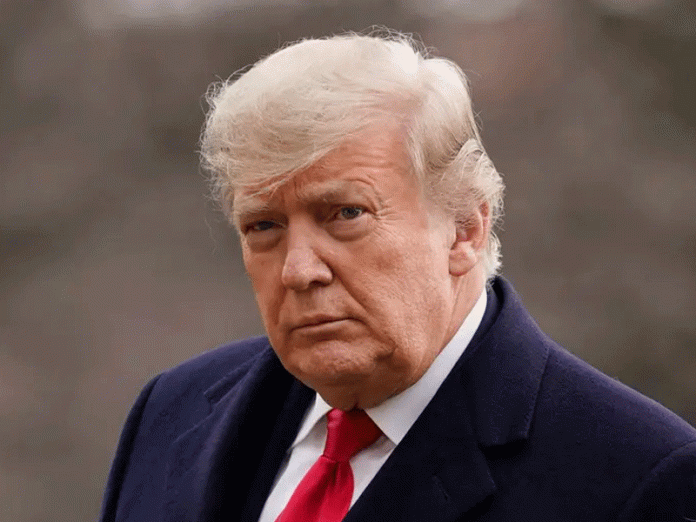
The World Health Organisation (WHO) has dismissed remarks made on Monday by former U.S. President Donald Trump in Washington, suggesting that paracetamol use in pregnancy may cause autism.

WHO spokesperson Tarik Jasarevic said on Tuesday that while some observational studies had raised questions, many others found no such link, and the overall evidence remained inconsistent.

“If there were a strong connection, it would have been seen consistently across multiple studies,” Jasarevic explained. He added that medicines during pregnancy should always be used cautiously and under medical supervision, especially in the first trimester.

Responding to journalists in Geneva, Jasarevic also rejected claims that routine childhood vaccines cause autism, stressing that WHO’s immunisation schedules are based on decades of research and have saved more than 150 million lives over the past 50 years.

In a related development, Kate O’Brien, Director of the Department of Immunisation, Vaccines and Biologicals at WHO, described vaccines as one of the most powerful tools in public health but warned that their future impact is threatened by misinformation.

“We are at a critical juncture. While vaccines have saved more than 150 million lives in the past 50 years, their impact for decades to come is increasingly threatened by another type of contagion: misinformation,” O’Brien said.

She noted that misinformation and disinformation spread faster than truth and risk reversing hard-won gains in global vaccine coverage and disease control.

According to O’Brien, vaccination campaigns have prevented millions of deaths and disabilities worldwide. She said over 18 million people who would have been paralysed by polio can walk today, more than 90 million children who would have died from measles are alive, and over a million deaths from cervical cancer have already been averted.

“Yet we are risking the erosion of decades of progress—not because we lack safe and effective vaccines, but because of misinformation. The consequences are not hypothetical; they are real and tragic,” she warned.

O’Brien pointed to recent deaths of unvaccinated children from measles and its complications, highlighting that vaccination rates in some countries have dropped to levels not seen in decades. In some communities, coverage is far below the 95 per cent threshold needed for herd immunity.

“This drop in coverage, particularly for measles, is driving a significant rise in cases and deaths—even in wealthy countries like the U.S., Canada, the UK and across Europe,” she added.

CBN Injects $52m Into Banks To Stabilise Exchange Rate

The Central Bank of Nigeria (CBN) has sold $52 million to authorised dealer banks in the foreign exchange market as part of efforts to stabilise the naira.

According to spot FX data, the intervention was executed between ₦1,482.55/$ and ₦1,486.10/$, boosting dollar liquidity on the supply side. The naira appreciated by 0.08 per cent to close at ₦1,487.37/$, supported by lower demand and improved export inflows. During the session, the currency traded within the range of ₦1,482.55–₦1,495.00/$.

CBN data showed that Nigeria’s gross external reserves rose to $42.14 billion as of September 22, 2025, up by $104.11 million from the previous day. Analysts expect the naira to remain broadly stable amid the stronger reserve position.

On the commodities market, Brent crude gained $1.88, or 2.85 per cent, to $67.85 per barrel, while U.S. West Texas Intermediate (WTI) rose $1.34, or 2.15 per cent, to $63.62 per barrel after talks to resume exports from Iraq’s Kurdistan stalled.

Gold prices also climbed to record highs, buoyed by safe-haven demand and expectations of further U.S. Federal Reserve rate cuts. Spot gold rose 0.44 per cent to $3,764.29 an ounce, while U.S. gold futures for December delivery settled 0.38 per cent higher at $3,782.15.

Freight Forwarder, Nze Okpara, Urges Transparency, Inclusive Reforms In Maritime Sector

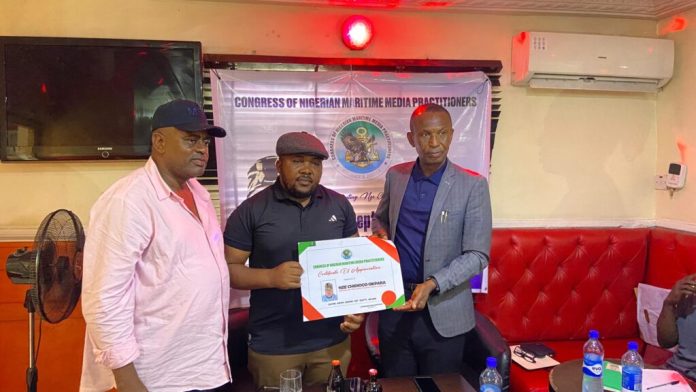
A leading freight forwarder and Chief Executive Officer of Chidosky Marine Concept Ltd., Nze Chidiogo Okpara, has called for greater transparency and inclusive policymaking in Nigeria’s maritime sector, warning that inefficiencies and rising costs are stifling trade and discouraging investment.

Okpara, who spoke at the CONMMEP Roundtable Conference in Lagos, criticised the implementation of the B’Odogwu Unified Customs Management System, launched by the Nigeria Customs Service (NCS) in October 2024 to replace the NICIS II platform.

Touted as a milestone for efficiency, transparency and digital transformation, the system has, one year on, left stakeholders divided. While Customs reports impressive revenue gains, many importers say the rollout has created more problems than it solved.

Okpara recounted how his company lost over ₦20 million in demurrage and storage fees due to operational delays.

“We lost about three months of operational time. The system functioned at 30–40% capacity during the rollout. Transactions that should take minutes now take hours. We were left stranded and broke,” he said.

Clearing agents have complained of system downtime, unresolved bugs, and poor support. Many were unable to process documentation for consignments with more than 20 line items, while others resorted to working at odd hours to use the system when functional.

Despite these setbacks, Customs has maintained that B’Odogwu has improved government revenue. The Tin Can Island Port Command alone generated ₦747 billion in the first half of 2025, reflecting nearly 30 per cent year-on-year growth.

But for Okpara, these numbers mask the deeper challenges confronting businesses. He warned that the cost of clearing a 40-foot container has soared to as much as ₦16 million—about ₦6 million higher than in neighbouring West African ports.

“The burden is becoming unbearable,” he said. “Many small and medium importers are closing shop. Others are incurring debts just to survive. We need policies that encourage growth, not punishment.”

Industry discontent has also been fuelled by the controversial 4% Free-On-Board (FOB) levy introduced under the 2023 Customs Act. Although suspended twice—in February and again in September 2025—operators allege the charge is still being collected, deepening mistrust in the system.

Okpara argued that such policies highlight the need for genuine stakeholder engagement.

“We are not against innovation. We’re against exclusion,” he said. “Systems like B’Odogwu should be piloted properly. Levies should be discussed openly. If government works with us and not against us, we can unlock Nigeria’s full maritime potential.”

Despite the hurdles, Okpara’s company has continued to expand, buoyed by global partnerships and a reputation for integrity. Beyond business, he has also taken on a mentorship role, helping younger freight agents navigate the sector.

“My passion goes beyond profit. I want to see others rise too. That’s how we build a stronger industry,” he said.

For many stakeholders, the real test of B’Odogwu lies not in revenue collection but in whether it delivers long-term value, fairness, and ease of trade.

“The maritime sector is Nigeria’s economic gateway,” Okpara stressed. “Corruption, poor training, lack of infrastructure—these are the issues weighing us down. If your hands are clean, you can survive. But it shouldn’t be this hard to do honest business.”

Whether the B’Odogwu system becomes a success story or a cautionary tale, stakeholders agree that the next steps taken by government will determine the trajectory of Nigeria’s maritime industry.

FIRS Reports 411% Surge In Federal Revenue To N3.64trn In September

The Chairman of the Federal Inland Revenue Service (FIRS), Dr. Zacch Adedeji, has attributed Nigeria’s record revenue growth to bold fiscal reforms introduced under President Bola Tinubu’s administration. Adedeji disclosed that federal revenue surged to N3.64 trillion in September 2025, representing a 411 per cent rise from N711 billion in May 2023.

Speaking with State House correspondents in Abuja, he highlighted reforms that have reshaped the fiscal landscape, especially the rapid expansion of non-oil revenue streams. According to him, non-oil revenue rose from N151 billion to N1.06 trillion within two years, reflecting a major shift in Nigeria’s earnings profile.

Oil revenue also increased to N644 billion, while Value Added Tax (VAT) collections tripled to N723 billion, driven by stronger compliance and improved efficiency across sectors.

He credited the impressive performance to initiatives that streamlined taxes, reduced burdens on small and medium-sized enterprises (SMEs), and introduced compliance tools such as e-invoicing and updated excise regulations.

Adedeji further revealed plans to implement a presumptive tax regime to capture hard-to-tax sectors and harmonise state levies in order to broaden the tax base.

“Our goal is to build a fair, efficient, and sustainable tax system that supports growth and boosts investor confidence,” he said.

On fiscal discipline, Adedeji confirmed that unbacked Ways and Means advances from the Central Bank have been discontinued. He noted that the loans have been reclassified as federal debt, with both principal and interest now being repaid to strengthen exchange rate stability and restore confidence in the system.

Addressing concerns about borrowing, he stressed that properly legislated loans remain a necessary tool for infrastructure development.
“Borrowing funds infrastructure that generates future tax revenues from beneficiaries. This is a sustainable approach for long-term development,” he explained.

Looking ahead, Adedeji announced that reforms to Personal and Company Income Tax will commence in January 2026 to further diversify and strengthen Nigeria’s revenue base. He maintained that the reforms aim to reduce reliance on borrowing, build fiscal resilience, and sustain the country’s economic growth trajectory.

14 Nigerian Banks Achieve CBN’s New Recapitalisation Benchmark – Cardoso

CBN Revokes Licenses Of 132 Microfinance Banks, Others

The Central Bank of Nigeria (CBN) has confirmed that 14 commercial banks in the country have successfully complied with the new capital base requirements outlined in the ongoing recapitalisation programme.

CBN Governor, Yemi Cardoso, disclosed this in Abuja on Tuesday while presenting the communiqué from the 302nd Monetary Policy Committee (MPC) meeting.

According to the apex bank, the revised capital thresholds are aimed at strengthening the financial system and ensuring long-term stability. The last major recapitalisation exercise took place in 2004, when the minimum capital base for banks was raised from ₦2 billion to ₦25 billion. That landmark policy triggered massive mergers and acquisitions, reducing the number of banks from 89 to 25.

Breakdown of the New Capital Requirements

Under the current recapitalisation framework, the CBN has classified requirements according to licence type:

  • Commercial banks with international authorisation – ₦500 billion
  • Commercial banks with national authorisation – ₦200 billion
  • Commercial banks with regional authorisation – ₦50 billion
  • Merchant banks – ₦50 billion
  • Non-interest banks (national) – ₦20 billion
  • Non-interest banks (regional) – ₦10 billion

Cardoso noted that the MPC applauded the progress of the recapitalisation exercise, highlighting that 14 financial institutions have fully met the set benchmark.

“The committee urged the CBN to sustain policies and initiatives that would guarantee the successful conclusion of the recapitalisation exercise,” he said.

Strengthening Transparency and Stability

The CBN governor further explained that the MPC observed the end of forbearance measures and waivers on single obligor limits. These measures, he added, have enhanced risk management, improved transparency, and reinforced long-term financial stability in the banking sector.

The MPC also reassured the public that the impact of removing forbearance remains temporary and does not undermine the soundness of Nigeria’s banking industry or the stability of domestic prices.

Monetary Policy Adjustments

At the meeting, the MPC announced several monetary policy adjustments. The Monetary Policy Rate (MPR) was reduced by 50 basis points, moving from 27.5 percent to 27 percent. The committee also adjusted the standing facilities corridor around the MPR to +250/-250 basis points.

For liquidity management, the Cash Reserve Ratio (CRR) for commercial banks was lowered from 50 percent to 45 percent, while the CRR for merchant banks remains at 16 percent. The Liquidity Ratio was retained at 30 percent.

Additionally, a new 75 percent CRR was introduced on non-Treasury Single Account (TSA) public sector deposits, a move designed to tighten liquidity management.

Cardoso explained that the decision to ease the MPR was based on the disinflationary trend sustained over the past five months and the projections of further inflation decline throughout 2025. He stressed that the move also aligns with efforts to support Nigeria’s economic recovery drive.

Unions Petition NCAA Over Alleged Breach Of Ground Handling Agreement

Two major aviation unions — the Air Transport Services Senior Staff Association of Nigeria (ATSSSAN) and the National Union of Air Transport Employees (NUATE) — have petitioned the Nigerian Civil Aviation Authority (NCAA) over alleged violations of the “Safety Threshold Ground Handling Charges” by industry operators.

In a joint petition obtained on Tuesday, the unions expressed concern that operators were disregarding the pricing framework agreed earlier this year. The petition, signed by ATSSSAN’s Principal Deputy General Secretary, Frances Akinjole, and NUATE’s Deputy General Secretary, Odinaka Igbokwe, also accused the NCAA of failing to act on an earlier complaint.

Managing directors of Nigerian Aviation Handling Company Plc (NAHCO), Skyway Aviation Handling Company (SAHCO), other airlines, and union branch executives were copied in the letter. The unions said growing competition among handling firms had triggered price undercutting despite the agreed minimum charges.

The country’s major ground handling operators include NAHCO, SAHCO, Precision Aviation Handling Company Limited, Butake Resources Limited, and Swissport Nigeria. Earlier this year, companies under the Aviation Ground Handling Association of Nigeria announced a sharp increase in charges, citing high inflation and rising operational costs.

The revised tariffs moved handling charges for a Boeing 737 aircraft from ₦70,000 to ₦400,000; for CRJ/Embraer aircraft from ₦50,000 to ₦250,000; and for Dash 8 aircraft from ₦25,000 to ₦150,000. Ground support services also recorded steep hikes, including Pushback Service rising from ₦22,000 to ₦200,000 and Ground Power Unit charges from ₦20,000 to ₦180,000 per hour.

Following resistance from airlines, the NCAA approved a 15 per cent downward adjustment. However, findings indicate that operators, particularly the larger firms, are allegedly breaching the agreement by offering discounted rates to attract clients.

The unions had earlier raised the issue in a July 4, 2025 letter, warning the NCAA that failure to enforce the charges could result in industrial action. “No member or officer of our unions shall be held liable for taking any action deemed necessary to protect the sanctity of the agreement,” the petition stated.

Industry sources also suggested that the Economic and Financial Crimes Commission (EFCC) may be drawn into the matter amid concerns that price undercutting could compromise safety standards. NCAA Director-General Chris Najomo recently visited EFCC Chairman Ola Olukoyede in Abuja, though details of their discussions were not disclosed.

Dollar To Naira Exchange Rate For 24th September 2025

Dollar To Naira Exchange Rate Today (Thur. July. 20, 2023)

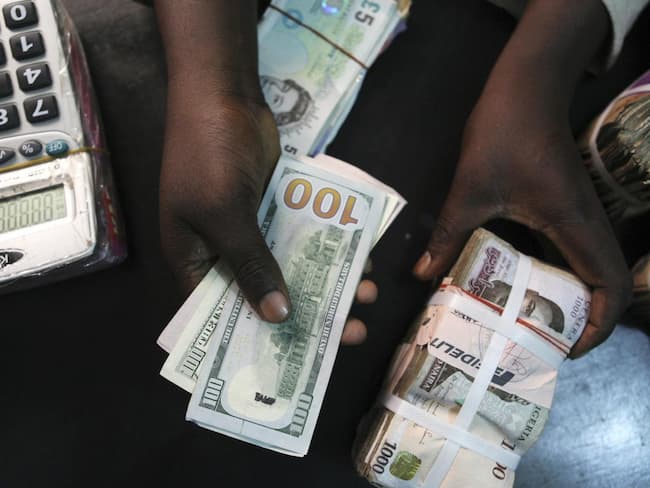
The exchange rate between the Naira and the US dollar, according to the data released on the FMDQ Security Exchange, the official forex trading portal, showed that the naira closed at 1520.00 per $1 on Wednesday, September 24th , 2025. The naira traded as high as 1482.00 to the dollar at the investors and exporters (I&E) window on Tuesday.

How much is a dollar to naira today in the black market?

Dollar to naira exchange rate today black market (Aboki dollar rate):

The exchange rate for a dollar to naira at Lagos Parallel Market (Black Market) players buy a dollar for ₦1535 and sell at ₦1520 on Tuesday 23rd September, 2025, according to sources at Bureau De Change (BDC).

Please note that the Central Bank of Nigeria (CBN) does not recognize the parallel market (black market), as it has directed individuals who want to engage in Forex to approach their respective banks.

Dollar to Naira Black Market Rate Today

Dollar to Naira (USD to NGN)Black Market Exchange Rate Today
Buying Rate₦1535
Selling Rate₦1520

Dollar to Naira CBN Rate Today

Dollar to Naira (USD to NGN)CBN Rate Today
Highest Rate₦1495
Lowest Rate₦1482

Please note that the rates you buy or sell forex may be different from what is captured in this article because prices vary.

BizWatchNigeria.Ng
Privacy Overview

This website uses cookies so that we can provide you with the best user experience possible. Cookie information is stored in your browser and performs functions such as recognising you when you return to our website and helping our team to understand which sections of the website you find most interesting and useful.