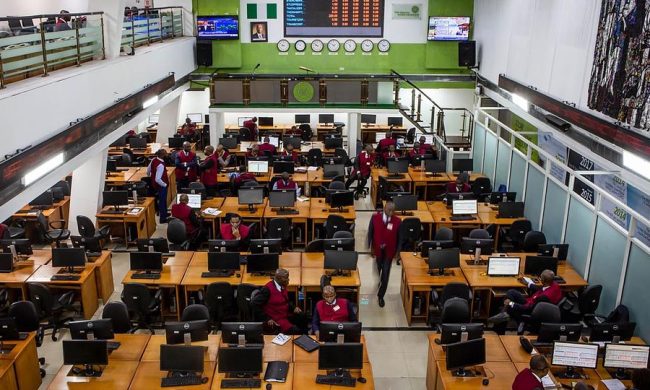
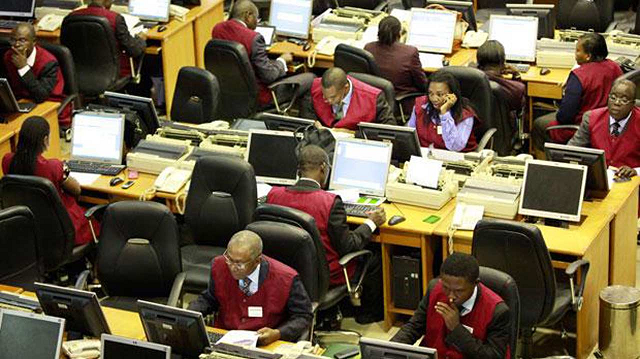
The Nigerian stock market swung back into positive territory on Thursday, delivering a ₦279 billion boost to investors following four straight sessions of losses.
Driven by bargain-hunting and renewed appetite for equities, the NGX All-Share Index rose by 0.31% or 432.94 points to close at 141,149.04, up from 140,716.10 the previous day. Market capitalization equally advanced from ₦89.063 trillion to ₦89.342 trillion.
Market breadth was upbeat, with 34 gainers outperforming 22 decliners. Mecure Industries led the advancers with a 9.89% gain, closing at ₦26.10, followed by Oando (+9.50%), McNicholas (+9.31%), CHAMS (+9.24%), and Legend Internet (+9.18%).
Conversely, Eterna topped the losers’ chart, shedding 10% to finish at ₦27.90. Sovereign Trust Insurance, The Initiates, Caverton Offshore, and Fidson also recorded declines.
Trading activity was heightened, as investors exchanged 5.5 billion shares worth ₦419.7 billion across 20,399 deals. This was a sharp increase from Wednesday’s 442.6 million shares valued at ₦16.9 billion in 21,684 deals. Aradel Holdings led both in volume and value, trading 693.3 million shares worth ₦388.2 billion.
Sectoral performance was largely bullish, with the Banking Index (+1.02%) leading the advance on the back of GTCO (+1.98%) and STANBIC (+3.09%). The Oil & Gas Index (+0.74%) also gained, supported by Oando’s surge, while the Consumer Goods Index (+0.31%) inched higher on DANGSUGAR’s rise. The Insurance Index (-0.41%) bucked the trend, pressured by losses in AIICO.
The Nigerian stock market staged a recovery on Thursday, buoyed by renewed interest in top banking and consumer goods stocks, with Zenith Bank and GTCO leading the rally.
The Nigerian Exchange (NGX) All-Share Index (ASI) climbed by 0.31%, closing at 141,149.04 points, as investors repositioned in response to recent monetary policy easing. The rebound brought relief after a stretch of losses earlier in the week.
Market activity surged significantly, with trading volume spiking by 160.35% to 1.1 billion units. Transactions were valued at ₦405 billion across 19,635 deals. FCMB was the most active stock by volume, recording 202 million units traded, while also topping the value chart with ₦2.1 billion in transactions.
Bullish momentum spread across key sectors, with notable buying interest in ZENITHBANK, GTCO, and MTNN lifting the benchmark. Market breadth reflected strong investor sentiment as 31 gainers outpaced 21 losers, producing an advance-to-decline ratio of 1.48.
Overall, market capitalization expanded by 0.31% to settle at ₦89.34 trillion, pushing year-to-date returns to 37.14%. Despite Oando’s decline on persistent negative sentiment, strong sector-wide demand underpinned Thursday’s rally.
Stanbic IBTC Asset Management, a subsidiary of Stanbic IBTC Holdings PLC, has officially launched Season 2 of its financial literacy game show, InvestBeta, with the premiere episode now streaming on the Stanbic IBTC Group’s official YouTube channel.
The new season kicked off in thrilling fashion as three contestants raced through three competitive rounds: rapid questions, quick fingers, and risk & reward. Each round pushed the contestants closer to a chance at winning investment funds worth ₦2 million, a stake higher than the inaugural season. The stakes proved higher than ever, with the very first winner walking away with a ₦1.4 million investment portfolio.
InvestBeta continues to blend entertainment and financial education, challenging contestants with questions that test their knowledge of saving, budgeting, and investing, while offering viewers practical insights and fun quizzes. Building on the momentum of Season 1, which captured the attention of Gen Z audiences nationwide, Season 2 delivers even more action, relatable contestants, and valuable money lessons.
Speaking on the significance of the show, Busola Jejelowo, Chief Executive, Stanbic IBTC Asset Management, said: “InvestBeta reflects our deep commitment to making financial education both accessible and exciting. Season 2 is bigger in every way; it has more compelling challenges, more relatable contestants, and more practical lessons for everyday life. We believe that when young people are equipped with real-world financial skills and the confidence to act, they are better prepared to create lasting wealth and achieve their dreams. This show is one of the many ways we are investing in the future of Nigeria’s youth.”
Beyond the show itself, viewers can immerse themselves in Beyond Dreams, Stanbic IBTC’s digital lifestyle and finance community. The community aims to help young people turn their aspirations into reality through secure, timely and smart investment choices. Since its inception, Beyond Dreams has grown to a network of over 90,000 young members, generated 2,100+ new investment accounts, and continues to position the Group as a trusted partner in the financial futures of Nigeria’s youth.
To catch all episodes of InvestBeta Season 2, visit the official Stanbic IBTC YouTube channel at youtube.com/@StanbicIBTC. New episodes premiere every Friday, giving viewers across Nigeria a front-row seat to the nation’s most exciting youth investment competition.
Open your first investment account with as little as ₦5,000 via blunest.stanbicibtcassetmanagement.com or 02012805595 and take the first step toward building your future.
Gold prices slipped for a second consecutive session on Thursday, trading at around $3,740 per ounce after recently touching an all-time high of $3,790. Analysts attribute the decline to a rebound in the US dollar and rising yields on US Treasury bonds following the Federal Reserve’s latest monetary policy decision.
The greenback strengthened against major currencies, including the euro, British pound, Japanese yen, and Canadian dollar, adding pressure on bullion. Market watchers also flagged heightened volatility across global FX markets.
Meanwhile, yields on short-term US government securities climbed faster than longer-term bonds, trimming the steepening trend that had dominated this quarter. The 10-year Treasury note yield advanced toward 4.2%, bouncing from last week’s five-month low of 4%.
On the industrial metals side, silver surged above $44 per ounce, its strongest level in 14 years, supported by robust industrial demand and constrained physical supply, despite stronger US economic data bolstering the dollar.
Gold, however, retains long-term support, having risen 45% year-to-date, as global investors continue to seek safe-haven assets amid geopolitical tensions, fiscal concerns in Washington, and skepticism around Fed policy direction.
China remains a key player in the bullion market, with the People’s Bank of China (PBoC) expanding its gold reserves for ten consecutive months. Beijing has also positioned its infrastructure to serve as a custodian for foreign gold holdings, reinforcing demand.
Stronger-than-expected US economic data further influenced trading sentiment. The latest GDP revision showed an annualized growth of 3.8% in Q2, while durable goods orders outperformed projections. Additionally, jobless claims declined for a second straight week, easing concerns of a rapid labor market slowdown and dampening expectations for additional Fed rate cuts.
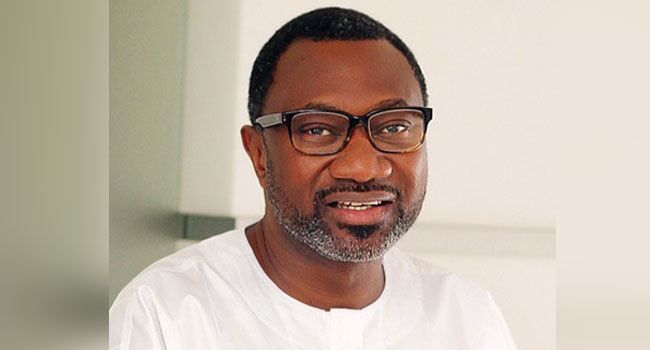
Billionaire investor and Chairman of First Bank Holdings Plc (First HoldCo), Femi Otedola, has expanded his shareholding in the company with the purchase of 39,313,379 additional units, valued at approximately ₦1.21 billion.
Fresh regulatory filings on the Nigerian Exchange (NGX) disclosed that the transaction was completed in Lagos on September 23, 2025, at ₦31 per share, under the trading identification code NGFBNH000009.
Despite the acquisition, First HoldCo’s stock recorded a mild downturn during intraday trading, shedding 48 basis points as negative investor sentiment weighed on performance.
Anchoria Securities Limited confirmed that about 40 million shares exchanged hands within a price range of ₦30.65 – ₦31.00, with total value estimated at ₦1.24 billion.
Prior to this transaction, Otedola’s direct ownership stood at 3,212,032,866 shares (7.67%), alongside an indirect stake of 3,465,560,297 shares (8.28%). With the latest acquisition, his direct holdings have risen to 3,251,346,245 shares, representing 7.77% of outstanding shares.
Additionally, Calvados Global Services Limited, a company affiliated with Otedola, secured 25,565,289 shares worth ₦792.5 million under the same deal. This raised his indirect stake to 3,491,125,586 shares, which now accounts for 8.34% of First HoldCo’s outstanding shares.
Guaranty Trust Bank (GTBank) has adjusted its foreign exchange rate for naira debit card transactions, with the United States dollar now selling at N1,495 per $1 for international payments.
According to the bank’s daily FX update, this marks a notable improvement from last week’s high of N1,545, reflecting the naira’s continued resilience across official trading windows.
During intraday trading, the greenback was quoted at N1,480, underscoring renewed strength in the local currency at the official exchange window. Market intelligence gathered by MarketForces Africa indicated that GTBank purchased the dollar from customers earlier this week at N1,490, a trend that aligns with the recent appreciation trajectory.
Intraday market sales ranged between N1,480 and N1,500, with analysts describing the movement as a positive signal for the naira. Customers using GTBank’s naira debit cards can process international payments online across multiple platforms under the updated FX rate.
In the parallel market, findings revealed that Bureau De Change (BDC) operators quoted the dollar at N1,515 to N1,530, with transaction volumes and denominations influencing final pricing for buyers and sellers.
Welcome back to Thursday Chronicles — your weekly escape from Nigerian stress, written by someone who’s definitely been shouted at while washing plates before. If you grew up hearing “Come and pick this remote!” from three rooms away, or you’ve ever received a slap mid-sentence for asking ‘why,’ then congratulations, you’re certified. Let’s unpack our trauma together with humor and sense.
Growing up in a Nigerian home is like going through military training, except there’s no uniform, no salary, and you still get sent on errands during rainfall. And one thing that stands out in every typical Nigerian household is this unique form of communication: shouting. Not talking. Not whispering. Shouting, with full chest and vibrating voice.
Your mother doesn’t ask you to do something gently. No. She screams your name like you just won a visa lottery: “AYOMIDE!!!” You drop everything and sprint like you’re being chased by area boys, only to reach the living room and hear: “Pick that spoon for me.” A spoon that’s literally two inches away from her foot. That’s the moment you realize, peace is not part of your inheritance.
Nigerian parents believe shouting equals results. If they don’t raise their voice, you won’t hear. If they don’t threaten your life over chores, you’ll sleep. If they don’t mix your name with thunder and ancestral warnings, you won’t know they care. “I’m shouting because I love you” is the unofficial slogan. If that’s the case, then love almost sent us into cardiac arrest.
They shout when they’re angry. They shout when they’re happy. They shout when you’re sick, and still shout when you’re better. One minute you’re coughing, next minute you hear: “So you want to die and disgrace me, abi?!” You’re not even allowed to faint in peace.
Even greetings are not safe. You come back from school and greet casually: “Good afternoon, ma.” And she responds with: “What is good about the afternoon?! Is that how you greet your mother? You better go back and come in again!” Next thing, you’re acting like an actor in Tinsel, opening the door dramatically and greeting like you’re reciting a presidential speech.
Let’s not forget their gift for dramatic sound effects. You drop a plate? Boom — “Ye! My enemies have succeeded!” You break a cup? “So you want to kill me in this house, abi?” You ask an innocent question? “You are talking back at me???” No matter what you do, the response is louder than your action.
And if you try to explain yourself, your volume is seen as competition. Suddenly you’re labeled rude. You can’t win. There’s no debate. In a Nigerian home, children don’t have arguments. They only have regret.
But in their own way, Nigerian parents believe this is how you raise strong children. They don’t do soft parenting. They do steel parenting. If you survive it, you can survive anything. And maybe that’s why most of us are tough. You can’t shame the shameless. You can’t scare the generation that used to wash cars before school.
Yet, as adults now, we’re beginning to understand the difference between fear and respect. We’re learning that parenting doesn’t have to be loud to be effective. You can discipline with calm words. You can correct without screaming. You can love loudly without shouting literally.
The irony? Now that we’re grown, they’ve softened. The same woman who once threatened to throw you out for scoring 68 in English is now calling you “my baby” and asking if you’ve eaten. The same man who once said “boys don’t cry” is now sending you emojis on WhatsApp. Nigerian parents, we see you.
Truth is, they did the best they knew. Many of them didn’t grow up with gentleness either. They passed down what they received. But we, this new generation, can do better. We can raise kids with peace. We can love with less shouting. We can correct without confusion.
So, to all the adults still healing from loud upbringing, just know: you’re not dramatic. You were just raised in surround sound.
Thanks again for lending your ears (and your childhood trauma) to Thursday Chronicles. If this one reminded you of the time your mum used one eye to control a whole room, you’re in good company. We’ll be back next week, same time, same truth, same hilarity.
Until then, stay strong, love softly, and if your mum still shouts your name in all caps, just answer before it turns into a family meeting.
The Minister of Marine and Blue Economy, Adegboyega Oyetola, has urged Nigeria’s maritime community to prioritise stewardship over exploitation in the management of the nation’s marine resources.
Speaking at the 2025 World Maritime Day (WMD) celebration in Lagos, the minister stressed that sustainable practices are essential to preserving the ocean’s critical role in global survival and trade.
Oyetola reminded participants that the ocean generates between 50 and 80 per cent of the Earth’s oxygen, provides food and livelihoods for billions, and facilitates more than 80 per cent of international trade. He, however, warned that these vital functions are increasingly endangered by pollution, overfishing, climate change, and neglect.
“The message is clear: stakeholders must be stewards, not exploiters,” Oyetola declared, calling for stronger enforcement of sustainable fishing practices, marine pollution control, biodiversity protection, and enhanced maritime security. He reaffirmed the Federal Government’s commitment to strengthening marine governance, modernising port infrastructure, and fostering regional and global partnerships for ocean preservation.
The Minister also commended agencies under the Marine and Blue Economy Ministry, alongside private stakeholders, for progress made in advancing the sector.
In his remarks, the Director-General of the Nigerian Maritime Administration and Safety Agency (NIMASA), Dr. Dayo Mobereola, reiterated the agency’s mandate to promote environmental stewardship, maritime safety, and security. He noted NIMASA’s active role in advancing a just transition to net-zero greenhouse gas emissions in line with International Maritime Organisation (IMO) frameworks. Mobereola, however, lamented the underfunding of the blue economy, stressing the need for private sector investment. He also highlighted NIMASA’s Marine Litter and Plastic Action Plan aimed at tackling plastic pollution.
The Managing Director of the Nigerian Ports Authority (NPA), Dr. Abubakar Dantsoho, added that beyond ceremonial celebrations, stakeholders must commit to practical actions that ensure cleaner oceans. He emphasised the responsibility of maritime operators in making global port operations more eco-friendly in line with the World Ports Sustainability Programme.
On his part, Chairman of the Senate Committee on Marine Transport, Senator Wasiu Eshinlokun, assured that the National Assembly remains committed to enacting policies and legislation that will support a sustainable marine and blue economy.
Also speaking, Chairman of Integrated Oil and Gas, Capt. Emmanuel Iheanacho, underscored the opportunities available in renewable energy and natural gas. He encouraged stakeholders to leverage emerging funding opportunities and align with Nigeria’s energy transition agenda as a pathway to economic diversification and sustainable ocean utilisation.
The event also featured the recognition of winners of the 2025 World Maritime Day Essay Competition, drawn from primary, secondary, and tertiary institutions across the country.
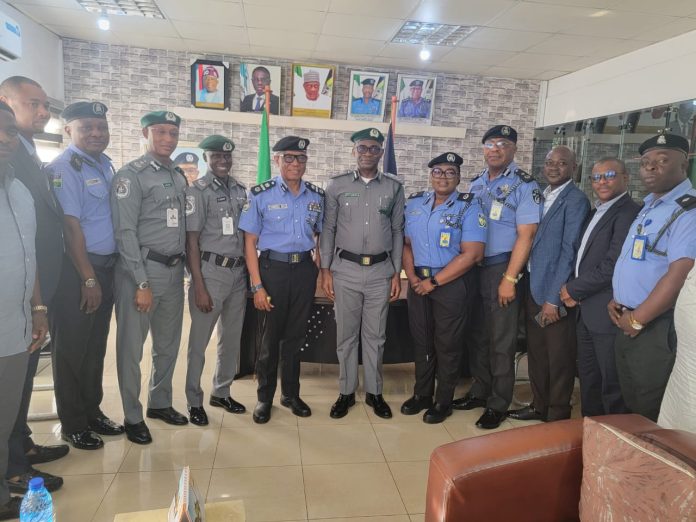
Comptroller Emmanuel Oshoba, the Customs Area Controller of Apapa Command has called for deeper collaboration between the Nigeria Customs Service (NCS) and the Maritime Police Command to enhance security and facilitate trade within the nation’s busiest seaport.
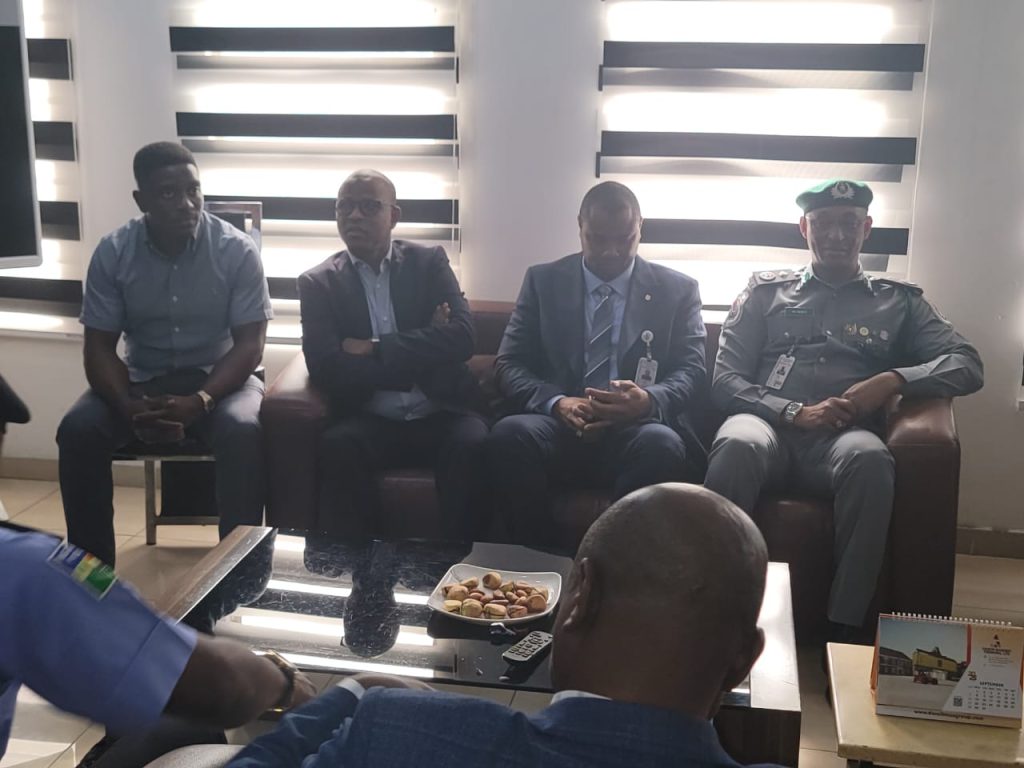
Oshoba made the appeal during a courtesy visit to the Maritime Police Command, Force Headquarters Annex, Lagos, on Thursday, September 25, 2025, where he was received by the Assistant Inspector-General of Police in charge of the command, AIG Chinedu Oko.
Highlighting the three policy thrusts of the Comptroller-General of Customs, Oshoba said his administration at the premier port would focus on consolidation, collaboration, and innovation.
“My mandate is to consolidate on the strides of my predecessor, particularly in revenue generation, enforcement, and trade facilitation. No agency can operate as an island. That is why I am here to strengthen collaboration with the Maritime Police. Your officers have been instrumental in maintaining peace and security, and I seek your continued support to enhance operations within the port corridor,” Oshoba stated.
He further disclosed that the command would deploy innovative measures, including the implementation of the Authorised Economic Operator (AEO) programme, which seeks to fast-track cargo clearance for compliant traders. According to him, the scheme would boost investor confidence and align with President Bola Tinubu’s drive for increased foreign direct investment.
Responding, AIG Oko welcomed the customs boss and assured him of the police command’s unwavering support. He praised Oshoba’s emphasis on intelligence-led operations and pledged cooperation to strengthen joint enforcement at the ports.
“We share the same goal of safeguarding the maritime domain. Both of us are relatively new here, but I want to assure you that this command will work hand-in-hand with Customs. There has been a strong operational relationship in the past, and together we will improve on it. We must see ourselves as one family working for the federal government,” Oko said.
The police chief, who traced his career to years in intelligence and training, also urged both agencies to uphold mutual respect and unity among uniformed services.
The courtesy visit underlines renewed inter-agency synergy in securing the ports, a move stakeholders believe is critical to curbing illicit trade, improving cargo clearance, and sustaining Nigeria’s revenue drive.
Four of Nigeria’s biggest lenders—United Bank for Africa (UBA), Zenith Bank, Guaranty Trust Holding Company (GTCO), and Stanbic IBTC Holdings—have declared interim dividends totalling about ₦135.49bn for the half-year ended June 30, 2025, offering relief to shareholders amid regulatory pressures and macroeconomic challenges.
Details of the payouts, contained in financial statements filed with the Nigerian Exchange Limited, showed that Stanbic IBTC Holdings emerged as the highest interim dividend payer, declaring ₦2.50 per ordinary share of 50 kobo each, translating to ₦39.75 billion. The bank stated that the payment, subject to withholding tax and approval, would be made to shareholders whose names appear in its register as of October 6, 2025. This decision, analysts said, underscored Stanbic’s earnings strength and commitment to shareholder value despite a tough operating environment.
Zenith Bank, Nigeria’s largest lender by market capitalisation, followed with an interim dividend of ₦1.25 per share across its 41.07bn issued shares, amounting to about ₦51.34bn. The bank explained that the dividend would be paid from retained earnings, subject to shareholder ratification, noting that the move reflected its resilience and strong balance sheet.
Guaranty Trust Holding Company announced an interim dividend of ₦1 per share, valued at ₦34.14bn, easing investor concerns that regulatory tightening might force lenders to scale back shareholder rewards.
UBA, meanwhile, proposed an interim dividend of 25 kobo per share, representing a dividend yield of 1.4 per cent and a payout ratio of 7.83 per cent. While comparatively modest, the bank’s payout reinforced its reputation for balancing shareholder returns with its regional growth strategy.
The announcements boosted investor sentiment in the financial markets, though not all banks were able to follow suit. Access Holdings secured an extension from the NGX to publish its half-year results by October 22, 2025, citing the need for Central Bank of Nigeria clearance. Fidelity Bank also delayed its filings, attributing the hold-up to ongoing reviews of its audited statements.
Other lenders, including First HoldCo, Sterling Financial Holding Company, Wema Bank, and FCMB Group, have released their half-year results but opted against declaring interim dividends, citing regulatory directives and capital management considerations.
The mixed approach across the sector comes against the backdrop of a recent Central Bank of Nigeria circular directing banks under regulatory forbearance to suspend dividend payments, defer executive bonuses, and halt offshore investments as part of ongoing reforms to strengthen financial system stability.
Despite these headwinds, the interim payouts by the four top-tier lenders underscore their resilience and ability to deliver value to shareholders while navigating an increasingly stringent regulatory and economic environment.
The Nigerian Upstream Petroleum Regulatory Commission (NUPRC) has approved a $510 million transaction that will see TotalEnergies Exploration and Production Nigeria Limited divest its 12.5 per cent contractor interest in Oil Mining Lease (OML) 118 to Shell Nigeria Exploration and Production Company (SNEPCo) and Nigerian Agip Exploration Limited (NAE).
The approval, granted yesterday in Abuja, comes just days after the Commission withdrew an earlier consent for a separate deal between TotalEnergies and Chappal Energies, citing poor consummation of that transaction despite ministerial approval in October 2024.
According to a statement signed by NUPRC’s Head of Media and Strategic Communications, Eniola Akinkuotu, the new Sales and Purchase Agreement (SPA) will see TotalEnergies transfer a 10 per cent interest to SNEPCo for $408 million, while NAE will acquire the remaining 2.5 per cent for $102 million. The deal, however, remains subject to ministerial consent in line with the Petroleum Industry Act (PIA) 2021.
The Commission said it carried out due diligence in line with Section 95 of the PIA to confirm the financial capacity and technical competence of both assignees. It noted that SNEPCo and NAE already have established participatory interests in OML 118 and possess the expertise and resources to sustain ongoing exploration, development, and production activities.
As part of the conditions of approval, SNEPCo and NAE will assume TotalEnergies’ obligations relating to decommissioning, abandonment, and host community responsibilities on the divested stake, thereby shielding the Federal Government from residual liabilities. The companies are also required to pay five per cent and two per cent of the total transaction value, respectively, as premiums for ministerial consent and processing fees.
The development underscores the continuing reshaping of Nigeria’s upstream petroleum sector, where international oil companies are divesting from certain onshore and shallow-water assets to streamline portfolios and reduce risk exposure, even as regulators tighten enforcement of decommissioning and community accountability provisions under the PIA.
The Dangote Petroleum Refinery’s new requirement that oil marketers must purchase a minimum of 500,000 litres of petrol to qualify for its free delivery scheme has sparked criticism across Nigeria’s downstream petroleum sector.
The policy, which translates to a minimum outlay of about ₦410 million at the refinery’s gantry price of ₦820 per litre, equivalent to 11 trucks of 45,000 litres each, was confirmed by a senior refinery official who noted that the free delivery offer only applies to bulk buyers that meet the benchmark. Independent petroleum marketers have raised concerns, describing the condition as unrealistic for most operators.
The National Publicity Secretary of the Independent Petroleum Marketers Association of Nigeria (IPMAN), Chinedu Ukadike, said members are struggling to meet the threshold and are now exploring collective purchasing to avoid a situation where middlemen take advantage of the scheme.
“Yes, it is true. We have to buy a minimum of 500,000 litres. That requirement has not been easy to follow,” Ukadike admitted, warning that the condition could revive the dominance of wholesalers in the supply chain.
Energy analyst Olatide Jeremiah, Chief Executive Officer of Petroleumprice.ng, also criticised the threshold, saying the requirement was far beyond the reach of most filling station owners.
“At ₦820 per litre, marketers must raise over ₦400 million to qualify. How many operators can afford that? Many will have no choice but to rely on wholesalers,” he argued, adding that the policy risks undermining the refinery’s stated aim of reducing costs and cutting out middlemen.
The free delivery scheme has also faced pushback from transport operators, with the President of the National Association of Road Transport Owners (NARTO), Yusuf Othman, warning that it undermines existing agreements. Othman said members who own more than 30,000 trucks cannot provide distribution services for free, noting that many acquired vehicles through bank loans backed by contracts with fuel buyers. He further argued that the initiative contravenes provisions of the Petroleum Industry Act (PIA).
The Dangote Refinery, which began commercial operations last year with a capacity of 650,000 barrels per day, is Africa’s largest and has been hailed as a potential game-changer for Nigeria’s energy landscape.
Earlier this month, it launched its free delivery initiative, backed by 1,000 compressed natural gas-powered trucks, and signed partnerships with several major marketers, including Conoil Plc, Eterna Plc, Golden Super, Nepal Energies, Kifayat Global Energy, and Riquest & Gas. However, smaller operators fear the high delivery threshold could sideline them, leaving wholesalers and depot operators to retain control of the fuel supply chain.
Industry analysts warn that unless the policy is reviewed to allow per-truck loading, the refinery risks alienating smaller players and inadvertently entrenching middlemen in the market.
The United Kingdom government is preparing to introduce a compulsory digital identification system for all adults, in a move aimed at tackling illegal immigration and reducing irregular Channel crossings.
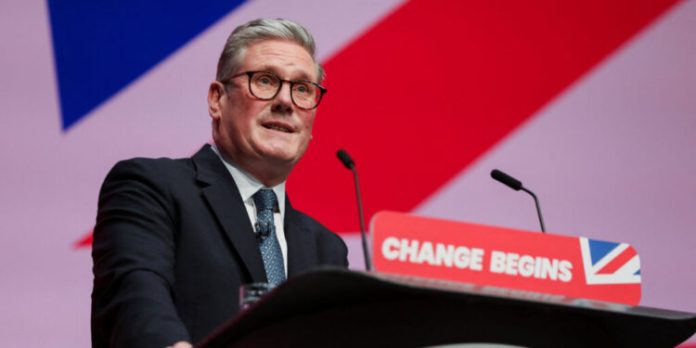
The proposed system, dubbed the BritCard, will serve as proof of the right to live and work in the UK. Unlike existing documents, the digital ID will be linked to a central government database, enabling more secure verification of individuals’ status. Prime Minister Sir Keir Starmer is expected to announce the scheme formally in the coming days, according to Sky News.
How the BritCard Works
The BritCard will be available both as a physical card and through a smartphone application. Employers and landlords will be able to confirm a person’s legal status instantly, while citizens will have a simplified process for demonstrating their right to work and reside in the country.
The government says the system is designed to close loopholes that allow undocumented migrants to exploit the black economy. Physical documents are seen as vulnerable to forgery, whereas a centralised digital system is expected to significantly reduce illegal employment opportunities. The rollout, however, will require new legislation and public consultation before implementation.
Rationale Behind the Policy
Labour peer Harriet Harman told Sky News in July that ID cards would help shrink the black economy by making it harder for people without legal status to secure employment. French President Emmanuel Macron has also repeatedly warned that the absence of mandatory ID cards in the UK has acted as a “pull factor” for migrants attempting Channel crossings, as many believe they can still access informal work.
If implemented, the BritCard would mark one of the most significant changes to UK immigration and labour enforcement policy in decades.
Potential Concerns
While the government argues the initiative will strengthen border control and protect domestic labour markets, critics are likely to raise concerns about privacy, state surveillance, and the balance between national security and civil liberties.
Part of Wider Immigration Reform
The move comes on the heels of a major immigration White Paper unveiled by Sir Keir Starmer on May 12, 2025, which set out sweeping reforms across work, family, and student visa categories. Key measures include:
Extending the residency requirement for permanent settlement from five to ten years.
Raising the skills threshold for work visas to degree-level qualifications.
Requiring companies to demonstrate investment in domestic skills before hiring foreign workers.
Reducing the post-study Graduate Route visa from two years to 18 months.
Introducing stricter family visa rules, including English language requirements for dependents.
Together, the reforms signal a decisive shift in Britain’s immigration framework, with the BritCard expected to play a central role in reshaping how the country enforces migration and labour policies.
Ethereum, the second-largest cryptocurrency by market capitalization, slipped below the $4,000 threshold on Thursday morning as heavy liquidation and profit-taking weighed on digital assets. This marks the first time since early August that the altcoin has dipped under the psychological $4K mark.
Over the last seven days, Ethereum has dropped more than 12%, with another 3.77% decline recorded in the past 24 hours alone. At press time, ETH was trading near $3,980, down roughly 20% from its record high.
The selloff follows aggressive portfolio rebalancing triggered by the U.S. Federal Reserve’s recent interest rate cut. With gold emerging as a preferred safe-haven alternative, investors have shifted funds away from riskier crypto assets.
Ethereum’s market capitalization now stands at approximately $484 billion, with daily trading volume reaching $42.05 billion. Analysts note that cascading liquidations across derivatives markets exacerbated the decline, with more than $1.7 billion in altcoin positions wiped out—$212.9 million of which were Ethereum contracts.
The broader crypto market has mirrored ETH’s downtrend. Bitcoin, which briefly soared above $120,000 following the Fed’s decision, has since pulled back into a consolidation range between $110,000 and $115,000. Solana, another top altcoin, tumbled to $204.45, losing nearly 17% in a week.
“Ethereum’s breakdown below $4K was driven by a combination of macro uncertainty, technical weakness, and large-scale liquidations,” explained Rachael Lucas, a crypto strategist at BTC Markets.
Although the Fed’s 25 basis point rate cut in September initially sparked bullish expectations, Fed Chair Jerome Powell’s remarks that further cuts may not come soon dampened investor sentiment. As a result, cryptocurrencies remain under pressure despite broader optimism around alternative assets.
salary of a woman. euro banknotes in hands on a green background. Income of women in European countries
The euro edged lower on Thursday, sliding to around $1.178 against the U.S. dollar after lackluster German business data cast doubts on the Eurozone’s recovery momentum. The single currency had previously climbed to a four-year peak of $1.192 last week but has since lost ground.
Germany’s Ifo Business Climate Index fell to 87.8 in September from 88.9, signaling deteriorating sentiment among companies. Both the Current Situation Index (85.7) and Expectations Index (89.7) declined, with the institute warning that hopes for a swift recovery have been dealt a setback.
Weakness was evident across multiple sectors. Manufacturing confidence slid further on the back of weaker orders and reduced optimism from capital goods producers. Services sentiment plunged to -3.0, its lowest level since February, while the trade sector also turned negative. Only construction showed mild improvement.
This downbeat reading followed a mixed HCOB PMI report showing that while services activity in the Eurozone grew faster than expected, manufacturing continued to contract.
At the same time, markets assessed comments from Federal Reserve Chair Jerome Powell, who reiterated caution over the pace of monetary easing, citing inflationary risks tied to tariffs and labor market pressures. Powell described September’s rate cut as a “risk management” measure rather than the beginning of a broader easing cycle.
Investors now see a 90% probability of another Fed rate cut in October, with Friday’s U.S. PCE inflation report in focus. Meanwhile, the European Central Bank has signaled it may pause rate reductions, citing lingering inflation risks from services, food, and fiscal spending.
Elsewhere, the Chinese yuan recovered some ground after the People’s Bank of China set a stronger-than-expected reference rate at 7.1118 per dollar. The move, coupled with signs of easing U.S.-China trade tensions, helped boost investor confidence even as markets await clarity on future policy directions.
Nigeria’s sovereign Eurobonds saw renewed investor demand this week as offshore participants increased exposure amid expectations of global monetary easing and firmer oil prices.
The rally comes on the heels of the U.S. Federal Reserve’s recent rate cut, which encouraged global investors to reassess allocations across emerging markets. Analysts say African issuers, including Nigeria, have benefited from portfolio realignments as foreign players seek higher yields.
Nigeria’s central bank has also mirrored the Fed’s easing stance, reducing its benchmark rate in response to slowing inflation and currency stability. Market observers believe this has improved the country’s attractiveness in the international debt market.
Trading data showed mixed performance across the African Eurobond curve on Wednesday. While shorter-term bonds experienced mild price declines, mid-to-long-term maturities posted gains, lifting overall investor sentiment. As a result, Nigeria’s average Eurobond yields eased by three basis points to 7.89%, according to Cowry Asset Limited.
Energy markets further supported Nigeria’s outlook, with Brent crude climbing 3.24% to $69.14 per barrel and WTI crude advancing 2.22% to $64.82. The gains followed a surprise drop in U.S. crude stockpiles and supply disruptions in Iraq, Venezuela, and Russia.
Investment managers, including AIICO Capital, suggest that Nigeria’s Eurobond performance could remain positive if oil maintains upward momentum. However, gold prices pulled back as the dollar strengthened, with spot gold down 1.23% at $3,717.97/oz and U.S. futures retreating 1.21% to $3,750.15/oz.
“Offshore appetite for Nigerian Eurobonds is being driven by a favorable mix of oil price strength, monetary easing, and relatively attractive yields,” said one Lagos-based market analyst.
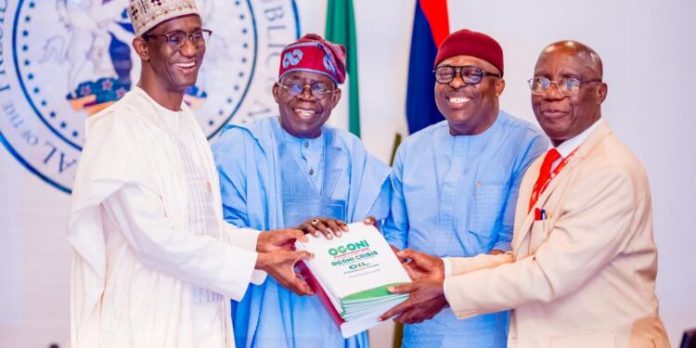
President Bola Tinubu on Wednesday posthumously conferred the national honour of Commander of the Order of the Niger (CON) on four late Ogoni leaders, decades after their execution during the military era.
The recipients, Albert Badey, Edward Kobani, Theophilus Orage, and Samuel Orage, are collectively remembered as the Ogoni Four. Their recognition comes months after the President honoured Ken Saro-Wiwa and eight other Ogoni activists killed under the Abacha regime.
The announcement was made at the State House, Abuja, during the presentation of the report of the Ogoni Consultations Committee, chaired by Professor Don Baridam. Rivers State Governor Siminalayi Fubara led the Ogoni delegation to the ceremony, according to a statement by the President’s Special Adviser on Information and Strategy, Bayo Onanuga.
Tinubu directed the National Security Adviser (NSA), Mallam Nuhu Ribadu, to commence immediate engagements with the Nigerian National Petroleum Company Limited (NNPCL), Ogoni communities, and other stakeholders to finalise modalities for the resumption of oil production in Ogoniland.
“We are not, as a government, taking lightly the years of pain endured in Ogoniland,” Tinubu said. “The Federal Government truly acknowledges the long suffering of the Ogoni people, and today we declare with conviction that hope is here and back with us.”
The President stressed that reconciliation was not an erasure of history but a commitment to building a new chapter of peace and development. He urged Ogoni communities to unite and embrace dialogue, assuring that government resources would be deployed to achieve shared prosperity.
Governor Fubara commended the President for measures that had already fostered confidence, including progress on the East-West Road and the establishment of the Federal University of Environment and Technology.
Ribadu, in his remarks, explained that early confidence-building steps approved by the President had enabled stakeholders to put aside differences and engage in constructive dialogue. He noted that all parties had now expressed readiness for oil production to resume on the principles of fairness, equity, and environmental responsibility, alongside a repositioned Hydrocarbon Pollution Remediation Project (HYPREP).
Committee chairman Baridam praised Tinubu for his “unwavering commitment” to the Ogoni cause, noting that the inclusive consultation process had restored trust and rekindled hope among the people.
The Federal Government has pledged to integrate environmental remediation, community benefits, and equity participation into the planned oil production framework in Ogoniland.
The National Pension Commission (PenCom) has reaffirmed its commitment to closer collaboration with the Trade Union Congress of Nigeria (TUC) to strengthen the Contributory Pension Scheme (CPS) and ensure greater compliance by employers.
PenCom Director-General, Ms. Omolola Oloworaran, gave the assurance during a courtesy visit to the TUC President, Comrade Festus Osifo, in Abuja on 24 September 2025. She was accompanied by the Acting Commissioner, Technical, Hon. Hafiz Kawu Ibrahim, and other senior management staff of the Commission.
Acknowledging the TUC’s invaluable role as a member of the PenCom Governing Board, Oloworaran stressed the need for more structured stakeholder engagements between the two organisations to safeguard workers’ retirement benefits.
She reminded employers that under the Pension Reform Act (PRA) 2014, they are legally obliged to remit pension contributions for their employees. She urged the TUC to support PenCom in enforcing compliance, noting that timely remittances were crucial to securing workers’ financial stability in retirement.
On ongoing reforms, the PenCom chief disclosed that the Commission is addressing value erosion in pension savings by finalising a revised Investment Regulation, which will expand opportunities in alternative assets and improve real returns. She further revealed that PenCom is collaborating with the Central Bank of Nigeria (CBN) and the Federal Ministry of Finance on mechanisms to allow pension investments in naira while generating returns in dollars.
Oloworaran also announced plans to introduce a minimum pension for all retirees under the CPS, enabled by President Bola Tinubu’s approval of a N758 billion bond to fund the Pension Protection Fund (PPF). The initiative, she said, would guarantee retirees a more dignified standard of living.
In his response, Comrade Osifo commended PenCom for its professionalism, integrity, and effectiveness, describing it as one of Nigeria’s best-performing institutions. He pledged TUC’s continued support in driving employer compliance, while condemning the practice of deducting pension contributions without remittance—a trend he said undermines savings and often sparks industrial disputes.
Osifo also advocated a review of the PRA 2014 to introduce greater flexibility in pension fund investments, thereby protecting contributors’ savings against inflation and exchange rate volatility.
Vice President Kashim Shettima, standing in for President Bola Ahmed Tinubu, will today (Wednesday) present Nigeria’s national statement at the 80th Session of the United Nations General Assembly (UNGA) in New York.
The address, scheduled between 3:00 p.m. and 9:00 p.m. local time, will spotlight Nigeria’s positions on multilateralism, United Nations reform, climate action, and global financial restructuring.
At last year’s Assembly, President Tinubu pressed for Africa to be granted permanent seats on the UN Security Council, a demand that is now under review by the global body.
On Tuesday, Shettima joined other world leaders at the UNGA opening session, where U.S. President Donald Trump formally welcomed delegates in his keynote address.
Later in the day, the Vice President met with Namibian President Netumbo Nandi-Ndaitwah, who assumed office on 21 March 2025. The Namibian leader praised Nigeria’s longstanding diplomatic support for her country and pledged to undertake an official visit to President Tinubu in Abuja.
“All the Nigerian diplomats were basically Namibians, helping in so many ways,” Nandi-Ndaitwah said, while reaffirming her commitment to strengthening bilateral ties.
In his response, Shettima stressed Nigeria’s determination to deepen cooperation with Namibia. “We are all Africans, and the Nigeria-Namibia relationship should be taken to the next level, beyond where it is now,” he said.
The meeting was attended by senior officials from both countries, including Nigeria’s Minister of Foreign Affairs, Yusuf Tuggar; Minister of Women Affairs, Hajiya Imaan Sulaiman-Ibrahim; and Minister of Education, Dr. Tunji Alausa.
In a separate engagement, Shettima held talks with a delegation from the Bill & Melinda Gates Foundation led by its CEO, Mark Suzman. The Vice President commended the Foundation’s contributions to Nigeria’s healthcare, agriculture, and financial inclusion sectors, while calling for expanded investment.
“In the Gates Foundation, we have a partner we trust and believe in. If all high-net-worth individuals made even half the investment Bill Gates has made, the world would be a better place. Kindly convey the highest regards of my boss, President Bola Ahmed Tinubu, to Mr. Gates,” Shettima said.
Reaffirming Nigeria’s economic goals, he added: “Our target over the next few years is to achieve annual growth rates of no less than seven per cent, anchored on macroeconomic stability, productivity, and strategic investment in infrastructure, healthcare, agriculture, and education.”
Education Minister Alausa also urged the Foundation to increase its focus on Nigeria’s education sector, particularly in technology, artificial intelligence, and machine learning. “Support for foundational learning remains inadequate, and I am seeking stronger collaboration to bolster this critical area,” he noted.
Responding, Suzman pledged the Foundation’s continued support for human capital development, education, and healthcare, while highlighting progress in Nigeria’s digital identity and financial inclusion initiatives. He confirmed that new grants had been signed with the Central Bank of Nigeria to advance related programmes.
“Nigeria is really one of our strongest partnerships on the African continent,” Suzman said. “I look forward to hearing where and how we might be more helpful, while assuring you of our commitment to remain a trusted partner.”
Other Gates Foundation officials present included Mr. Rodger Voorhies, President of the Global Growth and Opportunity Division; Mr. Uche Amaonwu, Country Director, Nigeria Office; and Dr. Paulin Basinga, Director for Africa.
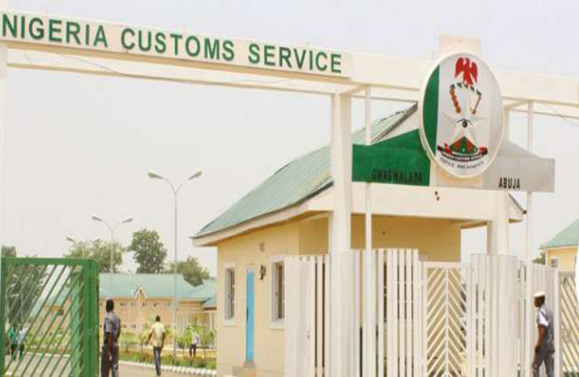
The Nigeria Customs Service (NCS) has introduced a new automated overtime e-clearance system designed to decongest the nation’s ports and improve trade facilitation through digital processes.
The initiative, announced on the Service’s official X account on Wednesday, is aimed at processing long-standing overtime cargo more efficiently by cutting delays, reducing manual interference, and curbing opportunities for corruption.
Speaking at a sensitization exercise in Lagos, Comptroller-General of Customs Adewale Adeniyi explained that the platform enables consignees to submit and track applications remotely, eliminating repeated visits to customs offices. He emphasized that the measure will help lower costs and shorten clearance times for cargo owners.
“We are more interested in removing these cargoes from our ports rather than managing them as overtime. If we had a choice, we would rather get all of them out of the ports. Everything we have tried to do is to ensure that our processes are more efficient, so that the cost and time it takes to clear these cargoes from the ports will be reduced,” Adeniyi said.
He, however, cautioned against abuse of the process, noting that some importers deliberately abandon cargo to evade duties. He cited a 15-year-old overtime cargo case still under investigation as an example of the loopholes the Service intends to close. According to him, tougher sanctions will apply to cases of deliberate abandonment, with intelligence units monitoring misuse.
Adeniyi directed the Zone A Coordinator to hold further engagement sessions with terminal operators and shipping companies to ensure seamless implementation of the system. Senior officials, including ACJ Mohamed Babandede, described the innovation as a step toward transparency, accountability, efficiency, and effectiveness.
Terminal operators and shipping lines present at the event pledged their cooperation, stressing that the new platform would help reduce congestion and improve turnaround times at Nigerian ports.
Previously, overtime cargoes were required to be cleared within 30 days at airports and 90 days at seaports. Under the new reform, the clearance window has been extended to 120 days, after which unclaimed goods will be disposed of, while perishable and inflammable items may be auctioned immediately.
Overtime cargoes have left uncleared beyond stipulated timelines which have long posed challenges for Nigeria’s ports, contributing to congestion, higher storage costs, and delays in cargo handling. While customs traditionally relied on auctions to dispose of such goods, the process had faced criticism over transparency and favoritism.
To address these concerns, the NCS launched an upgraded e-auction portal in January 2024, requiring bidders to present a valid Tax Identification Number (TIN) verified on the FIRS TaxPro Max platform, along with an active email address for registration.
By combining automation with the extended clearance window, the NCS says it is confident that the reforms will reduce abandoned consignments, strengthen transparency, and boost efficiency across ports and border commands.