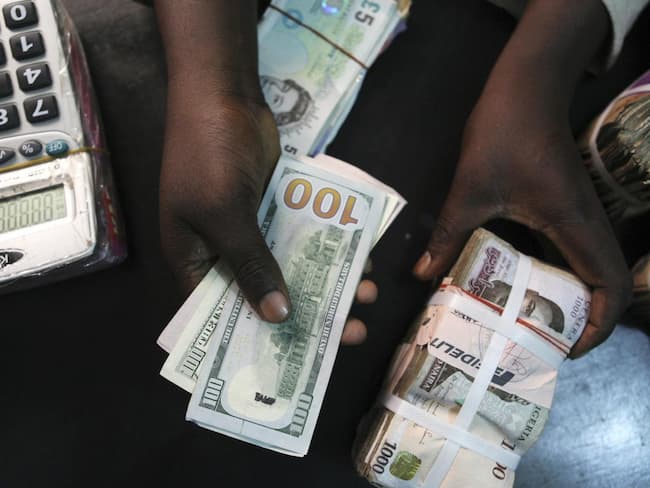
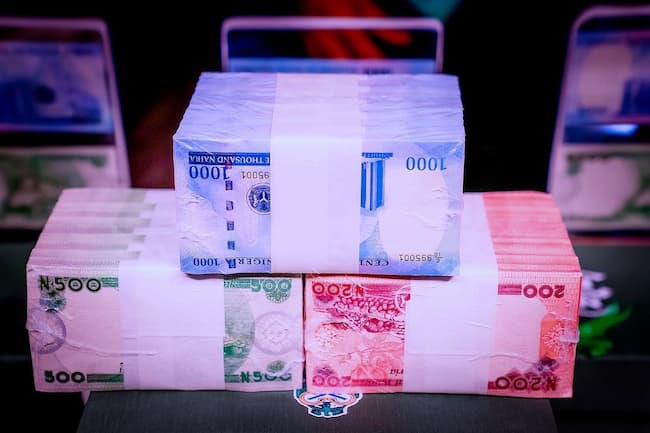
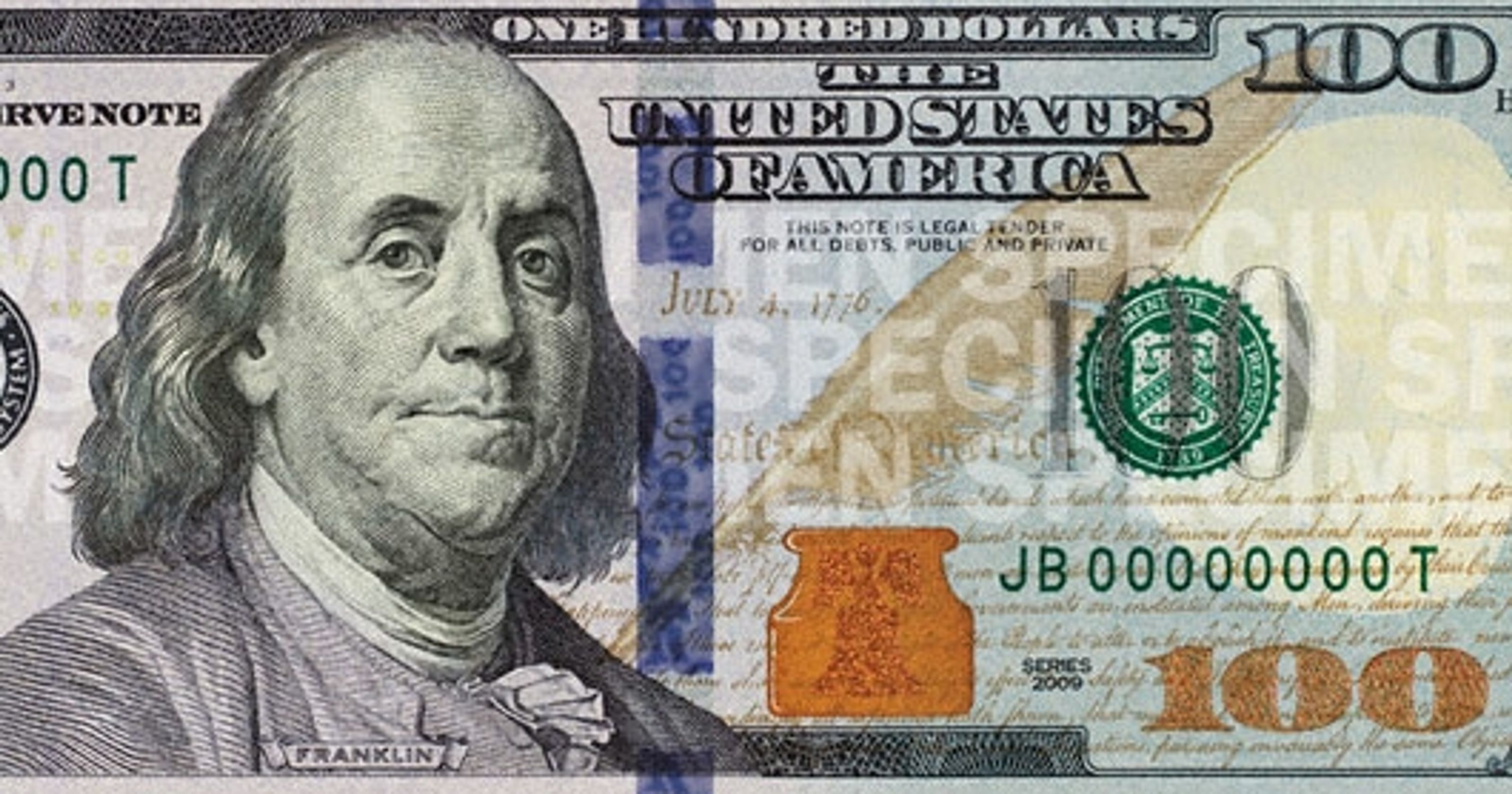
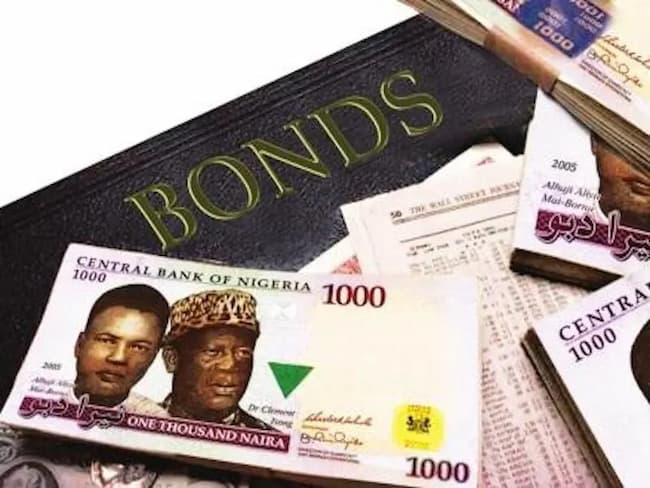
The exchange rate between the Naira and the US dollar, according to the data released on the FMDQ Security Exchange, the official forex trading portal, showed that the naira closed at 1480.00 per $1 on Monday, October 20th , 2025. The naira traded as high as 1469.00 to the dollar at the investors and exporters (I&E) window on Sunday.
Dollar to naira exchange rate today black market (Aboki dollar rate):
The exchange rate for a dollar to naira at Lagos Parallel Market (Black Market) players sell a dollar for ₦1500 and buy at ₦1480 on Sunday 19th October, 2025, according to sources at Bureau De Change (BDC).
Please note that the Central Bank of Nigeria (CBN) does not recognize the parallel market (black market), as it has directed individuals who want to engage in Forex to approach their respective banks.
Dollar to Naira Black Market Rate Today
Dollar to Naira (USD to NGN)
Black Market Exchange Rate Today
Selling Rate
₦1500
Buying Rate
₦1480
Dollar to Naira CBN Rate Today
Dollar to Naira (USD to NGN)
CBN Rate Today
Highest Rate
₦1482
Lowest Rate
₦1469
Please note that the rates you buy or sell forex may be different from what is captured in this article because prices vary.
The Nigerian naira ended the week weaker against the U.S. dollar, despite two separate foreign exchange interventions by the Central Bank of Nigeria (CBN) aimed at stabilising the market.
According to CBN data, the naira closed at ₦1,475.35 per dollar on Friday, depreciating by ₦4.32 or 0.29% compared with Thursday’s ₦1,471.02. The week saw consistent declines across most trading sessions, underscoring sustained pressure in the FX market.
The local currency opened the week at ₦1,457.51 on Monday and progressively weakened to ₦1,463.23 on Tuesday and ₦1,473.29 on Wednesday before recording a brief rebound on Thursday.
Analysts attributed the fluctuations to surging demand for foreign exchange amid limited liquidity inflows, noting that such conditions continue to weigh on the naira’s short-term performance.
TrustBanc Financial Group Limited reported that the CBN sold $70 million in FX interventions on Tuesday and Thursday to authorised dealer banks in an effort to bolster supply and narrow the market spread.
By week’s end, the naira had depreciated by ₦20.18 in the official market and ₦5 in the parallel market, closing at ₦1,490 per dollar. Consequently, the gap between both markets widened to 0.99%.
Despite the currency pressure, Nigeria’s external reserves increased by $92.5 million to $42.68 billion, supported by steady crude oil production, which averaged 1.46 million barrels per day over the past nine months.
In the commodities market, Brent crude prices declined to $61 per barrel amid U.S. inventory builds and IEA forecasts of a 2026 surplus. Meanwhile, gold prices climbed 4.87% to $4,202.10 per ounce, driven by investor concerns over a potential U.S. government shutdown and expectations of future interest rate cuts.
Market analysts predict continued naira volatility in the short term but remain optimistic that sustained reforms and reserve growth could support medium-term stability.
The Governor of the Central Bank of Nigeria (CBN), Yemi Cardoso, says the nation’s ongoing economic reforms are showing tangible results, revealing that Nigeria’s external reserves now provide 11 months of import cover.
Speaking in Washington, D.C., at the close of the IMF/World Bank Annual Meetings, Cardoso stated that recent fiscal and monetary measures have placed Nigeria on a trajectory of economic stability, inclusiveness, and innovation-led growth.
He said the Nigerian delegation’s active participation in the meetings reinforced the country’s credibility and commitment to fiscal discipline, earning the confidence of international investors and development partners.
“This has been a forward-looking and positive week for Nigeria,” Cardoso said. “Despite global economic volatility, our engagements reaffirmed that Nigeria is on the right path toward macroeconomic stability, policy consistency, and inclusive development.”
According to the apex bank chief, the results of these reforms are becoming visible across key indicators, including inflation, exchange rate performance, and investor confidence.
He highlighted that headline inflation has declined for six consecutive months, dropping to 18.02% in September from 20.12% in August — the lowest level in three years. Core and food inflation also fell during the same period, aided by tighter monetary policy, exchange rate unification, and improved market transparency.
Cardoso disclosed that Nigeria’s foreign reserves now exceed $43 billion, providing for 11 months of import cover — a key sign of economic resilience.
“The naira continues to strengthen, and the gap between the official and parallel market rates has narrowed to less than two percent,” he said, attributing the stability to rising capital inflows, increased diaspora remittances, and growing investor participation.
He reaffirmed the CBN’s commitment to sustaining reform momentum, boosting investor confidence, and ensuring that Nigeria remains an attractive destination for global investment.
The Central Bank of Nigeria (CBN) is set to offer ₦650 billion worth of Nigerian Treasury Bills (NTBs) for subscription in its upcoming primary market auction next week, as the market anticipates lower short-term borrowing costs.
The offering follows the Monetary Policy Committee’s (MPC) decision in September to cut the benchmark interest rate by 50 basis points, signaling a more accommodative stance.
According to auction details released by the apex bank, the CBN will issue ₦100 billion each for 91-day and 182-day maturities, and ₦450 billion for 364-day Treasury bills.
Market analysts expect yields to ease slightly in response to the improved inflation outlook, with real interest rates rising to 8.98% and investors showing strong demand for longer tenors.
In its fourth-quarter auction calendar, the CBN had previously raised ₦570 billion across similar maturities, while also reducing spot rates on mid-to-long term notes to reflect changing liquidity conditions.
During last week’s auction, the CBN offered ₦600 billion in Open Market Operation (OMO) bills with 193-day and 249-day tenors, attracting an impressive ₦2.12 trillion in total bids—fully allotted at stop rates of 19.40% and 19.89%, respectively.
In the secondary market, bullish activity persisted as investors maintained strong interest in Treasury Bills, driving average yields 6 basis points lower to 17.39% week-on-week.
However, mild sell-offs on certain OMO maturities—particularly the 9-Dec and 17-Feb notes—pushed average OMO yields up by 105 basis points to 21.62%.
Analysts project that the upcoming auction could see similar levels of demand as investors continue to seek attractive returns in the fixed-income space amid moderating inflation and stable monetary policy outlook.
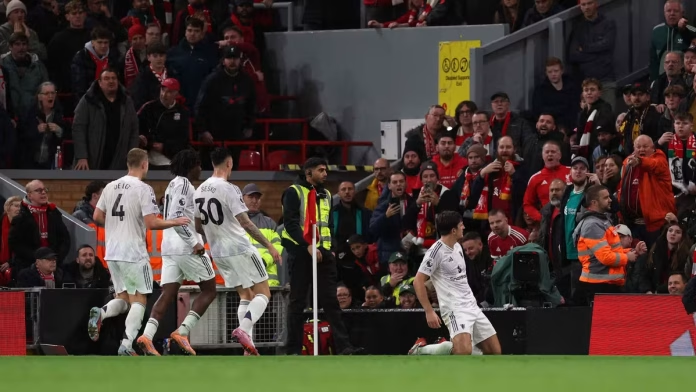
Manchester United finally broke their long-standing Anfield curse, defeating Liverpool away from home for the first time since January 2016. The dramatic 2-1 victory ended a ten-match winless run on Merseyside and pushed the Red Devils to within two points of the Premier League champions.
With United failing to win any of their previous eight league away games, few expected an upset. But Ruben Amorim’s men made a dream start — taking the lead within the opening 62 seconds. Bruno Fernandes fed Amad Diallo down the right, whose clever pass found Bryan Mbeumo. The forward calmly slotted home past Giorgi Mamardashvili, scoring one of the fastest goals ever in the fixture’s Premier League history.
Liverpool players protested the goal, claiming Alexis Mac Allister was down with a head injury after a collision with Virgil van Dijk, but the referee waved play on.
The hosts gradually found their rhythm and almost levelled in the 21st minute when Cody Gakpo curled a stunning effort that hit the post. Moments later, Fernandes struck the post for United after a fine exchange with Amad. United looked threatening on every counterattack, with Mamardashvili denying both Mbeumo and Mason Mount before half-time.
Liverpool returned after the break determined to respond, with Gakpo again denied by the woodwork after connecting with a Mohamed Salah cross. Both managers made triple substitutions around the hour mark as the match turned into a frenetic, end-to-end battle.
The Reds’ persistence finally paid off when Federico Chiesa’s low cross was turned in by Gakpo for the equaliser, sending Anfield into raptures.
However, United silenced the crowd in the 84th minute. Bruno Fernandes delivered a pinpoint cross that Harry Maguire powered home with a header, restoring United’s lead. Amorim’s side then defended valiantly against Liverpool’s late barrage to secure back-to-back league wins for the first time under the Portuguese coach.
The defeat marked Liverpool’s fourth consecutive loss across all competitions and their third straight in the Premier League, compounding pressure on manager Arne Slot.
The Federal Government has reaffirmed that English Language and Mathematics remain mandatory for all students registering for their O’Level examinations, clarifying recent speculations suggesting otherwise.
In a statement released on Sunday by the Federal Ministry of Education, the government emphasized that despite the newly reviewed admission framework into tertiary institutions, no candidate is exempted from taking or registering for the two core subjects.
According to the ministry’s Director of Press and Public Relations, Boriowo Folasade, the clarification became necessary following widespread misinterpretation of the recently introduced O’Level admission reforms.
Minister of Education, Dr. Maruf Tunji Alausa, explained that the reform was designed to enhance flexibility, fairness, and inclusiveness in tertiary education admissions, ensuring that students are not unfairly denied entry because of deficiencies in subjects unrelated to their chosen disciplines.
“The new system ensures that qualified students are not barred from higher education due to credit deficiencies in non-essential subjects,” Alausa noted.
He added that the reviewed framework aligns with international standards and corrects long-standing disparities in the previous admission system. While certain programs may not require a credit in Mathematics or English for admission, all candidates must still register and sit for both subjects during their O’Level examinations.
“All students are required to take English and Mathematics as part of their Senior School Certificate Examinations because they remain essential to a solid educational foundation,” the statement reiterated.
The ministry further stated that the new policy aligns with the government’s broader vision for inclusive education, equitable access, and human capital development while maintaining academic integrity and excellence.
Parents, students, and stakeholders were urged to rely only on verified communication channels of the ministry for authentic information on educational policies and reforms.
BizWatch Nigeria had earlier reported that under the new policy, students in the arts and humanities will no longer be required to present a credit pass in Mathematics for university or polytechnic admissions.
The US dollar weakened against major currencies as global markets priced in two potential rate cuts by the Federal Reserve within three months, amid the ongoing US government shutdown and uncertainty in Washington.
The greenback’s decline was fueled by fears of delayed economic data releases, suspended government operations, and renewed concerns over US-China relations.
By Friday, the USD/JPY pair fell 0.6% to 149.48, while the British pound strengthened to $1.3427, up 0.53%, and the euro gained 0.29% to $1.1655.
Following recent tariff-related tensions and market volatility, the dollar’s role appears to have shifted from a safe-haven asset to a risk-sensitive currency, reacting negatively to market instability.
The dollar’s decline deepened amid growing worries about regional bank loans and rising stress in money market rates. Analysts say the absence of key economic reports—due to the government shutdown—has left investors uncertain about the US economy’s strength.
The Consumer Price Index (CPI) for September, postponed because of the shutdown, is now expected to be released on October 24 after the Department of Labor recalled select staff to process the data for Social Security’s annual COLA adjustments.
Meanwhile, over two million federal workers remain unpaid, while political gridlock in Washington shows no sign of easing. Both major parties continue to stand firm, leaving the country in a stalemate that has weakened investor confidence.
The Dollar Index (DXY), which measures the greenback’s performance against six major peers, fell to around 98.00, its lowest point in over two months. This marks a reversal from the post-FOMC rally in September, when it peaked near 99.55.
Analysts believe the dollar’s fading strength reflects growing expectations of Fed rate cuts later this month and again in December.
Experts also note that the dedollarisation trend—where countries diversify away from the US currency—has intensified, further eroding the dollar’s traditional safe-haven appeal.
Ultimately, the greenback’s future direction hinges on upcoming data and the Fed’s tone, with investors watching closely for signs of economic resilience or slowdown.
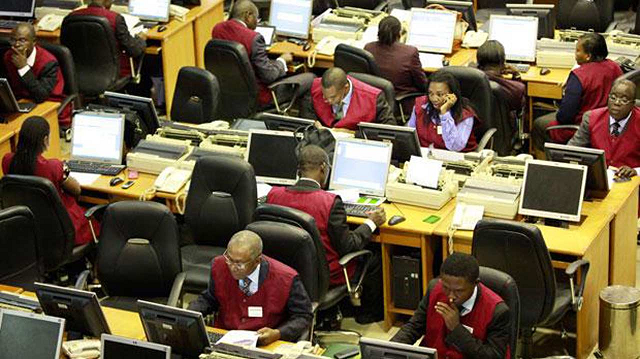
The Nigerian equities market extended its winning streak last week as investors gained approximately ₦1.3 trillion, with the Nigerian Exchange (NGX) All-Share Index climbing by 1.35% week-on-week to hit a new record level.
The sustained rally pushed the benchmark index to 148,977.64 points, flirting with the symbolic 150,000-point threshold—its highest level in 52 weeks. Market capitalisation also surged, closing at ₦94.56 trillion, reflecting renewed confidence among investors.
Analysts attribute the market’s uptrend to strong buying interest in mid and large-cap blue-chip stocks alongside strategic portfolio rebalancing, particularly as inflation cooled to 18.02% in September.
So far this year, the NGX All-Share Index has delivered an impressive 44.74% year-to-date gain, underlining the resilience and optimism driving Nigeria’s capital market.
Market breadth closed positive at 1.27x, with 52 gainers outpacing 41 decliners, signaling broad-based bullish sentiment. Trading activity, however, was mixed: while traded volumes rose by 5.93% to 2.42 billion units, the total transaction value slipped 15.53% to ₦76.98 billion from the previous week’s ₦91.14 billion.
The total number of deals also fell by 8.36% to 126,744, reflecting a more selective trading approach even amid the upbeat mood.
Sectoral performance leaned bullish overall, except for the NGX Banking Index, which fell by 0.13% due to mild corrections in GTCO, ACCESSCORP, and UBA as investors booked profits.
In contrast, Industrial Goods and Insurance indices led sector gains, rising 2.79% and 2.56%, respectively. Consumer Goods, Commodities, and Oil & Gas indices also advanced by 1.93%, 1.60%, and 0.04%, buoyed by renewed investor demand.
Top-performing stocks included SOVRENINS (+11.2%), ROYALEX (+11.1%), EUNISELL (+10%), SFSREIT (+9.9%), and OMATEK (+9.5%), benefiting from heightened market interest.
On the losers’ chart, TRIPPLE GEE (-18.8%), ACADEMY (-17.9%), REGALINS (-13.9%), LIVINTRUST (-13.5%), and IMG (-9.9%) topped the laggards, dragged down by profit-taking activities.
Analysts at Cowry Asset Management Limited noted that market sentiment remains upbeat as the index approaches the 150,000 resistance zone. They project a possible breakout if Q3 corporate earnings exceed expectations, though minor corrections may occur as traders lock in profits.
Looking ahead, experts anticipate continued bullish momentum driven by attractive equity valuations and improving macroeconomic indicators, while policy directions from monetary authorities remain a key determinant of near-term performance.
The Securities and Exchange Commission (SEC) has called on stockbrokers to strengthen their commitment to professionalism, ethics, and transparency to build investor trust and enhance Nigeria’s capital market integrity.
The SEC’s Director-General, Dr. Emomotimi Agama, made this appeal in a statement issued in Abuja on Sunday, stressing that market intermediaries must maintain the highest standards of honesty and competence.
Agama emphasized that ethical conduct is fundamental to a trustworthy investment environment, noting that investors must have confidence that their portfolios are being managed with transparency and accountability.
He further highlighted that digitisation, ethics, and sustainability form the foundation of modern capital markets globally, as technological innovation continues to reshape investment practices.
“Across the world, capital markets are being transformed by technology—from online trading and digital assets to data analytics, blockchain, and artificial intelligence,” he said.
“These innovations are redefining how we raise capital, invest, and regulate markets.”
Agama added that the SEC is leveraging digital tools to enhance efficiency, improve transparency, and strengthen investor protection. He also noted that the Commission is collaborating with the Chartered Institute of Stockbrokers (CIS) to deepen digital literacy and professional capacity in the market.
“As technology evolves, so must our ethics and professionalism,” he stated. “No innovation can replace the foundational importance of integrity.”
He reiterated that a sustainable and inclusive capital market must be anchored on transparency, accountability, and ethical discipline, which remain essential to attracting both local and foreign investments.
The Nigerian equities market closed the week on a bullish note, with the All-Share Index (ASI) advancing by 1,989.60 points to finish at 148,977.64, marking a 1.35% weekly increase.
Starting the week at 146,988.04, the benchmark index maintained an upward trajectory throughout the period, breaking key psychological levels of 147,000 and 148,000, largely buoyed by strong performances in heavyweight stocks such as Dangote Cement and Lafarge Africa.
Improved Market Activity
Investor participation strengthened significantly, as total trading volume rose to 2.4 billion shares, up from 2.2 billion recorded the previous week. The total value of transactions also climbed, pushing market capitalization to N94.5 trillion, compared to N93.2 trillion in the preceding week, across 126,591 deals.
Market sentiment remained positive with 52 equities appreciating in price, an increase from 51 in the previous week, while 41 stocks declined — the same number as the prior week. Meanwhile, 53 equities closed flat. So far, the All-Share Index has delivered a 4.39% month-to-date gain and an impressive 44.74% year-to-date return, signaling sustained market momentum.
Market Performance Overview
The Nigerian Exchange (NGX) maintained its upward momentum for most of the trading week, closing four out of five sessions in the green.
Monday: The market opened strong with a 729-point rally.
Tuesday: The index experienced a marginal decline of 6.3 points.
Wednesday: Gains were modest, with a 31-point increase.
Thursday and Friday: The week ended firmly positive, with the ASI surpassing the 148,000-point threshold by Thursday.
Index Highlights
The NGX Premium Index appreciated by 1.65%, supported by advances in major constituents — Dangote Cement (+4.35%), Lafarge Africa (+4.27%), FBN Holdings (+1.29%), and MTN Nigeria (+0.72%). Similarly, the NGX 30 Index gained 1.43%, while the NGX Main Board Index climbed 1.21%, underscoring broad-based market strength.
Sectoral Performance
Sector performance was mixed, with notable gains in industrial, insurance, and consumer goods sectors.
Industrial Goods Index: Led the week’s rally with a 2.79% increase, driven by over 4% gains in Dangote Cement and Lafarge Africa, alongside a 0.63% rise in BUA Cement.
Insurance Index: Added 2.56%, propelled by price gains in Sovereign Trust Insurance, Universal Insurance, and Prestige Assurance.
Consumer Goods Index: Improved 1.93%, supported by a robust 7.41% surge in Vitafoam Nigeria Plc.
Oil & Gas Index: Recorded a marginal 0.04% uptick.
Banking Index: The only major laggard, dipping 0.13% for the week.
Top Gainers
Sovereign Trust Insurance Plc led the advancers, appreciating 11.21% week-on-week to close at N3.57. Royal Exchange Plc followed with an 11.11% gain to settle at N2.40.
Other strong performers included:
Eunisell Interlinked Plc: +10.00% to N48.40
SFS Real Estate Investment Trust: +9.88% to N418.75
Omatek Ventures Plc: +9.49% to N1.50
Transcorp Power Plc: +8.92% to N342.00
Stanbic IBTC Holdings Plc: +8.26% to N118.00
Universal Insurance Plc: +8.11% to N1.20
Vitafoam Nigeria Plc: +7.41% to N87.00
Prestige Assurance Plc: +6.51% to N1.80
Top Losers
On the losing end, Tripple Gee and Company Plc topped the decliners’ list, dropping 18.84% week-on-week to close at N4.91, followed by Academy Press Plc, which fell 17.92% to N7.88.
Other notable losers were:
Regency Assurance Plc: -13.94% to N1.42
LivingTrust Mortgage Bank Plc: -13.46% to N4.50
Industrial & Medical Gases Nigeria Plc: -9.87% to N32.40
Sunu Assurances Nigeria Plc: -9.01% to N5.25
UACN Plc: -8.53% to N66.50
Austin Laz & Company Plc: -7.94% to N2.90
Ellah Lakes Plc: -7.20% to N13.40
Chams Holding Company Plc: -6.98% to N4.00
Corporate Developments
The week featured multiple corporate announcements and financial disclosures:
Transcorp Power Plc, Royal Exchange Plc, and Austin Laz & Company Plc released their Q3 2025 financial results.
Geregu Power Plc appointed StructureHQ as its new Company Secretary.
Okomu Oil Plc and Infinity Trust Mortgage Bank Plc also published their third-quarter financial statements.
BUA Foods Plc informed shareholders of a possible delay in its Q3 filings, citing internal data migration challenges.
Market Outlook
The Nigerian stock market sustained its bullish momentum through the week, breaking significant barriers at the 147,000 and 148,000 mark, supported by strong gains in large-cap industrial stocks.
As more companies continue to publish their Q3 earnings reports, market analysts anticipate that positive earnings surprises could further enhance investor confidence and potentially drive the All-Share Index higher in the coming weeks.
If Africa’s digital story were a building, innovation would be the design, but trust and infrastructure would be the pillars holding it all up. That belief powered every conversation Interswitch led at Moonshot by TechCabal 2025, Africa’s largest gathering of tech visionaries and digital builders.
This year’s Moonshot, hosted at the Eko Convention Centre in Lagos, brought together bold ideas, breakthrough technologies, and conversations redefining the future of Africa’s digital landscape. As Platinum Sponsor and curator of the Big Tech and Enterprise Stage, Interswitch was not just there to participate, it came to provoke thought, challenge assumptions, and inspire collaboration around the systems that make digital innovation possible.
At the heart of Interswitch’s participation was one clear message: Africa’s next phase of growth will not be defined by the number of start-ups launched or the latest app trends. It will be driven by the strength of the infrastructure that supports them, the invisible backbone keeping digital systems running, payments flowing, and confidence intact.
In his keynote session, Akeem Lawal, Managing Director, Payments Processing and Switching (Interswitch Purepay), reflected on what it truly takes to build a resilient digital economy. Africa’s tech ecosystem, he explained, has moved beyond emergence; it is now in acceleration mode. But to sustain that momentum, the continent must invest in secure, scalable, and interoperable systems that evolve alongside its growth. Innovation sparks progress, but enduring systems sustain it.
That is where Interswitch continues to play a defining role. From Verve to Quickteller, and across its switching and processing capabilities, the company has spent over two decades building the digital rails that power millions of transactions daily, not just enabling payments, but cultivating confidence in every connection. Behind every successful transaction lies assurance. Assurance in the system, the network, and the promise that technology will deliver as expected.
Beyond technology, Interswitch champions collaboration because no ecosystem thrives in isolation. Africa’s progress, as explored at Moonshot, depends on how effectively it mobilises both public and private capital to turn ideas into impact. With over $1.1 trillion in domestic capital available through pension and sovereign funds, the potential is massive. The challenge, as Akeem noted, lies in unlocking those resources and converting them into the infrastructure that can propel Africa’s innovation into the future.
The atmosphere at Moonshot was electric, a fusion of optimism, ambition, and action. Amid the buzz, Interswitch’s message stood out, echoing a truth that cut through the noise: Africa’s digital growth is not just about speed; it’s about sustainability. The systems we build today must be strong enough to carry tomorrow’s dreams.
By powering everyday connections, enabling seamless payments, and strengthening the digital foundations that fuel progress, Interswitch continues to light the path for Africa’s journey toward a truly connected economy. For the company, it has never been just about transactions, it has always been about building trust, systems, and connections that help Africa go further, together.
Bukky Bademosi is a highly accomplished Senior Sales & Marketing Executive and the current Sales Director for G4S Shared Services Limited. With over 25 years of experience holding lead positions across Nigeria and West Africa, she is a proven driver of aggressive business expansion, having been part of the team responsible for a notable 34% growth in the G4S business in a single year.
As the Director of Sales & Business Development, Ms. Bademosi leverages a deep cross-sectoral expertise that spans security, Oil & Gas, shipping, software design, and LPG engineering. Her strategic acumen is matched by her technical project execution capability, evidenced by her certification as a Project Management Professional (PMP).
According the just published “World Security Report” by Allied Universal and G4S – Why does fraud seem to be a bigger problem in Nigeria than anywhere else in Sub-Saharan Africa?
The survey findings show that fraud is top of mind for security chiefs based in Nigeria and this is likely to be fueled by financial pressures and economic instability. The data shows that security leaders are very cognizant of it and are taking proactive measures to mitigate it. For example, we have installed cameras fitted with AI in factories that can detect a change in stock levels. Companies are focusing on enhancing physical security, improving threat detection, and investing in technologies such as AI-powered surveillance and smart infrastructure. This is about building resilience against
According the report, 90% of companies that were interviewed said they would increase their physical security budgets next year in Nigeria. What’s causing this?
Companies in Nigeria expect their physical security budget to increase more than anywhere else in the world. There are a whole range of reasons why this might be the case, from inflationary pressures, investment in new technology and training staff. In Nigeria, companies are growing and their security requirements are increasing as a result.
The top budget priority in Nigeria, 69% of security chiefs say, is enhancing physical security. This is followed by employee security training and upskilling and then improving threat detection to prevent security incidents.
How big an impact is the likely increase in economic instability in Nigeria that’s expected next year – its set to rise from 40% to 47%. What impact does this have on companies?
Security chiefs will be mindful of any security-impacting hazards that are set to rise, whether that’s economic instability, civil unrest or climate change. Being aware of the security landscape is a good thing and means that companies can take a proactive approach, rather than a reactive one.
With so many threats to companies and businesses, what is the most important thing to focus on, security wise, if a company has a limited budget?
It very much depends on the industry they’re in and the type of work they do. With all our clients, we start with a risk assessment to understand the specific threats they may face and the potential vulnerabilities they have. We will then design a tailored security solution to mitigate those risks. We always recommend an integrated security solution which combines people and technology so that clients can get the benefits from both.
Do you think fraud is becoming more sophisticated in Nigeria?
Fraud can be sophisticated in some instances, but a lot of it isn’t. It is often carried out by individuals who might just be opportunists. It’s important for companies to prepare for all scenarios and all types of threat actors.
What’s worse in a company – external or internal fraud? And isn’t insider fraud just a result of companies not treating their staff well?
Both are serious and can have significant financial and reputational ramifications, but insider fraud can often be harder to detect. The World Security Report provides a window into what motivates intentional insider threats, with 55% of security chiefs saying financial dissatisfaction is a significant contributing factor. Understanding these root causes can help companies to mitigate these risks, in some cases.
So yes, how companies treat staff matters. Fair pay, bonuses, and recognition can go a long way in reducing temptation. Security starts with how you value your people.
Do you think the results of this report will put investors and companies off investing and starting a business in Africa and especially Nigeria?
No. Nigeria is a country of opportunity, young, entrepreneurial, and increasingly tech-savvy. It has one of the largest and most digitally connected populations in Africa, making it an attractive base for innovation and expansion.
While every fast-growing economy faces security considerations, what matters is having the right security partner, one that understands local realities, provides real-time intelligence, and builds tailored safeguards. With that support, multinational companies can operate safely and continue to thrive in Nigeria’s vibrant, forward-looking market.
Do you see a greater uptake in AI in security in the future?
Both globally and locally, AI is the next big leap in security. In Nigeria, nearly half (48%) of companies say AI-powered threat intelligence and automated incident response will be crucial to their operations over the next two years. AI helps detect anomalies faster, giving companies a head start against fraud and security breaches especially in high-risk industries like finance and logistics.
What’s the mix in your security surveillance with people and AI?
It is about balance. AI helps us scan vast amounts of data and detect unusual patterns, but people provide the intuition, empathy, critical thinking and considered judgment that technology alone can’t.
According to the World Security Report 2025, 59% of Nigerian firms view smart infrastructure from building sensors to public-space monitoring as crucial for operations over the next two years. But it is still the trained guards, analysts, and responders who interpret that data and act decisively. That is where the human element makes all the difference.
What gives G4S the edge or advantage over other security firms in Nigeria?
A number of factors separate us from our competitors. We have a presence in all states and a wealth of experience working across a range of different sectors. Crucially, we specialise in both security professionals and electronic security solutions – many security companies in Nigeria only do one or the other. We also have a significant risk intelligence capability and make good use of real-time information.
We have a number of different service lines, including journey management, so can cater to a whole spectrum of security needs that a company might have, particularly those operating globally.
President Bola Ahmed Tinubu is reportedly under mounting pressure to remove certain names from the recently approved presidential pardon list, following public outrage over the inclusion of individuals convicted of violent and high-profile crimes.
Sources revealed that the list, earlier endorsed by the Council of State and presented by the Attorney-General of the Federation (AGF) and Minister of Justice, Prince Lateef Fagbemi (SAN), is currently undergoing a thorough review. The move comes amid backlash from citizens, advocacy groups, and security agencies questioning the integrity of the pardon process.
Presidential Clemency Under Scrutiny
The presidential clemency, traditionally issued during national celebrations, aims to decongest correctional facilities and promote national unity. However, the 2025 pardon exercise has stirred intense debate, with critics arguing that some beneficiaries do not merit the President’s mercy.
According to the Presidency, the list was prepared based on recommendations from the Presidential Advisory Committee on the Prerogative of Mercy, chaired by Fagbemi. It was divided into six categories: general pardons, posthumous pardons (including the Ogoni Nine), presidential clemency, sentence reductions, and commutations from death sentences to life imprisonment.
Despite this structured approach, controversy erupted after names linked to violent crimes appeared on the list. Among them was Maryam Sanda, convicted in 2017 for murdering her husband, Bilyaminu Bello, in Abuja. While some family members of the deceased rejected the pardon, Bello’s father and Sanda’s father later accepted the President’s decision in a joint press briefing.
Other notable beneficiaries included Major S. Alabi Akubo, convicted for illegal possession of firearms, and Kelvin Prosper Oniarah, a notorious kidnapper known for terror operations across Delta, Edo, Rivers, Abia, Benue, and Oyo States.
Security Agencies Raise Objections
Top government sources disclosed that several law enforcement and anti-corruption bodies—including the Economic and Financial Crimes Commission (EFCC), National Drug Law Enforcement Agency (NDLEA), and Independent Corrupt Practices and Other Related Offences Commission (ICPC)—have raised strong objections to the list. They alleged that some names were “smuggled in” without proper vetting by the committee responsible for reviewing applications for clemency.
A senior security official told BizWatch Nigeria that the agencies warned the Presidency against releasing convicts found guilty of murder, kidnapping, or corruption-related offences, stating that doing so could undermine the country’s criminal justice system and ongoing anti-corruption efforts.
“The EFCC, NDLEA, and other agencies have made it clear that some names were not part of the committee’s recommendations,” the source said. “The list must be trimmed to remove individuals whose release could threaten national security or public trust.”
Review Underway
Responding to public concerns, the Attorney-General, Fagbemi, confirmed on Thursday that the Presidential Prerogative of Mercy has not been finalised and remains under review. In a statement issued from Abuja, he clarified that no inmate has been released under the latest clemency exercise.
“The process is still at its final administrative stage,” Fagbemi explained. “It includes a standard verification review to ensure all names fully comply with legal and procedural requirements before any release order is issued.”
He added that the Council of State’s approval marks only one phase of the process. The next step involves issuing the official instruments of release for each beneficiary after a final legal review by the Ministry of Justice and the Controller-General of Corrections.
“This step provides an opportunity for correction and ensures that only deserving individuals benefit from the President’s mercy,” he said, emphasizing that the government remains committed to transparency and due diligence.
Fagbemi also expressed appreciation for public vigilance, describing the widespread reactions as a sign of Nigerians’ concern for fairness and accountability in governance. “The rule of law does not rush; it ensures fairness,” he noted.
Possible Changes to the Final List
Officials familiar with the process revealed that the Presidency is likely to remove individuals whose inclusion has generated widespread controversy. Those convicted of violent crimes, drug trafficking, or offences involving national security are expected to be excluded from the final version.
“The President has been briefed, and a thorough audit of the names is ongoing,” a top government source said. “Only those who meet all the legal and ethical criteria will remain.”
The revised list, once approved, is expected to be made public in the coming days.
The exchange rate between the Naira and the US dollar, according to the data released on the FMDQ Security Exchange, the official forex trading portal, showed that the naira closed at 1480.00 per $1 on Friday, October 17th , 2025. The naira traded as high as 1464.00 to the dollar at the investors and exporters (I&E) window on Wednesday.
Dollar to naira exchange rate today black market (Aboki dollar rate):
The exchange rate for a dollar to naira at Lagos Parallel Market (Black Market) players sell a dollar for ₦1502 and buy at ₦1480 on Thursday 16th October, 2025, according to sources at Bureau De Change (BDC).
Please note that the Central Bank of Nigeria (CBN) does not recognize the parallel market (black market), as it has directed individuals who want to engage in Forex to approach their respective banks.
Dollar to Naira Black Market Rate Today
Dollar to Naira (USD to NGN)
Black Market Exchange Rate Today
Selling Rate
₦1502
Buying Rate
₦1480
Dollar to Naira CBN Rate Today
Dollar to Naira (USD to NGN)
CBN Rate Today
Highest Rate
₦1475
Lowest Rate
₦1464
Please note that the rates you buy or sell forex may be different from what is captured in this article because prices vary.
The Nigerian Army has commenced a disciplinary investigation into the conduct of a soldier accused of causing the death of a commercial bus driver at a military checkpoint in Akunu, Akoko North-East Local Government Area of Ondo State.
Assistant Director, Army Public Relations, 32 Artillery Brigade, Major Njoka Irabor, disclosed this in a statement posted on the official X handle of the Nigerian Army on Thursday.
According to the statement, the incident occurred on Sunday, October 13, 2025, when the driver, who was en route from Akure to Abuja, experienced mechanical problems near the Akunu military checkpoint. The situation reportedly escalated after passengers demanded a refund of their transport fare and requested the assistance of a soldier stationed at the checkpoint.
“The soldier, in responding to the passengers’ call, acted in an unprofessional manner, leading to a confrontation with the driver,” the statement read. “The altercation resulted in physical contact that contravened the Rules of Engagement and Code of Conduct governing military operations at checkpoints.”
Major Irabor stated that upon learning of the incident, the 32 Artillery Brigade promptly evacuated the driver to a nearby medical facility and took full responsibility for his treatment. The victim was later referred to the Ondo State Specialist Hospital, Akure, and subsequently to the Federal Medical Centre, Owo, where he tragically passed away on Monday, October 14, 2025.
The Army expressed deep regret over the incident and conveyed its condolences to the family of the deceased. It also assured the public that the implicated soldier would face appropriate disciplinary action.
“As a disciplined and professional institution, the Nigerian Army reaffirms its commitment to ensuring justice is served,” the statement read. “The soldier involved will face the full consequences of his actions, and the outcome of the disciplinary process will be made public.”
The statement further disclosed that officials of the 32 Artillery Brigade had visited the deceased’s family and the Ondo State chapter of the National Union of Road Transport Workers (NURTW) to express condolences and pledge support.
“The Brigade has undertaken to cover burial expenses and provide welfare assistance to the bereaved family to prevent disruption to the education of the late driver’s children,” the Army stated. It also confirmed that liaison officers remain in close contact with the family as burial arrangements continue.
The Ondo State Government, according to the statement, has commended the Army’s swift intervention and pledged to collaborate with military authorities to ensure the welfare of the deceased’s dependants.
Incidents of alleged abuse of power by security personnel at checkpoints have long sparked public concern in Nigeria. In 2020, for instance, a soldier was reported to have shot dead a motorist, Joseph Pessu, in Warri, Delta State, after he failed to stop at a military checkpoint during a COVID-19 lockdown.
Civil society groups have since renewed calls for stricter accountability mechanisms and a zero-tolerance policy on human rights violations within the armed forces.
In a significant move to boost the Nigerian real estate sector, Stanbic IBTC Bank has played a strategic role in facilitating access to affordable housing finance to Nigerians. With over 100 mortgages closed at single digit interest rates, Stanbic IBTC in collaboration with the Ministry of Finance Incorporated Real Estate Investment Fund (MREIF) has made a giant stride in reshaping the Nigerian home ownership landscape by directing essential funds toward property developers, real estate firms, and aspiring homeowners nationwide.
The MREIF provides financial support by offering loans of up to ₦100 million at an attractive interest rate of 9.75% per annum and a minimal equity requirement of only 10% of the property price. This comprehensive financial package empowers a wide variety of individuals; from first-time buyers looking to enter the property market to experienced developers ready to create new residential havens transforming the dream of home ownership into a reality. With these accessible terms, MREIF is setting the stage for a vibrant real estate renaissance, igniting hope and progress across Nigeria’s bustling communities.
Olu Delano, Executive Director, Personal and Private Banking at Stanbic IBTC Bank, expressed his enthusiasm about this initiative aimed at transforming Nigeria’s housing landscape. “We are excited to spearhead this initiative, providing mortgages of up to ₦100 million to give Nigerians the confidence that they can realise their dreams of home ownership,” he stated. This ambitious programme is designed not only to increase access to affordable housing but also to stimulate growth within the real estate sector.
Taiwo Ala, Head Products at Stanbic IBTC highlighted that by facilitating home ownership, the bank aims to empower individuals and families to foster a sense of stability and investment in their communities. He stated that “The mortgages will be tailored to meet the diverse needs of Nigerians, ensuring more people can find their place in a thriving and secure environment”. This move is poised to make significant strides in enhancing the quality of life for many and promoting economic development throughout the region.
The impact of this collaboration is already evident, by providing tailored mortgage solutions. Whether a young business executive or a married couple purchasing their first property. The over 100 mortgages already disbursed represent real stories of progress and stability. This milestone not only highlights Stanbic IBTC’s role in fostering economic growth but also aligns with broader national goals of increasing home ownership rates and stimulating the real estate economy.
To explore how you can benefit from these transformative mortgage solutions, visit Stanbic IBTC Bank’s website (Stanbic IBTC MREIF Home Loans | Stanbic IBTC Bank) or visit any of our branches today to start your journey towards home ownership.
Welcome to another sizzling edition of Thursday Chronicles, where we serve you hot truth with a side of sarcasm, pour fresh laughter into your week, and sprinkle facts like pepper in mama put stew. If you’re reading this with a shaky network or while holding a charger tightly at a public socket, just know you’re in the right place. Let’s dive into today’s gist.
Everywhere you turn these days, someone is either applying for a visa, preparing for IELTS, doing WES evaluation, or attending one mysterious “relocation seminar.” If you enter a random office in Lagos and shout “Canada,” half the people will turn and say “Amen.” The japa fever has officially taken over the nation, and nobody seems interested in checking their temperature.
It’s like one mass exodus. One big real-life episode of Escape Room. Nigerians are running, not jogging, with full energy, packed documents, and desperation that can move mountains. Some don’t even care where they’re going anymore. As long as there is light, clean water, stable currency, and nobody shouting “up NEPA,” they’re packing their bags.
And the funny thing is, it doesn’t even start with big announcements. It begins with subtle clues. First, they stop buying furniture, then they start greeting you with “How far, you dey?” instead of “Good morning.” Before you know it, their bio says “living in diaspora,” and they’re tweeting about how “abroad is not for the weak” from a cozy heated apartment.
But can we really blame them?
The Nigerian situation is like a toxic relationship. You keep hoping it’ll get better, but it keeps giving you heartbreak, bills, fuel scarcity, and mosquito bites at 2am. You vote, they rig. You complain, they ignore. You hustle, they frustrate. So when people get the chance to try elsewhere, they grab it like Black Friday sales. Who no wan soft life?
Let’s talk about the numbers. According to the Nigerian Economic Summit Group, over 71,000 Nigerians relocated to the UK in one year, and that’s just one country. Canada, Australia, Germany, Dubai — all collecting Nigerians like souvenirs. Nurses, teachers, software engineers, welders, fashion designers, even DJs — everybody is finding one route or another.
There’s also the peer pressure. You see your former classmate who used to forget his locker key now doing video tours of his Canadian kitchen. He’s smiling like his landlord is the one frying eggs for him. Suddenly, you start rethinking your entire life. You open Google and type “cheap countries Nigerians can relocate to without IELTS.” You even add “2025 version” to be current.
But as tempting as it sounds, japa is not beans. The process is not for the faint-hearted. From transcript wahala to embassy appointments, from WES stress to biometrics, from flight fare to accommodation, it’s like playing chess with your destiny. And the moment you step out of Nigeria, a new kind of struggle begins: cultural shock, homesickness, snow, and tax. Heavy tax.
Some people get there and cry in silence. They smile for Instagram but call their Nigerian friends at night just to hear the sound of generator. Some even miss gala and pure water. But they stay. Because, despite all the challenges, abroad offers one thing that’s scarce in Nigeria — hope. Hope that things can actually work. That if you pay tax, you’ll see road. That your hard work won’t be wasted by one policy announced at 1am.
And for those of us still here, battling fuel price, epileptic power supply, and the trauma of living in a country that sends you “We regret to inform you” emails more than job offers, we get it. It’s not that we don’t love Nigeria. It’s just that Nigeria sometimes behaves like it doesn’t love us back.
Still, not everyone will or wants to leave. Some are building businesses here. Some are staying close to family. Some are simply not ready. And that’s okay. Not everyone’s dream is Canada. Some just want peace, Wi-Fi, and affordable eggs.
At the end of the day, japa is not about geography. It’s about seeking better. If you find better here or there, the most important thing is peace of mind. Whether you’re staying or going, soft life is your birthright, and may we all find it one way or another.
Thanks again for hanging out with me on Thursday Chronicles. If this one touched your chest or reminded you to finish your Canada application form, don’t worry, you’re not alone. Whether you’re abroad, about to japa, or just jejely surviving in Mushin with dreams of Maldives, I’m rooting for you.
Let’s do this again next Thursday; same gist time, same chaotic life, same unfiltered truths. Until then, keep pushing, stay hydrated, and don’t forget to charge your phone, it’s still a jungle out here.
Yields on Nigerian Treasury Bills (T-bills) edged lower on Wednesday as sustained investor demand in the secondary market continued to drive prices higher, following new data showing a slowdown in inflation. The renewed buying pressure reflects growing optimism among traders and institutional investors that the Central Bank of Nigeria (CBN) could soon ease its monetary policy stance.
According to market data, the average yield on Nigerian Treasury Bills declined to 17.39% as investors maintained strong interest in short-term government securities. This demand surge was influenced by recent disinflation trends, as the headline inflation rate fell to 18.02% in September 2025 — a significant drop from 20.18% recorded in August.
The decline in inflation effectively lifted the real interest rate to about 9%, improving the attractiveness of fixed-income returns. Analysts say the disinflation trend could prompt the CBN to lower its benchmark rate in upcoming policy meetings, as authorities aim to stimulate private sector-led economic growth.
Meanwhile, banks have maintained relatively high liquidity positions, which has further supported demand for T-bills in the secondary market. Market participants also noted that while a rate cut might reduce lenders’ earnings from interest income, it could improve credit access and overall market stability.
On the trading floor, the Treasury Bills market exhibited mixed movements across tenors. Yields on short- to medium-term instruments—specifically the one-month, three-month, and six-month bills—fell by 1, 4, and 6 basis points (bps), respectively.
The 8-October-2026 bill experienced a modest rate decline, shedding 8 bps to settle at 15.48%, while the 17-September-2026 bill recorded a marginal increase of 4 bps to 15.55%. Despite these isolated variations, the overall market sentiment remained bullish, as reflected by the slight average yield decline of 1 bp across the curve.
Traders noted that abundant liquidity within the banking system will likely sustain investor appetite for government securities in the short term. “The liquidity levels are strong enough to maintain positive momentum in the fixed-income space,” one trader commented.
Across market segments, yields contracted by 1 bp each on the short-, mid-, and long-term ends of the curve. The contraction was mainly driven by strong demand for instruments with maturities of 75 days (-1 bp), 155 days (-1 bp), and 358 days (-12 bps). Conversely, yields in the Open Market Operations (OMO) segment increased slightly by 4 bps to 20.5%, reflecting some divergence in investor positioning.
Analysts believe the combination of easing inflation and robust liquidity will continue to underpin demand for Treasury Bills in the near term. They added that a potential policy rate cut by the CBN could further compress yields, while maintaining the market’s bullish tone as investors lock in available returns before any policy shift takes effect.
Overall, the recent disinflation trend has enhanced investor confidence, reinforcing expectations of a stable and more accommodative interest rate environment in the coming months.
Nigeria’s bond market traded on a bullish note on Wednesday as yields fell across maturities amid renewed investor demand for fixed-income assets. The heightened activity was driven by expectations surrounding the Debt Management Office’s (DMO) fourth-quarter auction rates and improving macroeconomic indicators suggesting a potential cut in interest rates.
Market participants continued to position themselves strategically following a noticeable drop in inflation, fueling optimism that the Central Bank of Nigeria (CBN) could introduce monetary easing measures to stimulate economic growth. As investors sought to lock in favorable yields on naira-denominated instruments, trading momentum strengthened significantly in the secondary market.
According to market analysts, the current yield movement is being shaped by rapidly evolving economic conditions that may lead to lower government borrowing costs. The country’s real interest rate has now widened to approximately 9%, reflecting a high nominal rate environment alongside successive declines in inflation levels.
The Monetary Policy Rate (MPR) was recently lowered to 27%, while headline inflation dropped by 210 basis points to 18.02%. This combination leaves investors with a real return of around 8.98%, a rare positive spread in Nigeria’s recent economic history.
“Declining inflation and expectations of further policy easing could drive additional yield compression across the naira bond market,” analysts at CardinalStone Securities Limited stated in a market commentary. “Although the yield curve may remain inverted in the near term, sharper corrections are likely at the short end of the curve.”
Trading in the secondary bond market began cautiously but later turned positive after the release of September inflation figures. Federal Government of Nigeria (FGN) bonds with maturities in 2032, 2033, and March 2035 all recorded notable yield declines from the previous close. As a result, the average benchmark yield fell by three basis points to 15.98%.
Fixed-income analysts predict that investors will continue to respond positively to the disinflation trend, especially with the likelihood of an interest rate cut at the upcoming November meeting of the Monetary Policy Committee (MPC).
Data from the National Bureau of Statistics (NBS) showed that Nigeria’s annual inflation rate dropped to 18.02% in September 2025 from 20.18% in August 2025, marking the first time in three years that the rate has fallen below 20%.
The slowdown in inflation was largely supported by a rebound in crude oil output, moderation in food prices as the harvest season commenced, and relative stability in the exchange rate. On a month-on-month basis, inflation rose marginally by 0.72%, slightly below the 0.74% recorded in August 2025, indicating a steady easing of price pressures.
Analysts believe the sustained disinflation could lead to a renewed appetite for long-term government securities as investors seek to take advantage of declining inflation and attractive real yields.
The overall sentiment in Nigeria’s debt market remains optimistic, with traders anticipating further downward pressure on yields as macroeconomic fundamentals continue to improve and expectations of monetary policy easing gather momentum.
The British pound held firm around the $1.34 mark on Thursday after fresh data showed that the United Kingdom’s economy expanded modestly in August 2025, in line with forecasts. The latest update from the Office for National Statistics (ONS) indicated that monthly real gross domestic product (GDP) grew by 0.1% in August, following a revised contraction of 0.1% in July.
According to the report, the UK’s production sector posted a 0.4% increase during the month, while the services sector remained flat and construction activity dipped by 0.3%. Over the three months to August 2025, GDP rose by 1.5% compared with the same period a year earlier.
The ONS data revealed that services output expanded by 1.8%, construction by 1.3%, while production output declined by 0.4%. On a year-on-year basis, GDP was 1.3% higher in August compared to the same month in 2024, reflecting a gradual but steady recovery in economic activity.
The services sector, which accounts for nearly 80% of the UK economy, recorded no overall growth for the second consecutive month. Of the 14 subsectors tracked by the ONS, seven reported growth in August. The strongest performance came from administrative and support service activities, which grew by 1.0%, driven by a 5.3% surge in rental and leasing operations — the subsector’s largest increase since July 2020. The report noted that this industry segment has now expanded for nine consecutive months, underscoring its resilience amid broader economic stagnation.
Finance Minister Rachel Reeves received a modest reprieve from the data ahead of the government’s upcoming budget announcement scheduled for November 26. Reeves, who has previously hinted at potential fiscal tightening, reaffirmed her commitment to maintaining economic and fiscal stability while signaling that tax adjustments are being considered.
Speaking to reporters ahead of an international finance summit in the United States, Reeves said the government is reviewing “further measures on tax” and public spending to ensure the UK’s finances remain sustainable. Her remarks come amid growing speculation that the chancellor may introduce new tax increases in the November budget following a series of policy reversals and mounting fiscal pressures.
According to BBC reports, Reeves implemented tax hikes worth £40 billion annually in her first budget last November, including increased payroll taxes for employers. Despite promising not to repeat the move, weakening fiscal conditions may force her hand once again.
In financial markets, currency traders increased bets on potential Bank of England (BoE) rate cuts in 2026, even as the International Monetary Fund (IMF) warned that UK inflation is likely to remain the highest among G7 nations through next year. The IMF urged the BoE to take a cautious approach to monetary easing to avoid reigniting inflationary pressures.
Over the three months to August 2025, the UK economy expanded by 0.3% compared to the previous three-month period ending in May, slightly higher than the 0.2% growth recorded in the quarter to July. Services output rose by 0.4% during the same period, while production declined by 0.3%, a smaller contraction than the 1.4% drop reported earlier. Construction output increased by 0.3%, a marginal improvement from previous readings.
While the latest figures signal modest progress, economists caution that the UK’s growth trajectory remains fragile amid high borrowing costs, persistent inflation, and limited consumer spending. Nevertheless, the data offers reassurance that the economy is not slipping into contraction, providing policymakers with some breathing room ahead of next month’s fiscal announcement.