








Home Blog Page 42

Amnesty International Trains Journalists On Rights-Centred Reporting Amid Rising Abuses

Amnesty International Nigeria has intensified calls for greater media accountability amid deepening concerns over the country’s deteriorating human rights climate.

At a two-day workshop in Enugu, over 60 journalists from the South-East and Delta State were trained in “Human Rights-Centred Journalism” to strengthen ethical reporting and amplify marginalized voices amid growing state impunity.

Speaking at the training, Amnesty International Nigeria’s Communications Officer, Michael Christian, said the initiative was informed by the alarming increase in abuses and the persistent lack of empathy and gender sensitivity in reportage.

He noted that although many media reports remain factually accurate, they often fail to reflect the human cost of rights violations or preserve victims’ dignity.

Delivering a paper on Press Freedom and the Law, Associate Professor of Law at Enugu State University of Science and Technology (ESUT), Chijioke Agbo, accused the political elite of “blatant disregard for democratic norms and citizens’ rights”, warning that continued attacks on civil liberties were undermining Nigeria’s democratic foundations.

He also called for the repeal of the Public Order Act of 1979 and criticised the Cybercrimes Act as a “weapon of state intimidation” deployed to silence dissent and muzzle the media. However, Agbo cautioned that source protection, while vital, remains a privilege under law, urging journalists to apply discretion in handling sensitive material.

In another session, law lecturer at the University of Calabar, Anne Agi, stressed the need for gender-sensitive reporting, particularly on gender-based violence (GBV). Her presentation, titled Journalism with a Gender Lens: Protecting Lives, Shaping Narratives, urged reporters to avoid sensationalism and dehumanising framing.

“Survivors are not case studies; they are people,” she said. “Reporting should restore dignity, not destroy it.”

Other facilitators — including Dr Kabiru Danladi, Hajiya Zainab Okino and John Omilabu — led discussions on media ethics, safety, and sustained rights-based advocacy.

Chairman of the Nigeria Union of Journalists (NUJ) Delta State Council, Churchill Oyowe, who participated in the training, described it as timely at a period of increased censorship and targeted attacks on journalists.

“This programme has reawakened our professional conscience. We are committed to practising journalism that defends human rights and promotes accountability,” he said.
Naira, Equities Slide As Markets React To Trump’s Military Warning

Federation Account Amasses Over ₦5trn In 6months- RMAFC

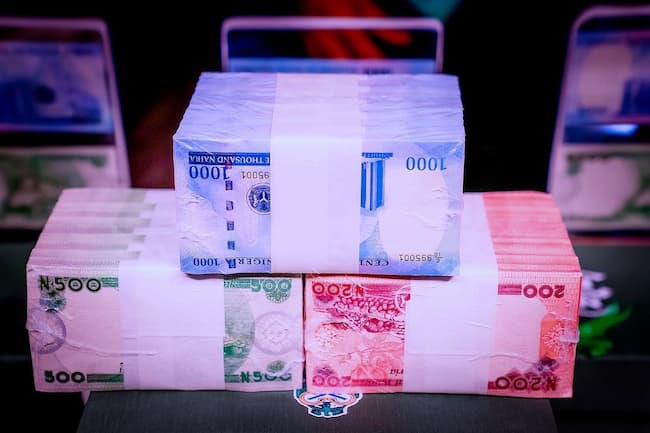
Nigeria’s financial markets opened in November 2025 on a negative footing, as both the naira and domestic equities declined sharply following comments by United States President Donald Trump threatening possible military action against Nigeria over alleged religious persecution.

Figures from the Central Bank of Nigeria indicated that the naira, which recently traded at a 2025 peak of N1,421.73/$, depreciated to N1,436.34/$ on Monday — a day-on-day loss of N14.61 or 1.03 per cent. At the parallel market, the currency also weakened to N1,455/$, reflecting heightened anxiety among investors and fresh foreign-exchange demand pressures.

The selloff was triggered by tense geopolitical rhetoric at the weekend, after Trump, via his Truth Social platform, described Nigeria as a “country of particular concern” and asked the US Department of War to prepare for “possible action” if alleged killings of Christians persist. He characterised the situation as “Christian genocide” — a claim that has drawn widespread global criticism and renewed debate about its diplomatic and economic implications for Africa’s largest economy.

The shock swiftly filtered into the capital market. At the Nigerian Exchange, bearish momentum resumed as the All-Share Index fell by 0.25 per cent to close at 153,739.11 points, bringing year-to-date gains down to 49.37 per cent. Market capitalisation dipped by N245.88bn to N97.58tn.

Aradel Holdings (-9.21 per cent) and Access Corporation (-3.07 per cent) led Monday’s decline. Market breadth was negative, with 38 losers against 19 gainers. Union Dicon topped the gainers chart (+9.93 per cent), while Honeywell Flour Mills emerged the worst performer (-10.00 per cent).

Trading sentiment was also weaker as total volume and turnover slumped 87.94 per cent and 44.64 per cent respectively, to 627.5 million units valued at N25bn. United Bank for Africa accounted for the most activity, trading 136.8 million units worth N5.5bn — representing 21.8 per cent of total volume and 22.2 per cent of total value.

Sectoral performance was mixed. Oil & Gas (-3.94 per cent), Commodities (-1.85 per cent), Insurance (-1.48 per cent) and Banking (-0.22 per cent) were down, while Consumer Goods inched higher by 0.49 per cent. Industrial stocks closed flat.

In the fixed-income market, Cowry Assets reported weaker appetite for Nigeria’s Eurobonds, with average yields rising by 5 basis points to 7.70 per cent on Monday amid global risk aversion. Bloomberg also reported that Nigeria’s dollar bonds were the worst performers among emerging-market peers, with all ten notes ranking among global decliners. The 2047 note shed 0.6 cents to 88.26 cents on the dollar before trimming some losses later in the session.

However, some analysts believe the panic may be temporary. Tilewa Adebajo, Chief Executive Officer of CFG Advisory, told The PUNCH that the reaction appeared “not sustainable”.

“This looks like a mere blip,” he said. “Closing prices in global markets already show stabilisation. With Nigeria’s exit from the FATF Grey List, the long-term fundamentals remain strong.”

But Chief Executive of the Centre for the Promotion of Private Enterprise, Dr Muda Yusuf, warned that such geopolitical statements could severely damage confidence.

“The US President’s threat of military intervention in Nigeria is unwarranted, counterproductive, and economically destabilising,” he said. “Remarks of this nature heighten risk perception and undermine investor confidence.”

He stressed that Nigeria must work to deepen governance and internal security, but added that diplomatic engagement “should be cooperative, not coercive”.

“Unilateral military action would destabilise the Nigerian economy, threaten regional stability, and worsen humanitarian pressures,” Yusuf warned.

With markets now watching for clearer signals on Washington’s policy posture and Abuja’s diplomatic response, analysts say medium-term stability will hinge on calm communication, confidence-building measures, and steady macroeconomic policy from the Federal Government and the CBN.

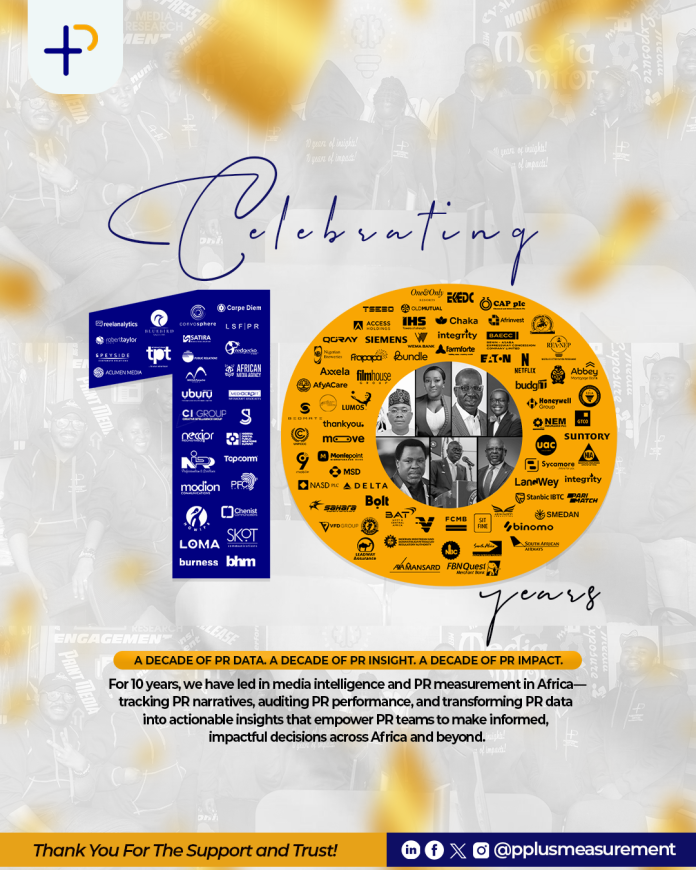
P+ Measurement Services Marks A Decade Of Independent PR Measurement In Nigeria

P+ Measurement Services, Nigeria’s first independent media intelligence and PR measurement agency, is marking its 10th anniversary this November. Founded in 2015 at the brink of a recession, the agency emerged from a vision to challenge the norms of public relations reporting and bring independence, objectivity, and data-driven accountability to PR measurement and evaluation across Nigeria and Africa.

Over the past decade, P+ has transformed what was once considered an “impossible mission” into a thriving sector. Established from the living room of its founder, Philip Odiakose, who questioned why PR agencies should be the accused, the judge, and the jury of their own work, the company has since led the charge in redefining how PR performance is measured. Today, P+ stands as a trusted partner for more than 20 brands on retainer, having executed 52 projects and collaborated with 25 local and international PR agencies, as well as 86 brands, including government bodies, ministries, NGOs, and private organizations.

P+ Measurement Services has also played a significant role in advancing global recognition for Nigeria within the PR and communications measurement field, through its involvement with international bodies such as the Institute for Public Relations (IPR) Measurement Commission and the International Association for the Measurement and Evaluation of Communication (AMEC). Beyond its client portfolio, P+ has trained over 40 analysts and developed partnerships with key trade associations, including the Nigerian Institute of Public Relations (NIPR) and Women in PR.

Speaking on the milestone, Philip Odiakose, Chief Media Analyst and a Commissioner at the IPR Measurement Commission, commented, “Ten years ago, this was just a bold dream, starting an independent PR measurement agency when the industry barely understood the concept of evaluation. What began in my living room has grown into a movement that has shaped how the Nigerian PR ecosystem thinks about accountability, insight, and performance. Our mission was to prove that independence in PR measurement wasn’t just possible, it was necessary. Ten years later, I can say with pride that we did more than prove it; we built a legacy.”

Adding her perspective, Olufunke Mohammed, Executive Director of Operations, shared, “This milestone means a lot more than numbers, it represents ten years of resilience, innovation, and teamwork. We took a risk when we left our jobs to pursue what was then an uncertain idea. Today, that idea has become a recognized institution helping brands make sense of their reputation and impact with credible data and analytics. It has been a decade of growth and learning, and we are only just getting started.”

Rukayat Yusuf, Senior Analyst, reflected on the company’s impact from an analyst’s lens, saying, “Working with P+ has been an opportunity to be part of something pioneering. We have not only provided insights for brands but also helped elevate the PR measurement profession itself. Being part of this journey has shown that excellence is built one dataset, one analysis, and one story at a time.”

As P+ Measurement Services celebrates this significant milestone, the company reaffirms its commitment to continuous innovation and collaboration, empowering communications and PR professionals across Africa with actionable insights that go beyond vanity metrics to drive meaningful impact.

Apapa Customs Sets New National Revenue Record With ₦303bn October Collection

The Nigeria Customs Service (NCS), Apapa Area Command, has recorded an unprecedented monthly revenue of ₦303 billion in October 2025, the highest ever generated by any customs command in the country’s history.

According to a press release signed by the superintendent of customs, Tunde Ayagbalo, the Public Relations Officer of the command, on November 3, 2025, the figure surpasses the previous record of ₦264 billion achieved by the Command in October 2024.

With this new benchmark, Apapa’s revenue haul for the first ten months of 2025 now stands at ₦2.4 trillion, already exceeding its total collection for the entire 2024 financial year, two months ahead of schedule.

The Customs Area Controller, Comptroller Emmanuel Oshoba, attributed the development to strengthened operational measures, enhanced compliance, and improved trade facilitation systems at the port. He described the new milestone as “the beginning of greater revenue exploits” under his leadership.

According to Oshoba, the Command is fully prepared for increasing trade volumes, particularly with the introduction of Drive-Through Scanning technology expected to process an average of 150 containers per hour from the quayside. He said the system would be a major advancement for port operations in West Africa.

He added that recently promoted Deputy and Assistant Comptrollers have undergone in-house capacity-building sessions to align with the reform directives of the Comptroller General of Customs, Bashir Adewale Adeniyi, MFR.

“While we are deploying all trade facilitation tools as directed by the CGC — including the One-Stop-Shop that harmonises customs procedures — we are also maintaining a strict stance against revenue leakages,” Oshoba said.

He noted that issuing Demand Notices (DNs) where necessary remains uncompromised, while officers continue to scrutinise attempts to misapply the Harmonised System (HS) code for duty evasion.

The Comptroller disclosed that he has embarked on unscheduled visits to port access corridors to interface with truckers, freight forwarders, and licensed agents, urging them to support the Nigerian Ports Authority (NPA) by ensuring the swift evacuation of cleared consignments.

He stressed that delays in cargo exit slow down processing of new imports, thereby undermining trade facilitation and revenue generation targets.

“We need the support of all stakeholders to sustain and surpass these gains. This is not our final destination — we are ready to do better,” Oshoba said.

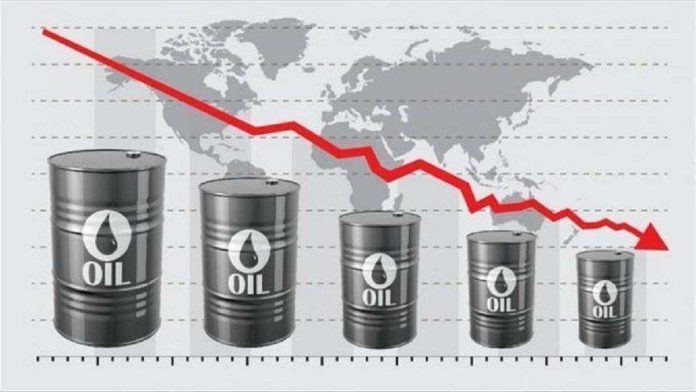
Oil Prices Rise As OPEC+ Moves To Prevent Oversupply Amid Global Tensions

Crude oil prices climbed on Monday following an announcement by the Organization of the Petroleum Exporting Countries and its allies (OPEC+) to temporarily halt further production hikes in a bid to avert a potential oversupply in global markets.

The group’s decision comes amid concerns over slowing demand and heightened geopolitical tensions linked to the ongoing Russia-Ukraine conflict, which have increased volatility in energy markets.

At the start of trading, Brent crude rose by 1% to $65.21 per barrel, compared to the previous close of $64.57, while U.S. West Texas Intermediate (WTI) increased by 1.1% to $61.37 per barrel.

OPEC+ announced that eight of its member nations—Saudi Arabia, Russia, Iraq, the UAE, Kuwait, Kazakhstan, Algeria, and Oman—will increase oil production by 137,000 barrels per day (bpd) in December but pause further increases from January to March 2026 to prevent a potential supply glut.

The decision follows a similar 137,000 bpd output hike approved for November, signaling a gradual rollback of the 1.65 million bpd voluntary production cuts made in April 2023. The organization described the move as consistent with “healthy market fundamentals” supported by low global stockpiles.

OPEC+ reiterated its pledge to monitor global oil demand trends closely and maintain flexibility to adjust output depending on market shifts. The group also reaffirmed the continuation of 2.2 million bpd voluntary cuts first introduced in November 2023.

Analysts say the decision highlights OPEC+’s efforts to manage market stability amid uncertain conditions.

“This period is typically one of reduced demand,” noted Daniel Hynes, Senior Commodity Strategist at the Australia and New Zealand Banking Group (ANZ). “By pausing further hikes, OPEC+ is signaling an awareness that the market may struggle to absorb additional supply—especially if disruptions to Russian exports are short-lived.”

Meanwhile, the Russia-Ukraine conflict intensified over the weekend, with both nations targeting critical energy infrastructure as winter approaches.

According to Ukrainian officials, overnight Russian drone strikes triggered a fire at a truck parking area in the Odesa region, killing two people and disrupting energy supplies. Governor Ivan Fedorov reported that nearly 58,000 residents in Zaporizhzhia lost power following the attacks.

Ukraine’s Air Force said it intercepted 67 out of 79 drones and two Iskander-M ballistic missiles launched by Russia.

In southern Russia, authorities in Krasnodar reported damage to an oil terminal and tanker in the port of Tuapse after debris from intercepted Ukrainian drones fell on the site. Emergency services confirmed there were no casualties but noted that a nearby railway station also sustained minor damage.

As geopolitical risks escalate, energy analysts say oil prices may remain supported in the near term despite concerns about slowing consumption.

OPEC+ Nations Approve 137,000 bpd Oil Production Increase For December

Eight key members of the Organization of the Petroleum Exporting Countries and its allies (OPEC+) have agreed to raise oil production by 137,000 barrels per day (bpd) starting in December, according to a statement released by the group on Sunday.

The alliance—comprising Saudi Arabia, Russia, Iraq, the United Arab Emirates (UAE), Kuwait, Kazakhstan, Algeria, and Oman—held a virtual meeting to evaluate current global oil market dynamics and the economic outlook heading into 2026.

OPEC+ confirmed that after December’s production boost, there will be a pause on further output increases between January and March 2026, citing seasonal demand patterns.

The 137,000-bpd adjustment marks a gradual and partial reversal of the 1.65 million bpd voluntary production cuts introduced in April 2023. The decision reflects the group’s confidence in a stable global economic environment and strong oil market fundamentals, underscored by declining global inventories.

In its statement, OPEC+ reaffirmed its commitment to monitor global energy developments closely and maintain flexibility to alter production levels if market conditions shift. The alliance said it remains ready to pause or reverse adjustments, including the 2.2 million bpd voluntary reductions initially introduced in November 2023.

The latest decision follows a similar 137,000 bpd output increase for November, approved during the group’s previous meeting on October 5.

Cumulative OPEC+ production cuts reached 5.85 million bpd in March 2025, equivalent to about 5.7% of global oil demand. These reductions include a 2 million bpd cut from October 2022, followed by the 1.65 million bpd voluntary reduction in April 2023, and the 2.2 million bpd cut in November 2023.

Member countries had fully reversed the 2.2 million bpd cut by the end of September 2025 and began rolling back the 1.65 million bpd cut in October, signaling a return to more normalized production levels as market balance improves.

OPEC+ will reconvene for its next ministerial meeting on November 30, 2025, to assess ongoing market conditions and future supply strategies.

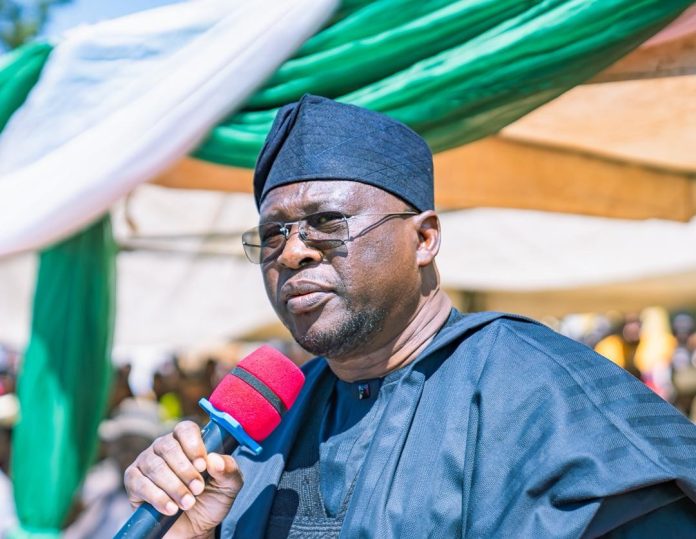
Fintiri Flags Off ₦14.9bn Mubi–Maiha Road Reconstruction

Adamawa State Governor, Ahmadu Umaru Fintiri, has flagged off the reconstruction of the 24.1-kilometer Mubi–Maiha Road, a ₦14.9 billion project expected to boost transportation, trade, and cross-border connectivity between Nigeria and Cameroon.

The ceremony took place at the Mubi–Maiha junction at the weekend. Although the road is a federal route, Fintiri said the state government resolved to intervene to ease the hardship faced by road users and to stimulate commercial activity in the area.

“This project reflects our commitment to inclusive development. We are determined to connect communities, promote economic growth, and open up Adamawa to greater opportunities,” the governor said, reaffirming his administration’s mantra that “no one is left behind and nothing is left untouched.”

Fintiri disclosed that 40 per cent of the contract sum has already been paid to the contractor, Triacta Nigeria Limited, to ensure timely delivery, and assured residents that the project would not be abandoned. He also revealed plans to commence additional road projects — including the Mubi–Gella and Ahmadu Bello corridors — as part of broader efforts to expand the state’s road infrastructure.

Commissioner for Works and Energy Development, Adamu Atiku, described the governor as “the architect of modern Adamawa,” noting that the administration has delivered unprecedented milestones in roads, bridges, drainages and flyovers.

He said the Mubi–Maiha road contract, valued at ₦14.98 billion, carries a completion timeline of 15 months, although he expressed confidence that the project could be delivered ahead of schedule.

Representing Triacta Nigeria Limited, Engineer Wajib pledged that the company would deliver a durable, quality road within the agreed timeframe, describing the project as “a pathway to safer travel, stronger communities, and greater economic growth.”

Community leaders who spoke with reporters welcomed the development, describing it as long overdue and one that would significantly transform mobility and trade in the region.

The Mubi–Maiha reconstruction forms part of a wider infrastructure drive by the Fintiri administration aimed at strengthening regional integration and accelerating socio-economic development across Adamawa State.

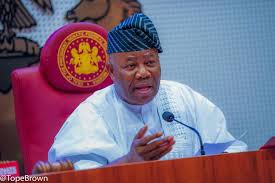
Akpabio Denies Making Viral Comment Against Trump, US Government

Senate President Godswill Akpabio has rejected a viral social media post that attributed to him a remark downplaying killing in Nigeria while criticising former United States President Donald Trump, describing the statement as fabricated and intended to cause diplomatic friction.

The post, circulated by a platform identified as Rant HQ, claimed Akpabio said: “The killing is taking place in Nigeria, not the USA. Trump should focus on the US. Nigerians are not complaining about the killings.”

In a statement on Sunday, Akpabio’s Special Adviser on Media and Publicity, Eseme Eyiboh, said the claim was entirely false, insisting that the Senate President never made such a comment “publicly, privately, in writing, or in conversation”. He challenged those behind the publication to provide evidence.

Eyiboh said the photograph attached to the viral post showing Akpabio at an official engagement was deliberately used to confer legitimacy on the fabricated quote.

“Senator Akpabio is a statesman of global repute and a strong advocate of international cooperation and mutual respect among nations. He holds President Trump in high regard as a historic figure and leader of a major democracy.” Eyiboh said. “

He cautioned against what he described as “digital recklessness” and urged the public to disregard the content, stressing that the Office of the Senate President remains committed to factual, responsible communication.

The controversy surfaced days after President Trump said Christianity faced an existential threat in Nigeria, claiming radical Islamist elements were responsible for mass killings of believers and declaring Nigeria a “Country of Particular Concern”.

While acknowledging global attention on issues of religious freedom and human rights, the Nigerian government has maintained that claims of widespread, one-sided religious persecution do not accurately capture the complexity of Nigeria’s security landscape.

The Federal Government insists that under President Bola Tinubu, efforts are ongoing to tackle terrorism, foster interfaith unity, and protect all citizens – irrespective of religious affiliation.

CBN Generates N7 Trillion From Six OMO Auctions, Launches New Short-Term Bills

The Central Bank of Nigeria (CBN) successfully generated about ₦7 trillion through six Open Market Operations (OMO) auctions held in October 2025, as part of strategic efforts to absorb excess liquidity from the financial system and attract foreign exchange inflows from offshore investors.

This marks a significant shift in the apex bank’s monetary approach, following only a single OMO auction conducted in September.

According to data from the CBN, a total of ₦6.99 trillion worth of OMO bills were sold to qualified investors—including deposit money banks and foreign portfolio investors—showing a sharp increase from the ₦620.65 billion sold in the previous month.

The aggressive liquidity mop-up drive was initiated to address excess cash in the banking system, which averaged ₦3.18 trillion in October. This move has consequently tightened rates in the money market, reflecting the regulator’s determination to rein in inflationary pressures and stabilize the naira.

During its end-of-month auction, the CBN introduced new short-term OMO bills with maturities of 46 days and 60 days, signaling a more flexible liquidity management framework.

Analysts at Meristem Securities Limited noted that the introduction of shorter-tenor bills indicates a strategic liquidity control mechanism rather than a typical investment issuance.

“Given the sustained liquidity levels, we expect the CBN to maintain this pace, offering short-tenor bills as the market demands,” Meristem said in its report.

“These issuances not only absorb excess naira liquidity but also create avenues to attract foreign portfolio investors through competitive yields.”

The firm further highlighted that the continued issuance of OMO bills could help strengthen foreign exchange inflows, supporting stability in the naira and enhancing overall market confidence.

With monetary tightening measures still in effect, analysts believe the CBN will persist with its OMO strategy in the near term to balance liquidity conditions and sustain investor participation.

Naira Strengthens By ₦54 As Nigeria’s External Reserves Climb In October

Nigeria’s currency, the naira, achieved a significant appreciation of around ₦54 against the U.S. dollar over the month of October, reflecting a favourable combination of offshore export flows and strengthening external reserves. At the end of October, the local rate in the Nigerian foreign-exchange market closed at approximately ₦1,421 per dollar—up from ₦1,475 per dollar at the end of September.

Analysts attribute the advance to a broad sell-off in the U.S. dollar index as global central banks embarked on further interest-rate reductions. Nigeria’s FX inflows from hydrocarbon exports also played a central role, supported by dollar-volume revenues from international oil companies and reduced fuel import payments. Additionally, foreign portfolio investors increased their wagers in treasury instruments, aiding the naira’s moderate appreciation. The exchange rate moved from about ₦1,465.29 per dollar at the start of the week to ₦1,457.96 by Friday, underscoring improved market dynamics and relatively restrained intervention by the Central Bank of Nigeria (CBN).

In October, Nigeria’s gross external reserves rose by approximately US$819 million, reaching US$43.172 billion from US$42.353 billion at the end of September. The rise in reserves provides increased stability in the FX market and supports a positive outlook for the naira in 2025, according to several analysts.

The global oil-market backdrop was nuanced. At the month’s start, the OPEC+ cartel signalled a planned output boost in December, raising near-term supply expectations even as demand remained weak—particularly in China, where industrial activity shrank for a seventh straight month. Geopolitical pressure, including the Israel–Hamas conflict and Western sanctions on Russian oil majors such as Rosneft and Lukoil, added short-lived volatility, but persistent Russian crude exports dampened hopes for major supply disruption. These factors, together with swelling inventories and slack demand, pushed Brent crude down by 5.2 % month-on-month to about US$64.50 per barrel.

Toward the week’s end, oil prices staged a modest rebound: Brent crude gained US$4.65 (up 7.59%) to close at US$65.94 per barrel, while U.S. West Texas Intermediate (WTI) added US$4.35 (up 7.61%) to finish at US$61.50 per barrel. Meanwhile, spot gold trimmed losses after U.S. inflation data came in slightly softer than expected—further raising expectations of an imminent rate cut by the Federal Reserve—even though the metal still ended the week lower, with spot gold down 3.24% to US$4,112.10 per ounce and U.S. futures settling at US$4,137.80.

Overall, Nigeria’s improved external-reserves position and stabilising FX trends suggest a firmer footing for the naira as the country moves into 2025.

Nigeria’s Eurobond Yields Drop As Sovereign Prepares Fresh External Borrowing

DMO Set To Auction N150bn Bond On FG's Behalf

In a clear sign of improving investor sentiment, yields on Nigeria’s sovereign Eurobonds fell in international markets ahead of the upcoming external-borrowing programme that includes a US$2.85 billion issuance plus a US$500 million Sukuk offering. The move reflects heightened appetite for Nigerian debt ahead of the maturity of a US$1.12 billion note originally issued in 2018.

According to investment-firm reports, the benchmark average yield dropped by 20 basis points within a week, landing at approximately 7.59% on Friday. The broader African Eurobond market saw mixed trading throughout the week but maintained an overall bullish tilt. Early optimism stemmed from hopes of reduced U.S.–China trade tensions, triggered by remarks from former President Donald Trump regarding tariff sustainability. However, investors remained cautious amid lingering global uncertainties, even as the oil-price rebound and softer-than-expected U.S. inflation data toward week’s end helped revive risk appetite.

The federal government’s external-borrowing strategy includes refinancing the maturing 7.63% bond that matures in November 2025, enabling Nigeria to manage refinancing risk and maintain its external-debt profile. The target amount of roughly US$2.35 billion plus the targeted US$500 million Sukuk underscores a proactive posture toward debt strategy.

Analysts note that the month-on-month yield decline of about 35 basis points for Nigerian Eurobonds signals a stronger investor acceptance of higher-yielding African sovereign debt. With Nigeria preparing fresh issuance and demonstrating refinancing discipline, sentiment in the Eurobond space is expected to remain mildly bullish heading into November.

U.S. Congressional Bill Targets Northern Nigerian Governors Over Religious Freedom Concerns

In a development signalling a widening diplomatic flashpoint, the United States Congress is moving forward with legislation that would impose sweeping sanctions on a group of prominent Nigerian officials, including twelve governors from the country’s northern region, senior judges and traditional rulers.

American lawmakers allege that these individuals are complicit in what they call a systematic assault on religious minorities, particularly Christians, within Nigeria’s sharia-governed states.

The proposed measure, known as the Nigeria Religious Freedom Accountability Act of 2025, crafted and sponsored by Republican Senator Ted Cruz, designates Nigeria as a “Country of Particular Concern” for religious persecution. It calls for the U.S. Secretary of State to compile, within 90 days of the bill’s passage, a list of Nigerian officials who have “promoted, enacted or maintained blasphemy laws” or allowed violence by non-state actors under religious pretext. Those listed would become subject to visa bans, asset freezes and other sanctions under the U.S. Global Magnitsky human-rights framework (Executive Order 13818).

The backdrop to the bill is an earlier decision by then-President Donald Trump to categorise Nigeria as a Country of Particular Concern for the first time, citing “systematic, ongoing and egregious” religious-freedom violations — including attacks by the extremist group Boko Haram — and a judiciary allegedly complicit in ethno-religious conflict.

On a post to the Truth social-media platform, President Trump decried the “thousands of Christians being killed in Nigeria” and pressed for immediate investigation via U.S. Representative Riley Moore and House Appropriations Chairman Tom Cole. The bill affirms that since 2000, when the northern state of Zamfara led by Governor Ahmad Sani Yerima expanded Sharia to include criminal law, about a dozen states in Nigeria’s north adopted similar religious-legal frameworks.

These states — which include Zamfara, Kano, Sokoto, Katsina, Bauchi, Borno, Jigawa, Kebbi, Yobe, Kaduna, Niger and Gombe — introduced parallel Sharia courts and penal codes. In contrast, other states such as Kwara, Kogi, Plateau, Benue, Nasarawa, Taraba and Adamawa restricted Sharia to family-law matters rather than criminal or public law.

More recently the Sharia Council signalled an intention to expand its arbitration panels in southern states like Oyo and Ogun, a move that alarmed leaders of Christian communities and sparked public debate before the body clarified it would not establish binding courts but serve only as mediation panels.

Senator Cruz, defending the legislation, accused Nigeria’s leadership of having “institutionalised sharia law and enabled jihadist violence”, stating that “since 2009, over 52,000 Christians have been murdered, 20,000 churches and faith institutions destroyed, and dozens of villages wiped out. The federal and state governments have failed to act, and in many cases, they are complicit.”

By spotlighting the link between regional legal frameworks and religious-freedom abuses, the bill seeks to hold individual Nigerian officials directly accountable under U.S. sanctions law — marking a significant escalation in U.S.–Nigeria diplomatic and human-rights relations.

SERAP Drags Akpabio, Abbas To Court Over Failure To Investigate Alleged ₦3m Pay-To-Pass Claims

The Socio-Economic Rights and Accountability Project (SERAP) has filed a suit at the Federal High Court, Abuja, against the Senate President, Godswill Akpabio, and Speaker of the House of Representatives, Tajudeen Abbas, over their alleged refusal to investigate claims that lawmakers pay between ₦1 million and ₦3 million to sponsor motions, bills, and petitions at the National Assembly.

The legal action, marked FHC/L/CS/2214/2025, was instituted over the weekend. SERAP is asking the court for an order of mandamus compelling Akpabio and Abbas, sued in their personal capacities and on behalf of all members of the National Assembly, to refer the allegations to appropriate anti-corruption agencies for a full-scale probe and possible prosecution.

The suit was triggered by allegations made by Ibrahim Auyo, an APC lawmaker from Jigawa State, who in a viral Hausa-language video claimed that members of both chambers pay unofficial fees to initiate legislative business.

SERAP is also asking the court to issue an order compelling both presiding officers to take steps to protect Auyo as a whistle-blower, in line with international anti-corruption provisions.

According to SERAP, the allegations amount to a serious breach of public trust and undermine the integrity of the legislature under Section 4 of the 1999 Constitution. The organisation argues that claims of quid pro quo lawmaking erode democratic rights and make a mockery of the legislative mandate conferred on the National Assembly.

In the filings signed by Kolawole Oluwadare, Kehinde Oyewumi, and Andrew Nwankwo, SERAP maintained that the matter raises issues of public interest, accountability, and rule of law; insisting that failure to probe the allegations would perpetuate impunity and weaken confidence in democratic institutions.

“Auyo is a whistle-blower protected under Article 33 of the UN Convention Against Corruption. Ending persistent allegations of corruption in the National Assembly is a matter of the rule of law and public interest.” SERAP noted in the suit.

A date has not yet been fixed for the hearing.

Zenith Bank Reports 16% Surge In Gross Earnings To ₦3.4tn

… PBT Stands at ₦917.4bn in Q3 2025

Zenith Bank Plc has posted gross earnings of ₦3.4 trillion for the nine months ended 30 September 2025, representing a 16 per cent increase from the ₦2.9 trillion recorded in the corresponding period of 2024.

The unaudited financial statements submitted to the Nigerian Exchange (NGX) show that the growth was largely driven by a 41 per cent rise in interest income to ₦2.7 trillion, supported by a high-yield environment and an expanded investment portfolio. Interest expense rose by 22 per cent to ₦814 billion due to tighter monetary conditions and a larger funding base, with Net Interest Margin increasing to 12 per cent, from 10 per cent in September 2024.

However, non-interest income fell by 38 per cent to ₦535 billion, following a significant 60 per cent decline in trading gains.

Profit before tax closed at ₦917.4 billion, compared with ₦1 trillion in 2024, while profit after tax moderated 8 per cent to ₦764 billion. Earnings per share stood at ₦18.60, compared with ₦26.34 in Q3 2024. The bank attributed this to proactive measures to restructure and strengthen asset quality.

Total assets rose 4 per cent to ₦31 trillion as at September 2025, backed by customer deposits which grew 8 per cent to ₦23.7 trillion. Gross loans fell by 9 per cent to ₦10 trillion, with non-performing loan ratio improving to 3 per cent, partly due to the write-off of non-performing exposures.

Return on Average Equity (ROAE) and Return on Average Assets (ROAA) were reported at 23.3 per cent and 3.3 per cent respectively. Cost-to-income ratio stood at 45 per cent, while coverage ratio and liquidity ratio remained strong at 211.1 per cent and 53 per cent respectively.

Group Managing Director/Chief Executive, Dame (Dr) Adaora Umeoji, OON, said the results reflect the resilience of the Zenith franchise and its disciplined strategy in a challenging operating environment.

“We have fortified our capital base, reset our asset quality, and are well positioned for sustainable and profitable growth,” she said, noting that the bank will continue to focus on innovation, digital transformation, and solutions that address emerging client needs.

Zenith Bank has continued to receive multiple international and domestic industry awards in recognition of its performance, corporate governance culture, digital leadership, and sustainability initiatives — including being ranked Nigeria’s Number One Tier-1 bank in the 2025 Top 1000 World Banks ranking by The Banker, and winning “Nigeria’s Best Bank” at the Euromoney Awards for Excellence 2025.

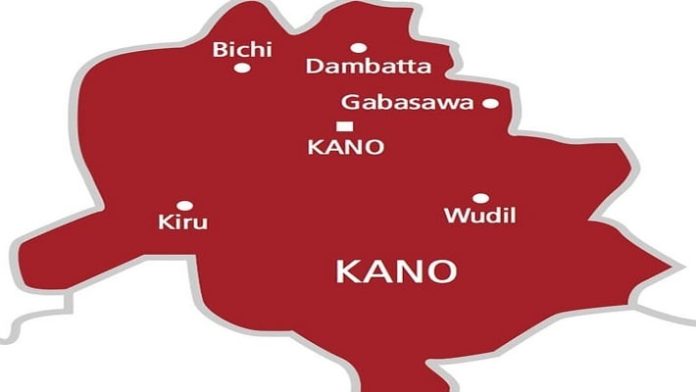
Kano Approves ₦8.2bn For Education, Water, And Energy Projects

The Kano State Executive Council has approved over ₦8.2 billion for a new round of interventions in the education, water supply, and energy sectors.

The approvals were issued in separate statements on Sunday by the governor’s spokesperson, Sanusi Bature, following the Council’s 33rd meeting presided over by Governor Abba Kabir Yusuf.

According to Bature, education received the largest allocation, with more than ₦4.9 billion committed to infrastructure upgrades, learning enhancement programmes, and initiatives aimed at improving access to quality education.

The allocation covers the Phase II renovation of Government Technical College, Ungogo; settlement of outstanding feeding liabilities for boarding schools; and the production of instructional materials through the Kano Printing Press.

Also approved were the furnishing and completion of the e-library at the Kano State College of Education and Preliminary Studies, funding for accreditation exercises at Kano State Polytechnic, and procurement of office furniture and fittings for Northwest University, Kano.

“Education remains the cornerstone of our development agenda, and we will continue to invest in facilities that promote quality teaching and learning,” the statement added.

In a separate approval, the Council earmarked ₦3.3 billion for water and energy-related projects designed to improve access to clean water in urban and rural communities. This includes the construction of a modern treatment plant at Taliwaiwai in Rano Local Government Area, payment of outstanding electricity and fuel bills owed by the State Water Board, procurement of diesel (AGO) and petrol (PMS) for treatment plants, and other operational payments.

The interventions, according to government officials, are intended to ensure steady water supply, promote energy efficiency, and enhance living standards across the state.

Governor Abba Yusuf reiterated his administration’s resolve to prioritise investments with direct social impact and long-term infrastructural value.

PUNCH Online had reported on 18 August 2025 that the Kano State Government approved over ₦40.8 billion for the construction and rehabilitation of 17 township roads in the metropolitan area, covering local government areas including Gwale, Nasarawa, Kumbotso, Fagge, Kano Municipal, Tarauni, Dala, and Ungogo.

Dollar To Naira Exchange Rate For 3rd November 2025

Dollar To Naira Exchange Rate For 8th Dec 2023

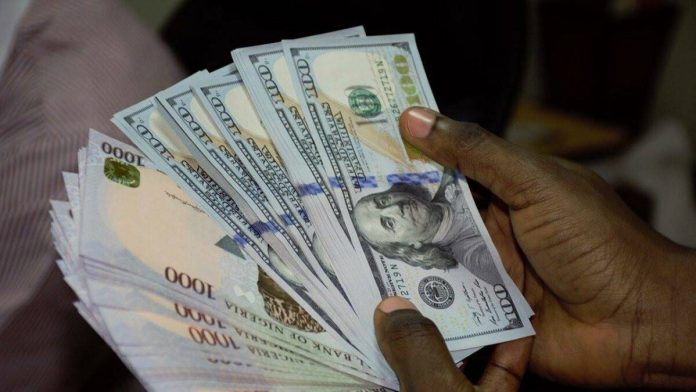
The exchange rate between the Naira and the US dollar, according to the data released on the FMDQ Security Exchange, the official forex trading portal, showed that the naira closed at 1440.00 per $1 on Monday, November 3rd , 2025. The naira traded as high as 1415.00 to the dollar at the investors and exporters (I&E) window on Sunday.

How much is a dollar to naira today in the black market?

Dollar to naira exchange rate today black market (Aboki dollar rate):

The exchange rate for a dollar to naira at Lagos Parallel Market (Black Market) players sell a dollar for ₦1450 and buy at ₦1440 on Sunday 2nd November, 2025, according to sources at Bureau De Change (BDC).

Please note that the Central Bank of Nigeria (CBN) does not recognize the parallel market (black market), as it has directed individuals who want to engage in Forex to approach their respective banks.

Dollar to Naira Black Market Rate Today

Dollar to Naira (USD to NGN)Black Market Exchange Rate Today
Selling Rate₦1450
Buying Rate₦1440

Dollar to Naira CBN Rate Today

Dollar to Naira (USD to NGN)CBN Rate Today
Highest Rate₦1434
Lowest Rate₦1415

Please note that the rates you buy or sell forex may be different from what is captured in this article because prices vary.

Nigeria Money Market Rates Decline As Banking System Faces Excess Liquidity

How Much Money Is Spent On Groceries In Nigeria, Other Countries?

Money market rates experienced a notable decline during the week as Nigeria’s financial system grappled with a surge in excess liquidity. The interbank market was awash with funds, allowing deposit money banks to take advantage of above-average treasury bill rates offered through placements at the Central Bank of Nigeria (CBN) window.

According to a market update from TrustBanc Financial Group Limited, reduced liquidity mop-up activities by the CBN contributed to a stronger funding position within the financial system, maintaining short-term interest rates below the 25% threshold. Data showed that banks’ placements at the Standing Deposit Facility averaged ₦2.88 trillion, up from ₦2.02 trillion recorded the previous week.

By the end of the week, the banking system reported a ₦2.47 trillion liquidity surplus, down from an opening balance of ₦3.78 trillion. In the absence of funding strain, the average daily liquidity level for October increased by 9% to ₦2.96 trillion, compared to ₦2.71 trillion in September.

The overall funding outlook was further supported by inflows from the Federation Account Allocation Committee (FAAC) disbursements and other system credits, which helped offset early-week Open Market Operations (OMO) outflows. Market data also showed that ₦261.38 billion in bond coupon payments contributed to system liquidity, even as a midweek bond auction settlement of ₦313.77 billion exerted mild pressure on funds.

Despite temporary contractions caused by OMO and treasury bills auction settlements, the market maintained comfortable liquidity conditions. This stability kept interbank rates lower by an average of 14 basis points. The Open Repo Rate (OPR) slipped by 4 basis points to 24.50%, while the Overnight Rate (O/N) dropped 24 basis points to settle at 24.83% week-on-week.

With coupon inflows of about ₦261 billion expected from the April 2029, April 2032, and April 2049 bonds, analysts forecast that funding costs may decline further in the coming week, provided no significant liquidity-draining actions occur.

Fans Decry Poor Security And Chaos At Davido’s Enugu Concert

Davido Donates N234m To 424 Orphanages

What was meant to be a thrilling night of Afrobeats entertainment turned chaotic for thousands of fans at Davido’s concert in Enugu, following widespread reports of poor security, overcrowding, and theft.

The concert, held at Michael Okpara Square on Saturday, November 1, was part of Davido’s ongoing “5ive Tour,” which includes stops in Akwa Ibom, Adamawa, Enugu, Ibadan, and Lagos. While earlier tour dates in Uyo and Yola went smoothly, the Enugu show drew heavy criticism from concertgoers who described the event as disorganized and unsafe.

According to eyewitnesses, the concert attracted more than 40,000 attendees — nearly double the venue’s estimated 20,000 capacity — leading to severe crowding, confusion, and reports of harassment. Fans who spoke on social media platforms such as TikTok and X (formerly Twitter) accused organisers of failing to enforce crowd control measures and maintain adequate security.

Complaints began surfacing on Sunday as attendees shared disturbing videos showing gate breaches, pickpocketing, and physical altercations. Some concertgoers reported that Davido arrived around 3 a.m., nearly 12 hours after the show’s scheduled start time, further heightening tension.

A TikTok user, @adis_beautification, claimed that ticketless individuals forced their way into the venue. “The gate was broken, and the security guards were nowhere to be found,” she said. “Touts entered, and they used razor blades to tear people’s bags. My phone was stolen.”

Another attendee, @hairz_by_steph, said she experienced harassment amid the overcrowded environment. “They were pressing girls; the crowd was unbearable. I lost my nails trying to protect myself,” she recounted. “Davido didn’t come on stage until 3 a.m., and by then, everyone was exhausted.”

Further eyewitness accounts described chaotic entry points where security personnel allegedly used tasers and canes in a failed attempt to control the crowd. A user identified as @mmachukwu described what she called a “stampede-like situation,” adding, “People were falling, and the security completely lost control.”

Inside the venue, the situation worsened due to heat and lack of ventilation. “We had to move toward the fence to breathe,” she said. “The wait and danger weren’t worth it.”

Several fans reported stolen wigs, shoes, phones, and handbags, with one user, @reallifestories, breaking down in tears after losing all her belongings. “Someone helped me with slippers and a shirt to go home,” she said. “It’s unfair and traumatizing.”

Videos circulating online also captured instances of theft in real time, further fuelling outrage. Many social media users condemned the event organisers for failing to ensure basic crowd safety. “It’s 2025 — there’s no excuse for this,” wrote one X user, @Gidi_Traffic. “Concert organisers must prioritise safety and security, especially for women.”

As of press time, neither Davido nor the concert organisers had released an official statement addressing the security lapses or fans’ complaints.

JAMB Extends Public University Admission Deadline To November 17

The Joint Admissions and Matriculation Board (JAMB) has announced a new deadline of November 17, 2025, for the completion of admission processes into public universities, following appeals from university authorities.

JAMB’s spokesman, Dr. Fabian Benjamin, disclosed this in a statement on Sunday, explaining that the extension from the initial October 31, 2025 deadline became necessary due to judicial and administrative disruptions affecting some universities.

According to Benjamin, the decision was taken after the Association of Vice-Chancellors of Nigerian Universities (AVCNU) requested more time, citing the recent court order that temporarily halted admission activities until it was lifted on October 28, 2025.

He added that the National Universities Commission (NUC) had also recently accredited 229 new programmes across 37 universities, requiring additional time to integrate those courses into the ongoing admission cycle.

Benjamin stated, “The extension is to ensure inclusiveness and fairness to all candidates and institutions. The new deadline is final and must be strictly adhered to.”

The Board expressed appreciation to public universities for their commitment to meeting the initial deadline but emphasized the need to complete all admission processes through the Central Admissions Processing System (CAPS) before the new date.

This marks the second extension by JAMB in 2025, following its September 18 announcement granting more time for universities to upload Post-UTME screening scores for underage candidates who participated in the 2025 Unified Tertiary Matriculation Examination (UTME).

Education analysts say the latest move underscores JAMB’s commitment to transparency and access in tertiary education, aligning with the Federal Government’s Renewed Hope Agenda to expand learning opportunities for Nigerian youths.

Nigerian Stocks Decline As Market Value Drops By N964 Billion

Stock Exchange Closes Trading Week With N30bn Gain

The Nigerian stock market closed last week on a bearish note, with the Nigerian Exchange (NGX) shedding approximately N964 billion in market capitalization as investors offloaded shares to lock in recent gains.

After several weeks of sustained rallies, the local bourse witnessed a reversal in sentiment across four out of five trading sessions, driven by portfolio rebalancing and mixed corporate earnings, particularly from the banking sector.

According to market data, the All-Share Index (ASI) dropped by 0.98% week-on-week, settling at 154,126.45 points, while total market capitalization fell to N97.83 trillion.

Analysts at Cowry Asset Management Limited attributed the downturn to profit-taking and cautious positioning by investors awaiting the end of the quarter. The firm noted that the NGX currently trades within a short-term corrective channel, with the ASI dipping below its 20-day and 50-day moving averages — a signal of temporary weakness.

However, Cowry Asset observed that the Relative Strength Index (RSI) is approaching the oversold region, suggesting that fundamentally strong blue-chip stocks may soon present attractive entry points for medium-term investors.

Despite the overall market decline, activity levels improved notably. The weekly traded volume rose by 102.7% to 7.49 billion units, while the value traded advanced 12.16% to N145.44 billion. The total number of deals also climbed 7.85% to 159,598 transactions, underscoring selective but active investor participation.

Across sectors, four of six major indices closed lower, including Banking, Consumer Goods, Industrial Goods, and Insurance, all pressured by profit-taking and weak sentiment. Conversely, the Oil & Gas (+0.30%) and Commodity (+0.15%) indices posted modest gains, buoyed by increases in OANDO and OKOMUOIL.

Top gainers for the week included ASO Savings (+56.1%), Julius Berger (+13.3%), OANDO (+11.9%), Berger Paints (+9.3%), and ETI (+8.2%). On the flip side, Omatek (-21.9%), John Holt (-16.9%), Caverton (-16.2%), NAHCO (-15.9%), and eTranzact (-15.3%) led the losers’ chart.

Looking ahead, analysts expect mixed performance driven by reactions to fixed-income yields, fund rotation into safer assets, and corporate earnings updates. Cowry Asset advised investors to focus on “fundamentally sound stocks with strong earnings power” while waiting for clearer macroeconomic catalysts to re-ignite bullish momentum.

BizWatchNigeria.Ng
Privacy Overview

This website uses cookies so that we can provide you with the best user experience possible. Cookie information is stored in your browser and performs functions such as recognising you when you return to our website and helping our team to understand which sections of the website you find most interesting and useful.