The Members of the Ekiti State House of Assembly have called on the Department of the State Security Service (DSS) to obey a court order and release their members who they said were “illegally” arrested and detained.
Some of the lawmakers on Thursday in Abuja submitted a petition against the DSS at the National Human Rights Commission, Chairman, House committee on health, Hon. Samuel Omotosho said the arrest and detention of members without charging them to court was a breach of their fundamental human rights. He also added that the family members dont know their whereabouts and they are extremely worried. He also stated that they dont know if they are dead or not. That is the answers that they are all looking for.
Omotosho also said ,the Ekiti State High Court gave an order for the release of the detained members on Friday, March 11 but that the DSS refused to comply.He said this is the 14th day these people have been detained and they havent heard from them. In the petition, they accused the federal government of plans to arrest and intimidate lawmakers in the state because they were an opposition party.
Omotosho Plead to the Rights Commission to step into the matter and fight for the rights of the detained members as “the issue has left the rest of us in the house traumatized.”
Representing the Executive Secretary of the Commission, Prof Bem Angwe, Deputy Director of Investigation, Mr Lambert Okpara said the petition would be looked into and proper investigation into the matter would commence
President Muhammadu Buhari has said that his administration would vigorously implement policies that would revive Nigeria’s agricultural sector and reposition it as the mainstay of the national economy.
He further said his administration would evolve and implement policies that will help Nigeria become self-sufficient in food production because continued importation of food could expose the country to more external shocks.
A statement by his spokesman, Femi Adesina, quoted the President as noting that the unbridled importation of food also contributes to the depletion of the country’s foreign reserves and deprives citizens of job opportunities.
‘Therefore, we must produce what we eat. We don’t have unlimited resources to continue the importation of food items that can be produced locally”.
The management of the University of Ilorin has described as unnecessary the criticism over deadline for payment of tuition fee in the University.
Mr. Kunle Akogun, the Head of its Corporate Affairs Unit, in a press statement said the University decried the attempt by some people to whip up sentiment over a policy of the institution.
According to Mr. Akogun, he said the University’s commitment to rules and regulations was one of the secrets behind its academic excellence, stable calendar and zero-vice status, for which it has become the toast of admission seekers and parents for the past 15 years.
He also added,“For the avoidance of doubt, the University of Ilorin, known for its strict adherence to rules of good administration, has a well-laid down academic calendar, which it follows very strictly and all our students and staff have keyed-in into this culture qnd also at the beginning of every semester, the deadlines for the school fees are set.
He also added that the portal can not be open for ever, and it had to be closed for the last time with the approach of the semester examinations.
The University management sympathises with the few students who, for one reason or the other, could not pay their fees within the permissible time-frame. But the laid-down rule must take its course if we are to avoid a descent into anomie.
He concluded by saying, “we are trying to build an ideal society where rules and regulations would be strictly applied and obeyed to foster the great nation of our dream”.
Akwa Ibom State governor Udom Emmanuel has promised that his quest to make Ibaka Deep Sea-Port a reality will be achieved in no distant time. He reiterated his administration’s resolve to industrialize Akwa Ibom State.
According to the commissioner, the site for Ibom Industrial City, was expanded to 14,400 hectares during Akpabio’s administration to accommodate the Ibom Deep Seaport, export processing zones, gas processing zones, industrial and commercial ports, residential areas and commercial zones.
He explained that the state government has acquired license for a free trade zone which is part of the building blocks for an industrial city, adding that the survey plan and Environmental Impact Assessment (EIA) has been carried out together with the bio-metric survey, perimeter survey, topography survey, aerial surveys, wave studies, and other parameters needed to give way for the next phase of the project.
The Rotary International PolioPlus Committee and its partners have announced readiness to begin the second round of the 2016 National Immunisation Days which is slated to run between Saturday, 19th March and Tuesday 22nd March. The exercise will take place in all states of the federation including the Federal Capital Territory, FCT.
Chairman of the Rotary International Nigeria National PolioPlus committee, Dr. Abdulrahman Olatunji Funso, hinted that over 20,000 staff have been recruited for the exercise in Lagos State alone. He said plans had been in top gear to ensure a hitch-free exercise adding that exercises such as this is not carried out without careful planning.
Funsho disclosed that the staff have been divided into teams which include a consultant; a vaccinator; town announcer as well as a traditional leader.
“Every vaccination team has four people. You have a supervisor who also takes the record of how many children they immunised, there is the vaccinator as well as the town announcer.
And then you have a traditional leader that usually goes with the team.”, the Consultant Cardiologist stated.
Pfizer – Good health is vital to all of us, and finding sustainable solutions to the most pressing health care challenges of our world cannot wait. That’s why we at Pfizer are committed to applying science and our global resources to improve health and well-being at every stage of life. We strive to provide access to safe, effective and affordable medicines and related health care services to the people who need them.
We are recruiting to fill the following positions below:
WTS Energy provides recruitment and manpower services for the global oil and gas and energy industries. We supply engineers and consultants to our clients’ projects and operations, and perform employment outsourcing services such as workforce management in oil and gas regions around the world. WTS Energy operates globally with offices in 14 countries and is operational in over 50 countries.
We are recruiting to fill the following vacant positions:
AG Leventis Nigeria Plc – For over seven decades, AG Leventis (Nig) Plc has provided West Africa with reliable, innovative & affordable products & services. By focusing on the core markets such as Power, FMCG, Logistics and Real Estate – AGL has become one of the Major forces in Nigeria & beyond.
We are recruiting to fill the following positions below:
Nigerian Stock Exchange, NSE, on Thursday, March 17, reversed a three day downward trajectory with a marginal increase of 0.08 per cent.
The All-Share Index jumped by 21.55 points to close at 25,679.03 points from 25,657.48 points achieved on Wednesday.
Likewise, market capitalisation which opened at N8.83 trillion rose by N8 billion to close at N8.83 trillion.
Nigerian Breweries recorded the highest price gain to lead the gainers’ table, appreciating by N3.95 to close at N100 per share.
Dangote Cement followed with N1 gain to close at N165 per share, while NAHCO garnered 9k to close at N4 per share.
UBA inched 7k to close at N3.67 per share, while Fidelity Bank appreciated by 5k to close at N1.23 per share.
Conversely, Guinness topped the losers’ chart, dropping by N1.51 to close at N107.99 per share.
Breakdown of the losers showed that PZ Industries lost 96k to close at N24.04 per share, while ETI dipped 45k to close at N15 per share.
Berger Paints shed 41k to close at N9.01 per share and National Salt dropped 40k to close at N7.60 per share.
Also, the volume of shares traded closed higher with an exchange of 6.87 billion shares valued at N7.68 billion transacted in 3,632 deals.
NAN reports that this was against 4.34 billion shares worth N4.69 billion traded in 4,125 deals on Wednesday.
Wema Bank was investors’ delight with a total of 6.67 billion shares worth N6 billion.
It was trailed by FBN Holdings which accounted for 44.67 million shares valued at N161.82 million, while Zenith Bank sold 31.74 million shares worth N391. 97million.
UBA exchanged 21.62 million shares valued N77.27 million while Access Bank traded 18.79 million shares worth N79.27 million. (NAN)
The United Bank for Africa, UBA, has forecasted loan growth of 10 to 15 per cent for 2016, reversing a 3.3 percent decline last year, it said on Thursday, March 18.
The top tier lender had originally forecast loan growth last year of five to eight per cent but that did not materialise. Loans grew 14 percent in 2014, the bank said.
“Because of uncertainty in the macro-environment we decided to be very cautious in the growth of risk assets,”Reuters quoted the bank’s Chief Executive Officer, Phillips Oduoza, who is due to retire by July to have said, explaining the drop in loans last year.
“For this year we see a positive outlook but we will continue in our conservative approach to risk creation.”
While commenting on the bank’s 2015 results released recently, Oduoza had explained that the 2015 profit was a new high, saying it reflected the hard work and discipline of our Board, Management and Staff in creating value for all stakeholders.
“We remain committed to growing in a responsible manner that aligns with our vision of building an enduring institution.”
He said the bank’s resilient business model, geographic diversification, proactive strategies, and strong governance created an edge for it through the year.
“We will continue to invest in our future whilst managing cost tightly to generate strong returns to shareholders,” he assured. Speaking in the same vein, the Group Chief Finance Officer (GCFO) of the bank, Mr. Ugo Nwaghodoh, had expressed satisfaction at the performance of the bank’s Africa operations, particularly in synergy extraction and pursuit of scale economics to achieve market share and earnings target
Elizade Nigeria Limited said it was set to kick off assembling of JAC brand of vehicles in the country.
The Managing Director of the company, Demola Ade-Ojo, said this in Lagos at the launch of an auto centre exclusively meant to market the JAC brand of vehicles.
He said the company had already secured the support of the JAC management to ensure the smooth commencement and success of the assembly operations. According to him, as part of the preparation for the project, his company had submitted an application to the National Automotive Design and Development Council and was expecting to be granted an auto manufacturer status.
The automobile investor said that the new venture was being undertaking with the Elizade Autoland name in partnership with a Chinese auto manufacturer, JAC Motors.
He revealed that the new auto centre worth over $2m (about N394), saying it was meant to provide an easy sale and a hassle- free maintenance arrangement for the JAC vehicles.
He said it took Elizade three years before the official launch because the firm had to subject the JAC brand to numerous tests to ensure it would not be a disappointment to Nigerians willing to use it for everyday vehicular needs
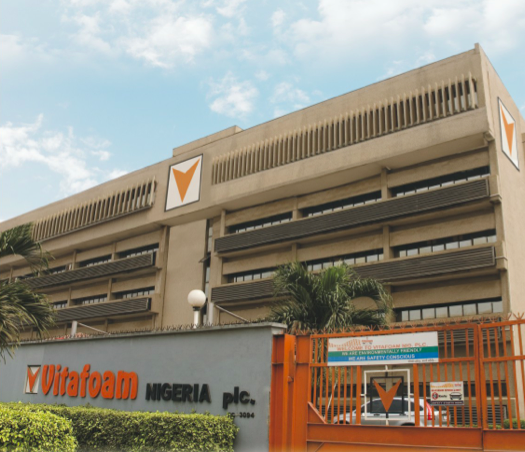
Group Managing Director, Vitafoam Nigeria Plc, Taiwo Adeniyi, has attributed the drop in the company’s profit recorded in the financial year ended December 31, 2015 to tough operating environment.
Adeniyi, who assured the shareholders of higher value, expressed concern about the effects of forex scarcity and imported raw materials on the production of foams in Nigeria.
Vitafoam’s profit before tax fell by 24 per cent to N534 million, from N709 million, while profit after tax recorded a higher decline of 42 per cent to be at N249 million, down from N435 million in 2014.
It recorded a growth of 8.8 per cent in revenue, rising from N16.713 billion to N17.185 billion, while gross profit rose marginally by 0.7 per cent to N5.433 billion, from N5.395 billion in 2014.
PricewaterhouseCoopers, PwC, on Thursday, March 18, projected that the Nigerian economy could leap through the world rankings to top 10 in 2050 with projected Gross Domestic Product, GDP, of $$6.4 trillion, surpassing Germany, the United Kingdom, France and Saudi Arabia.
Partner and Chief Economist, PwC Nigeria, Andrew Nevin, who disclosed Disclosing this at the Lagos Chamber of Commerce and Industry, LCCI-PwC organized stakeholders forum on the state of the economy, tagged “Nigeria: Looking beyond oil,” said Nigeria was the largest economy in Africa and 22nd globally.
He said to achieve this ranking, however, diversification from the economic over dependence on crude oil was required.
“Nigeria’s intrinsic potentialities lie beyond oil; harnessing these potentialities has become an imperative, given the expectations of lower for longer oil prices. Based on recent trends, our report reviews the impact of low oil prices on key economic indicators and the real sector through an industry survey,” he said.
However, he said the transition to a non-oil economy would not be an easy task. He said based on a 2016 PwC interview of foreign companies across Nigeria, four concerns stood out as challenges with the business environment: corruption, inadequate infrastructure, low skill levels, and macroeconomic uncertainty.
“Our survey highlights the exchange rate as one of the top challenges facing industries in recent times. Capital controls, FX rationing, and restrictions on the importation of certain items are measures the CBN has implemented to preserve the foreign reserves and maintain currency stability,” he stated.
He noted that Nigeria needed to ensure sustainable fiscal management that was resilient to global oil price cycles.
The Managing Director of Lagos Deep Offshore Logistics base, LADOL, Amy Jadesimi, has reeled out plans to attract $5billion investments into the country in the Lagos Free Trade Zone.
Jadesimi, who spoke on Thursday, March 18, in Abuja at the sixth African Petroleum Congress and Exhibition (CAPE VI) organised by the African Petroleum Producers Association (APPA), said, given the spate of growth at the zone, “the success of LADOL has attracted new investors to Nigeria who are partnering with credible Nigerian investors leading to the creation of dozens of similar facilities.”
In her paper, titled, “Driving Economic Growth through Local Private Sector Investments in Nigeria,” she said in 2010 alone, 130 oil rigs were towed from Wes Africa across the Indian Ocean to the Far East for repairs, adding, “with LADOL and similar facilities now on ground, more of such ventures would be done in Nigeria thereby saving the country avoidable capital flight.”
At the event, President Muhammadu Buhari identified the unique contribution of LADOL as one of the strategic investments in the country that currently drives the nation’s economy.
Represented by Vice President Yemi Osinbajo (SAN), the President identified LADOL, which has invested over $600million in private investment, as one of the companies that is currently adding the most value to the Nigerian economy through its ingenious investments.
The LADOL/SHI project referred to as Egina Floating Production Storage and Offloading (FPSO) platform and valued at $3.8billion is said to be first of its kind to be built in sub-Saharan Africa.
Following the world’s biggest suppliers decision to meet and discuss an output freeze, oil prices rise on Thursday, March 18.
Oil producers including Gulf OPEC members support holding talks next month on a deal to keep production at current levels, even if Iran declines to participate, OPEC sources said on Wednesday.
A meeting would increase the likelihood of the first global supply deal in 15 years.
U.S. crude was up 65 cents at 39.11 dollars a barrel at 0452 GMT, having earlier risen as high as 39.38 dollars.
Brent crude rose 38 cents to 40.71 dollars.
“A smaller than expected gain in inventories in the U.S. also supported prices,” ANZ said in a morning note.
Crude inventories jumped 1.3 million barrels in the week to March 11 to 523.2 million, a much smaller build than the 3.4 million-barrel increase expected by analysts.
The market is also rallying after a less hawkish U.S. monetary outlook, as the U.S. Federal Reserve held interest rates steady and indicated two rate hikes this year instead of the four expected.
The dollar plunged on Thursday, March 18, lifting world shares to their highest level of the year, after the Federal Reserve scaled down its own expectations of the number of U.S. rate hikes likely over the next nine months.
The Fed, via its ‘dot plot’ system, which charts what rate moves policymakers expect, effectively chopped those forecasts in half, from four hikes to two for the year.
It was a signal that triggered a plunge in the dollar and a surge in risk appetite that rolled from Wall Street to Asia and then into Europe, where London .FTSE, Frankfurt .GDAXI and Paris .FCHI opened 0.5 to 0.8 percent higher and bond yields fell. [GVD/EUR] Commodity markets cheered too.
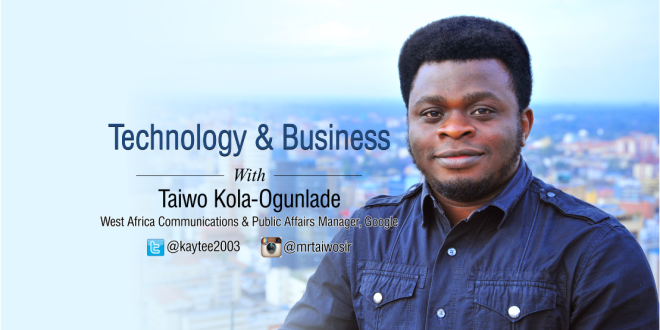
For centuries, access to information – and the ability to communicate it – has been controlled by the wealthy and the well-educated. The Internet changed all that. It has broken down the barriers that exist between people and information – effectively democratizing access to human knowledge.
This has made us all much more powerful as individuals. We no longer have to take what business, the media or indeed politicians say at face value. By typing just a few key words into a computer it’s possible to find out about almost any subject – comparing prices, products and policies within seconds.
Not surprisingly people are using that power to buy better value goods and services, to hold others to account and above all to express themselves. It’s the first rule of the Internet – people have a lot to say.
This has brought unprecedented freedoms to millions of people worldwide: the freedom to create and communicate, to organize and influence, to speak and to be heard.
Video sharing sites, blogs, social networks – all have offered platforms on which individuals, politicians, non-profit groups, and others can make themselves heard by a worldwide audience. From on-the-ground footage of the turmoil in Kenya, to a sophisticated, multi-party Australian politics channel on YouTube, the Internet is providing greater transparency into what is happening in the world, and in the process widening our perspective. Nigeria too has had its own share. One that comes to mind now is the video of the widowed market woman that attained national fame through the words: “Go and die!”. Although the drama occurred in a ‘remote’ location in Edo state, the web made it a global story.
The opportunities the Internet presents to Nigerians are huge. Today, the percentage of Nigerian content available on the web is still small relative to the demand by the large population of Nigerians online. But with easy access to communication tools like setting up blogs, YouTube, forming groups on Google Groups, and creating layers on Google Earth, Nigerian users can not only connect with friends and family, but with a global audience. And thanks to modern translation tools, Nigerian user-generated content can even spread to foreign-language speakers.
Even top leaders and policy makers are taking notice of the trend and the need for user-created content. In the 2015 general elections, the top candidates in the federal and state elections leveraged the power of web tools like YouTube to reach the large population of Nigerians online. In many cases, the videos generated went viral. In 2007, Queen Rania Al Abdullah of Jordan launched her presence on YouTube with a message to the world’s young people asking them to join in a global dialogue to recognize commonalities and to dismantle stereotypes of Muslims and the Arab World. Today, videos on that channel have been watched almost 8 million times.
If you are still not convinced, ponder on this – the combined views on Davido’s hit tracks ‘Gobe’ and ‘Aye’ on YouTube is about a hundred and fifty percent of the population of Ghana. More than what any TV station can deliver. And these are just 2 videos! Now imagine the combined videos from other top artists like PSquare, Olamide, Wizkid etc. One of the most watched user-generated YouTube videos in Nigeria in 2014 was the Arik Air video recorded with a mobile phone by one of the passengers. And the examples are endless.
Becoming a part of this global dialogue is easier than many may think. Upload a photo, share videos on YouTube, share your opinions on a blog or website – or start one yourself on free tools like Blogger. It only takes a few minutes to set up, and the benefits are immediate: are you passionate about travel, or knowledgeable about a local specialty dish? Sharing your passions, hobbies, thoughts, and tips with people around the globe isn’t just about widening your community; it’s also about widening your perspective and helping to introduce people to the world around you.
User created content is the new face of the internet and will shape the way we think and behave as individuals – when used positively it means more choice, more freedom and ultimately more power for the individual.
Dangote Sugar Refinery Plc, on Thursday, March 17, announced improvement in its consolidated and separate financial statement for the year ended December 31, 2015 with N101.058 billion.
The sugar refinery company’s revenue leaped from N94.856 billion in 2014 financial year represented N6.202 billion increase.
It spent N80.329 billion on cost of sales in 2015 against N76.227 billion it spent on the same purpose in 2014.
The company gross profit stood at N20.728 billion at the end of 2015 financial year from N18.628 billion in 2014.
Its profit before tax rose by N956 million from N15.592 billion it made in 2014 toN16.548 billion at the end of current year. While its profit after tax stood at N11.535 billion in 2015 from N11.636 billion in 2014.
Its earnings per share dropped from N97 kobo in 2014 to N96 kobo during the review period of 2015, indicates N1 kobo or 1.03 per cent increase.
The bearish trend that rocked the Nigerian Stock Exchange, NSE, for three consecutive days let to a drop of N114 billion from Monday to Wednesday.
The Market Capitalization of 190 listed companies on the bourse opened the week with N8.939 trillion to end the mid-week at N8.826 trillion.
The All Share Index also depreciated by 330.92 basis points from 25,988.40 points to close yesterday at 25,657.49 points.
The mid-week trading also declined by N29 billion representing 0.34 per cent.
Analysts believed that the recent downtrend in equities was driven by profit taking following dividend play by investors in recent weeks.
At the end of the trading, Unity Capital Plc led the most traded stocks with 4.160 billion units of shares worth N3.203 billion followed by Zenith Bank Plc with 44.521 million shares at N560.549 million, UBA Plc with 21.685 million shares valued at N78.337 million, FCMB Plc with 17.467 million of shares at N14.099 million and Transnational Corporation of Nigeria Plc with 14.769 million shares worth N16.278 million.
Access Bank Plc, on Thursday, March 18, declared N337.404 billion gross earnings in its 2015 financial results released to the Nigerian Stock Exchange.
The bank’s gross earnings leaped by N92.021 billion translated to 37.50 per cent from N245.383 billion it made during the same period of 2014.
Access Bank result for 2015 showed that profit before tax stood at N75.038 billion, as it grew to N23.016 billion or 44.24 per cent from N52.022 billion, while profit after tax stood at N65.869 billion, growing at N22.893 billion, representing 53.27 per cent from N42.976 billion.
The strong year-on-year growth in profit before tax was driven by both revenue lines; funding income grew 23 per cent year-on-year while non-interest income grew 45 per cent year-on-year.
Its earnings per share increased from N185 kobo in 2014 to N262 kobo during the review period of 2015, indicating N77 kobo or 41.62 per cent increase.
Access Bank total assets increased by N487 billion from N2.104 trillion to end 2015 with N2.591 trillion.
Its liabilities also rose from N1.827 trillion during the 2014 financial year to N2.224 trillion at the end of 2015 showing a N397 billion increase.
The bank’s non-performing loans ratio dropped from 2.2 per cent it made in 2014 to 1.7 per cent at the end of 2015 financial year.