





Home Blog Page 3197

Ijebu-Ode: Tale of a People and Their Festival

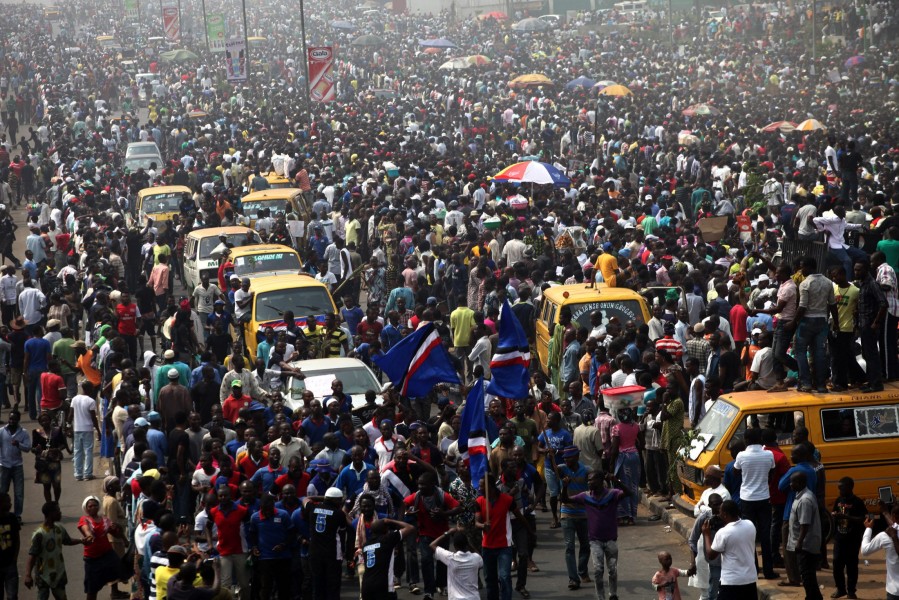
Ojude Oba Festival

Nestled in Ogun State, Ijebu-Ode is a warm, animate and touristic town that boast of a fingerlicking gourmet, overwhelming hospitality and a magnetic festival that attracts all and sundry from different parts of the world.

The town is the second largest city after Abeokuta in Ogun state and the thriving traditional institution led by Oba Sikiru Adetona further attests to the rich heritage of Ijebu-Ode. These makes Ijebu-Ode one of the most sort after destinations in Nigeria. Jovago.com, Africa’s No. 1 hotel booking tells you a tale of the people, their festival as well as how to navigate this receptive town.

Top 3 tourist attractions

Ojude-Oba Festival

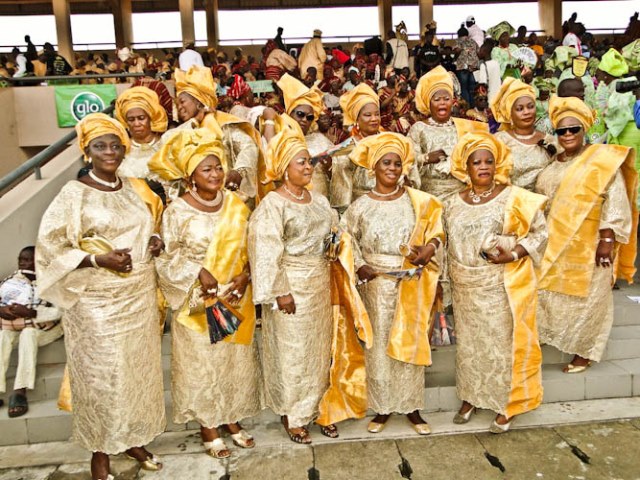
Arguably one of the most anticipated festivals in Nigeria. Ojude-Oba festival is a widely and lavishly celebrated festival in Ijebu-ode. It is a day set aside to pay homage to the King and commemorate the values, culture and tradition of Ijebus’. Hotels are fully booked, homes are filled with visitors and tourists come from far and wide to experience the festival. Key highlights of the festival include horse displays by the various horse-riding families, dancing competitions among the various regbe regbes i.e age grades, resplendent attires and deftly plaited hairdo of women. The festival is held opposite the Oba’s palace. It is a festival to quench your desire for fun

Awujale’s Palace

Led by His Eminence Oba Sikiru Kayode Adetona, the Awujale’s palace over the years is a historical monument that houses valuables of past Awujales of Ijebuland as well as provide relevant information about the history of Ijebu-Ode. The palace is a compendium of the people’s culture, craft and art.

Sungbo’s Eredo

Sungbo’s Eredo is the wall that was dedicated to Bilikisu Sungbo for her commendable contributions to the development of Ijebu-Ode. The sungbo Eredo is also believed to be the final resting place of the Queen of Sheba. The site was added to the tentative list of World Heritage Sites on 1st November 1995.
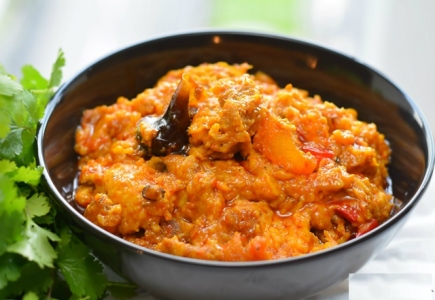
Ifokore
Ifokore

Unwinding

Ikokore is a meal readily available in Ijebu-Ode. They own this delicious cuisine. It is a must eat for visitors to the state. It is prepared with Water yam sprinkled with fresh fish, prawn, crab, pepper. Yummy! If you cannot get someone to prepare it for you, you can walk into these restaurants to order for ikokore or any one of your favourite food-Tasty Food consult, Ademola Food Canteen, lollyboi kitchen. Goodnews delicious restaurant and Odunsi Eatery.

Shopping

Ife-oluwa variety store, Deo Gratias Superstore, Mariam Variety store, and Olori Mini Mart  are amongst the small scale that you can do your shopping. It is a developing town, do not bother to search for giant shopping like you have in Lagos.

Hotel

As a town where a popular festival is held, there are various stars of hotels that correspond with your taste. Visit Jovago.com to select any one of the 38 available hotels. These hotels are inexpensive.

Fun fact

Indigenes of Ijebu-Ode are known to be party freaks. They love to rock the dance floor with glossy attire and flamboyant hairdos. It should come as a surprise that they host one of the biggest festivals in Nigeria.  
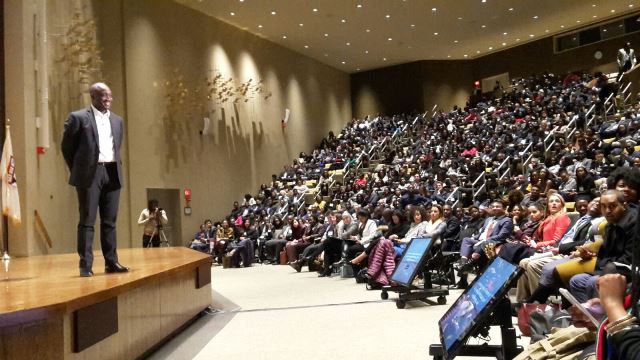
Verve CEO Charles Ifedi Talks Motivation and Innovation at Harvard Africa Business Conference

Charles Ifedi answering questions

Charles Ifedi, the CEO Of Verve International, recently opened a rare window into himself as he spoke to a select audience of business and thought leaders at the Harvard Africa Business Conference in Boston, USA.

The conference, which held on Saturday 27 February 2016, was themed “Unite. Innovate. Disrupt: Home grown models for Africa’s Prosperity”.

With the stated aim of inspiring a new generation of young, smart Africans, Charles Ifedi, went into depth in his 20-minute presentation, outlining his personal take on leadership using his personal experiences of motivation, passion, teamwork and continuous improvement as a case study.

Speaking on his participation in the conference, he later remarked,

“The goal of this conference is to share information with people with the power to create positive change through making better informed business, investment and policy decisions, and I am honoured to have been invited to share my insights and experiences here. I am sure everyone here took something useful away and that alone makes this worthwhile.”

The conference also had a panel session moderated by CEO Interbrand Africa, Doug de Villiers, which featured Charles Ifedi alongside CEO Dangote Foundation, Zouera Youssoufou and Marketing Director Nando’s, Doug Place. The panel session, themed “Breakthrough Brands In Africa”, was broadcast live by CNBC.

Our Women Needs Economic Emancipation – Lawmaker

A member of Nigeria’s House of Representatives, Rotimi Agunsoye at the weekend called for an end to gender inequality and advocated the encouragement of economic freedom for Nigerian women.

“My message is simple, we need a 21st Century mentality for women’s economic emancipation, we need to flush out the negative gender inequality and give women economic freedom”, the lawmaker representing Kosofe Local Government of Lagos State has said.

Mr. Agunsoye made this call at the empowerment programmed he organised for fifty women that would be trained in various skills and vocations including: hairdressing, fashion designing, soap/cream/bead making, wire works by officials from the National Directorate of Employment (NDE).

The lawmaker said, the empowerment programme was designed mainly for women due to the need for them to bridge the gap existing between men and women in skill acquisition and economic freedom.

He noted that lack of good education through skills acquisition had created a disadvantage, adding that, however, the programme been offered like others in such category would help women attain economic freedom.


Nigeria’s Exports Volume Dip by 40% Over Oil Price Plunge

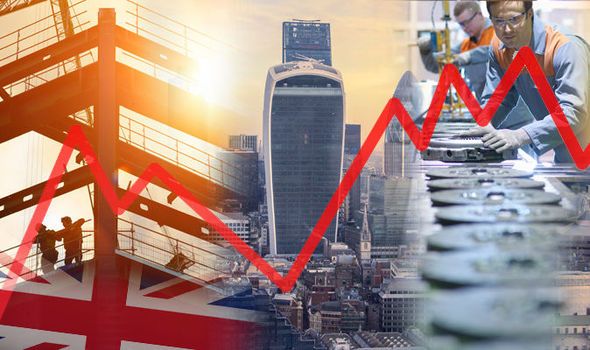
According to the National Bureau of Statistics, NBS, exports slid by 40.3 per cent last year after a fall in crude prices slashed government’s revenues, weakened the currency and caused the economy to grow at its slowest pace in decades.

NBS said with limited manufacturing capacity, Nigeria imports most of what it consumes, and last year imports fell 9.2 per cent, adding that the decline helped mitigate a trade balance.

The balance of trade for 2015 was N3.03 trillion, down from N8.93 trillion, a year earlier ($15.2 billion – $44.9 billion).

“This development arose largely due to a sharp decline in the value of exports. The structure of Nigeria’s exports is dominated by crude,” the NBS said.

Nigeria’s exports dropped by 29.7 per cent in the fourth quarter from a year ago and imports declined 22.4 per cent, the NBS said. The fall in crude oil exports, which accounted for 71.4 per cent of total domestic exports last year, hit the economy the most.

The nation’s economy slowed in 2015 to grow at 2.8 per cent, its slowest growth in decades, down from 6.2 per cent in 2014, as currency controls introduced by the central bank last year to support the naira, as oil prices plunged, started to hurt growth.

The dollar restrictions caused inflation to jump in February, rising to almost a three-and-half-year high while forcing lenders to delay hard currency loan and trade repayments to foreign bank.


Nigeria’s GDP To Hit $6.4trillion By 2050

According to a projection by PWC, Nigeria’s gross domestic product, GDP,will soar to $6.4 trillion by 2050, moving the country to the ninth position on the world ranking, surpassing Germany, United Kingdom, France, and Saudi Arabia.

The report released at the weekend also noted that Nigeria’s intrinsic potential lies beyond oil, adding that harnessing this potential has become an imperative given the expectations of lower oil prices and heightened competition in the oil market.

Based on recent trends, the report reviews the impact of low oil prices on key economic indicators and the real sector as well as addresses the question of priority sectors that should be targeted for diversification efforts.

The PwC report identified agriculture, petroleum, retail and ICT as priority sectors with the most dominant transmission links to the overall economy.

“Forward linkages to agro-processing and other services, such as logistics as well as backward integration to input supply sectors, could improve farm incomes, increase employment and improve domestic food security,” the report reads in part, stating that Nigeria’s global agriculture exports could take-off at a rate similar to Brazil’s, with $59 billion in export revenues by 2030. It noted further that value added to oil and gas output needs to urgently improve by implementing diversification within the sector.

“This implies investments across the downstream sector to develop petrochemicals, fertilizers, methanol and refining, industries relevant in both industrial and consumer products which Nigeria currently imports.


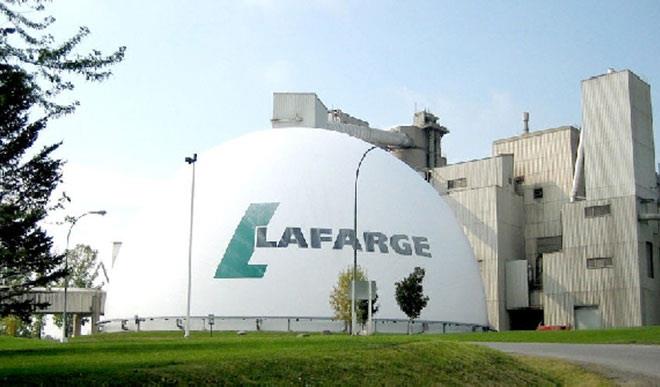
Lafarge Africa Records N6.547 billion Drop in Profit After Tax

LaFarge
Lafarge Cement Announces Defers Filing of Audited Reported

Giant building material manufacturer, Lafarge Africa Plc has posted a steep fall in its key performances in the group consolidated and separate financial statements for the year ended 31 December, 2015 released to the Nigerian Stock Exchange in Lagos last week.

The group’s profit after tax slid by  represented 19.52 per cent, from N33.545 billion it made during the 2014 financial year to end the current year at N26.998 billion.

It’s profit before tax stood at N29.275 billion at the end of 2015 from N40.358 billion of 2014, this is N11.083 billion which is 27.46 per cent decline.

The cement producing company’s spent 69.12 per cent of its revenue on cost as its cost of sales rose to N184.703 billion against N177.783 billion which is 68.17 per cent of revenue spent on the same purpose during the 2014 financial year.

Lafarge Africa revenue slightly increased by N6.424 billion translating to 2.46 per cent at the end of 2015 year end.
Its earnings per share slumped by 138 kobo or 17.99 per cent from 767 kobo in 2014 to 629 kobo in 2015.

The total equities and liabilities of the group increased by N37.065 billion from N415.947 billion of 2014 to N453.012 billion it made at the end of 2015 financial year.

In the same vein, Lafarge Africa declared N3.60 kobo dividend for its shareholders which is lower than N3.60 kobo paid last year.

Toyota Nigeria Car Sale Slides by 50%

Toyota Nigeria Limited, TNL, has posted a 50 per cent decline in total vehicle sales in 2015.
The automobile company also expressed concern over the multiple glitches plaguing the nation’s auto sector which has continued to hamper growth in recent times.
Managing Director of the company, Kunle Ade-Ojo revealed these in Lagos during the launch of Toyota’s Special Service Campaign, an initiative to give hassle-free maintenance and high standard of after- sale service to users of the brand who bought their cars from authorised dealers across the country.

Ade-ojo also identified that one of the problems government should tackle is the Nigeria’s porous border management system.

Nigeria’s Population To Hit 752million By 2100

Nigeria’s population size has been projected to hit 752 million people in 2100, should the country fail to manage population growth.

Vice President and distinguished scholar, Population Council, New York, John Bongaarts, who revealed this at the weekend while making a presentation titled ‘Nigeria’s population and development future’ during the 10th anniversary celebration of Population Council Nigeria in Abuja.

Bongaarts aid Nigeria’s population size was expected to quadruple between 2015 and 2100 and this would pose a severe challenge.

While stating that the Nigerian government spends less than one percent of the country’s budget on family planning, he said officials should recognize the multi-sectoral benefits of family planning and slower population growth, and make investments in family planning programmes a development priority supported by the government.

According to him, family planning programmes, help women to avoid unplanned pregnancies and thus reduce birth rate, in addition to substantial health, socio-economic, environmental, governmental and political benefits that accrue to countries from fertility decline.

UBA Plans To Sustain 6.3% Interest Margin

United Bank for Africa Plc, UBA, has restated its commitment to sustain net interest margin at a minimum of 6.3% in 2016.

The bank Group Managing Director designate, Kennedy Uzoka, said this during the presentation of 2016 Strategic Imperatives and Earning Guidance at the Investors and Analysts Conference held in Lagos.

The UBA Group had last week released its audited 2015 financials announcing N69 billion profit before tax; representing a 22% year-on-year growth.

“We will leverage on our balance sheet optimization initiatives, to further improve asset yields. Interestingly, our improving deposit mix and funding cost will enhance our ability to sustain our NIMs,” Uzoka said.

Uzoka noted that despite the external cost pressures, UBA Group would remain committed to its cost efficiency initiatives.

He stressed that UBA will keep its cost growth below inflation rate and further moderate the cost-to-income ratio to a level below 65%.

The incoming CEO, also used the opportunity to inform investors and analysts from Nigeria and around the world that UBA Plc will grow customer deposits book across its 19 African subsidiaries from 10% to 15%.

WAPIC Insurance Nets N1.7billion Profit

Multi-line insurance company, WAPIC Insurance  has announced its audited financial results for the period ended December 31, 2015, with N1.7 billion profit before tax (PBT) recorded during the financial year.
The current profit margin was as a result of the growth in the topline and returns from strategic investment in associated companies, according to a statement on Sunday, March 20.

The company also announced that its underwriting profit increased by 12 per cent to N1.5bn, driven mainly by a 33 per cent increase in underwriting income, while its gross written premium of N7.1bn grew by 36 per cent against the figure recorded in the 2014 financial year.

Besides, the insurance company paid out N2.2bn in claims, representing a 100 per cent increase on the payout in the 2014 financial year, while its gross claims increased to 31 per cent in the current financial year, against the 21 per cent in the previous year.

International Conference on Social Science and Humanities

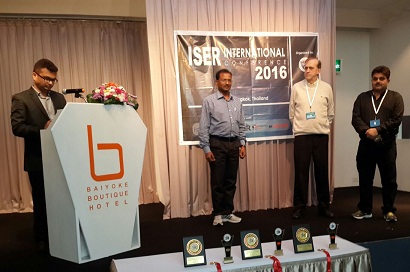
The International Conference on Social Science and Humanities, organized by the International Academic of Science, Technology, Engineering and Management will take place on 29th March 2016 at the Sheraton Abuja Hotel in Abuja, Nigeria. The conference will cover areas like Design Technology, Design Management, Fine Arts Technology, Visual Communication, Ergonomics, Arts & Design History.

Venue:Sheraton Abuja Hotel , Abuja Nigeria.

Date   :29 March  2016.

Contact: Www.iastem.org


Equities Value Slides by N101billion

Aggregate market value of all quoted equities slid by N101 billion from the week’s opening value of N8.940 trillion to close at N8.839 trillion.

Most equities with price changes ended on the negative side. There were 20 gainers against 41 losers last week as against 39 gainers recorded against 22 losers in the previous week.

The benchmark indices at the NSE showed widespread underlying selling sentiments, in spite of earnings reports by many companies during the week.

The All Share Index (ASI)- the value-based index that tracks prices of quoted equities, dropped by 1.13 per cent to close the week at 25,694.79 points as against its week’s opening index of 25,988.40 points.

Oando recorded the highest percentage decline during the week, dropping by 25.23 per cent to close at N4. Ecobank Transnational Incorporated dropped by 20.28 per cent to close at N14.35. Access Bank declined by 10.63 to close at N3.95. Honeywell Flour Mills lost 10 per cent to close at N1.62 while Ikeja Hotel dropped by 9.62 per cent to close at N2.35 per share.

On the positive side, Conoil led the contrarian stocks with a gain of 21.38 per cent to close at N20.10. United Bank for Africa followed with a gain of 9.59 per cent to close at N3.77 while Law Union and Rock Insurance rose by 9.38 per cent to close at 70 kobo per share.

Acquisitions Drive Stock Market Turnover to N18.34billion

Following the completion of two major acquisition deals at the Nigerian Stock Exchange, turnover at the stock market gained 971.7 per cent last week.

Turnover jumped to 11.91 billion shares valued at N18.34 billion in 19,508 deals, representing 972 per cent and 146.2 per cent increase in turnover volume and value. In the previous week, turnover stood at 1.11 billion shares valued at N7.45 billion in 15,562 deals.

The turnover last week was driven by major acquisition deals on Wema Bank Plc and Unity Kapital Assurance Plc. A total of 4.16 billion shares of Unity Kapital Assurance Plc were swapped in a cross deal at 77 kobo per share. This represented about 30 per cent equity stake in Unity Kapital Assurance. The transaction on Unity Kapital was a divestment of the major equity stake of Unity Bank Plc, according to a reliable source.

Also, a total of 6.67 billion shares of Wema Bank Plc were swapped in three deals at 90 kobo per share. The deals were block divestments. A source said the divestments were part of the share sales by Asset Management Corporation of Nigeria (AMCON). The three deals represented 17.3 per cent equity stake in Wema Bank.

The acquisition deals expectedly placed Wema Bank and Unity Kapital atop the activities’ chart. The trio of Wema Bank Plc, Unity Kapital Assurance Plc and Zenith Bank International Plc accounted for 11.01 billion shares worth N11.27 billion in 2,856 deals, representing 92.4 per cent and 61.5 per cent of the total equity turnover volume and value respectively.

The financial services sector remained the most active sector with a turnover of 11.69 billion shares valued at N14.73 billion traded in 13,094 deals; representing 98.2 per cent and 80.35 per cent of the total equity turnover volume and value respectively.

The conglomerates sector followed with 71.89 million shares worth N175.60 million in 777 deals while the consumer goods sector placed third with a turnover of 69.72 million shares worth N1.18 billion in 3,019 deals.

Also traded during the week were a total of 294,047 units of Exchange Traded Products (ETPs) valued at N3.209 million executed in 42 deals, compared with a total of 72,054 units valued at N637,635.25 traded in 26 deals two weeks ago.

In the bonds segment, a total of 12,470 units of Federal Government bonds valued at N14.348 million were traded in eight deals last week.

The stock market however came under intense sell pressure as investors readjust portfolios ahead of the monetary policy meeting of the Central Bank of Nigeria (CBN).


Nigeria Exports 328,897million Barrels of Crude

The Nigerian Extractive Industrial Transparency Initiative, NEITI, has said, Federal Government exported 328, 897 million barrels of crude oil in the last four years.

The agency, in a paper titled: ‘’NNPC offshore processing and swap arrangements: Revenue loss to the nation’’ obtained at the weekend, showed that the Federal Government allocated 655,235million barrels of crude during the period under review, of which it exported 328, 897 million barrels to generate revenues for the country.

The paper, which gives an account of the number of volumes of crude oil allocated per year, volumes delivered to the refineries for processing into petrol, kerosene, diesel and other finished products, volumes supplied for offshore processing, and those exchanged between Nigeria and her partners abroad, said the government supplied 134, 387 million barrels of crude oil to the refineries during the period.

In the paper presented by former NEITI Acting Executive Secretary, Dr Orji Ogbonaya Orji, the government allocated more crude oil for exports since it derives more than 70 per cent of its earnings from oil exports.

Giving a breakdown of crude oil dealings during the period under review, NEITI said the country allocated 161,914 million of crude oil in 2009; 166, 523millions in 2010; 164,455million in 2011; and 162,343millions in 2012.

It said the government exported 142, 500 million barrels of crude oil in 2009; 97, 792 million barrels in 2010; 39, 341 million barrels in 2011 and 49, 215 million barrels in 2012.

The paper said the government delivered 19, 363 million barrels to the refineries in 2009; 34, 703 million barrels in 2010; 48, 394 million barrels in 2011 and 34, 927 million barrels in 2012.

Others include crude oil offshore processing-27,556 million barrels of crude oil in 2010; 26, 688 million barrels of crude oil 2011; and 22, 755 million barrels of crude oil in 2012.


18 Quoted Firms Declare N321billion Total Dividend

A total of 18 quoted firms on the the Nigerian Stock Exchange, NSE, have so far declared their 2015 financial year results, announcing N320.721 billion in dividends to their shareholders.

Dangote Cement Plc is to pay the larger amount of N136.324 billion representing 41.92 per cent of total dividend declared so far.

Dangote Cement Plc alone contributed N2.812 trillion or 31.81 per cent to the N8.839 trillion market capitalization of 190 equities quoted in the stock market due to large chunk of its shares outstanding.

Zenith Bank Plc also declared N48.665 billion out of after tax of N105.663 billion it made in 2015 to its shareholders, while

Guaranty Trust Bank Plc announced N44.735 billion dividend for the year ended December 31, 2015.

Other companies that declared dividend for 2015 year end are, Nigerian Breweries Plc with N28.545 billion, Nestle Nigeria Plc with N15.060 billion, UBA Plc with N14.512 billion, Lafarge Africa Plc with N13.665 billion, Access Bank Plc with N8.678 billion, Dangote Sugar with N6 billion, Forte Oil Plc with N4.494 billion and United Capital Plc with N2.100 billion.

Also, African Prudential Registrars Plc announced N860 million dividend payout to its shareholders, while Wapic Insurance declared N401.482 million dividend and Glaxosmithkline Plc to pay N358.763 million as dividend.

In the same vein, Ashaka Cement Plc declared N335.917 million dividend, while Vitafoam Plc, AXAMansard Insurance Plc and Grief Nigeria Plc also declared N245.700 million, N210 million and N25.584 million respectively.

More dividends are expected from many companies who are yet to announce their financial reports for 2015 period.

Zenith, Diamond Bank Lead Forex Disbursement with $41.2million

Zenith Bank Plc and Diamond Bank Plc disbursed the highest volume of foreign exchange, forex, worth $41.2 million to 802 customers cut across different segments of the economy.

According to the published forex utilization data for last week, the funds were sourced from the Central Bank of Nigeria (CBN) and sold to the beneficiary customers at the official rate of N197.50 to dollar.

The beneficiaries used the funds to the importation of goods, services and other items that fall within the CBN-stipulated import approval list.

Zenith Bank Plc took the lead with $24,547, 235.36 allocations disbursed to key players in the economy ranging from manufacturing, oil and gas, school fees payment as well as Personal Travel Allowances (PTAs) and Business Travel Allowances (BTAs).

The bank gave the lion share of $4.4 million to Dangote Gropu of Companies (Dangote Cement, Dangote Flour Mills Plc, Dangote Sugar Refinery) among others. The funds were disbursed to the company in 13 tranches for Letters of Credit (LCs) approved for the importation of different production raw materials ranging from spares parts for textile machines, cement plant machinery, roll crusher plants among others.

Another $2 million allocation went to Oando Marketing Plc for Premium Motor Spirit (PMS) import. The funds were disbursed in two tranches of $1 million each.

Zenith Bank financed a total of 472 items within the CBN import approved list. Of this, payment for school fees abroad got the highest allocation in terms of volume, but it also sold dollars to some of its corporate customers for visible items such as the importation of raw materials, pharmaceutical and agricultural products, among others.

Diamond Bank Plc funded imports worth $16,872,037.50 for 330 customers. Swift Oil Limited; Dozzy Oil & Gas Limited; Rahamaniya Oil & Gas Limited and Obat Oil & Petroleum Limited and got $2.2 million; $1.5 million; $1.41 million and $1.25 million respectively for the importation petroleum and gas products. The bank also made several allocations to individuals and companies needing the funds for school fees, BTAs, PTA among others.

The next was Access Bank Plc which got and disbursed about $12.5 million to 184 customers that cut across oil and gas, education, manufacturing among others. The lion share of $6 million went to MRS for gasoline import followed by Blakeney Management which received$1.5 million for school fees payment among others.

GTBank, MoneyGram Partner on Fund Service For $21billion Remittances to Nigeria

Guaranty Trust Bank Plc, GTBank, and MoneyGram have launched a new fund receiving service across the network of the commercial bank known as the MoneyGram’s cash to account service.
As such, bank’s customers in Nigeria can now receive money from friends and family in 200 countries and territories directly into their personal GTBank accounts within minutes.
These funds can be accessed as customers would normally do on all deposits into their accounts either in person, online or through an ATM.
MoneyGram CEO, Alex Holmes while speaking at the event said:“Remittances are crucial to Nigeria’s economy.
Nigerians living abroad sent more than $21 billion back into the country in 2015.”
‘‘GTBank’s Executive Director, Wale Oyedeji, who signed on behalf of the bank said: “This collaboration with MoneyGram is a reflection of the bank’s commitment to building strategic partnerships that birth innovative financial solutions.”

Lagos State Gets N5billion FDI in Q1 2016


Lagos State government has recorded over N5billion foreign direct investment, FDI,in the first quarter of 2016.

The Permanent Secretary, Office of Overseas Affairs and Investment, Yakub Olajide Bashorun, made this disclosure at the weekend during a one-day sensitisation of MDAs on mandate of Office of Overseas Affairs & Investment in Lagos.

Speaking on the investment profile of Lagos, the erstwhile Permanent Secretary in the Ministry of Agriculture and Co-operatives, said: “The investment projection for the state is very high. In the first quarter for instance, we have done about N5billion worth of investment into Lagos, creating hundreds of jobs for Lagosians.

“That is over 50 per cent of what has come in to the country this year alone. So you can imagine what will still be done with this kind of sensitisation workshop with everybody on the same page, whether in agriculture, in power, in transportation, health, medical tourism, ICT, education, entertainment and tourism sectors. So these are areas that are huge.”

He said: “We will continue to monitor with aftercare because it is not only enough to ensure that investment comes to Lagos we want to also ensure that investment is thriving.


Borno Loses N1.9trillion to Boko Haram Onslaught in Seven Years

According to a Preliminary Validation by World Bank officials of a Post Insurgency Recovery and Peace Building Assessment report, Borno State lost 20,000 citizens and suffered property damage worth $5.9bn over Boko Haram onslaught in the last seven years.
This represents an estimate of the value of public and private property damaged by the insurgents’ war in the state’s 27 local government areas.

The assessment report presented by Borno State Government to the World Bank for validation,obtained by Daily Trust indicates that out of 3,232,308 private houses in the state, 956,453 or 30 percent were destroyed by insurgents.

Worst hit is Mobbar local government where out of 150,585 private houses, 101,085 houses were destroyed.  Abadam, Guzamala, Bama and Gwoza followed in the scale of destruction. More than 80 percent of the houses in Bama local government were destroyed.
The report also found that 5,335 classrooms and other school buildings were destroyed in primary, secondary schools and two tertiary institutions.
Bama was worst hit with 519 classrooms destroyed in 92 schools while Gwoza followed with 420 classrooms affected in 70 schools.  School buildings were destroyed in 24 of the 27 local governments. Bayo, Shani and Kwaya Kusar LGAs in the state’s Southern parts were the only ones spared. 512 primary schools, 38 secondary schools and two tertiary institutions, namely Umar Ibn El-Kanemi College of Education, Science and Technology, Bama and College of Business and Management Studies, Konduga were destroyed by the insurgents.
The report also showed that 201 health centres, mostly primary healthcare clinics, dispensaries and some General Hospitals were affected damaged.  Also, Boko Haram destroyed 1,630 water sources including motorized boreholes, hand pumps, solar powered boreholes and facilities for piped water schemes.
The report also shows that 665 municipal buildings comprising ministry and LGA buildings, prisons, police stations and electric offices were destroyed by the insurgents. Of the number, there were 436 LGA buildings, 104 Ministry buildings, 76 police stations, 35 electric offices and 14 prison buildings in 24 local government areas.
Also destroyed by Boko Haram were 726 distribution substations of 11 KV/415V and distribution lines of 415-230 V in the 27 LGAs. Parks, game reserves, forest reserves, grazing reserves, green wall projects, orchards, ponds, river basins and lakes were either poisoned or bombed in 16 local government areas. In addition, 470,000 livestock were either killed or stolen.

Ekiti Speaker Accuses DSS of Deceiving Nigerians

The Speaker of the Ekiti State House of Assembly,  Hon. Kola Oluwawole, has again accused the Department of State Services (DSS) of deceiving Nigerians over the detention of a lawmaker, Hon. Afolabi Akanni, saying it has reneged on its promise to release the suspect on Saturday.

A statement by his Special Assistant  on Media, Stephen Gbadamosi, yesterday noted that if it was not a case of political vendetta and misuse of state’s  machinery , the DSS would have adhered to its promise to release the incarcerated lawmaker.
Oluwawole said it was  rather incongruous, illegal and undemocratic for the DSS to have promised that the service was already contemplating releasing  Akanni before the House staged a protest to its state office along New Iyin Road on Thursday only for the lawmaker to still be in custody of DSS till yesterday.

 “We have said that injustice to one is injustice to all. This is the only one of our missing four lawmakers that the DSS has accepted is with them. We said if you are holding him, tell us why, or if you have any evidence against him, charge him to court. We are law-abiding people in Ekiti.
“If you can’t charge him to court, then, you have no reason under the law to continue to hold him. He has been in your custody for close to three weeks now, yet, you have not proffered any charge against him.

What kind of democracy is this? “On Thursday, the Director of DSS  in Ekiti State promised us that they were already contemplating to release Akanni, and that latest, by Saturday, he would be released. Why is he not with his family now? We forced them to show him on television to know whether he is alive or not.

“They showed him. Is that man alive? He needs immediate medical attention. You have denied him access to doctor, family, lawyer and medication in about three weeks. Even a common criminal has right to live until otherwise decided by the court,” the speaker said.
He added: “People should not toy with human lives that they cannot create, in the name of politics. If anybody has done anything wrong,
take him/her to court. Let the court be the last arbiter.

“You can’t, as DSS, be the judge in a case you institute. DSS has proved partisanship again, as it promised to release Akanni latest on Saturday and it failed to do so. It is obvious that there is ulterior political motive in this.

Recent Posts

10 IPOs that made early investors the most money, According to...

By Boluwatife Oshadiya | September 3, 2026 KEY POINTS • Walmart tops the list — a $1,000 investment at its 1970 IPO is now worth over...