






Home Blog Page 174

PIC And BII Sign Landmark Partnership To Advance Vital Investment Across Africa

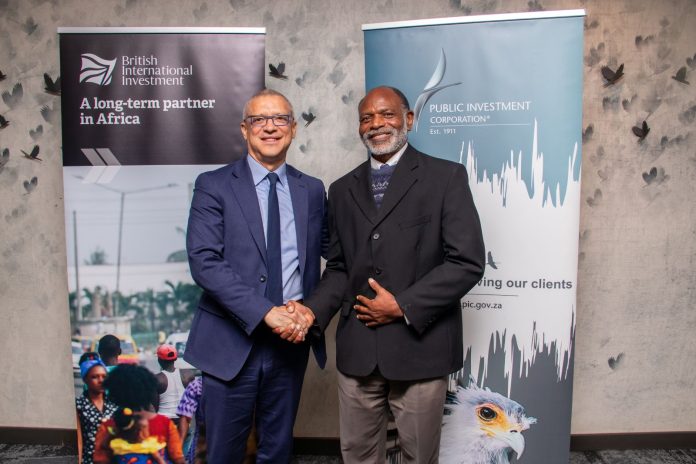
The Public Investment Corporation (PIC) and British International Investment (BII) have signed a Memorandum of Understanding (MoU) to accelerate collaboration in investments across the African continent.

The agreement between one of Africa’s largest asset managers and the UK’s development finance institution and impact investor, establishes a framework for the PIC and BII to jointly explore and pursue impactful investment opportunities, aligning their mandates and resources to drive sustainable economic growth and development across the continent.

The MoU outlines a commitment to share deal pipelines, facilitating the exchange of promising investment opportunities across various economic sectors like agriculture, financial services, infrastructure and climate initiatives. The partnership will foster regular dialogue and explore co-investment possibilities, leveraging the expertise of both organisations to maximise impact.

By combining their strengths, the PIC and BII aim to unlock new avenues for capital deployment and contribute to transformative development across Africa. The organisations have committed to review investment opportunities in debt, equity and funds.

The PIC has an investment mandate that enables it to capitalise on development-focused projects. In this regard, the PIC development mandate incorporates broad areas including investments in unlisted South African-based entities, with a focus on sectors such as agriculture, manufacturing, mining, and financial services economic, environmental, and social infrastructure, as well as developmental investments in the rest-of-Africa.

On the other hand, BII has been investing in Africa for over 75 years, providing long-term capital that supports the growth of productive, sustainable and inclusive economies. With a portfolio of US $5.6 billion invested across 810 companies in Africa, the DFI uses its capital to back businesses that drive local economies, build infrastructure that connects people, and create jobs and services that help communities to thrive. The partnership with PIC forms part of BII’s strategy to work with institutional investors and use its concessionary capital to create ways in which more commercial capital can be deployed to support development in Africa.

According to Mr. Abel Sithole, outgoing CEO of the PIC, the organisation’s strategy of investing on the rest of the African continent is underpinned by investing through partnerships. “The BII partnership cements this strategy and will enable the use of blended funding models to unlock investments that facilitate infrastructure development, industrialisation and trade on the continent. We are elated by the powerful force of two large impact investors working together for the benefit of Africa,” Mr. Sithole explained.

Commenting on the cooperation, the PIC Chief Investment Officer, Mr. Kabelo Rikhotso, said: “We consider cooperation and partnerships as an important factor in our ability to deliver on client investment mandates. The signing of this MoU provides the opportunity to expand our investments across Africa. Sharing deal pipelines and the potential for co-investment opportunities provides important prospects for cooperation between the PIC as an asset manager and the BII as a global development finance institution, committed to investing in emerging economies.”

BII CEO, Mr. Leslie Maasdorp added: “This partnership with PIC exemplifies our shared ambition to drive growth and increase impact across the continent. By leveraging our combined expertise and resources, we can unlock new opportunities for transformative investments that support sustainable development, drive economic growth, and attract increased commercial capital into key sectors across Africa.”

Mr. Antony Phillipson, British High Commissioner to South Africa, said: “This landmark partnership between BII and the PIC marks a significant step forward in deepening the UK-South Africa Growth Partnership. It reflects our shared commitment to mobilising capital for sustainable development across Africa. This collaboration brings together two institutions with a strong track record and a common vision – to unlock inclusive growth, support resilient infrastructure, and create long-term opportunities in South Africa and across the continent.”

Collaboration, Education, Standardised Regulations Key To Safety For Urban Mobility- Experts

Stakeholders drawn from the transportation sector and law enforcement agencies have canvassed the need for collaborative approach, increased safety education as well as standardized regulations to address security challenges arising from ride-hailing services in Nigeria.

In his welcome address at the inDrive Safety Education Summit 2.0 held on Friday, June 20, 2025, the Country Representative, inDrive Nigeria, Timothy Oladimeji stated that the summit was conceived with the aim of fashioning out insights that would help the platform to work with other stakeholders with a view to ensuring safety of both drivers and riders while also bridging users’ education gap about its safety features.

Oladimeji explained that safety remains a collective responsibility which all stakeholders including riders and drivers must take cognizance of.

He disclosed that inDrive has invested heavily on technology to improve its safety features such that even before a rider gets on a trip, safety is already guaranteed.

Delivering his keynote address, Commissioner for Transportation, Lagos State, Oluwaseun Osiyemi who was represented by the Director, Public Transport and Commuter Services (PTCS), Engr. Adebayo Olusoji described the gathering convened by inDrive as a testament to the collective commitment of stakeholders to creating safer environments for citizens.

At a panel session titled” Strengthening Driver & Passenger Trust”, Osiyemi explained that it has become imperative to strengthen collaborations, and address the challenges faced in the journey towards safer urban mobility.

Highlighting some of the steps necessary to make urban mobility safe, he identified the need to prioritize strengthening of interagency coordination through concerted efforts of various government bodies, transport authorities, law enforcement, and even private sector players must come together

According to him, creating streamlined communication channels and fostering a spirit of collaboration among these entities would open doors to innovative solutions that address the pressing issues of traffic congestion, road safety, and emergency response.

“We have seen the impact that enhanced coordination can have in mitigating crises and ensuring quick and effective responses to emergencies. Whether it’s through shared data systems, joint training exercises, or collaborative policy-making, the benefits of interagency coordination are vast. It is time we leverage our collective knowledge and resources to create a harmonized approach to urban mobility,” he said.

He also pointed out the need to standardize safety regulations across boards adding that by doing so, all operators and transport systems will be held to the same high level of safety, regardless of location or mode of transport.

“In our quest for standardization, we must also remain adaptive, as technology continues to evolve at an unprecedented pace. Our regulations must incorporate modern advancements such as smart mobility solutions and emerging safety technologies to ensure that we are not only reactive but proactive in our approach to improving urban mobility and safety,” he said.

He also identified the need for inclusive stakeholder engagement in the policymaking process, stating that insights and perspectives from transportation stakeholders are instrumental in crafting policies that are both effective and empathetic to the needs of diverse populations.

Making his submission during the panel session, Superintendent Route Commander, Federal Road Safety Corp, Lagos Command, Ayodele Ologun revealed that the law enforcement agency is doing a lot within its power to ensure that passengers, riders and drivers are safe.

Ologun stated that the Lagos command has been quite responsive in reporting incidents or crashes and providing post-crash inspection to victims post-crash and post-crash monitoring as the need arises.

He disclosed that the agency has upscaled its service delivery to Nigerians especially with the introduction of the FRSC app for any individual to report if there is an accident or determine the speed of the vehicle in question.

Also speaking at the session, Public Relations Officer, Nigerian Police Force, Lagos Command), Benjamin Hundeyin who was represented by the Deputy Superintendent of Police, Rapid Response Squad, Lagos Command, Adedayo Abu Sadiq explained that the Nigeria Police Force is doing everything within the ambit of the law to guarantee the safety of every Nigerian.

According to Abu Sodiq, the current Nigerian Police Force has been quite responsive in protecting the citizen especially as it relates to any case of emergency.

He stated that the Force would continue to collaborate with ride-hailing platforms, transport stakeholders as well as other law enforcement agencies  in ensuring the safety of citizens.

Also speaking during the session, Country Public Policy & GovernmentAffairs Manager,inDrive Nigeria, Maryanne Momoh-Ige stressed the need for the government to formulate public policy that protects ethical disclosure of data noting that doing so serves as an appropriate framework needed to protect the passengers, the companies, and  their fundamental rights to data privacy.

The event also featured a fireside chat titled “Innovation in App-Based Mobility Safety” and  involving the winner of 2023 Aurora Tech award, Folake Owoduni

Interswitch Leadership Visits FIRS Executive Chairman To Deepen Strategic Collaboration

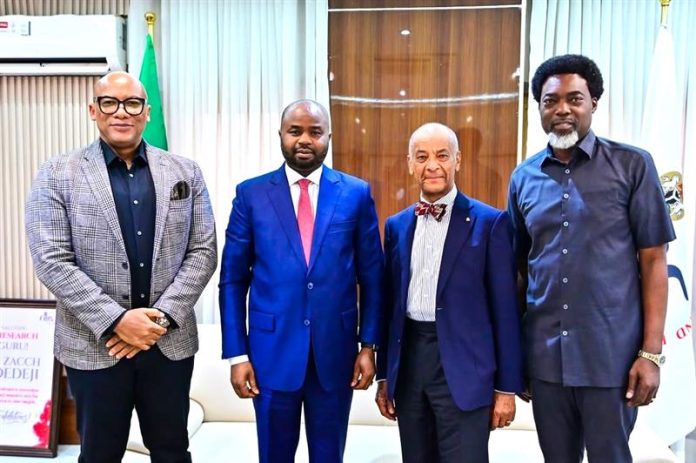
The leadership of Interswitch Group, one of Africa’s leading integrated payments and digital commerce companies, recently paid a courtesy visit to the Executive Chairman of the Federal Inland Revenue Service (FIRS), Dr. Zacch Adedeji, at the FIRS Headquarters in Abuja.

The Interswitch delegation was led by the Group Managing Director and Chief Executive Officer, Mitchell Elegbe, and the Board Chairman and Lord-Lieutenant of Greater London, Sir Ken Olisa. Also present at the meeting was the Chief of Staff to the Executive Chairman and Coordinating Director of the FIRS Strategic Management Office, Tayo Koleosho.

The visit served as an opportunity to strengthen the relationship between Interswitch and the FIRS, reinforce ongoing collaboration, and reiterate Interswitch’s commitment to responsible corporate citizenship and support for national development efforts.

Speaking concerning the visit, Elegbe, remarked:

We recognise the critical role that the FIRS plays in shaping Nigeria’s fiscal landscape, and we are honoured to engage at this level. At Interswitch, we see our work not just through the lens of innovation, but also through the responsibilities that come with growth. This visit reflects our belief that public-private partnerships are essential to building sustainable progress in the digital economy.”

The courtesy visit reflects Interswitch’s continued efforts to maintaining strong, transparent relationships with key regulatory institutions, while contributing meaningfully to Nigeria’s economic advancement. Interswitch remains committed to building solutions that support national objectives, aligning innovation with compliance, and driving transformation across Africa’s financial ecosystem.

Petrol Price Soars to N955/Litre Amid Fresh Hike by NNPC, Marketers

Premium Motor Spirit (PMS) pump price, also known as petrol, surged to as high as N955 per litre on Monday, following fresh upward adjustments by the Nigerian National Petroleum Company Limited (NNPCL) and independent marketers.

In the Federal Capital Territory, NNPC retail outlets revised their pump price to N945/litre, while some of their Lagos stations now dispense petrol at N915/litre, up from N910 and N870, respectively. The hike represents an increase of N35 in Abuja and N45 in Lagos.

Independent marketers have also raised prices, with some stations in Abuja selling PMS for N955/litre, marking a N60 increase from the previous rate of N895. In Lagos, retail prices ranged between N915 and N950/litre, depending on location and marketer.

Retailers associated with the Dangote Petroleum Refinery, such as MRS, Heyden, and AP, implemented a new pump price of N925/litre in Lagos and N935/litre in Ogun State. TotalEnergies now sells at N910/litre, while outlets like Oluwafemi Arowolo Petroleum adjusted prices to N920/litre.

The price hike follows a recent increase in the ex-depot price by Dangote Refinery from N825 to N880/litre, which has since triggered a market-wide ripple effect. Depot sources confirmed that major supply hubs, including WOSBAB, Pinnacle, and NIPCO, now offer ex-depot rates between N920 and N925/litre as of June 23, citing rising global crude prices and upstream cost pressures.

Data from PetroleumPrice.ng also revealed that NIPCO Lagos led the spike with a 2.72% price jump, the highest among surveyed depots, raising prices by N25 to N940/litre in some locations. Dangote’s depot closed at N905/litre, while others like Fynefield, TSL, and Ever saw similar increases. A few, including First Fortune and Rainoil, held steady at N920/litre.

BizWatch Nigeria correspondents observed that NNPC mega stations and independent outlets across key areas in Abuja, such as Kubwa and Airport Road, reflected the new pricing. A.Y.M. Shafa, A.A. Rano, and NIPCO stations were selling PMS uniformly at N955/litre, while strategic partners like Optima and MRS priced theirs at N945/litre.

The persistent hikes in pump prices are expected to further strain household incomes and transportation costs, intensifying inflationary pressure in an already volatile deregulated downstream market.

Global Oil Market Turbulence Adds Pressure

On the international front, geopolitical tensions between the United States and Iran have sent shockwaves through the global oil market. A U.S.-Israeli airstrike on Iranian nuclear facilities over the weekend has triggered retaliatory missile attacks from Iran on U.S. bases in Qatar and Iraq.

Qatar confirmed that its Al Udeid base—run by the U.S.—was targeted, calling the incident a “flagrant violation.” While these developments initially drove oil prices upward, Brent crude futures surprisingly dipped to $71.66 per barrel, and WTI crude fell to $68.32 on Monday, reflecting market volatility.

According to Olatide Jeremiah, CEO of PetroleumPrice.ng, “Depot-level tensions are escalating, and speculative pricing is taking root. The increase in crude oil prices is around 3%, yet depot prices have jumped over 10%. These artificial hikes are unsustainable and will inevitably filter down to pump prices.”

As price fluctuations continue, industry watchers warn that further instability in the international oil market could deepen the crisis at home, with consumers absorbing the brunt of surging energy costs.

GTCO Shares Deliver Nearly 50% Return As Market Sentiment Soars

GTCO Shareholders To Receive ₦3 Per Share

Guaranty Trust Holding Company (GTCO) Plc has delivered an impressive return to shareholders, with its stock appreciating by nearly 50% year-to-date, pushing the group’s market capitalization close to the ₦3 trillion mark.

According to trading data from the Nigerian Exchange (NGX), GTCO’s share price closed at ₦84.95 on Friday, reflecting strong investor confidence and sustained buying interest throughout the past week.

Investor sentiment around the stock has been buoyed by its consistent historical performance, minimal key-man risk, and anticipation ahead of its Q2 2025 financial results. Both local and international investors have increased their stakes in the company as its valuation continues to trend upward.

Data shows that shareholder value has surged to ₦2.9 trillion, fuelled by a week-long rally in the equities market. However, analysts at Afrinvest Limited have urged investors to tread cautiously.

Afrinvest’s research desk recently released a note advising clients to trim their positions in GTCO, highlighting that the bank’s stock had already surpassed their 12-month price target of ₦82.80. The recommendation signals a potential market correction, as the share price currently trades above its forecast valuation.

Despite the cautionary outlook, GTCO appears poised to break past traditional valuation ceilings, potentially becoming one of the few Nigerian financial institutions to cross the ₦3 trillion capitalization threshold.

As the Q2 earnings season approaches, analysts and market watchers will closely monitor the bank’s financial disclosures to assess whether current momentum can be sustained. Meanwhile, GTCO’s leadership remains focused on strategic positioning to maintain its growth trajectory amid evolving market conditions.

Crude Oil Prices Surge Amid Escalating Iran-U.S. Tensions

Oil markets opened the week with a dramatic upswing, driven by heightened geopolitical risks following targeted U.S. airstrikes on Iran’s nuclear facilities in Fordo, Natanz, and Isfahan.

International benchmark Brent crude climbed 0.4% in early Monday trading, reaching $76.22 per barrel from its previous close of $75.91. Likewise, U.S. West Texas Intermediate (WTI) crude rose by 0.5% to $74.08 per barrel, up from $73.72.

U.S. President Donald Trump confirmed that the airstrikes had effectively destroyed key nuclear enrichment sites, cautioning that any further aggression from Tehran would provoke even stronger retaliation.

The situation has stirred global concerns about disruptions to energy supplies, particularly regarding potential instability around the Strait of Hormuz—a vital conduit for global crude shipments.

In a significant development, Iran’s legislative body has reportedly passed a resolution supporting the closure of the strait, pending final ratification from the Supreme National Security Council.

U.S. Vice President J.D. Vance, in a televised interview with NBC, labeled any Iranian move to block the strait as “suicidal,” noting such an act would severely damage Iran’s economy and trigger international backlash.

Similarly, U.S. Secretary of State Marco Rubio warned that shutting down the Strait of Hormuz would have severe repercussions not just for the U.S., but also for other major global economies, including China. Rubio further suggested that Beijing should take the lead in defusing any escalation given its reliance on energy imports from the region.

Despite the rising geopolitical tensions, maritime activity through the Strait of Hormuz has so far continued unabated. The waterway remains a crucial artery for the export of crude oil and liquefied natural gas (LNG) from the Middle East to global destinations via the Arabian Sea and Indian Ocean.

The strait is responsible for the transit of nearly one-third of the world’s seaborne oil, underscoring its importance in maintaining stability in the global energy market. Major producers such as Saudi Arabia and the United Arab Emirates heavily rely on this passage for their energy exports.

Nigerian Government Bonds See Yield Dip Ahead Of DMO Auction

FGN Bond For Jan. 2021 Oversubscribed

Nigeria’s sovereign bond market recorded a notable decline in average yields, with rates dipping to 18.64% in the secondary market ahead of a new debt issuance from the Debt Management Office (DMO).

According to financial market sources, the DMO is set to raise ₦100 billion through a mix of reopened and freshly issued bonds at a scheduled primary market auction (PMA) on Monday.

Last week’s bond market activity closed on a positive trajectory, buoyed by a combination of improved investor sentiment, upgraded sovereign credit outlooks, and steady demand across multiple tenors, Cowry Asset Management noted in a market commentary.

Early in the week, bond trading was relatively tepid as attention shifted towards the Open Market Operations (OMO) auction. The limited participation in the secondary market was attributed to wide bid-ask spreads, which constrained trading flows.

By midweek, market activity improved moderately, with heightened interest seen in longer-dated bonds including the April 2029, February 2031, May 2033, March 2035, and June 2053 issues. As the week progressed, investor demand picked up, supported by selective buy-side interest after a round of early profit-taking.

Notably, bulk trading volumes were observed in the February 2031, May 2033, February 2034, and March 2050 papers. Market insiders highlighted a mildly bullish sentiment, particularly concentrated on specific maturities.

Yields fell significantly on some key instruments. The JAN 2035, JUN 2038, and MAR 2026 bonds witnessed drops of 57 basis points, 57 basis points, and 60 basis points respectively—signalling strong market demand.

Consequently, the average yield across the FGN bond curve dropped by 25 basis points on a weekly basis to 17.83%, reflecting rising domestic appetite for federal debt instruments.

Looking ahead, analysts project sustained bullishness in both the local and international bond markets, supported by positive investor sentiment and enhanced fiscal stability.

For the upcoming auction, the DMO will reopen the April 2029 five-year bond and issue a new seven-year bond maturing in June 2032, offering ₦50 billion for each tranche. Analysts expect a strong turnout, with the government leveraging local debt to finance its 2025 fiscal obligations.

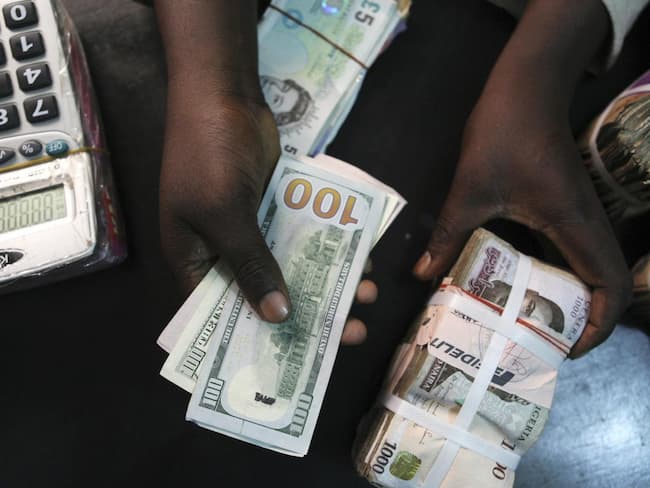
Dollar To Naira Exchange Rate For 23rd June 2025

Dollar To Naira Exchange Rate Today (Thur. July. 20, 2023)

The exchange rate between the Naira and the US dollar, according to the data released on the FMDQ Security Exchange, the official forex trading portal, showed that the naira closed at 1605.00 per $1 on Monday, June 23rd, 2025. The naira traded as high as 1546.00 to the dollar at the investors and exporters (I&E) window on Sunday.

How much is a dollar to naira today in the black market?

Dollar to naira exchange rate today black market (Aboki dollar rate):

The exchange rate for a dollar to naira at Lagos Parallel Market (Black Market) players buy a dollar for ₦1587 and sell at ₦1605 on Saturday 22nd June, 2025, according to sources at Bureau De Change (BDC).

Please note that the Central Bank of Nigeria (CBN) does not recognize the parallel market (black market), as it has directed individuals who want to engage in Forex to approach their respective banks.

Dollar to Naira Black Market Rate Today

Dollar to Naira (USD to NGN)Black Market Exchange Rate Today
Buying Rate₦1587
Selling Rate₦1605

Dollar to Naira CBN Rate Today

Dollar to Naira (USD to NGN)CBN Rate Today
Highest Rate₦1552
Lowest Rate₦1545

Please note that the rates you buy or sell forex may be different from what is captured in this article because prices vary.

BizWatch Nigeria: News Of The Week In 5 Minutes | Sun, 15th June – Sat, 21st June, 2025

BizWatch Nigeria brings to you Nigeria’s Biggest News Headlines in Just 5 Minutes – Your Weekly Recap Is Here. If a hectic week has kept you away from the headlines, don’t worry—we’ve got you covered. With national developments escalating across key sectors, now’s the time to get up to speed.

From high-stakes national security concerns and crucial foreign exchange market shifts to viral moments in politics, finance, tech, and entertainment, this week’s roundup delivers the news that truly matters—quickly and clearly.

No long-winded breakdowns. No unnecessary noise. Just the top stories across Nigeria’s major sectors, all packaged into a sharp, easy-to-watch 5-minute video that gives you the insights you need—fast.

Whether you’re on your lunch break or winding down for the day, this is your go-to summary to stay ahead, stay informed, and stay smart.

Watch the full video recap now:

FIFA Club World Cup: Manchester City Crush Al Ain 6-0 As Gundogan Shines With A Brace

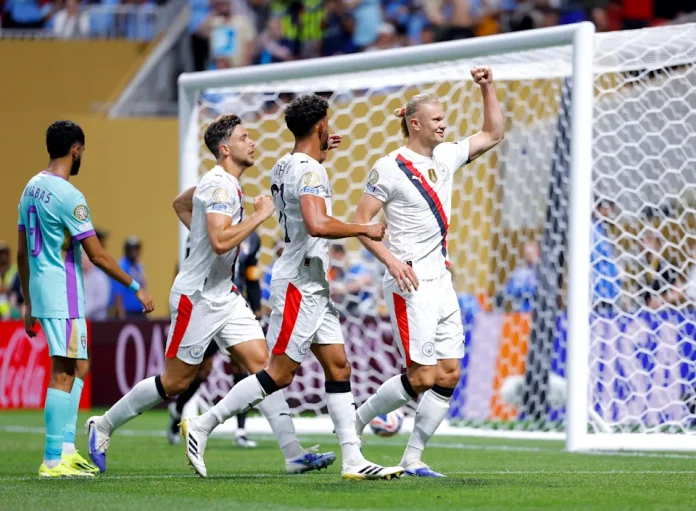
Manchester City delivered a commanding performance in the Club World Cup group stage, dismantling UAE Pro League side Al Ain with an emphatic 6-0 victory at the stunning Mercedes-Benz Stadium in Atlanta. Midfielder Ilkay Gundogan was the standout performer, netting twice to help City secure a spot in the tournament’s last 16.

Under the stadium’s closed roof and amid a sea of blue, Pep Guardiola’s side proved far superior to their Abu Dhabi-based opposition. From the opening whistle, City controlled possession and tempo, and it didn’t take long before their dominance reflected on the scoreboard.

Gundogan, who has recently been linked to a potential move to Turkish giants Galatasaray, opened the floodgates in the eighth minute with a lofted strike that floated over the goalkeeper and into the net. Though initially unclear whether it was a shot or a misdirected cross aimed at Erling Haaland, the ball’s drop into the net made City’s intent clear early on.

Teen sensation Claudio Echeverri, making his first senior start for City, made an immediate impact by curling home a precise free-kick for the second goal after Matheus Nunes was brought down on the edge of the box. That moment of class from the young Argentine added to the spectacle and hinted at the depth of City’s rising talent.

Before halftime, Haaland etched his name onto the scoresheet as well, converting from the spot after VAR intervention confirmed that Manuel Akanji had been wrestled to the turf by Ramy Rabia. The Norwegian striker sent Al Ain goalkeeper Khalid Eisa the wrong way, making it 3-0 going into the break.

Despite the one-sided scoreline, City experienced moments of vulnerability in defence. Al Ain’s Nassim Chadli found himself through on goal at one point, but his effort was expertly tipped behind by Stefan Ortega. Meanwhile, Josko Gvardiol came close to extending City’s lead with a powerful header that rattled the post.

There was concern for Echeverri after a knock required medical attention, but he quickly recovered and remained involved before being substituted later in the match.

Haaland had multiple chances to increase his tally, including a clever run that saw him steal the ball from Park Yong-woo and round Eisa, only to fire wide from a tight angle. He also saw a low cross from Phil Foden turned away by Eisa’s reflex double-save early in the second half.

City’s fourth came when Bernardo Silva played a clever ball into Gundogan, who elegantly chipped the goalkeeper to score his second of the evening in the 73rd minute. The Premier League champions weren’t done yet.

Substitute Oscar Bobb added to the rout with a sharp strike inside the near post, and new signing Rayan Cherki capped off the win with a composed finish from the edge of the box as the final whistle approached.

With this dominant win, Manchester City and Juventus have confirmed their progression from Group G. The two sides will meet on Thursday in Orlando to decide who finishes top. The outcome will be crucial, as tournament heavyweights Real Madrid could await in the next round.

Having made 11 changes from their opening win against Wydad Casablanca, Guardiola’s men showcased their squad depth and hunger to add another international title to their trophy cabinet.

Oklahoma City Thunder Make History With First NBA Title After Game 7 Victory Over Indiana Pacers

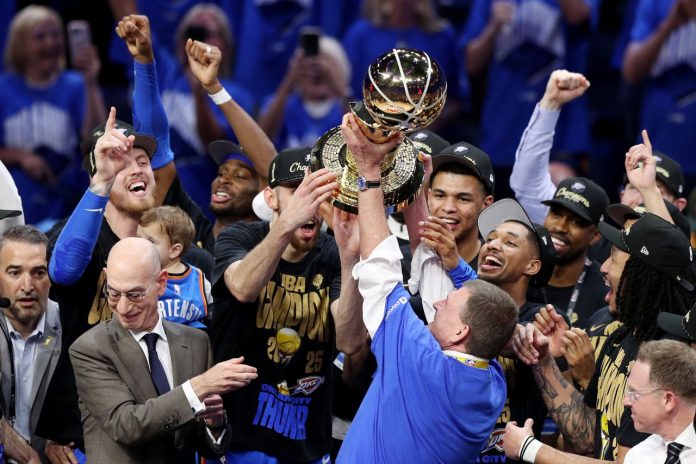
In a groundbreaking moment for the franchise, the Oklahoma City Thunder secured their maiden NBA championship on Sunday night with a decisive 103-91 Game 7 win over the Indiana Pacers, capping a season defined by dominance, resilience, and an extraordinary turnaround in performance.

This victory marks a landmark achievement for the franchise, which relocated to Oklahoma City 17 years ago. After years of rebuilding and near-misses, the Thunder finally reached the summit of professional basketball, rewriting the narrative of one of the league’s most patient and strategic teams.

The Thunder’s 2024-25 campaign was nothing short of historic. After posting win totals of just 22 and 24 games during the 2020-21 and 2021-22 seasons, Oklahoma City surged to the top of the Western Conference for the second consecutive year. This season, they registered 68 wins—ranking among the top seven single-season records in NBA history—and shattered the all-time record for point differential in a regular season, a mark that had stood for over 50 years.

Including the playoffs, Oklahoma City notched 84 victories, tying the 1996-97 Chicago Bulls for the third most wins in a single season. Only the 2016-17 Golden State Warriors (88 wins) and the 2015-16 Bulls (87 wins) achieved more.

However, the Game 7 finale also carried a somber tone due to a devastating injury to Pacers star Tyrese Haliburton. The standout guard suffered a right Achilles injury less than five minutes into the first quarter while driving to the basket, ending his game and potentially altering Indiana’s title hopes. Despite the setback, the Pacers entered halftime leading 48-47.

The Thunder responded in emphatic fashion. Led by league MVP Shai Gilgeous-Alexander, Oklahoma City unleashed a third-quarter blitz, outscoring the Pacers 34-20 to take a commanding lead into the final quarter. Gilgeous-Alexander once again delivered in clutch fashion, finishing with 29 points and 12 assists in a performance that earned him NBA Finals MVP honors.

The Pacers refused to go down without a fight, cutting a 22-point deficit to 10 in the final minutes after a timely three-pointer from Andrew Nembhard. But unlike previous games where Indiana pulled off stunning comebacks, the Thunder maintained their composure and closed the door on any late drama.

“It still feels surreal,” Gilgeous-Alexander said postgame. “We’ve put in the hours, we’ve pushed through the disbelief, and we always believed in ourselves. This team earned this championship.”

The triumph reflects the vision and long-term strategy of General Manager Sam Presti, who has helmed the team since its final season in Seattle back in 2007-08. Under Presti’s stewardship, the Thunder have amassed the second-most regular-season wins since 2008—only behind the Boston Celtics—and sit fifth in postseason victories during that span.

Before this season, however, the franchise had struggled to clinch the ultimate prize, falling short in the 2012 NBA Finals against the Miami Heat and making deep but unsuccessful runs in 2014 and 2016. On the same day that former franchise cornerstone Kevin Durant was traded to the Houston Rockets, Oklahoma City finally broke through and claimed the crown.

The seeds of this title run were sown in 2019 when Presti initiated a transformative rebuild by trading Russell Westbrook and Paul George. In return for George, the Thunder acquired a promising young guard named Shai Gilgeous-Alexander from the LA Clippers—a move that has now defined the franchise’s new era.

Weeks after those trades, Presti published an open letter in The Oklahoman, stating: “In saying goodbye to the past, we have begun to chart our future. The next great Thunder team is out there somewhere.”

That future arrived quicker than anticipated. Alongside Gilgeous-Alexander, the Thunder unearthed defensive stalwart Luguentz Dort in 2019 and later added key foundational pieces in Chet Holmgren (No. 2 overall pick, 2022) and Jalen Williams (No. 12 overall, 2022). Holmgren, despite being hampered by injuries throughout the season, recorded five blocks in Game 7—the highest in a Finals Game 7 since the NBA began tracking the stat in 1973-74.

“Records come and go, but winning as a team, that’s forever,” said Holmgren. “This is something we’ll all remember, something that will live on.”

Williams, who had struggled in earlier rounds, had a breakout series in the Finals. His 40-point effort in Game 5 showcased his potential as a future superstar and a key component in the Thunder’s long-term plans.

With both Williams and Holmgren expected to sign contract extensions this offseason—alongside a potential supermax deal for Gilgeous-Alexander—the Thunder’s core looks set for sustained success. Remarkably, only two players on Oklahoma City’s roster are older than 27, making them the second-youngest team to ever win an NBA title, following only the 1976-77 Portland Trail Blazers.

“They act like champions. They train like champions. They celebrate each other’s success,” said head coach Mark Daigneault. “This team is unique—and now they’re champions.”

The Thunder’s victory also continues a trend of competitive balance in the league. Oklahoma City became the ninth franchise to win an NBA title during Adam Silver’s 12-year tenure as commissioner. By contrast, only eight franchises won during David Stern’s 30-year term.

For Gilgeous-Alexander, this season will be remembered as one of the greatest individual campaigns in NBA history. The 25-year-old joined elite company by claiming the scoring title, the regular-season MVP, the Finals MVP, and the championship—becoming the first player since Stephen Curry in 2015 to accomplish the feat.

Back then, Curry led the rise of a youthful Warriors dynasty. Whether the Thunder are poised for a similar reign remains to be seen. But history shows that every dynasty begins with a single title—and Oklahoma City finally has its first.

Week 2 Pool Fixtures For Sat 12, Jul 2025, Aussie 2025

Week 2 Pool Fixture for Sat 16, July 2022: Aussie 2022

Now you can find the Week 2 pool fixtures 2025: pool fixtures for this week, this week pool fixtures, football pools results and fixtures, pool fixtures this week, classic pool fixtures, Aussie pool fixtures, UK pool fixtures, advance pool fixtures, Australia pool fixtures, pool panel results, pool result today Saturday, pool results and fixtures this week, fortune soccer pool fixtures.

Find all the Week 2 pool fixtures on Bizwatchnigeria.ng as soon as they are released by the FPA (Football Pools Authority).

Pool Fixtures For This Week: 2; SEASON: AUSSIE 2025
Advance Pool FixturesStatus
1
2
3
4
5
6
7
8
9
10
11
12
13
14
15
16
17
18
19
20
21
22
23
24
25
26
27
28
29
30
31
32
33
34
35
36
37
38
39
40
41
42
43
44
45
46
47
48
49

Week 52 Pool Result For Sat 28, Jun 2025, Aussie 2025

Week 52 Pool Fixture for Sat 2, July 2022: Aussie 2022

Week 52 pool results 2025: Football pools results, live football pool result today, pool result today saturday matches, pool results for this week, british and aussie pool result, football pools results and fixtures, pools panel results today, pool panel results and live score pool result today. We publish half-time results first of its kind.

Week 52 Pool Results: Football pools results for this week 52 2025 are published on this website immediately after full-time confirmation of live score results. We also publish the outcome of postponed matches by the football pools panel at half-time as decided by the football pools. This week’s Week 52 Pool Results are made available in partnership with Bizwatch Nigeria. Stay tuned for reliable and accurate updates throughout the week.

WEEK: 52; SEASON: AUSSIE 2025; DATE: 28-June-2025
Football Pools ResultsHTFTStatus
1Central CoastMt Druitt T.-:--:-Sunday
2Marconi S.Sydney FC-:--:-Sunday
3Rockdale C.Sutherland-:--:-Sunday
4St George S.A.Leichhardt-:--:-Sunday
5Sydney O.Blacktown C.-:--:-Saturday
6Sydney Utd.NSW Spirit-:--:-Sunday
7W. SydneyWollongong-:--:-Saturday
8Bonnyrigg W.Bankstown C.-:--:-Saturday
9B. AcademyBlacktown S.-:--:-Saturday
10Canterbury B.Macarthur R.-:--:-Saturday
11Dulwich HillRydalmere-:--:-Saturday
12Hakoah S.Mounties W.-:--:-Saturday
13Inter LionsHills Utd.-:--:-Saturday
14Northern T.Newcastle J.-:--:-Saturday
15UNSW FCSD Raiders-:--:-Saturday
16AvondaleDandenong T.-:--:-Saturday
17George CrossBentleigh G.-:--:-Saturday
18Melbourne S.Melbourne C.-:--:-Saturday
19N. SunshineEastern Lions-:--:-Saturday
20Western Utd.Moreland C.-:--:-Sunday
21BalcattaFremantle C.-:--:-Saturday
22F. AthenaOlympic K.-:--:-Saturday
23Perth GlorySorrento-:--:-Saturday
24Perth Red StarBayswater C.-:--:-Saturday
25Western K.Armadale-:--:-Saturday
26Ad. CometsCampbelltown-:--:-Saturday
27Croydon K.Para Hills-:--:-Saturday
28FK BeogradW.T. Birkalla-:--:-Saturday
29Metro StarsAdelaide U.-:--:-Saturday
30Modbury J.Adelaide C.-:--:-Saturday
31Playford C.C. Raiders-:--:-Saturday
32Ad. CobrasSturt Lions-:--:-Saturday
33Fulham Utd.Adelaide O.-:--:-Saturday
34Salisbury U.W. Adelaide-:--:-Saturday
35S. AdelaideVipers FC-:--:-Saturday
36AdamstownCooks Hill U.-:--:-Saturday
37B. SwanseaCharlestown-:--:-Sunday
38Edgeworth E.Valentine-:--:-Saturday
39Lambton J.Weston W.-:--:-Saturday
40New LambtonMaitland-:--:-Saturday
41Newcastle O.Broadmeadow-:--:-Sunday
42Devonport C.Launceston U.-:--:-Saturday
43Launceston C.Kingborough-:--:-Saturday
44Riverside O.Glenorchy K.-:--:-Saturday
45South HobartClarence Z.-:--:-Saturday
46Canberra C.Gungahlin U.-:--:-Sunday
47Monaro P.Yoogali SC-:--:-Saturday
48QueanbeyanO’Connor K.-:--:-Saturday
49TuggeranongTigers FC-:--:-Sunday

Treasury Bills Yield Falls As CBN Rejects Over ₦1 Trillion In Bids

Yields on Nigerian Treasury bills slid last week in the secondary market after the Central Bank of Nigeria (CBN) declined to allot more than the offered amount at its latest auction, despite a surplus of investor interest totaling ₦1.071 trillion.

The move triggered heightened trading activity among investors who missed out at the primary market, pushing up demand and sending yields downward. Cordros Capital stated that the average yield fell by 13 basis points to 20.5% as unmet bids flooded the secondary market.

At the auction, the CBN offered a total of ₦162.02 billion: ₦22.02 billion in 91-day paper, ₦40 billion in 182-day bills, and ₦100 billion in one-year bills. Subscriptions totaled ₦1.23 trillion, slightly down from the previous ₦1.31 trillion.

Despite the high interest, the CBN stuck to its offer, allotting ₦37.98 billion for the 91-day maturity, ₦40.54 billion for the 182-day, and ₦83.5 billion for the 364-day bills. This translated to a bid-to-offer ratio of 7.6x—significantly higher than the 2.9x ratio in the prior auction.

As a result, stop rates adjusted downward. The 91-day bill settled at 17.80% (down 18 bps), the 182-day at 18.35% (down 15 bps), and the 364-day bill dropped to 18.84% from 19.35%.

Simultaneously, the CBN conducted an OMO auction offering ₦600 billion split evenly between 155-day and 204-day instruments. Demand surged to ₦1.15 trillion, prompting the CBN to allot ₦1.07 trillion. Stop rates were set at 24.20% for 155-day and 24.59% for 204-day OMO bills.

However, the secondary market responded with a 75 basis points increase in average OMO yields to 26.7%, as investors offloaded positions to realign with the primary auction.

With continued investor interest in short-term government securities and the CBN’s strategic allotments, analysts predict more pricing adjustments in the coming sessions, especially as maturing instruments pump liquidity back into the system.

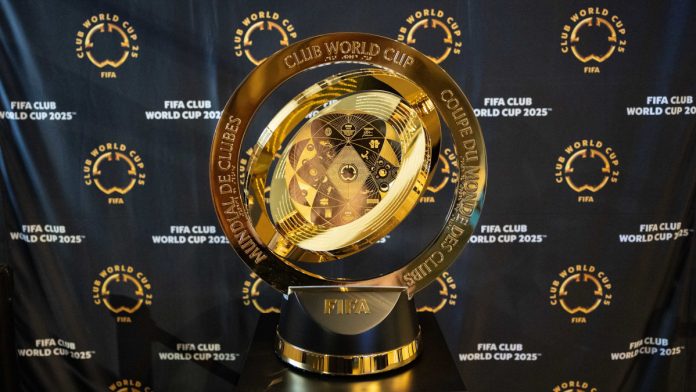
Who Has Won the FIFA Club World Cup? A Year-by-Year Look At Global Club Champions

CHARLOTTE, NORTH CAROLINA - MAY 17: The FIFA Club World Cup Trophy is seen at Bank of America Stadium on May 17, 2025 in Charlotte, North Carolina. (Photo by Jacob Kupferman - FIFA/FIFA via Getty Images)

Let’s be honest—football fans might argue all day over which league is the toughest, which derby is the fiercest, or which goal broke the internet. But when it comes down to crowning the best football club on the planet, the FIFA Club World Cup settles the debate, at least for a moment. This tournament, a melting pot of champions from every continent, has had its fair share of glory, heartbreak, and unforgettable drama.

So, who’s ruled the world, literally? Let’s take a winding walk through history—club by club, title by title—with a few eyebrow-raising facts along the way.

Real Madrid: The Kings of the Club World

Let’s start at the top, because why bury the lede?

Real Madrid has lifted the FIFA Club World Cup trophy five times—more than anyone else. And they didn’t just sneak in; they owned the 2010s. Their wins came in 2014, 2016, 2017, 2018, and 2022, mostly during the reign of their Champions League dynasty. Remember that Cristiano Ronaldo era? That team steamrolled everyone, everywhere, and their Club World Cup dominance just felt inevitable.

You could say the trophy practically lived in Madrid for a decade. Not many clubs can say that about any international competition.

Barcelona

Trailing just behind their eternal rivals, Barcelona has bagged three titles—in 2009, 2011, and 2015. These weren’t just wins; they were masterclasses. Prime Messi, Xavi, and Iniesta? It was like watching football played in another dimension.

What’s wild is that every one of those wins came under managers who believed in total football. And here’s a kicker: Pep Guardiola was in charge for two of them. Yep, we’ll talk about him more in a bit.

English Giants

The Premier League’s big boys took a while to warm up to the Club World Cup, but once they did, they made it count.

  • Manchester United claimed the crown back in 2008.
  • Liverpool, after their wild ride under Klopp, won it in 2019—a year when they looked unbeatable.
  • Chelsea got theirs in 2021, grinding out a win over Palmeiras after years of trying.

And Manchester City? They finally added it to their stacked trophy cabinet in 2023, beating Fluminense after sweeping through Europe. Pep again. That man has a monopoly on this trophy.

Bayern Munich

Let’s talk German precision. Bayern Munich won in 2013 and again in 2020. And honestly, both wins felt like box-checking. No drama, no fuss—just efficient, ruthless football.

In 2020, they capped off a perfect year, winning everything in sight. UCL, Bundesliga, DFB-Pokal—and the Club World Cup was the cherry on top. Flick’s machine was firing on all cylinders, and it showed.

South American Clubs

Europe doesn’t always dominate. Remember Corinthians in 2012? They stunned Chelsea—a reminder that South American clubs can absolutely match Europe’s finest when it matters most.

Then there was São Paulo in 2005, taking down Liverpool. Internacional followed in 2006, beating Barcelona no less. If you’re sensing a trend, you’re not wrong—Brazilian clubs have had their golden moments, especially when the European sides underestimated them (or just hadn’t shaken off the jet lag).

Let’s not forget Internazionale in 2010 and AC Milan in 2007—Italian powerhouses at their peak. Those wins meant a lot in an era when Serie A still felt like the center of the football universe.

Most Trophies By A Coach -Pep Guardiola

Now, let’s take a detour—because it’s not just clubs that leave a mark. Pep Guardiola has more Club World Cup wins than any other manager. Four, to be exact:

  • 2009 and 2011 with Barcelona
  • 2013 with Bayern Munich
  • 2023 with Manchester City

It’s honestly ridiculous. If the Club World Cup had a Hall of Fame, Pep would be the first name carved in stone. He’s not just winning; he’s shaping football history in the process.

What Happened in 2024?

Funny you ask. Nothing. FIFA hit the pause button in 2024 to prep for the new, expanded format launching in 2025. Instead of the usual 7-team tournament, it’s ballooning into a 32-team spectacle—kind of like the World Cup itself but for clubs.

It’ll be held every four years, so expect more global flavor, more chaos, and—let’s be honest—more commercial appeal. Whether it adds prestige or dilutes the magic, we’ll have to wait and see.

The Complete Winners List

Here’s your trophy sheet, from 2000 till now:

  • 2023: Manchester City def. Fluminense
  • 2022: Real Madrid def. Al-Hilal
  • 2021: Chelsea def. Palmeiras
  • 2020: Bayern Munich def. UANL
  • 2019: Liverpool def. Flamengo
  • 2018: Real Madrid def. Al-Ain
  • 2017: Real Madrid def. Gremio
  • 2016: Real Madrid def. Kashima Antlers
  • 2015: Barcelona def. River Plate
  • 2014: Real Madrid def. San Lorenzo
  • 2013: Bayern Munich def. Raja Casablanca
  • 2012: Corinthians def. Chelsea
  • 2011: Barcelona def. Santos
  • 2010: Internazionale def. TP Mazembe
  • 2009: Barcelona def. Estudiantes
  • 2008: Manchester United def. LDU Quito
  • 2007: AC Milan def. Boca Juniors
  • 2006: Internacional def. Barcelona
  • 2005: São Paulo def. Liverpool
  • 2000: Corinthians def. Vasco da Gama

Does the Club World Cup Really Matter?

Some argue it’s just a shiny afterthought to the Champions League. Others swear by the bragging rights of global supremacy. For players from smaller confederations, it’s the biggest stage they’ll ever see. For European giants, it’s the final jewel in a trophy-laden season.

But one thing’s for sure—every year it’s played, only one team can say they’re the best club on Earth.

Meta Begins Testing Ads On WhatsApp, Marking A New Chapter In The App’s Evolution

In a move that signals a major shift in user experience, Meta Platforms has officially begun rolling out advertisements on WhatsApp—one of the world’s most widely used messaging platforms. Long cherished for its simplicity and privacy, WhatsApp is entering a new era where light advertising will now form part of the ecosystem.

For over a decade, WhatsApp users have enjoyed an ad-free space for private messaging and voice calls. But that’s set to change, albeit gradually, as Meta looks to monetize the app more strategically. The company has clarified that these ads will not infiltrate personal chats. Instead, they’ll be confined to a newly targeted section of the platform.

Where Will Ads Appear on WhatsApp?

Meta is introducing ads exclusively in the “Updates” tab, which houses WhatsApp Statuses and Channels. According to the company, this feature sees over 1.5 billion daily views, making it a ripe space for content discovery and commercial engagement.

Here are the key updates users can expect:

  • Status Ads: Businesses will now be able to display promotional content through 24-hour disappearing Stories, similar to Instagram or Facebook Stories.
  • Boosted Channels: Channel admins will have the option to pay for increased visibility within the WhatsApp directory, helping them grow their audiences more efficiently.
  • Subscription Channels: For the first time, WhatsApp will support paid Channels, allowing users to subscribe for exclusive content from influencers, brands, or communities.

Meta assures users that these changes are strictly limited to the Updates section, leaving the core messaging and group chat features unaffected—for now.

Privacy Concerns Still Loom

Even as Meta moves forward with monetization, the company continues to insist that user privacy remains sacrosanct. The end-to-end encryption that WhatsApp is famous for remains in place. Ads, Meta says, will not be based on users’ messages, voice calls, or group activity.

Instead, ad targeting will rely on non-intrusive metrics such as:

  • Geographic location (country or city)
  • Language preferences
  • Channels followed
  • Engagement patterns with public content

Users who have connected WhatsApp to Meta’s broader Accounts Center could see slightly more tailored ads. However, the company reiterated that phone numbers will not be shared with advertisers under any circumstance.

A Departure From WhatsApp’s Original Vision

The decision to introduce ads starkly contrasts with WhatsApp’s founding philosophy. Co-founder Brian Acton famously posted a note on his desk that read, “No Ads! No Games! No Gimmicks!” The company blog echoed a similar sentiment in 2012: “When advertising is involved, you, the user, are the product.”

Even after Facebook acquired WhatsApp in 2014 for $19 billion, then-CEO Mark Zuckerberg and WhatsApp’s founders promised that the app wouldn’t be monetized with ads. But priorities have since shifted.

According to Will Cathcart, Head of WhatsApp, these changes are part of a broader transformation in how people consume content. He describes the Updates tab as a natural evolution, in line with how other platforms like Telegram and Snapchat have leveraged private spaces for business growth.

Will This Erode User Trust?

With the recent permanent addition of a Meta AI assistant button and now the introduction of advertising, many users feel WhatsApp is slowly losing the intimate, minimalistic feel it once offered.

Still, Cathcart insists that the average user won’t notice any significant change—unless they actively explore the Updates section. Messaging, voice notes, and group chats will remain uninterrupted and private.

Opportunities for Businesses and Creators

While regular users may lament the rise of ads, this development creates new opportunities for small businesses and content creators. Unlike traditional advertising, WhatsApp’s model is more discreet, integrated through status updates and channel promotion.

Currently, Meta does not charge fees for creators to operate subscription channels, which means more Nigerian entrepreneurs and digital creators may find new ways to monetize their following without heavy costs. The potential for hyper-local promotion through Status ads could also help microbusinesses engage with nearby communities more effectively.

What Comes Next?

As WhatsApp gradually evolves into a platform that supports commercial discovery, users will need to recalibrate their expectations. The sanctity of private conversations remains protected—for now—but the door to monetization has been opened.

Whether this enhances or erodes the overall WhatsApp experience remains to be seen. But one thing is clear: the green icon we’ve long known as a safe space for uninterrupted communication is entering a new, commercially aware phase.

CBN Liquidity Measures Push Money Market Rates Toward 29%

CBN Approves Reduction In Banks' CRR

The Central Bank of Nigeria’s (CBN) aggressive liquidity tightening strategies have significantly impacted money market rates, pushing short-term borrowing costs to new highs. As banks brace for fresh FAAC inflows, average system liquidity plummeted from ₦986.49 billion to ₦180.96 billion, sparking a sharp rise in overnight funding rates.

According to FMDQ data, the open repo rate climbed 167 basis points to 28.17%, while overnight lending rose 193 basis points to 28.92%. Analysts attribute the tightening to the CBN’s recent actions, including cash reserve ratio (CRR) debits and a heavily subscribed ₦600 billion Open Market Operations (OMO) auction that drew ₦1.15 trillion in bids.

The apex bank eventually allotted ₦1.07 trillion in OMO bills, absorbing liquidity and spiking funding costs. Although a maturity of ₦985.88 billion briefly eased conditions midweek, subsequent outflows from cross-currency repayments, FX settlements, and net Treasury bill funding totaling ₦134.8 billion reignited liquidity pressures, according to AIICO Capital.

Cordros Capital reported that a combined ₦2.07 trillion in outflows—₦1.07 trillion from OMO and ₦1 trillion via FX swaps—overwhelmed the inflows from maturing OMO and NT-bills. Consequently, the market closed with a net long liquidity position of ₦780.22 billion, down from ₦986.79 billion a week earlier.

The CBN’s liquidity management was further evidenced by heavy traffic at its Standing Deposit Facility window, which averaged ₦872.98 billion throughout the week.

Market watchers suggest that short-term benchmark rates may remain elevated, close to the 28% mark, until a wave of inflows—₦1.12 trillion in FAAC disbursements, ₦283.79 billion in maturing Treasury bills, and ₦216.76 billion in bond coupon payments—enters the financial system.

Unless the CBN launches another liquidity mop-up operation, analysts expect these inflows to provide substantial relief and restore balance to the money market in the coming week.

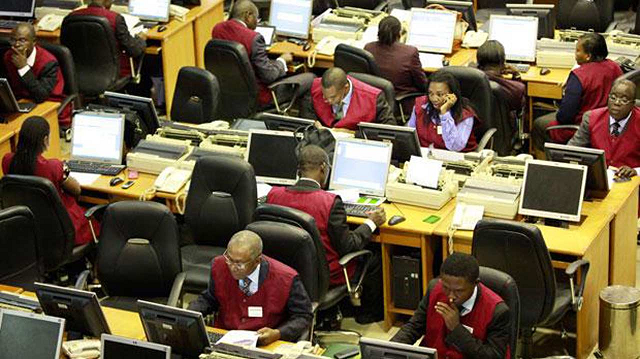
Market Momentum Surges As NGX Investors Bag ₦1.75 Trillion In Weekly Gains

NGX Records N256bn Loss Last Week

The Nigerian stock market continued its upward trajectory last week, with investors raking in a substantial ₦1.75 trillion in market value, signaling increasing confidence in key sectors. The Nigerian Exchange (NGX) All-Share Index (ASI) climbed by 2.35% week-on-week to an all-time peak of 118,138.22 points, bolstered by renewed bullish sentiment.

Despite a rocky start to the week due to a regulatory directive from the Central Bank of Nigeria (CBN) that restricted dividend payouts and new offshore investments by banks with compliance issues, market momentum was quickly restored. Cowry Asset Limited disclosed that the restrictions were aimed at financial institutions violating the Single Obligor Limit or those with unresolved COVID-19-era forbearance loans.

Initial panic sparked a brief selloff in banking stocks, but subsequent reassurances from affected lenders and a confidence-boosting statement from the apex bank affirming the sector’s soundness reversed the downward trend.

The market’s resurgence saw its total capitalisation expand by 2.40%, closing at ₦74.53 trillion. The year-to-date return on the ASI rose to 14.78%, demonstrating resilience amid economic and policy fluctuations.

Investor engagement reached new highs, as turnover data reflected a 65.62% surge in traded volume to 3.39 billion shares and a 114.52% jump in value to ₦108.72 billion. The total number of deals executed soared by 47.79% to 95,625.

Sectoral indices were broadly bullish. The Oil & Gas Index led gains at 5.27%, driven by strong performances from SEPLAT and MRS. The Commodity Index rose 4.37%, while the Banking Index advanced by 3.58%, buoyed by renewed investor interest in GTCO and Stanbic IBTC.

Other sectors posting solid gains included Insurance (+2.37%) and Consumer Goods (+2.16%), driven by movements in Custodian and Ellah Lakes. However, the Industrial Goods Index dipped by 0.36%, weighed down by losses in John Holt, Enamelware, RTBriscoe, and Dangote Cement.

Top weekly gainers included Ellah Lakes (+56.8%), LEGEND (+48.3%), BERGER (+41.5%), LivingTrust (+30.8%), and FIDSON (+28.9%). Decliners were led by NNFM (-25.5%), JOHNHOLT (-18.4%), VFDGROUP (-13.8%), SUNUASSUR (-12.8%), and CONOIL (-12.6%).

Looking ahead, Cowry Research anticipates a possible liquidity boost in the equities space due to over ₦283 billion in maturing NT-bills and the absence of a new auction. Additionally, dividend season and undervalued equities may spur further buying activity. However, analysts advised a cautious, fundamentals-focused strategy amid continuing macroeconomic uncertainties.

Top 7 High-Yield Mutual Funds To Consider For Investment In Nigeria (2025 Update)

As many Nigerians continue to embrace digital savings platforms like Piggyvest, Cowrywise, Opay, and Fairmoney, it’s become clear that while these apps offer secure savings options with modest interest rates, they may not deliver the kind of financial growth needed to outpace inflation or currency depreciation.

In an economy grappling with high inflation and a fluctuating naira, mutual funds are emerging as a powerful investment tool for Nigerians seeking to preserve value and grow wealth over time.

Think of a mutual fund as a shared investment pool managed by finance professionals. These managers allocate funds into a mix of assets—like stocks, bonds, and other securities—ensuring diversification and reduced individual risk. Investors buy units of the fund, and their returns are tied to the collective performance of the underlying assets. It’s a simplified, low-effort entry point into expert-managed investing—even for beginners with small capital.

In 2024, equity-focused mutual funds recorded an average return of 49.6%, far exceeding returns from fixed deposits and money market funds. With the Monetary Policy Rate (MPR) steady around 27.5% and inflation surging past 35% by the end of the year, more Nigerians have turned to mutual funds to secure better real returns on their investments.

With minimum buy-ins as low as ₦5,000, these funds offer a blend of affordability, professional oversight, and easy access via mobile investment apps—making them ideal for both new investors and experienced portfolio holders.

1. Stanbic IBTC Aggressive Fund

The Stanbic IBTC Aggressive Fund, which allocates up to 90% of its assets to equities, recorded an impressive 49.9% return in 2023. Tailored for long-term investors with a high risk appetite, this fund thrives when the Nigerian stock market performs well. However, its volatility means potential losses during downturns. It’s ideal for investors with a 5 to 10-year horizon who are comfortable with market swings.

👉 Access via: Stanbic IBTC Asset Management

2. ARM Ethical Fund

This fund blends Sharia-compliant equities with stable fixed-income instruments and posted a 30.89% return in Q1 2024. With a focus on ethical investing, it’s suitable for those avoiding interest-bearing assets. Its balanced composition tempers risk, although its equity exposure means investors should expect some volatility.

👉 Where to invest: Available on Cowrywise app.

3. ARM Fixed Income Fund

Catering to conservative investors, the ARM Fixed Income Fund targets quality government bonds and corporate debt. It delivers consistent annual yields of 12%–15% and offers lower volatility compared to equity-focused alternatives. While it lacks explosive growth potential, it’s an excellent option for stable, passive income.

👉 Buy via: Piggyvest.

4. Chapel Hill Denham Nigeria Dollar Income Fund

This fund is structured around U.S. dollar-denominated fixed-income assets, offering a hedge against naira devaluation and foreign exchange volatility. Investors benefit based on the performance of these dollar-backed securities. Ideal for those looking to protect their capital and diversify across currencies, it requires access to foreign exchange.

👉 Platform: Invest Naija

5. Halo Equity Fund

Managed by Halo Asset Management, this fund has delivered standout performance—110.79% YTD in January 2025 following a 98.91% gain in 2024. With a narrow bid-ask spread of just 0.82% and a ₦16.6 billion fund size, it focuses on high-performing equities, offering lucrative gains alongside significant risk.

👉 Visit: Halo Nigeria Capital Management

6. Alpha Morgan Balanced Fund

Striking a balance between equities and fixed-income assets, this fund aims for both capital growth and income generation. With a moderate risk profile and a minimum entry of ₦10,000, it’s ideal for investors seeking less volatility. It requires a 180-day holding period and has been recognised by Business Day as a top performer.

👉 Where to buy: Cowrywise

7. GTCO Equity Income Fund

The GTCO Equity Income Fund is structured around high-yield, blue-chip stocks on the Nigerian Exchange, combined with fixed-income investments to offer a blend of income and long-term capital growth. It currently delivers an average return of 13%, making it one of the most competitive equity-income funds available.

👉 Start via: GTCO Fund Managers

How to Get Started with Mutual Fund Investments in Nigeria

Entering the mutual fund market is easier than many Nigerians think. Begin by selecting a reputable investment platform—this could be a bank (such as Stanbic IBTC or Chapel Hill Denham) or a trusted fintech app like Cowrywise, PiggyVest, Bamboo, or Trove.

Set up an account using essential documents like your Bank Verification Number (BVN), National Identification Number (NIN), and a valid ID. After verification, fund your account through bank transfer or debit card. Browse available funds based on performance, risk level, and minimum entry amount. Once you identify a fund aligned with your goals and risk appetite, you can proceed to invest any desired amount above the minimum.

The key to successful mutual fund investing lies in aligning your choices with your financial objectives—whether you’re seeking steady returns, capital growth, or protection against inflation. Also consider whether you prefer naira-based funds or dollar-denominated alternatives, especially in light of Nigeria’s volatile FX market.

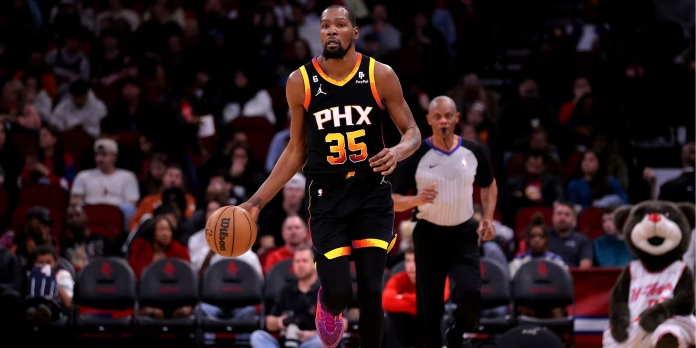
Phoenix Suns Trade Kevin Durant To Houston Rockets In Major Deal Involving Generational Talents

In a blockbuster deal that brings an end to weeks of mounting speculation, the Phoenix Suns have officially traded NBA superstar Kevin Durant to the Houston Rockets. The high-profile trade, finalized in principle but pending formal league approval, sends Durant to Houston in exchange for young guard Jalen Green, veteran forward Dillon Brooks, and a substantial collection of draft capital.

According to ESPN’s Bobby Marks, the transaction won’t be made official until July 6 due to timing restrictions tied to Green’s rookie-scale extension, which was signed last October. The deal also includes the Rockets’ No. 10 overall pick in the upcoming 2025 NBA Draft, as well as five future second-round draft selections that will reportedly extend through the year 2032, as first reported by NBA insider Jake Fischer.

Durant, 36, had previously narrowed his list of preferred trade destinations down to a final three, with Houston among them. Reports from ESPN’s Shams Charania indicated that the Suns were engaged in serious discussions with both the Rockets and the Miami Heat over the weekend, before ultimately finalizing the deal with Houston on Sunday morning.

The former MVP and 15-time All-Star learned of the completed trade while appearing live at the Fanatics Fest event in New York City.

“Joining the Houston Rockets is something I’m excited about,” Durant said. “It’s been a wild couple of weeks, but I’m relieved it’s done now.”

He confirmed that the Suns had allowed him input into the trade process. “They asked me where I’d prefer to land, and I gave them my list. Now, here we are,” Durant added.

Rockets Rebuild Accelerates With Durant’s Arrival

Durant becomes the latest marquee addition to a Rockets roster already loaded with promising young talent, including Amen Thompson and Alperen Şengün. With Green and Brooks heading to Phoenix, Durant will take on a veteran leadership role on a team expected to make a serious push into playoff territory in the 2025-26 season.

This latest trade officially ends Durant’s tenure with the Suns, which began in February 2023 when Phoenix acquired him from the Brooklyn Nets in a blockbuster deal that cost them Mikal Bridges, Cam Johnson, and four first-round draft picks.

Durant’s Stint in Phoenix: What Went Wrong?

Phoenix’s initial vision had been to pair Durant with franchise cornerstone Devin Booker in hopes of competing for a championship in the Western Conference. However, that dream never materialized. After recovering from a knee injury just in time for the 2023 postseason, Durant helped the Suns reach the second round, defeating the LA Clippers before falling to the eventual champions, the Denver Nuggets.

That run would mark the pinnacle of Durant’s stint in Arizona.

During the 2023-24 regular season — Durant’s only full campaign with the team — the Suns finished with a solid 49-33 record and clinched the sixth seed in the West. Despite Durant playing in 75 games and producing elite numbers, Phoenix was swept in the first round by the Minnesota Timberwolves.

A Disappointing Follow-Up Season and a Coaching Change

In 2024-25, the Suns’ performance sharply declined, finishing the season with a 36-46 record — good for 11th in the West and outside of playoff contention. That disappointing campaign led to the dismissal of head coach Mike Budenholzer after just one season at the helm.

Following Budenholzer’s exit, reports emerged that Phoenix would collaborate with Durant to find a suitable new destination. The Rockets, seen as an up-and-coming team looking to inject veteran experience, emerged as a fitting landing spot.

Durant’s Game Still Commands Respect

Though no longer in his MVP years, Durant remains one of the league’s most consistent and lethal scorers. During the 2024-25 season, he posted averages of 26.6 points, 6.0 rebounds, 4.2 assists, and 1.2 blocks per game. His shooting splits were stellar: 52.7% from the floor and 43% from beyond the arc.

Durant earned his 15th All-Star selection this past season and attracted interest from several championship contenders, including the Timberwolves and Heat, before ultimately being dealt to Houston.

A Shifting Landscape in the Western Conference

Durant’s move is the latest in a series of major shakeups reshaping the Western Conference. This season alone has seen Luka Dončić and Anthony Davis team up, De’Aaron Fox shipped to the San Antonio Spurs, and Jimmy Butler traded to the Golden State Warriors.

As the league heads into another turbulent offseason, Durant’s relocation to Houston could mark the beginning of a new era for both franchises.

BizWatchNigeria.Ng
Privacy Overview

This website uses cookies so that we can provide you with the best user experience possible. Cookie information is stored in your browser and performs functions such as recognising you when you return to our website and helping our team to understand which sections of the website you find most interesting and useful.