








Home Blog Page 170

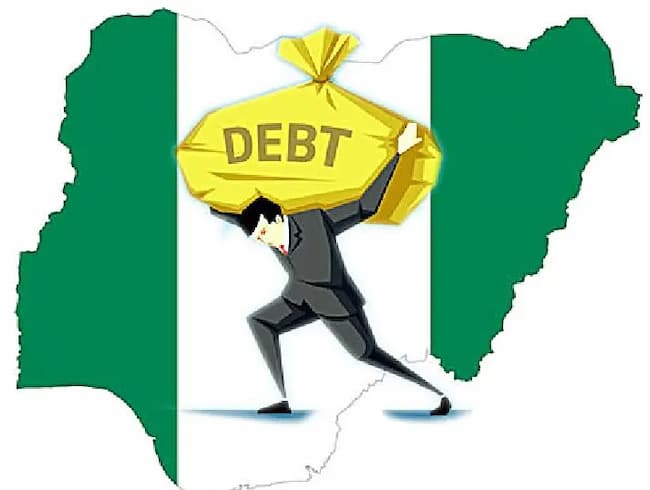
Nigeria’s Public Debt Hits N149.39 Trillion In Q1 2025 Amid Currency Pressures And Increased Borrowing

Nigeria's Public Debt Now At ₦46.25bn - DMO

Nigeria’s public debt has reached an unprecedented high of N149.39 trillion as of March 31, 2025, marking a significant year-on-year surge of N27.72 trillion or 22.8%, when compared to the N121.67 trillion recorded during the same period in 2024.

This development was revealed in the latest debt profile report published by the Debt Management Office (DMO) on Friday. The DMO’s data further showed a quarter-on-quarter increase of N4.72 trillion, or 3.3%, compared to the N144.67 trillion reported at the close of 2024.

The escalation in Nigeria’s debt burden continues to be fueled by the Federal Government’s sustained borrowing activities, coupled with the continuous depreciation of the naira, which has significantly inflated the naira-equivalent of the country’s external debts.

Against the backdrop of persistent fiscal challenges, Nigeria has leaned heavily on both domestic and external borrowing to support its expenditure framework. According to the report, external debt obligations stood at N70.63 trillion (equivalent to $45.98 billion) at the end of Q1 2025. This represents a jump from N56.02 trillion ($42.12 billion) in Q1 2024 — a 26.1% increase year-on-year.

Quarter-on-quarter, external debt showed a slight rise from N70.29 trillion in December 2024 — a modest increase of N344 billion, or 0.5%. While the actual increment in dollar terms was limited to $3.86 billion, the depreciation of the naira exaggerated the growth when converted into local currency.

The DMO disclosed that the Central Bank of Nigeria (CBN) had applied an exchange rate of N1,330.26 per dollar in Q1 2024 to calculate the local value of external loans. While the rate used in Q1 2025 was not publicly disclosed, the increase in naira value signals a further weakening of the domestic currency.

Nigeria’s external debt portfolio includes obligations to multilateral lenders like the World Bank and African Development Bank, bilateral creditors, and commercial instruments such as Eurobonds. The rising cost of servicing these debts, exacerbated by currency devaluation, has triggered concerns over fiscal sustainability and the growing pressure on Nigeria’s already tight finances.

On the domestic side, the country’s debt stock reached N78.76 trillion (approximately $51.26 billion) in March 2025 — a leap from N65.65 trillion ($49.35 billion) in March 2024. This reflects a year-on-year increase of N13.11 trillion or 20%. When compared to Q4 2024, domestic borrowing increased by N4.38 trillion or 5.9%, up from N74.38 trillion.

Out of the total domestic liabilities, the Federal Government accounted for N74.89 trillion, while the debts held by state governments and the Federal Capital Territory (FCT) amounted to N3.87 trillion. This marks a marginal reduction from N3.97 trillion in Q4 2024 and N4.07 trillion in Q1 2024, suggesting either improved debt repayment practices or reduced borrowing activity at the subnational level.

Domestic borrowings are structured through various instruments, including Federal Government Bonds, Treasury Bills, Sukuk, and Green Bonds — all of which are used to plug fiscal deficits. While they are shielded from exchange rate shocks, they also carry high interest obligations and may limit credit access for private sector players.

The overall composition of Nigeria’s debt structure has undergone slight adjustments. As of March 2025, domestic debt made up 52.7% of the total debt portfolio, while external debt accounted for 47.3%. This represents a change from March 2024’s split of 54% domestic and 46% external, underlining the growing vulnerability of Nigeria’s debt exposure to currency fluctuations.

At the same time, the steady uptick in domestic borrowing reflects the Federal Government’s increasing dependence on the local capital market — a trend that persists despite high interest rates and growing caution among investors.
Senate Ruling Blocks Trump-Era Student Loan Repayment Changes For Current Borrowers

Rescue Abducted American Citizen

The push by former President Donald Trump and Senate Republicans to introduce sweeping reforms to federal student loan repayment options has been dealt a serious blow, following a pivotal ruling by Senate parliamentarian Elizabeth MacDonough. Her recent decision makes it clear that the proposed overhaul to repayment plans cannot be applied to existing borrowers.

The June 25 advisory from MacDonough — the Senate’s chief authority on procedural matters — is a setback for GOP legislators trying to appease fiscal conservatives by slashing federal expenditures within the broader tax and spending bill. This comprehensive legislative package is being fast-tracked under budget reconciliation rules that require all components to directly affect federal spending to qualify for passage by a simple majority.

The ruling comes as lawmakers race to push the bill through the Senate, with the White House urging for its finalization by the July 4 self-imposed deadline. But uncertainty looms over whether Republican leaders can secure the minimum 50 votes necessary, especially with no backing from Democrats.

The bill’s architects had hoped to restructure the federal student loan system by consolidating multiple repayment options into two core plans: a standard plan requiring fixed payments for 10 to 25 years depending on the loan size, and an income-driven “Repayment Assistance Plan.” While the GOP aimed to make this new structure mandatory for all borrowers, the parliamentarian ruled that only future loan recipients — not those already in repayment — can be forced into the revised framework.

The implications are significant. Over 40 million Americans with existing federal student loans, including approximately 8 million currently enrolled in President Joe Biden’s SAVE plan, will not be subject to the new repayment scheme. That plan’s future, however, remains uncertain, pending a court ruling on its legality.

In May, the nonpartisan Congressional Budget Office estimated that modifying repayment terms for current borrowers could result in over $160 billion in federal savings annually, making the ruling a major fiscal pivot.

Additionally, MacDonough rejected several other components of the bill. These included proposals to disqualify certain non-citizen students from financial aid, restrict student loan relief for doctors and dentists, and expand Pell Grant access to short-term job training programs. While these measures failed under budget rules, they may still pass if Republicans garner 60 votes — meaning at least 10 Democratic senators would need to cross party lines.

Jeff Bezos And Lauren Sánchez Celebrate Star-Studded Wedding Amid Criticism In Venice

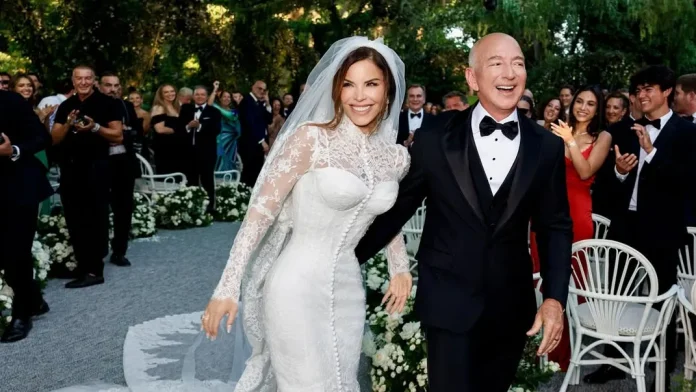
Jeff Bezos, founder of Amazon, and media personality Lauren Sánchez have officially married in a high-profile wedding held in Venice, Italy, on Friday, June 27. The multi-day affair drew attention not only for its extravagance but also for its timing and the surrounding controversies, including growing criticism over wealth inequality and tax issues linked to Bezos.

The glamorous ceremony, hosted at the ultra-luxurious Aman Hotel and set against Venice’s historic canals, featured a guest list packed with global A-listers. Sánchez was seen waving to onlookers from a sleek motorboat en route to the venue, while Bezos later made his entrance to cheers from onlookers.

High-profile guests spotted at the event included Kim Kardashian, her sisters Khloé, Kendall, and Kylie Jenner, Kris Jenner, Leonardo DiCaprio, Oprah Winfrey, Brooks Nader, and billionaire Bill Gates. Vogue exclusively reported on the event and Sánchez’s custom Dolce & Gabbana gown — a high-neck design inspired by Sophia Loren’s 1958 film appearance in “Houseboat,” complete with 180 silk chiffon-covered buttons.

In a reflective interview with Vogue, Sánchez shared, “Not many things surprise you as you grow older. But I’m excited to see Jeff’s reaction.” She spoke openly about her emotional growth and therapy journey, stating that Bezos didn’t change her — he helped her feel seen and free to be herself.

The wedding, limited to about 200 guests — 70 of whom are family — marked a stylistic shift for Sánchez, whose usual fashion choices have sparked public debate. Her wedding look was described as a departure from her often bold, sexy style. “I used to want a simple, sexy dress,” she said, “but now I want something that reflects where I am in life.”

In the lead-up to the ceremony, Sánchez wiped most of her Instagram feed and subtly changed her display name to “Lauren Sánchez Bezos,” along with her handle, signaling her transition into married life.

Despite the fairytale setting, the couple’s wedding ceremony has no legal status in Italy, suggesting they may have finalized the legal aspects in the U.S. Protests surrounding the event also erupted, with activists calling on Bezos to contribute more in taxes amidst rising frustration about wealth disparities.

Bezos, 61, and Sánchez, 55, began dating publicly in 2019 following divorces from their previous partners. Bezos finalized his split from ex-wife MacKenzie Scott that same year, with whom he shares four children. Sánchez has two children with former husband Patrick Whitesell and one with NFL alum Tony Gonzalez.

Their relationship culminated in an engagement during the 2023 Cannes Film Festival, where Bezos proposed with a $2.5 million pink diamond ring tucked under Sánchez’s pillow.

Other notable attendees during the celebrations included Ivanka Trump, Jared Kushner, designer Diane von Fürstenberg, Tom Brady, Gayle King, Orlando Bloom, and Katy Perry. Donald Trump was reportedly invited but did not attend. Prior to the ceremony, Sánchez held a bachelorette celebration in Paris attended by Kim Kardashian, Kris Jenner, Eva Longoria, and more.

Following the wedding, the celebration was expected to continue at a hall within Venice’s historic Arsenale district — a vast, centuries-old maritime complex surrounded by canals and famously used for the Venice Biennale art showcase.

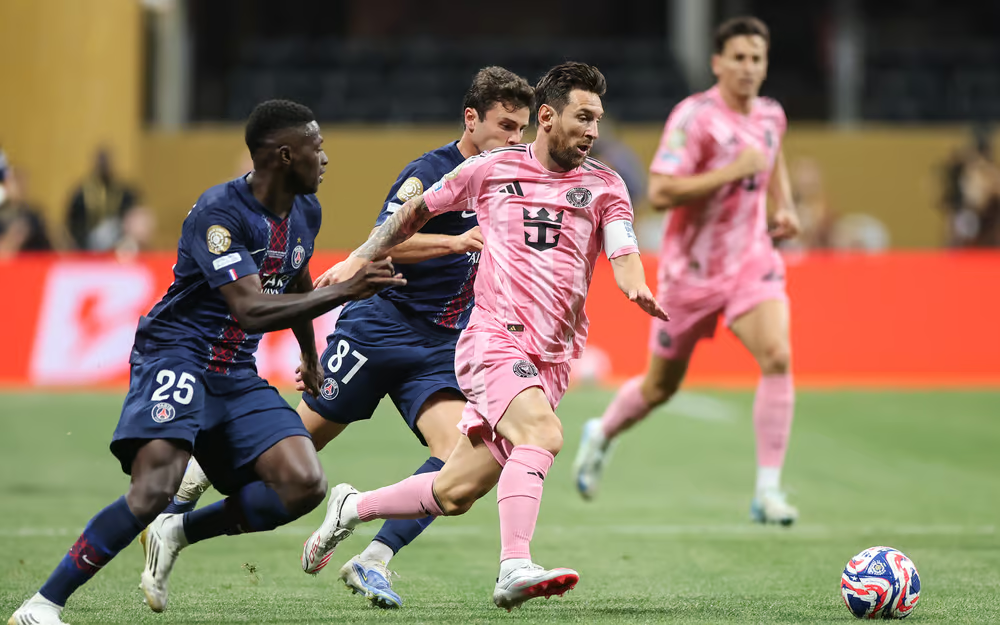
PSG Outclass Inter Miami In Club World Cup Rout, Messi Powerless Against Former Rivals

Paris Saint-Germain flexed their European muscle with a dominant 4-0 triumph over Inter Miami on Sunday, advancing to the Club World Cup quarterfinals and sending a clear warning to future opponents.

Despite Lionel Messi’s presence and home soil advantage, Miami were completely outgunned by the UEFA Champions League holders, who scored all four goals in the first half and eased off the accelerator in the second.

PSG needed just five minutes to get on the scoresheet. A perfectly-placed free kick from Vitinha was nodded home by João Neves, setting the tone for what would become a long evening for the hosts. The French champions ended the night with 19 shots—nine on target—and showed they were capable of more if required.

Inter Miami, aware of the disparity in quality, initially adopted a defensive approach. However, by halftime, they found themselves 4-0 down. PSG’s intricate passing, relentless pressing, and tactical discipline left Miami chasing shadows.

Even Messi, with all his wizardry, couldn’t bridge the chasm between the MLS outfit and European elite. The Argentine had stunned Porto earlier in the competition with a match-winning strike but found himself isolated and unsupported against PSG.

Before the tournament began, newly-appointed Inter Miami manager Javier Mascherano voiced his concerns over the squad’s thin depth, citing a lack of transfer activity and the rigid MLS roster rules. These challenges were magnified when 21-year-old defender Noah Allen limped off injured early in the game. Replacement Tomás Avilés struggled immediately, picking up a yellow card before scoring an own goal.

“The restrictions in MLS make it difficult to compete internationally,” Mascherano said in a pre-match press conference. “Our depth is being tested in every match.”

Despite the heavy defeat, there were moments Miami can build upon. Players like Benjamin Cremaschi, Federico Redondo, and Ian Fray—graduates from Inter’s youth academy—gained invaluable experience facing world-class opposition.

Club co-owner Jorge Mas also echoed the need for reform, saying, “The gap between our starters and bench options is the issue. Our first XI can compete, but depth is what separates us from the best.”

Inter qualified for the tournament after a historic MLS season, winning the 2024 Supporters’ Shield and setting a new points record. Their campaign included a memorable upset over FC Porto and a dramatic draw with Palmeiras, which saw them progress as the only MLS side into the knockout stage.

“There’s a lot of pride to take in this journey,” said Jordi Alba post-match. “PSG are probably the best in the world right now. The lessons from this will only help us grow.”

With this experience under their belts, Inter Miami now return home to focus on the MLS season, Leagues Cup, and Concacaf Champions Cup—aiming for another crack at global competition.

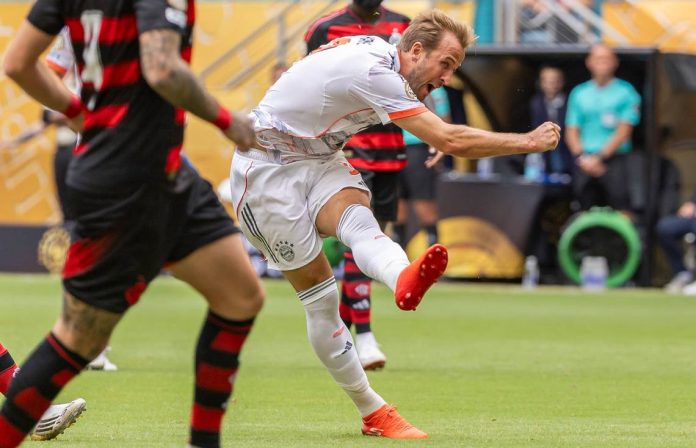
FIFA Club World Cup—Kane’s Double Fires Ruthless Bayern Past Flamengo To Set Up PSG Showdown

Bayern Munich marched into the Club World Cup quarterfinals with a thrilling 4-2 victory over Brazilian side Flamengo on Sunday night, setting the stage for a heavyweight clash against Paris Saint-Germain.

Harry Kane delivered a stellar performance with a brace, while Bayern took advantage of Flamengo’s shaky defensive line, scoring twice in the opening 10 minutes to establish control. The scoring commenced early when Erick Pulgar mistakenly turned a corner into his own net in the sixth minute. Three minutes later, Kane capitalized on the momentum, striking low past Agustin Rossi off the post to double the lead.

Despite the scoreline, Flamengo remained spirited, with Luiz Araujo nearly pulling one back but denied by the reflexes of Manuel Neuer. Their persistence paid off in the 24th minute when Gerson unleashed a thunderous shot that ricocheted off the crossbar and in, lifting the largely Brazilian crowd to its feet.

Bayern responded in kind before the interval, as Leon Goretzka took full advantage of Flamengo’s open midfield to curl a long-range effort past Rossi, restoring their two-goal cushion.

Flamengo’s frustration boiled over when Pulgar clattered into Kane, causing a brief confrontation. Ten minutes into the second half, the Brazilian side clawed back again, with Jorginho calmly converting a penalty after Michael Olise was penalized for a handball.

However, it was Kane who had the final say. In the 73rd minute, the English striker found space on the edge of the box and delivered another clinical finish to seal the win for Bayern.

“It was a hard-fought game against a very good team,” Kane said after the match. “The heat made it even more challenging, but we managed the game well and took our chances.”

The victory means Bayern will now square off with PSG, who earlier in the day cruised to a commanding 4-0 win over Inter Miami.

Stanbic IBTC Bank Strengthens Regulatory And Customer Relations With Strategic Trade Forum

Stanbic IBTC Bank’s Corporate and Investment Banking (CIB) division has concluded its CIB Trade Customer Forum, bringing together industry leaders, key clients, and regulatory stakeholders for a day of strategic discussions and networking focused on advancing Nigeria’s trade finance sector.

The exclusive forum themed, “Trade Policy and Regulatory Framework in Nigeria: Recent Development and Implications,” held on 20 June 2025. The forum marked a significant milestone in Stanbic IBTC Bank’s commitment to fostering collaborative platforms that drive industry growth and innovation. The event successfully united top CIB Trade clients with senior executives from the Central Bank of Nigeria (CBN), the Standards Organisation of Nigeria (SON), and the Nigeria Customs Service (NCS), creating opportunities for cross-sectoral dialogue.

Through a carefully curated panel session featuring both Stanbic IBTC leadership and notable industry speakers, participants engaged in robust discussions on topical developments shaping Nigeria’s trade landscape.

Eric Fajemisin, Executive Director, Corporate and Investment Banking, Stanbic IBTC Bank, emphasised, “This forum represents our unwavering commitment to being at the forefront of industry thought leadership. By bringing together regulators, clients, and industry experts under one roof, we’ve created a unique ecosystem for knowledge sharing and strategic partnership development.”

The forum delivered exceptional results across multiple strategic objectives. The event successfully fostered stronger relationships between Stanbic IBTC Bank and its key clients, providing opportunities to address industry challenges collaboratively.

With delegates from CBN, SON, and Nigeria Customs Service in attendance, the forum created valuable opportunities for private sector-regulatory alignment, contributing to more effective trade finance practices. Participants gained access to valuable insights on emerging trends, regulatory updates, and best practices in trade finance, enhancing their strategic decision-making capabilities. The networking sessions generated multiple opportunities for new partnerships and business development, positioning Stanbic IBTC Bank for expanded market engagement.

Jesuseun Fatoyinbo, Head, Transaction Banking, Stanbic IBTC Bank, stated, “Today’s forum exemplifies our dedication to fostering meaningful partnerships within the trade finance sector. By creating a platform for open dialogue between industry leaders and regulators, we are empowering our clients to navigate the evolving landscape with confidence. At Stanbic IBTC Bank, we remain committed to driving innovation and collaboration that not only enhances our services but also strengthens the entire ecosystem for sustainable growth in Nigeria.”

The forum’s success has positioned Stanbic IBTC Bank as the definitive thought leader in Nigeria’s trade finance sector, demonstrating the bank’s commitment to creating top-of-mind experiences that drive client loyalty and industry advancement. The collaborative approach shown during the event has set a new standard for industry engagement and stakeholder collaboration.

Building on the overwhelming success of this inaugural forum, Stanbic IBTC Bank plans to make this an annual flagship event, continuing to provide platforms for industry leaders to collaborate, learn, and drive sustainable growth in Nigeria’s trade finance ecosystem.

The forum reinforced Stanbic IBTC Bank’s position as a leader in creating strategic platforms where clients can network, collaborate, and drive mutual growth.

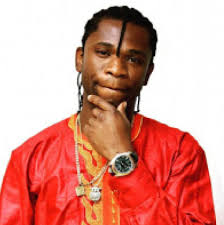
NAPTIP Declares Speed Darlington Wanted For Rape, Cyberbullying

Controversial Nigerian artiste, Darlington Okoye, popularly known as Speed Darlington, has been declared wanted by the National Agency for the Prohibition of Trafficking in Persons (NAPTIP) in connection with alleged offences including rape, cyberbullying, and cyberstalking.

The agency announced this in a statement on Friday, urging the public to contact NAPTIP with credible information on his whereabouts. The statement reads, “Darlington Okoye, aka Speed Darlington, is wanted in connection with alleged offences including rape, cyberbullying, and cyberstalking.

“Anyone with credible information on his whereabouts is urged to contact NAPTIP immediately. 07030000203 & 627. info@naptip.gov.ng.”

NAPTIP’s action follows the artist’s failure to honour a formal invitation extended to him four weeks ago after a viral Instagram live video surfaced earlier in the week. In the video, Speed Darlington allegedly confessed to having sexual relations with a 15-year-old girl and claimed he gave her ₦2,000 afterward.

Reacting to the video, the agency said the alleged confession raised serious concerns under the Trafficking in Persons (Prohibition) Enforcement and Administration Act (TIPPEA) 2015, and the Cybercrime (Prohibition, Prevention, etc.) Act, 2015.

“We write to formally invite you to appear before the National Agency for the Prohibition of Trafficking in Persons (NAPTIP) in respect of certain video materials recently circulated online, including but not limited to a particular Instagram video wherein you allegedly made statements admitting to having engaged in sexual acts with an underage girl.”

Top 5 Sites To Sell Bitcoin In Nigeria 

Ever felt stuck with Bitcoin in your wallet but no possible way to turn it into Naira? Or maybe you’re doubting your cryptocurrency investments and need to cash out first.

You’re not alone. Thousands of Nigerians search daily for the safest and quickest way to sell Bitcoin in Nigeria. Thanks to crypto becoming more rampant and local payment options improving, it’s now easier to sell your Bitcoin for cash directly into your bank account.

However, with so many platforms promising the best rates and instant payouts, choosing the right one can be tricky.  In this guide, we’ve selected the top 5 trusted sites to sell Bitcoin safely in 2025, comparing their features, payout methods, fees, and user experience.

1. Breet—Best for Instant Cash-Out

Breet is one of the most efficient and user-friendly platforms where you can sell Bitcoin in Nigeria instantly, without P2P stress or trading charts. 

Unlike traditional exchanges, Breet automates the entire process, with no need to find a buyer or negotiate rates. It is well known for its credibility among 250k verified users, with guaranteed transactions done in 287 seconds.

Pros

  • Instant auto-sell: Easy crypto-to-cash feature; Bitcoin is automatically converted to Naira when received.
  • Direct bank transfers: Withdraw directly to your local bank account in less than 287 seconds. 
  • Zero transaction fees: There are no additional or hidden charges. You get access to full value. 

How to Sell Bitcoin on Breet

  1. Download the Breet app and sign up.
  2. Select “Sell Bitcoin” from the dashboard.
  3. Send Bitcoin to your unique Breet Bitcoin wallet address.
  4. Breet automatically converts it to naira.
  5. Tap “Withdraw” or activate the “Automatic settlement” feature  to send the money directly to your Nigerian bank account.

Limitations of Using Breet

  • Limited to users in Nigeria and Ghana at the moment.

However, if you want a stress-free way to sell Bitcoin instantly in Nigeria, Breet is one of the fastest and safest options.

2. Binance P2P—Best for Flexible P2P Trading

Binance P2P is a peer-to-peer trading platform that connects you with verified buyers who pay directly into your bank account or mobile wallet.

Some of its key features include

  • Huge liquidity: thousands of active Nigerian traders.
  • Escrow protection: Binance ensures secure transactions by holding the BTC until you confirm payment.
  • Multiple payment options: It supports multiple payment methods, including bank transfer, mobile money, cash deposits, and over 100 fiat currencies.
  • Competitive rates: It provides access to market-driven pricing.

Cons

  • Requires a learning curve to filter trusted buyers and manage disputes.
  • Trades can be delayed if the buyer is unresponsive.

3. Paxful—Best for Multiple Payment Options

Paxful is another popular P2P platform trusted by millions of users worldwide. It offers more than 300 ways to get paid for your Bitcoin.

Some of its key features are

  • Flexible payouts: bank transfer, PayPal, mobile money, gift cards, or cash in person.
  • Escrow system: Keeps your BTC safe until you receive payment.
  • Large Nigerian community: There are lots of active local buyers, with high trade activity and liquidity.

Cons

  • Some buyers may attempt chargebacks or scams.
  • Variable fees depending on payment method.
  • Disputes can take time to resolve, especially with low-rated traders.

If you want maximum payout flexibility when you sell Bitcoin in Nigeria, Paxful is a good choice. However, it poses a higher risk of low-quality buyers. So, always check user ratings.

4. KuCoin P2P—Best for Low Fees

KuCoin P2P is a fast-growing peer-to-peer service with zero transaction fees and an easy-to-use interface.

Some of its key features include

  • Zero trading fees: There are no hidden fees, and you have access to 100% of your profit. 
  • Good local liquidity: Many verified Nigerian buyers.
  • Multiple payment options: You have access to direct bank transfers.
  • Mobile app: Trade on the go.

Cons

  • Smaller buyer pool compared to Binance P2P and Paxful.
  • Customer service can be slow.
  • You must personally ensure payment before releasing BTC.

5. Remitano—Best for Secure P2P trading

Remitano is a global P2P crypto exchange well-known in Africa for secure BTC, ETH, and USDT trading.

Some of its key features include

  • Strong Nigerian user base: Plenty of verified local buyers for Bitcoin trades.
  • Flexible payment methods: bank transfers and some mobile wallets.
  • Escrow service: Protects both buyer and seller until payment is confirmed.
  • Beginner-friendly: Smooth onboarding and a simple app.

Cons

  • Trades can be slower.
  • Transaction fees may apply for fiat withdrawals or large trades.
  • Not as much liquidity as Binance P2P, so big trades may require more time to fill.

Remitano is best for privacy-focused users who still want safe, escrow-backed Bitcoin trades. However, it’s important to note it has a smaller user base in Nigeria compared to other P2P platforms.

4 Key Tips for Selling Bitcoin in Nigeria

Before you pick a platform to sell Bitcoin in Nigeria, it is important to keep these tips in mind:

  1. Check buyer ratings: On P2P exchanges, always trade with verified buyers with high ratings to avoid being defrauded.
  2. Compare rates: Prices can vary by up to 5% between platforms. Check current BTC/NGN rates across platforms.
  3. Confirm payment: Never release your Bitcoin until you see funds in your bank account.
  4. Stay compliant: Declare profits if required and follow local regulations.

Conclusion

Choosing the right platform to sell Bitcoin in Nigeria makes trading safer and faster. The platforms in this guide guarantee secure transactions, fair rates, and smooth bank withdrawals. Remember to always compare fees and start with small trades if you’re new to crypto trading.

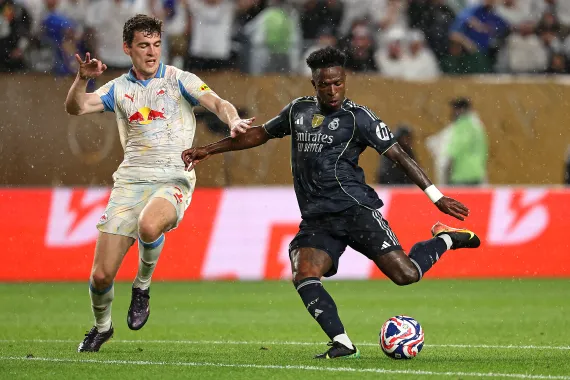
Xabi Alonso’s 3-5-2 Tactics Lifts Real Madrid Past Salzburg Into FIFA Club World Cup Knockouts

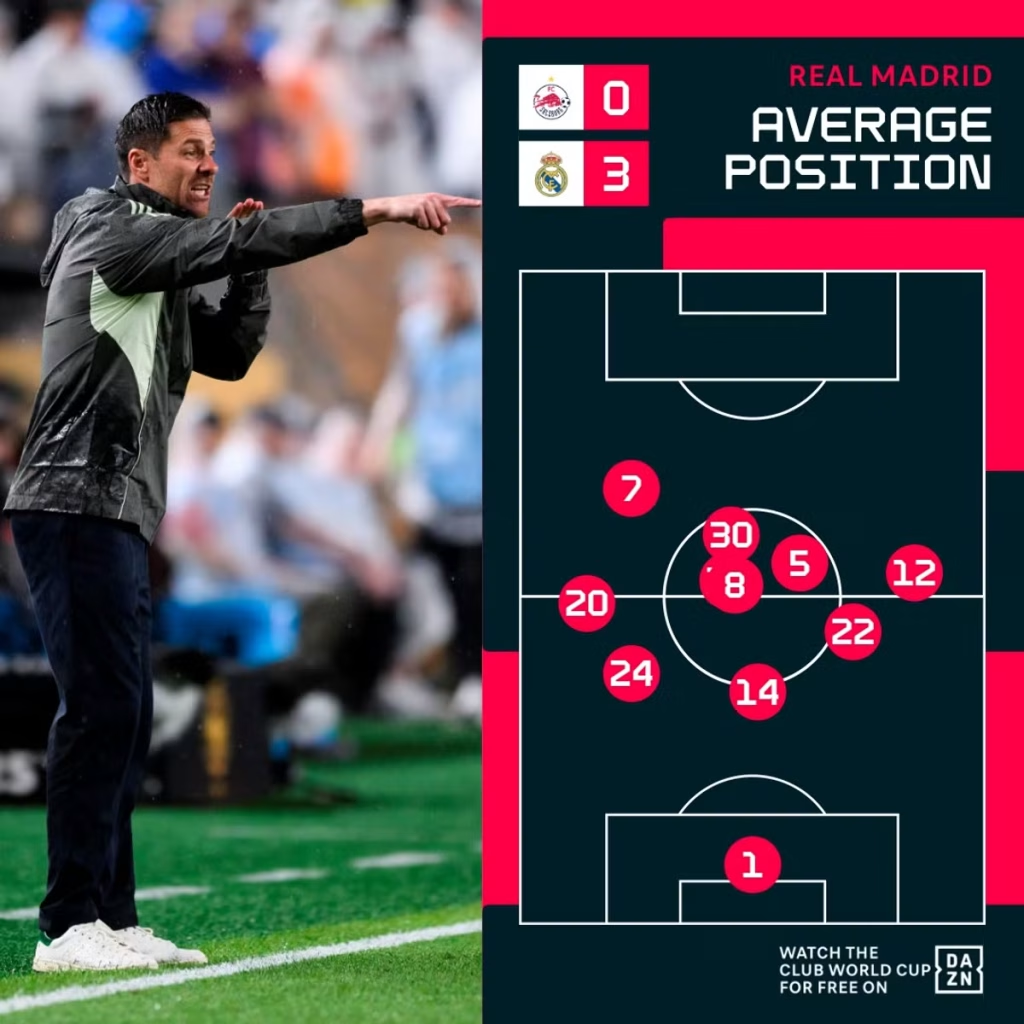
In a striking departure from conventional tactics, Real Madrid manager Xabi Alonso unveiled a dynamic 3-5-2 formation that powered Los Blancos to a commanding 3-0 victory over RB Salzburg on Thursday, clinching top spot in Group H and earning a blockbuster Round of 16 clash against Juventus in the FIFA Club World Cup.

Alonso, who took charge at the Santiago Bernabéu amid great anticipation following a decorated stint with Bayer Leverkusen, implemented a bold system featuring a five-man backline—a setup not seen in Madrid’s ranks since the days of Vicente del Bosque’s Champions League-winning side in 2000.

The shift from the traditional 4-3-3 used by former managers like Carlo Ancelotti and Zinedine Zidane signaled a new era under Alonso, one defined by tactical fluidity and aggressive width.

“We’re adapting gradually,” winger Vinicius Jr. said in a post-match interview with DAZN. “You can’t internalize a new system overnight, but tonight gave us a good base—especially during the first half.”

The Spanish tactician had initially experimented with a four-man defense during the group stage, overseeing a 1-1 draw against Al Hilal and a 3-1 win over Pachuca. However, Thursday’s game saw French midfielder Aurelien Tchouameni slot between centre-backs Antonio Rudiger and Dean Huijsen, forming a solid defensive spine. On the flanks, Trent Alexander-Arnold and Fran Garcia provided relentless energy as wing-backs.

In midfield, Jude Bellingham and Arda Guler served as dual playmakers with Federico Valverde orchestrating from deep. Up front, Vinicius Jr. and academy graduate Gonzalo Garcia operated as a mobile, high-pressing forward line.

The reimagined formation paid off in full as Madrid dictated the pace from start to finish. Bellingham and Guler repeatedly broke Salzburg’s lines, unlocking space for Vinicius Jr. to exploit. The Brazilian eventually found the net in the 40th minute with a dazzling solo effort, slipping between two defenders and dispatching a shot into the bottom-right corner.

Moments later, Vinicius turned provider, delivering an audacious back-heel assist that Federico Valverde converted in stoppage time of the first half. The win was sealed late in the second half when Gonzalo Garcia executed a composed lob over the Salzburg goalkeeper, finishing off a rapid counterattack to make it 3-0.

Alonso praised the maturity of his team in a post-match press briefing.

“Our approach in the first half was composed. We knew we couldn’t force the game in ten minutes—we had to wait, stay disciplined, and pick our moment,” the Real Madrid boss said. “The second half began strongly as well, and at 3-0, I can say I’m satisfied with what the players delivered.”

This performance marked a clear step up from earlier group fixtures, where Real had at times looked disjointed. Alonso’s new tactical identity appears to be gaining traction, with players embracing the flexibility and roles demanded by the 3-5-2 system.

Looking ahead, Real Madrid are set to face Italian giants Juventus in the Round of 16 next Tuesday. All eyes will be on Alonso’s system once again, especially with speculation mounting over the availability of Kylian Mbappe, who missed the group stage due to illness.

“We’re monitoring Kylian closely,” Alonso noted. “We hoped he’d be fit for tonight, but it wasn’t possible. Now we have four days. I want to stay optimistic, but we’ll proceed with caution.”

With renewed momentum and a tactical masterclass in motion, Real Madrid’s evolution under Xabi Alonso promises to be one of the most compelling narratives of the Club World Cup season.

Manchester City Crush Juventus 5-2 To See Perfect Group Stage Finish At Club World Cup

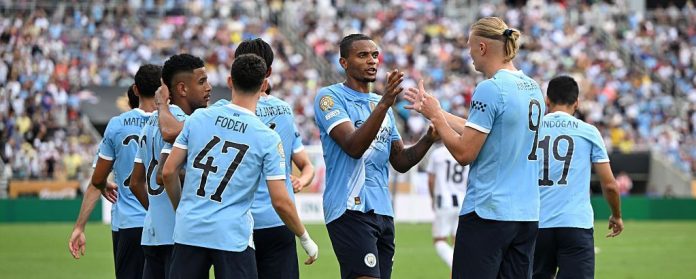
Manchester City delivered a commanding performance on Thursday evening, dismantling Italian giants Juventus 5-2 to wrap up their Group G campaign at the FIFA Club World Cup with a flawless record.

The dominant victory marked City’s third straight win in the group, ensuring they finished top and significantly boosting their hopes of dodging a Round of 16 showdown with Real Madrid — a possibility now looming over Juventus. The final Group H fixtures, set to conclude Friday evening, will determine their respective opponents.

In a day filled with positives for Pep Guardiola’s men, 2024 Ballon d’Or winner Rodri made a highly-anticipated return to the starting lineup — his first appearance since suffering an ACL injury in September. With several fresh faces in the starting XI, the English champions looked a far cry from the side that trailed Liverpool by 13 points in last season’s Premier League campaign.

From the opening whistle, City took control. Within five minutes, Bernardo Silva’s well-placed header forced Juventus goalkeeper Michele Di Gregorio into a sharp save with his feet. Just four minutes later, the breakthrough arrived. Following a typically intricate City build-up, Rayan Ait-Nouri split the Italian defense with a precise through ball. Jeremy Doku collected it and curled a low effort into the far corner to open the scoring.

However, Juventus were gifted a lifeline when City’s Brazilian shot-stopper Ederson misplaced a pass directly to Teun Koopmeiners, who drove into the box and rifled home the equaliser with confidence.

City were soon handed a gift of their own. In the 26th minute, Juventus defender Pierre Kalulu bizarrely turned Matheus Nunes’ low cross into his own net, restoring the Premier League side’s advantage without any pressure.

A brief but heavy downpour shortly before half-time cooled things down at the stadium, but the heat was back on when Guardiola introduced Erling Haaland at the break. The prolific Norwegian wasted little time, netting City’s third just seven minutes into the second half. A slick move saw Tijjani Reijnders release Matheus Nunes, who squared the ball across the box for Haaland. The striker, though not at his cleanest, tapped in from close range to mark his landmark 300th career goal.

Rodri received a standing ovation as he exited in the 66th minute, with Ilkay Gundogan replacing him in midfield. Despite the change, City maintained relentless pressure on the Turin side.

City’s fourth came when Haaland latched onto a long pass from Ederson and tried to find Phil Foden. Though the delivery narrowly missed the England international, Savinho recovered the ball and teed up Foden for a simple finish.

The fifth goal was all Savinho. After De Gregorio saved Haaland’s effort with his feet, the Brazilian winger smashed the rebound off the underside of the bar to make it 5-1, capping a stunning spell of attacking football.

Juventus, largely toothless throughout the contest, salvaged a touch of dignity late on. Kenan Yildiz’s deft touch and clever pass sent Dusan Vlahovic through on goal, and the Serbian forward curled a composed finish past Ederson from the edge of the area.

The comprehensive win not only sends a strong message to potential opponents but also underlines City’s intent to secure global silverware and continue building on their European dominance.

Tinubu Approves Four Tax Reform Bills

Tinubu Appoints Mandate Secretaries For FCTA

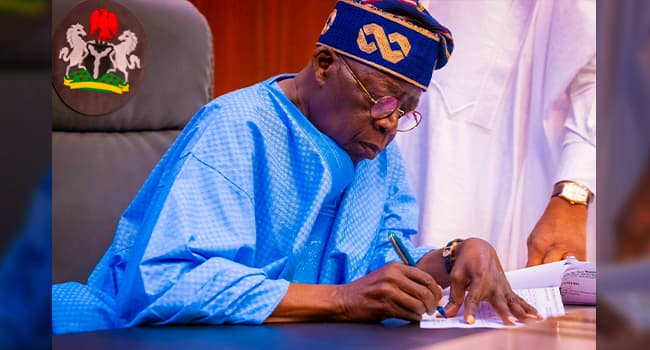
President Bola Tinubu has signed four landmark tax reform bills into law, describing the move as a bold step toward a new era of economic governance in Nigeria. The signing ceremony took place on Thursday at the State House, Abuja, with Senate President Godswill Akpabio, House Speaker Tajudeen Abbas, and other members of the National Assembly in attendance.

The four new laws include the Nigeria Tax Bill (Fair Taxation), the Tax Administration Bill, the Revenue Service (Establishment) Bill, and the Joint Revenue Board (Establishment) Bill.

President Tinubu stated that the reforms are not merely administrative but are set to reshape Nigeria’s tax landscape, introducing the country’s first major pro-people tax cuts in decades to reduce the burden on ordinary citizens.

“What we did a few minutes ago is the way forward for our country’s revolution,” Tinubu said. “Leadership must help the people to take off, lead the way through every twist and thorn on the road, and help them reach their destination.”

He noted that the new laws will provide targeted relief for low-income earners, small businesses, and struggling families, enabling them to retain more of their hard-earned income.

According to the President, the reforms will unify Nigeria’s fragmented tax system, eliminate overlapping agency functions, and foster better coordination among tax authorities at all levels.

“These reforms are designed to boost investor confidence, enhance transparency, and open the door for new economic and business opportunities,” he said, adding that Nigeria is now demonstrating its readiness to attract investments and drive economic growth.

President Tinubu transmitted the proposed bills to the National Assembly on October 3, 2024, as part of his administration’s broader fiscal policy and tax reform agenda.

Naira Appreciates To ₦1,536 As Oil Sector Boosts FX Supply

Federation Account Amasses Over ₦5trn In 6months- RMAFC

The Nigerian naira recorded a significant uptick against the US dollar in the official foreign exchange market, bolstered by enhanced liquidity from major international oil producers and foreign portfolio inflows.

According to the Central Bank of Nigeria (CBN), the local currency strengthened by 85 basis points to settle at ₦1,536.0817 per dollar on Thursday, buoyed by improved dollar availability and subdued demand.

Financial advisory firm AIICO Capital Limited reported that the appreciation stemmed from steady FX supply provided by International Oil Companies (IOCs), domestic sources, and global investors showing renewed confidence in the Nigerian economy.

“This upward momentum is being driven by a more optimistic risk sentiment in the international financial markets,” AIICO stated. Trading sessions observed the USD/NGN pair fluctuating within a band of ₦1,534.00 to ₦1,549.50, indicating strong market activity.

Meanwhile, CBN’s latest figures revealed that Nigeria’s gross external reserves currently stand at $37.41 billion, reflecting a minor decline of $54.09 million. Nonetheless, analysts forecast continued exchange rate stability in the near term, assuming current trends persist.

Global oil markets also showed signs of bullishness on Thursday. Crude prices edged higher due to declining U.S. inventories, which typically rise during the summer driving season.

Brent crude closed marginally higher at $67.73 per barrel, while U.S. West Texas Intermediate (WTI) crude gained 32 cents to settle at $65.24, as market participants digested recent demand signals and geopolitical developments.

Gold markets remained relatively flat, with spot gold holding steady at $3,333 per ounce. Market watchers attributed this to investor caution ahead of a crucial U.S. inflation report and easing Middle East tensions.

According to analysts, while geopolitical risks continue to simmer, the likelihood of a major oil price spike remains limited due to diplomatic moves—such as recent ceasefire efforts spearheaded by the U.S. government.

Spiro Advocates Electric Mobility For Sustainable Transport In Nigeria

In a bid to promote cleaner and more sustainable transport in Nigeria, electric vehicle company Spiro is intensifying efforts to advance electric mobility across the country.

The company says its long-term vision is to support Nigeria’s transition to a low-emission transport system, noting that electric mobility is gaining global traction due to rising fuel costs, urban congestion, environmental concerns, and the push for cleaner alternatives. Spiro aims to make electric two-wheelers a viable and scalable solution within Nigeria’s transport sector, despite ongoing challenges around infrastructure and policy.

Rahul Gaur, Spiro’s director for the West Africa region, stated that the company is working with state governments to encourage adoption and position electric mobility as a cleaner alternative to fossil fuel-based transport.

“We want to lead the green revolution in Nigeria,” Gaur told BusinessDay. “With more bikes on the road, more users sharing the benefits, a cleaner environment, and government support, we believe electric mobility is the future.”

To adapt to local realities and address energy access challenges, Spiro is exploring solar-powered battery swap stations and home-charging solutions to give customers flexibility while reducing reliance on unstable grid electricity.

“We are working on solar energy for our swap stations and providing home chargers for added convenience,” Gaur said. “By offering electric bikes with lower running costs and simplified maintenance, riders can save up to 35% on fuel and 40% on maintenance compared to petrol-powered motorcycles.”

The company has expanded its operations across 10 states and introduced a battery-swapping model to reduce fuel dependency. It has onboarded over 100 dealerships across Nigeria and is set to commission a large-scale assembly plant in Sagamu by September, with a planned capacity of 50,000 bikes annually.

“We will also establish swap stations across 10 to 12 major states within the next eight to nine months,” Gaur added.

Spiro’s electric mobility model, Gaur noted, can help the government cushion the impact of fuel price fluctuations by providing a more stable, low-cost alternative for transport.

The company also offers to set up command centres for governments to monitor and manage electric vehicle activities in real time, providing enhanced security and asset control for both public and private stakeholders. Spiro’s electric bikes and batteries come with built-in tracking systems that allow for remote immobilisation in cases of theft.

“For governments, we can build command centres to monitor and control all bikes in a city or state at the click of a button,” Gaur said.

By promoting electric mobility, Spiro aims to play a key role in shaping Nigeria’s move towards a cleaner, more sustainable urban transport system while reducing carbon emissions and supporting environmental goals.

Wike, Fubara Reconcile After Presidential Peace Meeting

…as Tinubu’s intervention ends months-long Rivers political crisis

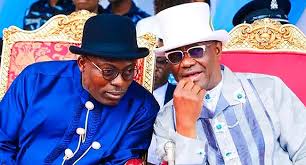
After nearly a year of political tension and open confrontation, Minister of the Federal Capital Territory and former Rivers State Governor, Nyesom Wike, on Thursday night confirmed that he and Governor Siminalayi Fubara have agreed to end their long-standing feud and work together in unity.

Speaking to journalists at the Presidential Villa in Abuja following a closed-door meeting brokered by President Bola Ahmed Tinubu, Wike declared that both factions had resolved their differences and reached a final agreement to put the political crisis behind them.

“We have all agreed to work together with the governor, and the governor also agreed to work together with all of us. We are members of the same political family,” Wike stated.

He described the breakthrough as a definitive conclusion to the months-long political battle that had paralysed governance in Rivers State.

“Yes, just like humans, you have a disagreement, and then you also have a time to settle your disagreement. And that has been finally concluded today, and we have come to report to Mr. President, that is what we have agreed. So for me, everything is over,” he added.

The FCT Minister urged political supporters to embrace peace and cooperation, insisting there was no longer any basis for division or hostility. “I enjoin everybody who believes to work with us, to also work together with everybody. There’s no more acrimony. There’s nothing to say.”

Also addressing the press, Governor Siminalayi Fubara expressed gratitude for the resolution, calling it a divine moment and a pivotal chapter in Rivers State’s political history.

“For me, it’s a day we have to thank Almighty God. It’s very important that this day has come to be,” he said.

He stressed the importance of peace for the state’s development and pledged to uphold the unity restored through the president’s intervention.

“What we need for the progress of Rivers State is peace, and by the special grace of God, this night, with the help of Mr. President and the agreement of the leaders of the state, our leader, peace has returned in Rivers State,” Fubara declared.

“We’ll do everything within our power to make sure that we sustain it this time around.”

The reconciliation follows months of political turmoil triggered by the falling-out between Wike and his political protégé, Governor Fubara, shortly after the latter assumed office in May 2023.

The crisis escalated in October 2023 when lawmakers loyal to Wike in the Rivers State House of Assembly initiated impeachment proceedings against the governor. In response, Fubara ordered the demolition of the Assembly complex following a suspicious fire outbreak, relocating legislative activities to a temporary facility.

The impasse deepened into a full-blown governance crisis, drawing national attention and concern.

In December 2023, President Tinubu stepped in to broker a fragile truce, which saw Fubara concede key political appointments to Wike’s loyalists. However, the peace was short-lived.

The situation deteriorated again in early 2025, culminating in President Tinubu’s declaration of a state of emergency on March 18, 2025. The president suspended the governor’s executive powers for six months, citing heightened insecurity and a breakdown in governance, and appointed a sole administrator, Vice Admiral Ibok-Ete Ekwe Ibas (retd.), to oversee the state’s affairs.

With Thursday’s truce, observers hope Rivers State can now move beyond the political crisis and refocus on governance and development.

SAHCO Records N28bn Revenue Growth

SAHCOL
SAHCOL Records ₦3 billion Revenue, ₦11.42 million Profit in H1

The Skyway Aviation Handling Company Plc has reported a significant boost in its financial performance, growing its revenue to N28.9bn for the 2024 financial year. The company also announced plans to acquire additional ground support equipment to expand operations and service more clients.

These updates were shared in SAHCO’s 2024 Financial Year Report presented during its 15th Annual General Meeting, held virtually on Thursday.

According to the report, the N28.9bn revenue represents a 74.8 per cent increase from the N16.5bn recorded in 2023. Compared to 2022, when it posted N11.1bn, the company achieved over a 160 per cent increase within two years.

SAHCO also recorded a gross profit of N16.3bn in 2024, up from N8.1bn in the previous year, while its operating profit before tax stood at N6.4bn. The company’s total assets rose to N41.7bn in 2024, compared to N34bn in 2023.

The shareholders approved a final dividend of 60 kobo per share.

Speaking at the AGM, SAHCO Chairman, Dr Taiwo Afolabi, noted that the global economy witnessed modest growth in 2024, with the International Monetary Fund estimating a global GDP growth rate of 3.2 per cent, driven by improved supply chain conditions and a rebound in consumer demand.

He said, “To sustain this momentum, the focus must remain on efficiency, innovation and resilience, ensuring that Nigeria’s aviation sector remains competitive on the global stage.”

Afolabi also projected further expansion for the company within Africa.

The Managing Director, Mrs Adenike Aboderin, stated that the company had made significant investments in new ground support equipment during the year and reaffirmed SAHCO’s commitment to its core values and mission.

“As we look ahead to 2025, we remain optimistic about the opportunities before us,” Aboderin said, adding that the company anticipates growth from an expected increase in the domestic handling rate and a pipeline of new business prospects.

“We are committed to continuing our upward trajectory and positioning SAHCO as the premier aviation handling company in the region.”

FG Exempts Households Earning Below ₦250,000 From Tax – Oyedele

FG Will Double Nigeria's Income Without Increasing Tax - Adedeji

The Chairman of the Presidential Committee on Fiscal Policy and Tax Reforms, Taiwo Oyedele, has announced that Nigerian households earning ₦250,000 or less per month will be exempt from paying taxes under the new tax laws signed by President Bola Tinubu.

Oyedele, a former tax leader at PricewaterhouseCoopers (PwC), explained that the new laws are aimed at stimulating economic activity, protecting businesses, and ensuring the government does not “tax poverty” while improving compliance among higher earners.

Speaking on the design of the laws, Oyedele described them as efficiency-driven, growth-focused, and people-centric.

“This tax law will not put cash in your pocket, but at least it won’t take your cash away if you are poor,” he said, adding that the committee had carefully considered Nigeria’s economic realities when defining the poverty line for tax purposes.

The committee concluded that households earning ₦250,000 or less monthly fall within the poverty bracket and should therefore be exempt from tax obligations. Oyedele noted that this group represents a significant portion of the Nigerian population.

For those earning between ₦1.8 million and ₦2 million per month, representing about 5% of the population, the new laws will bring a reduction in their tax burden.

Oyedele further highlighted that Nigeria currently collects only about 30% of its potential tax revenue, and the new tax laws aim to close the existing 70% collection gap while promoting economic growth.

The new tax policies are scheduled to take effect from January 2026.

Oil Prices Rise On Strong US Demand, Middle East Tensions

Oil prices climbed on Thursday, supported by a sharper-than-expected decline in US crude inventories, signaling robust demand in the world’s largest oil consumer. However, market sentiment remained cautious amid lingering uncertainties over the Iran-Israel ceasefire and broader Middle East stability.

International benchmark Brent crude rose by 2.3% to $66.91 per barrel at 9:50 a.m. local time (0650 GMT), up from $66.41 in the previous session. Similarly, US benchmark West Texas Intermediate (WTI) gained 2.3%, trading at $64.94 per barrel compared to $64.50 at the prior close.

Data from the US Energy Information Administration (EIA) showed that commercial crude inventories fell by 5.8 million barrels last week to 415.1 million barrels, marking the fifth consecutive weekly decline. Analysts had forecast a smaller drawdown of around 1.2 million barrels. Gasoline inventories also dropped by 2.1 million barrels to 227.9 million barrels during the same period.

“The sustained inventory drawdowns in the US have prompted some buyers to position for continued strong demand, but uncertainty remains over the Iran-Israel ceasefire,” analysts noted.

Attention is also shifting toward production decisions by the Organization of the Petroleum Exporting Countries (OPEC) and its allies, known as OPEC+. On Saturday, Igor Sechin, CEO of Russia’s Rosneft, indicated that OPEC+ could advance its planned production increases by nearly a year.

While tensions between Iran and Israel appear to be easing, markets are refocusing on demand fundamentals and supply strategies. US President Donald Trump welcomed the de-escalation, noting that upcoming talks with Iranian officials may address calls for Tehran to halt its nuclear activities. He reaffirmed that the US “maximum pressure” campaign, including restrictions on Iranian oil exports, remains in effect but hinted at potential flexibility to support Iran’s reconstruction efforts.

Lagos Moves To Regulate Agency Fees, Targets Affordable Housing

In a bid to curb the rising costs of housing transactions and foster transparency within the real estate sector, the Lagos State Real Estate Regulatory Authority (LASRERA) has partnered with the chairmen of Community Development Associations (CDAs) and Community Development Committees across the state’s 57 Local Government Areas (LGAs) and Local Council Development Areas (LCDAs).

The strategic collaboration aims to regulate and reduce agency and legal fees charged by real estate practitioners, providing much-needed relief for residents.

Speaking at a recent meeting with the council chairmen, the Lagos State Commissioner for Housing, Maruf Akinderu Fatai, emphasised the objective of the initiative.

“The aim of this collaboration is not only to reduce the exorbitant fees being charged by some property agents but also to bring sanity to the built sector and make life easier for the average Lagosian,” he stated. “Housing is a basic necessity, and we are committed to ensuring it is accessible and affordable.”

The Special Adviser to the Governor on Housing, Barakat Odunuga-Bakare, outlined the new guidelines on agency fees, stating that such fees must range between zero and ten percent and anything beyond that would be deemed unacceptable and exploitative.

She further reiterated the state’s long-term goal of transitioning to a monthly rent payment system, stating that efforts are ongoing to make this vision a reality.

Odunuga-Bakare urged Lagos residents to protect themselves financially and legally by dealing only with real estate agents and developers officially registered with LASRERA.

“Doing business with unregistered agents poses serious risks,” she warned. “LASRERA exists to protect both tenants and landlords, and we will not relent in our effort to restore sanity to the built sector.”

This partnership with LGA and LCDA chairmen marks a significant step in extending LASRERA’s regulatory oversight to the grassroots, where most property transactions take place, underscoring the state government’s commitment to promoting fair and affordable housing practices across Lagos.

Market Correction Wipes ₦303 Billion From NGX As Investors Take Profits

NGX Records N256bn Loss Last Week

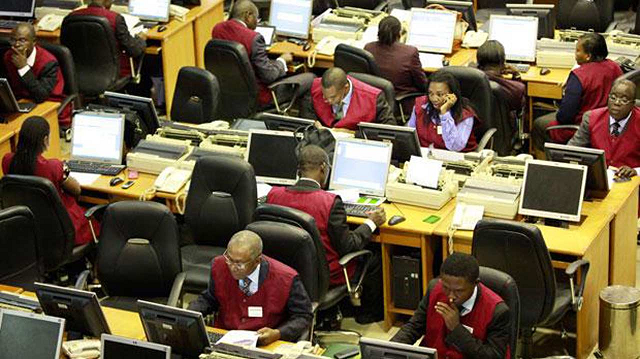
The Nigerian stock market experienced a sharp downturn on Thursday, erasing ₦303 billion in investor wealth amid a wave of profit-taking and valuation corrections on the Nigerian Exchange (NGX).

After a robust rally driven by both fundamentally strong and overvalued equities, the NGX All-Share Index broke its six-day winning streak, falling by 40 basis points to close at 120,772.68 index points. Consequently, the market capitalization slid to ₦76.46 trillion, down from ₦76.76 trillion.

Market data revealed that sell-offs in key counters like BUA Foods (-6.46%), Oando (-9.96%), and First Bank Holdings (-3.28%) contributed significantly to Thursday’s bearish session. Their losses outweighed gains recorded in stocks such as BUA Cement (+5.90%) and Transcorp Hotels (+9.62%).

Overall, the All-Share Index dropped by 446.18 points during the session, with year-to-date gains witnessing a modest decline. Analysts said the downturn underscores investor strategy to secure profits following a prolonged uptrend.

“Strategic offloading of overbought equities is a natural phase after such bullish runs,” stockbrokers commented, adding that the correction also signals a more cautious investor outlook.

Trading activity was mixed. While trade volume increased by 1.94%, the value of trades dipped by 31.31%, pointing to cautious repositioning by market participants.

According to a market update from Atlass Portfolio Limited, approximately 878.37 million units worth ₦17.98 billion were exchanged in 25,121 deals. ELLAH Lakes led the volume chart, accounting for 12.76% of total trade volume. Other top contributors included AccessCorp (8.57%), Caverton (7.29%), Japaul Gold (6.92%), and Zenith Bank (6.78%).

In terms of trade value, Zenith Bank dominated with 19.10% of the total value transacted on the floor.

On the gainers’ table, Unilever advanced by 10%, followed closely by Neimeth (+9.98%), UACN (+9.97%), CAP (+9.92%), Prestige Assurance (+9.80%), and Transcorp Hotels (+9.62%). A total of 31 equities posted gains.

However, the day closed with 37 laggards, led by Thomas Wyatt, which lost 10%. Other major losers included NAHCO (-9.99%), Oando (-9.96%), Livestock Feeds (-8.16%), and BUA Foods (-6.46%).

Sectoral performance was uneven. The consumer goods (-1.44%), oil & gas (-1.25%), and banking (-0.57%) indices all declined, driven by bearish sentiment in BUA Foods, Oando, and First Bank Holdings, respectively. Conversely, the industrial goods index gained 2.11% and the insurance index rose 1.08%, buoyed by buying interest in BUA Cement and NEM Insurance. The commodity index remained flat.

Institutional Strength Crucial For Africa’s Progress – CBN Governor Cardoso

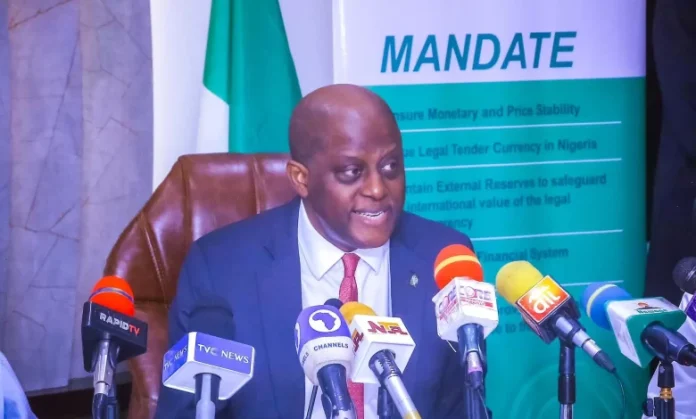
Governor of the Central Bank of Nigeria, Olayemi Cardoso, has emphasized the pivotal role institutional resilience plays in Africa’s long-term growth and development. His remarks came during the official opening of the 2025 Afreximbank Annual Meetings, held in Abuja.

Addressing dignitaries, Cardoso praised Afreximbank for its transformation from a trade finance institution to a pan-African economic enabler, noting its strategic interventions in the continent’s most challenging periods.

He highlighted Africa’s capacity to weather multiple global disruptions—including the COVID-19 pandemic, energy price volatility, and shifting geopolitical landscapes—attributing this to the strategic foresight of institutions like Afreximbank.

The governor referenced Nigeria’s close relationship with the bank, revealing that the country has secured over $52 billion in project and trade financing through Afreximbank since inception. He also pointed to the Central Bank’s efforts to boost diaspora inflows through policy reforms like the introduction of the Non-Resident Nigerian Ordinary and Investment Accounts.

He urged African nations to align more closely with the African Continental Free Trade Area (AfCFTA), advocating for faster implementation, deeper economic integration, and active engagement of diaspora communities in the continent’s transformation agenda.

“Afreximbank has inspired us to think boldly; now we must act boldly,” Cardoso stated.

The event also featured the unveiling of Afreximbank’s flagship 2025 African Trade Report and Economic Outlook, marking another milestone in the bank’s 32-year history.

BizWatchNigeria.Ng
Privacy Overview

This website uses cookies so that we can provide you with the best user experience possible. Cookie information is stored in your browser and performs functions such as recognising you when you return to our website and helping our team to understand which sections of the website you find most interesting and useful.