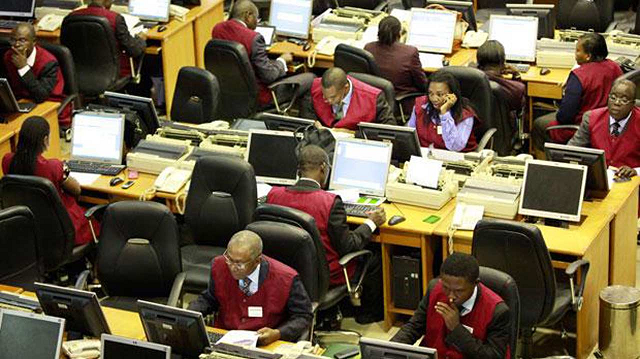
The Nigerian Exchange (NGX) witnessed a landmark surge on Wednesday as investors reaped over ₦1.44 trillion in gains, driven by strong buying pressure across major indices.
Trading resumed with bullish momentum after the holiday break, pushing the market to unprecedented levels. Key market indicators soared by 1.80% during the session, propelling the year-to-date return to 25.30%.
Investor sentiment remained upbeat, with sustained interest in heavyweight stocks like NESTLE, FIRSTHOLDCO, UBA, and 37 other equities—particularly within the banking sector—fueling the gains.
The benchmark All-Share Index rose by 2,587.64 basis points, closing at a record high of 128,967.08 points. Total trading activity experienced a substantial uptick, as both volume and value of trades jumped by 833.60% and 1,087.01%, respectively.
A report from Atlass Portfolio Limited revealed that over 11.67 billion shares worth ₦363.41 billion were exchanged in 38,918 deals, highlighting the intensity of market activity.
UBA led the trading charts by volume, accounting for 12.76% of total transactions, followed by ACCESSCORP (10.10%), UNIVINSURE (10.05%), ZENITHBANK (5.37%), and Nigerian Breweries (4.18%). UBA also dominated in value terms, contributing 19.09% of total traded value.
On the gainers’ chart, NESTLE, EUNISELL, NSLTECH, and OMATEK saw their share prices rise by 10.00% each, followed by TRIPPLEG (+9.92%), FIRSTHOLDCO (+9.90%), IMG (+9.89%), and STANBIC (+9.67%).
However, 44 stocks closed lower, with FTNCOCOA and NPFMCRFBK leading the losers at -10.00% each. Other notable decliners included CILEASING (-9.97%), ELLAHLAKES (-9.93%), and CONHALLPLC (-9.87%).
Despite the negative market breadth of 40 gainers to 44 losers, three of the five key sectors posted gains: banking (+7.05%), consumer goods (+1.33%), and industrial goods (+1.15%). The insurance and oil & gas sectors, however, dipped by -2.94% and -0.19%, respectively.
The market’s total capitalisation surged by ₦1.64 trillion, closing at a new peak of ₦81.58 trillion, as optimism around the Nigerian stock market continues to grow.
Nigeria’s inflation rate continued its downward trajectory in June 2025, dropping to 22.22% year-on-year, according to the latest data released by the National Bureau of Statistics (NBS) on Wednesday. This marks the third consecutive month of disinflation following the recent rebasing of the Consumer Price Index (CPI).
The headline inflation rate decreased by 75 basis points (bps) from 22.97% in May to 22.22% in June, signifying a modest easing of inflationary pressures. However, on a month-on-month basis, the Consumer Price Index (CPI) rose to 1.68% from the 1.53% recorded in May, reflecting a short-term uptick in prices.
Food inflation surged to 21.97% in June, up by 83 bps from 21.14% in May. Month-on-month, food prices saw a sharper climb of 107 bps, rising from 2.19% in May to 3.25% in June.
According to the NBS, the increase in food inflation was driven by significant price hikes in essential food items such as dried green peas, fresh pepper, dried white shrimps, crayfish, fresh meat, tomatoes, plantain flour, and ground pepper.
Core inflation, which excludes the prices of volatile agricultural goods and energy products, also moved upward. It reached 22.76% year-on-year in June, up from 22.28% in May—an increase of 48 bps. On a monthly basis, the core index jumped by 136 bps to 2.46%, compared to 1.10% the previous month.
Despite the decline in headline inflation, analysts note that persistent food price hikes and high core inflation continue to pose challenges for monetary policy and household spending power.
Nigeria has once again surpassed its crude oil production quota set by the Organization of the Petroleum Exporting Countries (OPEC), reaching a daily output of 1.505 million barrels in June 2025.
According to the July 2025 edition of OPEC’s Monthly Oil Market Report (MOMR), this marks the second instance this year that Nigeria has exceeded its assigned cap of 1.5 million barrels per day (bpd). The first occurrence was recorded in January.
Figures from the Nigerian Upstream Petroleum Regulatory Commission (NUPRC) for June show that the country averaged a daily production of 1,505,474 barrels, amounting to 100.4% of its OPEC target.
The NUPRC also disclosed that Nigeria’s total crude oil and condensate output ranged between 1.61 million bpd and a peak of 1.82 million bpd during the month. Overall daily average production stood at approximately 1.697 million barrels per day, comprising 1.505 million barrels of crude oil and 191,572 barrels of condensate.
This production figure represents a notable improvement compared to the output in March, which dipped to 1.60 million bpd, and slightly higher than the 1.65 million bpd reported in May.
OPEC’s broader June production statistics, based on direct communication with member states, indicated Saudi Arabia produced 9.360 million bpd, Iraq 3.627 million bpd, and the United Arab Emirates 3.033 million bpd. Other countries reported the following outputs: Kuwait – 2.420 million bpd, Libya – 1.367 million bpd, and Venezuela – 1.069 million bpd.
This upward trend signals a potential rebound in Nigeria’s oil sector, amid ongoing efforts to stabilize output and attract foreign investments.
In a remarkable show of investor confidence, MTN Nigeria Communications Plc has surged to a new record in the Nigerian equities market, reaching ₦400 per share for the first time since its listing on the Nigerian Exchange (NGX).
This historic rally reflects a significant turnaround for the telecommunications giant, whose shares had previously experienced a period of downturn. Analysts attribute the sharp uptick to renewed optimism surrounding the company’s earnings outlook, buoyed by regulatory tariff adjustments and a robust Q1 2025 financial performance.
According to official NGX data, MTN Nigeria’s stock hit the ₦400 mark after successfully surpassing all previous resistance levels, marking a new all-time high. The surge was driven by heightened trading activity, with over 1.9 million shares exchanged at a value exceeding ₦790 million. This indicates strong demand from institutional and retail investors alike.
Wednesday’s rally added ₦5 to the telco’s stock price, bringing the market capitalisation of its outstanding 20.995 billion shares to an impressive ₦8.398 trillion.
Market insiders say the renewed interest in MTN Nigeria follows the company’s return to profitability in early 2025, after navigating regulatory hurdles. The tariff hike approved earlier this year is expected to enhance revenue generation, setting the stage for sustained growth and stability in its operations.
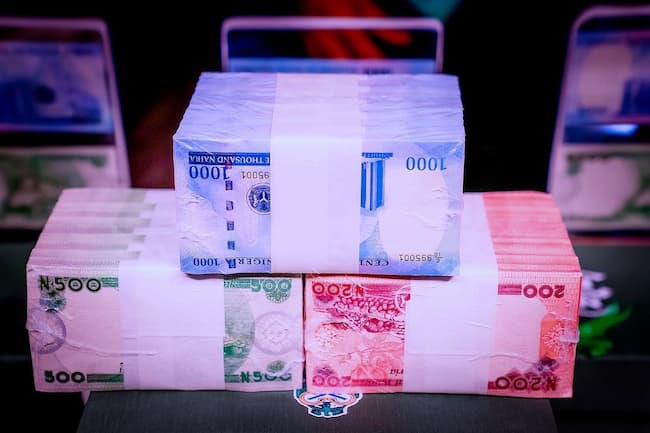
The Nigerian naira faced downward pressure on Wednesday, depreciating against the US dollar due to increased demand in the official foreign exchange window, despite positive signals from the nation’s external reserves.
Fresh figures from the Central Bank of Nigeria (CBN) showed the spot exchange rate settled at ₦1,530.25 per US dollar. Market activity saw the rate fluctuate, peaking at ₦1,533 and briefly hitting an intraday low of ₦1,527 before closing at ₦1,531.
This decline came even as Nigeria’s foreign reserves continued their upward trajectory, climbing to $37.638 billion earlier this week. Analysts attribute this growth to stronger crude oil output and a deceleration in the CBN’s FX interventions.
Nigeria’s crude oil sector recorded notable improvements in June 2025, achieving the OPEC production quota for the first time in five months. The Nigerian Upstream Petroleum Regulatory Commission (NUPRC) reported a 3.6% rise in average daily crude oil output (excluding condensates), increasing to 1.51 million barrels per day (mbpd) from May’s 1.45 mbpd. Including condensates, the total liquid output stood at 1.69 mbpd.
Despite improving reserves, the CBN appears to have reduced its dollar supply to commercial banks in the second half of the year. In H1 2025, the apex bank expended $4.7 billion in its efforts to support the naira amid declining foreign investor confidence and portfolio exits.
While capital outflows have recently eased, some financial analysts caution that falling yields on government securities—such as treasury bills, FGN bonds, and OMO instruments—could revive risks of renewed investor flight if the trend continues.
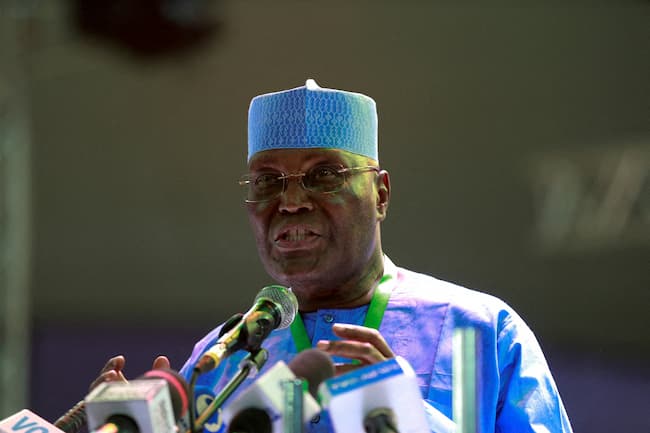
Former Nigerian Vice President Atiku Abubakar has officially withdrawn his membership from the Peoples Democratic Party (PDP), citing growing internal rifts and a departure from the party’s founding principles.
In a resignation letter dated July 14 and addressed to the Chairman of the Jada 1 Ward in Jada Local Government Area of Adamawa State, Abubakar expressed sorrow over his decision, stating it was not an easy one to make.
Abubakar wrote, “As a founding member of this great party, walking away is a painful decision. But the current direction the party is heading no longer aligns with the values we once collectively upheld.”
He acknowledged the pivotal roles the PDP played in shaping his political journey, saying, “Being privileged to serve Nigeria as Vice President for two terms and running as the party’s presidential candidate twice has been a highlight of my career. I will forever cherish those opportunities.”
The veteran politician emphasized that the irreconcilable differences within the party left him with no choice but to take this step.
“It is with a heavy heart that I resign, recognising that harmony is no longer attainable within the existing party framework. I wish the leadership and members continued success,” he added.
Atiku’s resignation comes on the heels of a new political realignment. He is currently among a group of opposition leaders who recently announced the formation of a nationwide coalition, which has declared support for the African Democratic Congress (ADC).
Kano State Ant-Graft Agency Insists Emir Sanusi Still Under Investigation
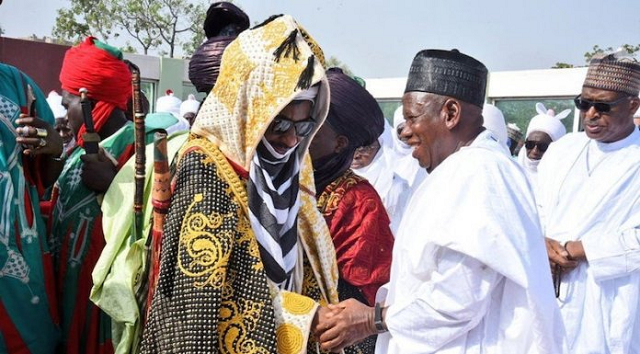
Muhammadu Sanusi II, the reinstated Emir of Kano, was absent at the state burial of former Nigerian President Muhammadu Buhari on Tuesday, due to an official assignment in the United Kingdom, a close associate has confirmed.
Sanusi’s aide, Muhammadu Dallatu, said that the monarch was out of the country and expected to return to Nigeria on Wednesday. “The Emir will not attend. He’s not even in the country. He travelled to London for an official engagement and is expected back on Wednesday,” Dallatu stated.
Buhari, who died at age 82 in a London hospital on Sunday, was laid to rest at his residence in Daura, Katsina State, in accordance with Islamic rites.
Further findings revealed that Emir Sanusi was seen on Saturday participating in the 2025 Access Bank Polo Tournament held in Surrey, England. He reportedly mingled with notable global figures, including former Chelsea manager and England national team boss Thomas Tuchel.
In contrast, the 15th Emir of Kano, Alhaji Aminu Ado Bayero, attended the late president’s burial in Daura. His media aide, Abubakar Naisa, confirmed the development. “Yes, His Highness Aminu Ado Bayero left Kano this morning for Daura to pay his last respects,” he said. “He is attending the burial alongside the Emirs of Kazaure and Dutse.”
The presence of Bayero, Sanusi’s rival in a deepening emirate leadership crisis, has further spotlighted the ongoing tussle over Kano’s traditional throne. Sanusi, who originally served as Emir from 2014 until his controversial removal in 2020 under former Governor Abdullahi Ganduje, was reinstated in May 2024 amid legal and political disputes still unfolding.
The burial ceremony of the late president became yet another symbolic stage in the struggle for legitimacy between the two men who both claim the mantle of Kano’s royal leadership.
The average yield on Nigerian Treasury bills inched up to 18.36% at the start of the week as investors engaged in light sell-offs, responding cautiously ahead of the June inflation data release.
Market activity showed signs of mild pressure, with investors retreating from positions amid successive dips in naira asset yields. Analysts suggest this pullback reflects market anticipation that Nigeria’s ongoing economic reforms may be beginning to ease inflationary pressures.
Inflation cooled to 22.97% in May, but with the Central Bank of Nigeria maintaining its benchmark interest rate at 27.75%, real returns on government securities currently hover around 4.53%. Analysts said a further drop in inflation could push real returns above 5%, potentially creating room for monetary policy easing later in the year.
“There’s clear interest in naira assets, especially at the belly of the curve,” one analyst noted, citing strong demand for 178-day Treasury bills that drove their yield down by 64 basis points.
Market data showed yield contraction across the short (-2 bps) and mid (-14 bps) tenors, driven by selective buying. Notably, the yield on 73-day maturity bills fell by 3 basis points. However, selling pressure emerged at the long end of the curve, where investors booked profits on 297-day maturities, pushing yields up by 76 basis points.
Meanwhile, activity in the Open Market Operations (OMO) segment was relatively quiet, with average yields declining by 5 bps to 24.6%.
Despite limited overall trading volumes, the modest shifts across maturities underscore investor sensitivity to inflation trends and liquidity constraints, analysts said. They added that the Treasury bills market is likely to remain cautious in the short term, with further adjustments tied closely to inflation readings and central bank signals.
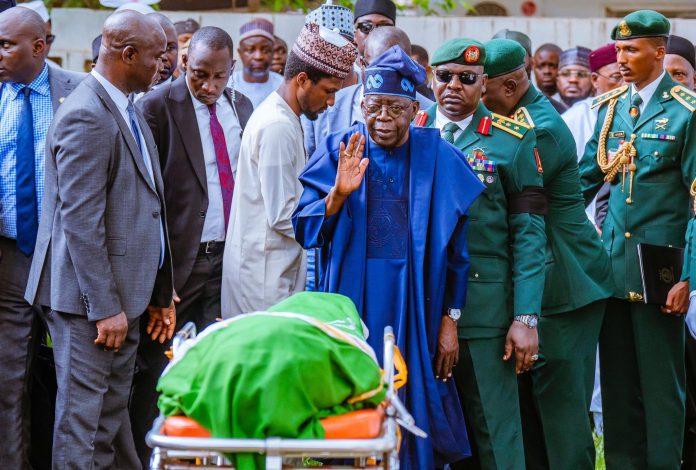
Nigeria on Tuesday laid to rest one of its most influential leaders, former President Muhammadu Buhari, in a solemn state funeral that drew together the country’s political elite, military top brass, global dignitaries, and citizens mourning a man many saw as a pillar of discipline, simplicity, and nationalism.
President Bola Ahmed Tinubu and Vice President Kashim Shettima led a high-powered federal delegation to Daura, Buhari’s hometown, where the former military ruler and two-term civilian president was buried following Islamic rites.
Buhari died on Sunday, July 13, at the age of 82 in a London hospital. His body was flown into the Umaru Musa Yar’Adua International Airport, Katsina, aboard the Presidential Aircraft, symbolically the same jet he used during his presidency. President Tinubu was present at the airport to personally receive the flag-draped coffin at 1:51 p.m., following his own arrival from Abuja minutes earlier.
The state burial, conducted by Chief Imam of Daura, Sheikh Salisu Rabiu, took place at the PMB Helicopter Ground, drawing mourners from all walks of life. The casket, carried by a nine-man team of senior military officers, was wheeled in a slow, dignified procession as a military band played the hymn “God Be With You Till We Meet Again.”
Among the international dignitaries in attendance were Guinea-Bissau President Umaro Sissoco Embaló, Niger Republic Prime Minister Ali Zeine, and former Nigerien President Issoufou Mahamadou. From Nigeria, the lineup of attendees included former Vice Presidents Yemi Osinbajo and Atiku Abubakar, Senate President Godswill Akpabio, Speaker of the House Tajudeen Abbas, and over a dozen state governors.
Traditional rulers, including the Emirs of Katsina, Daura, and Kano, also paid their respects, as did private sector leaders such as Aliko Dangote, Sayyu Dantata, and Dahiru Mangal.
The Katsina airport saw an unprecedented 130 aircraft movements in 48 hours, according to the Nigerian Airspace Management Agency, reflecting the national scale of the loss.
President Tinubu, joined by Buhari’s widow Aisha and family members, accompanied the coffin on a one-hour road trip to Daura. There, prayers were held and the former president was interred at his residence at 5:50 p.m., concluding a full military funeral that included a 21-gun salute.
As condolences continued to stream in, Buhari’s former appointees and close associates remembered him as a leader defined by integrity, humility, and service to country over self.
Dr. Rabi’atu Aliyu, former Minister of State for the Federal Capital Territory, called Buhari “honest, resilient, and tolerant,” saying, “I feel this loss deeply, as if I just lost my own father… He was detribalised and appointed people based on merit.”
Sadiya Farouq, former Minister of Humanitarian Affairs, described the late president as “a father, a patriot, and a nationalist” who upheld discipline and believed in opportunity for all. “We have lost a pillar, especially for the poor and vulnerable,” she said.
Pauline Tallen, ex-Minister of Women Affairs, said Buhari “embodied humility and simplicity,” adding, “Look at his life ,he held some of the highest offices, yet lived modestly.”
Former Minister of Transportation Rotimi Amaechi called Buhari’s death “a personal loss,” describing him as “principled, disciplined, and selfless.”
Dr. Aliyu Audu, ex-Senior Special Assistant on Public Affairs, summed up the sentiment: “Buhari was a bright star of Nigeria who served with deep commitment. We are gathered in his humble home because he lived a truly humble life.”
The Presidential Committee will continue with a weeklong schedule of condolence visits and memorial activities to honor the legacy of a leader whose impact, both revered and debated, remains deeply etched in Nigeria’s political history.
President Buhari served as Nigeria’s Head of State from 1983 to 1985 and returned as a democratically elected leader in 2015, completing two terms before handing over to President Tinubu in 2023. His funeral marked the end of an era one that is marked by austere leadership, anti-corruption crusades, and a steadfast belief in the unity of Nigeria.
This handout picture taken and released by Ukrainian State Emergency Service on July 16, 2025 shows firefighters extinguishing a fire on civilian object after Russian strike in Vinnytsya region, amid Russian invasion in Ukraine. Russia fired hundreds of drones, artillery and a ballistic missile at Ukraine between late July 15 and early July 16, Ukraine said, defying calls by Donald Trump to reach a peace deal. (Photo by Handout / Ukrainian State Emergency Service / AFP) / RESTRICTED TO EDITORIAL USE - MANDATORY CREDIT "AFP PHOTO / UKRAINIAN STATE EMERGENCY SERVICE/ HANDOUT"- NO MARKETING NO ADVERTISING CAMPAIGNS - DISTRIBUTED AS A SERVICE TO CLIENTS
Russia unleashed a massive aerial assault on Ukraine overnight, firing more than 400 drones, artillery shells, and at least one ballistic missile across multiple regions, Ukrainian authorities said Wednesday. The attacks, which came just days after former U.S. President Donald Trump demanded a peace deal within 50 days, killed one woman and wounded over two dozen people, including a teenager in critical condition.
The heaviest damage was reported in Ukrainian President Volodymyr Zelensky’s hometown of Kryvyi Rih, where a missile strike cut off power and water supplies, injured at least 15 people, and destroyed an industrial building. City officials said a 17-year-old boy suffered serious abdominal injuries and is currently fighting for his life in the hospital.
“This has never happened before,” Kryvyi Rih Mayor Oleksandr Vilkul wrote on Telegram. “A ballistic missile and 28 Shaheds [Iranian-designed drones] simultaneously.”
In the central city of Vinnytsia, overnight drone strikes left eight people wounded, while attacks on Kharkiv in northeastern Ukraine injured three more, local authorities said.
The Ukrainian air force confirmed that Russia launched at least one Iskander ballistic missile from occupied Crimea and sent hundreds of Shahed drones into Ukrainian territory between late Tuesday and early Wednesday. The full scale of the damage is still being assessed.
The wave of attacks follows renewed international scrutiny over the stalled peace process. On Monday, Trump warned of “severe sanctions” against Ukraine unless it agreed to a peace settlement with Russia within 50 days. His comments drew swift criticism from Kyiv and some NATO allies, who say Russia has shown little interest in meaningful negotiations.
Peace talks between Ukraine and Russia have been frozen for more than a month, with no new meetings scheduled, though the Kremlin insists it remains open to dialogue. Meanwhile, Russia has intensified its summer offensive, combining advances on the battlefield with sustained aerial bombardments of civilian infrastructure.
Trump also claimed this week that he secured a deal with NATO leadership to send additional American air defense systems and weapons to Ukraine which was an assertion not yet confirmed by U.S. officials.
As both military pressure and diplomatic tensions rise, Ukrainian cities brace for more assaults, with authorities urging civilians to stay alert amid the ongoing threat.
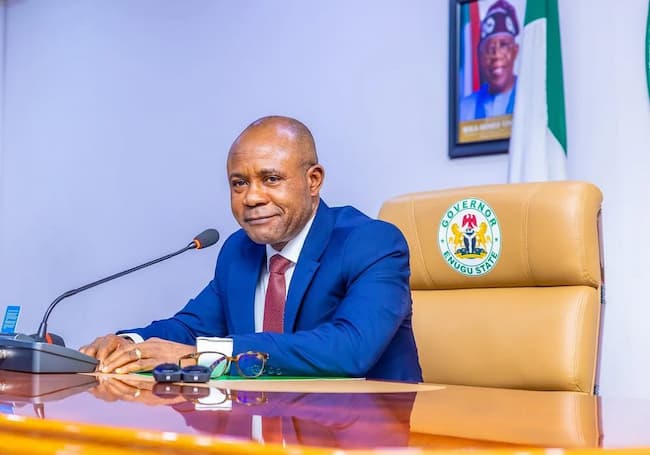
The Enugu State Government has initiated the development of Annual Operational Plans (AOPs) aimed at shaping its 2026 health sector budget, in a strategic move aligned with the national Nigeria Health Sector Renewal Investment Initiative (NHSRII).
The initiative, which seeks to transform Nigeria’s healthcare system through better infrastructure and expanded health insurance coverage, is being rolled out in Enugu through a four-day training workshop focused on leadership and systems strengthening for health managers. The workshop kicked off Monday in Enugu with the theme: “Towards Rational, Realistic, Pragmatic and Comprehensive Plan that Informs Health Budget for the People of Enugu State.”
Speaking at the opening of the event, the Enugu State Commissioner for Health, Dr. Emmanuel Obi, emphasized the importance of the NHSRII in creating a unified, coordinated framework for healthcare delivery.
“The NHSRII is a sector-wide programme that brings together every single player in the health sector under one coordinating umbrella to monitor sector indices across the board,” Obi said. “This workshop marks the beginning of a capacity-building exercise for master trainers who will help produce a one-sector annual operational plan that will be integrated into the 2026 health budget.”
Dr. Obi explained that the reform is built on the State-Wide Approach (SWAp), a model introduced by the Federal Ministry of Health to promote collaboration and consistency in health planning and implementation. “Through the SWAp reform, we aim to create a single plan, unified monitoring and evaluation, and a coordinated network for the entire health sector,” he noted.
Participants at the training include senior health officials, programme managers, and stakeholders from various agencies within the state’s health sector. Francisca Ewoh, the SWAp Desk Officer for Enugu State, also highlighted the need for better coordination in health sector activities.
“Unlike before, when partners operated independently, SWAp ensures that all interventions are evidence-based and aligned with the state’s priorities,” she said. “It’s no longer business as usual.” Mrs. Ann Oguejioffor, Head of Health Planning, Research and Statistics at the Enugu State Ministry of Health, said the approach will reduce duplication and promote efficient use of resources.
“With the SWAp programme, what the partners are offering will align with the government’s plan rather than duplicating it,” she stated. “It will help streamline planning towards the 2026 health budget.”
Officials say the development of Annual Operational Plans is expected to enhance service delivery and ensure that all stakeholders work together toward a shared goal. The new approach also aims to prevent fragmentation in the health system and improve accountability in resource allocation.
Welcome back to Thursday Chronicles, your weekly reminder that you’re not crazy, just Nigerian and overwhelmed. If you’ve ever looked at your age, checked your bank account, sighed deeply, and whispered ‘Na wa for me,’ please come closer. Today, we’re dragging the unrealistic timelines society planted in our heads.
Somewhere along the line, we all created a mental calendar for our lives.
Graduate by 21. Serve at 22. Get a job by 23. Own a car by 24. Marry at 25. Buy house by 27. Have 2 kids and a thriving business by 30. And live happily ever after with glowing skin and matching pajamas.
Now you’re 26, in a rented apartment, career still finding leg, relationship blurry like bad network, and you haven’t even finished paying back the ₦12k you borrowed to buy gas last month. Yet, you’re judging yourself like you’re running for Guinness World Record.
Why are we like this?
Every time you open Instagram or LinkedIn, someone’s getting married, buying a house in Lekki, relocating with their entire family, or starting a skincare brand with their dog. And there you are, still trying to figure out how to survive on a data plan and vibes. You see someone celebrating their “3rd property at 28” and suddenly you’re questioning everything, including your primary school choices.
But let’s be honest, most of these timelines are not even ours. They’re handed to us by family pressure, society standards, and motivational speakers who sleep 2 hours a day and tell you “you have the same 24 hours as Beyoncé.”
Please, Beyoncé has chefs and nannies. You have NEPA.
Nobody tells you life will curve. That there’ll be delays, detours, heartbreaks, pandemics, job loss, bad decisions, unexpected responsibilities, and moments where everything just… pauses.
You didn’t plan to spend an extra year at home after NYSC. You didn’t expect to start over at 29. You didn’t think you’d be in your late 20s still figuring things out. But here you are, still breathing, still trying, still standing.
And that? That’s success in its own right.
It’s hard not to feel left behind. Society glorifies speed. You see someone doing in 2 years what you haven’t done in 7. But what they don’t show you is the full story, the background help, the lucky breaks, the sacrifice, or the quiet depression behind the soft life aesthetic.
Life is not a race. It’s not a straight road. It’s a winding path with potholes, traffic, and fuel scarcity. Some people take bike. Some take car. Some fly. But everyone moves at their own pace, and even a delay doesn’t mean denial.
Your timeline is valid. Even when it looks nothing like what you imagined.
You don’t fail because you’re not where you thought you’d be. You fail when you let shame and comparison steal your joy and blind you to how far you’ve actually come. You may not be living your dream life yet, but you’re not where you used to be either.
You’re learning. You’re growing. You’re trying. You’re unlearning. You’re surviving a tough country with a soft heart.
And that’s powerful.
Give yourself grace. Things might be slow now, but they’ll align. Maybe not by 25. Maybe not by 30. But they’ll align, because you’re not stagnant. You’re in motion, even when it feels like you’re crawling.
Thanks again for joining Thursday Chronicles, where we slap pressure with the hand of wisdom and drag timelines like it stole our money. Whether you’re ahead, behind, or figuring it all out in between, just know: you’re not late. You’re just on your own path, and that path is still valid, still blessed, still unfolding.
Catch you next Thursday — same gist, same truth, same support system in Google Docs form. Until then, breathe, reset your mind, and remember: success is not a deadline, it’s a direction.
Oil prices declined on Wednesday as concerns over slowing global demand combined with rising OPEC+ production weighed on the market, while uncertainty over the US Federal Reserve’s interest rate path added to the cautious sentiment.
Brent crude slipped by 0.17% to $68.17 per barrel, while US West Texas Intermediate (WTI) eased by 0.16% to $65.55 per barrel, extending losses from the previous session.
Data released Wednesday showed that US consumer prices rose 0.3% in June, matching expectations, while annual inflation accelerated to 2.7%, its highest level since February. Core inflation, excluding food and energy, rose 0.2% for the month and 2.9% year-on-year, slightly below forecasts.
The uptick in headline inflation tempered expectations for an interest rate cut by the Fed in September, although markets still anticipate two rate cuts before year-end. Higher US interest rates typically strengthen the dollar, making oil more expensive for holders of other currencies and potentially dampening global demand.
Meanwhile, the Organization of the Petroleum Exporting Countries (OPEC) reported an increase in crude production, adding to supply-side pressures. OPEC’s output rose by 220,000 barrels per day (bpd) in June to 27.23 million bpd, driven primarily by higher production from Saudi Arabia, which increased output by 173,000 bpd to 9.35 million bpd. In contrast, Iran’s production fell by 62,000 bpd to 3.24 million bpd.
Including non-OPEC allies, total OPEC+ production rose by 349,000 bpd in June to 41.56 million bpd, according to the group’s monthly report.
Despite the increase in output, OPEC maintained its forecast for global oil demand growth, projecting a rise of 1.3 million bpd in 2025 to 105.13 million bpd, with most of the growth expected from non-OECD countries.
Adding to bearish sentiment, the American Petroleum Institute reported an unexpected surge in US crude inventories, which rose by 19.1 million barrels last week against expectations of a 2 million-barrel drawdown. The unexpected buildup raised concerns about weakening demand in the world’s largest oil-consuming nation.
Investors now await official US inventory data from the Energy Information Administration for further direction on market fundamentals.
With steady demand projections amid rising supply and signs of softening consumption in key markets, concerns over a potential oversupply in the second half of the year continue to pressure oil prices.
UK inflation unexpectedly rose to an 18-month high in June, intensifying pressure on the government and raising concerns over the country’s economic outlook. The Consumer Prices Index climbed to 3.6% last month, up from 3.4% in May, driven by persistently high motor fuel and food prices, according to data released Wednesday by the Office for National Statistics (ONS). The June figure marks the highest inflation rate since January 2024 and defied analysts’ expectations of no change.
The inflation surge follows recent data showing the UK economy contracted for a second consecutive month in May, adding to challenges facing Prime Minister Keir Starmer’s government amid economic headwinds and trade uncertainty due to US tariffs.
“Inflation ticked up in June, driven mainly by motor fuel prices which fell only slightly, compared with a much larger decrease at this time last year,” said Richard Heys, ONS acting chief economist. “Food price inflation has increased for the third month, reaching its highest annual rate since February 2024.”
In response, Finance Minister Rachel Reeves acknowledged the continued cost-of-living challenges facing Britons, stating, “There is more to do” to support households.
Despite the uptick in inflation, some analysts believe the Bank of England could still proceed with an interest rate cut next month to support the struggling economy. Ruth Gregory, deputy chief UK economist at Capital Economics, noted that while the rise in CPI inflation may complicate the Bank’s decision, it is unlikely to derail a potential 25-basis-point rate cut in August.
“But it will add to the pressure on the Bank to continue to cut rates at a gradual pace,” Gregory added.
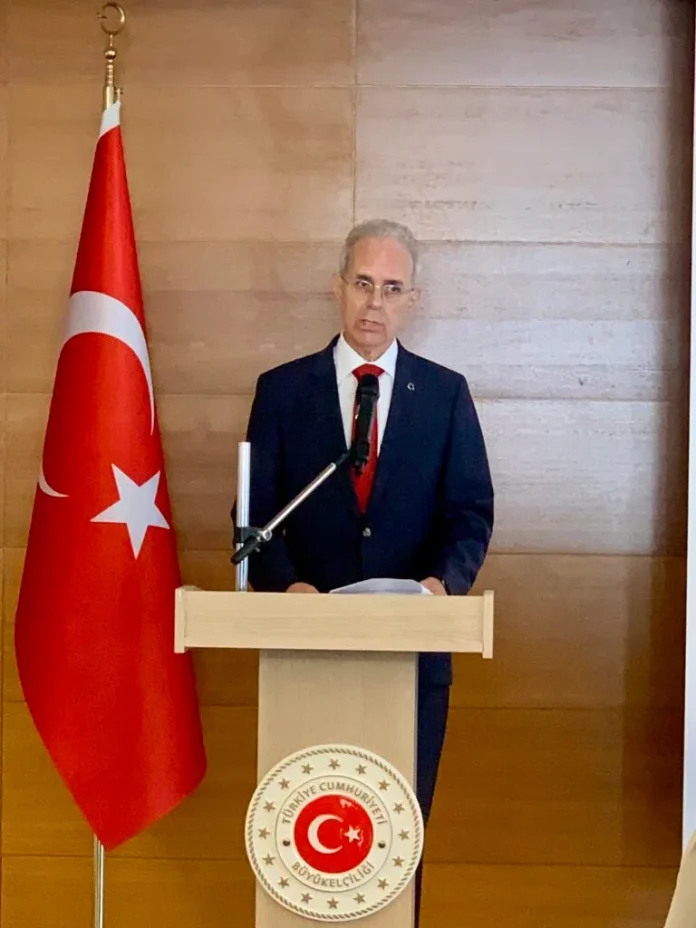
Turkish Envoy Mehmet Poroy speaking at the country’s Democracy and National Unity Day celebration on Tuesday night in Abuja. Credit: NAN
The Turkish government has raised concerns over the presence of members of the Fethullah Terrorist Organisation (FETO) in Nigeria, warning that the group also operates under various fronts in other countries.
Turkey’s Ambassador-designate to Nigeria, Mehmet Poroy, issued the warning on Tuesday night in Abuja during a dinner hosted by the Turkish Embassy to mark Türkiye’s Democracy and National Unity Day, commemorating the July 15, 2016, failed coup attempt in the country.
Poroy stated that the coup, which claimed at least 251 lives, was orchestrated by the FETO network, led by the late Fethullah Gülen, a Turkish Islamic scholar who died in October 2024 in the United States while living as a fugitive.
“Unfortunately, the FETO terrorist organisation still maintains its activities in Nigeria, particularly in the fields of education and healthcare,” Poroy said, stressing that the presence of such a group poses a threat to any country where it operates.
He explained that Turkey has consistently warned Nigerian authorities about the group’s activities, urging vigilance and caution. “We consistently inform our Nigerian friends about the nature and dangers of this organisation, and urge them to remain vigilant and cautious,” he said.
Poroy noted that through international cooperation, Turkey has disrupted many FETO cells globally, taking over institutions, especially schools, linked to the group in allied countries. However, he acknowledged that FETO’s global networks have not been fully dismantled, and new investigations and arrests continue to emerge.
“In several countries, including Nigeria, FETO continues to pursue its operations under the guise of humanitarian aid, education, healthcare, and interfaith dialogue,” Poroy warned. “Behind this humanitarian appearance lies an organisation that seeks to infiltrate the political and bureaucratic institutions of host countries.”
The Gülen movement, known as Hizmet (Service) in Turkish, was founded in the late 1950s and has presented itself as a religious, educational, and social organisation. However, the Turkish government has designated it a terrorist organisation and blames it for the 2016 attempted coup, maintaining an aggressive campaign to dismantle its global operations.
The Organisation of Islamic Cooperation, the Gulf Cooperation Council, Pakistan, and Northern Cyprus have also designated FETO as a terrorist organisation.
Turkey’s government has seized or frozen billions of dollars in Gülen-linked assets and institutions worldwide, including schools, foundations, associations, and companies, as part of its global crackdown against the network.
The Federal Government has disclosed that more than 420 federal roads, bridges, and infrastructure projects have been completed or significantly advanced within President Bola Tinubu’s first two years in office.
Chairman of the Senate Committee on Works, Senator Barinada Mpigi, made this known during the opening of the 33rd Engineering Assembly organised by the Council for the Regulation of Engineering in Nigeria (COREN) in Abuja. Represented by Ashley Emenike, Mpigi highlighted that engineering remains central to national development, with the projects spanning critical routes and economic corridors across the country.
“Based on implementation reports and oversight missions by my committee, we estimate that over 420 federal roads, bridges, and projects have either been completed or advanced significantly within this administration,” Mpigi said.
He praised President Tinubu’s “Renewed Hope Agenda” for driving infrastructural growth, citing the Lagos-Calabar coastal highway and investments in roads, housing, energy, and bridges nationwide as evidence of the administration’s commitment to building a stronger Nigeria.
However, Mpigi raised concerns over the rise in engineering failures, including building collapses and deteriorating infrastructure, attributing many incidents to poor compliance with professional standards, weak supervision, and quackery.
“This persistent failure of infrastructure is a national alarm bell,” he said. “It is unacceptable that in the 21st century, buildings are still collapsing under rain and bridges are caving in under minimal pressure.”
He pledged the committee’s support for COREN in strengthening enforcement and compliance measures, advocating the implementation of building codes across states to prevent tragedies and safeguard public trust.
In his remarks, COREN Registrar, Okorie Uche, called for renewed commitment to professionalism and quality service delivery, describing the assembly as a platform to push for systemic reforms within the engineering profession.
The President of the Nigerian Society of Engineers, Margaret Oguntala, also emphasised the need for quality education, fair remuneration, and stricter compliance to restore integrity within the profession, assuring COREN of the NSE’s continued collaboration.
Former Minister of Power and Chairman of Geometric Power Group, Barth Nnaji, urged the government to create innovation funds and technology parks to foster homegrown engineering solutions, noting that engineering remains central to economic development.
“From roads, bridges and dams to energy systems and healthcare access, engineers lay the foundation of every economy,” Nnaji said, citing China as an example of how engineers in leadership can drive national development.
Participants at the summit called on governments at all levels to integrate engineers into national development planning, stressing that Nigeria’s future depends on aligning engineering expertise with enlightened public policy.
The Nigeria Customs Service (NCS) has pledged full support for the operations of the NAHCO Export Packaging & Processing Centre (NEPPC), a facility established to advance Nigeria’s commodity exports and enhance compliance with global standards.
Comptroller-General of Customs, Bashir Adewale Adeniyi, gave the assurance during an official visit to the Nigerian Aviation Handling Company (NAHCO) headquarters and the NEPPC facility in Lagos last Thursday.
Adeniyi commended NAHCO’s role in supporting Nigeria’s non-oil export drive and reaffirmed Customs’ commitment to facilitating initiatives that promote economic growth.
“I commend what you are doing here. Whatever improves the economy, especially exports, I am fully in support of,” Adeniyi stated. He directed the Customs Area Controller of the Cargo Terminal Command, Mr. Awe, to expedite all necessary procedures to enable the NEPPC to commence full-scale operations without delay.
The Customs CG, who was accompanied by senior officials including ACG Charles Orbih (Zonal Coordinator, Zone A), Comptroller E.J. Harisson (Murtala Muhammed International Airport Command), and Comptroller M.S. Shuaibu (FOU Zone A), emphasized that the NCS prioritizes partnerships with businesses that drive compliance and economic value, beyond revenue generation.
In his remarks, NAHCO’s Group Managing Director/CEO, Olumuyiwa Olumekun, expressed appreciation for the visit, describing it as timely encouragement for NAHCO’s efforts to streamline agro-exports.
Olumekun explained that the NEPPC, commissioned in 2024, is designed to handle perishable exports separately from regular cargo, thereby improving operational efficiency at NAHCO’s export shed. He emphasized that the facility meets international packaging and quality standards, positioning Nigerian products more competitively in global markets.
“The Centre reflects our commitment to helping Nigerian exporters meet compliance requirements and access global markets with properly packaged, high-quality products,” Olumekun stated.
Also present during the visit were NAHCO’s Chief Financial Officer, Adeoye Emiloju; General Manager of External Affairs, Ahmed Gulma; and Head of Cargo Services, Oluwole Olalandu.
The Federal Airports Authority of Nigeria (FAAN) and the Nigeria Customs Service (NCS) have intensified efforts to remove Nigeria from the Financial Action Task Force (FATF) grey list, strengthening measures to curb money laundering and illicit financial flows through the country’s airports.
The agencies disclosed this over the weekend following a joint inspection of the international wing of the Lagos airport by FAAN Managing Director Olubunmi Kuku and Comptroller-General of Customs Adewale Adeniyi.
Nigeria was placed on the FATF grey list on February 24, 2023, due to identified deficiencies in combating money laundering, terrorism financing, and illicit arms flows. Since then, relevant agencies have been working to address these concerns and restore investor confidence.
Kuku stated that the partnership with Customs aligns with broader government efforts to improve passenger and cargo facilitation while enhancing compliance with international financial standards. She noted that FAAN has deployed advanced screening technologies and e-gate systems to enhance airport security and passenger experience.
“There is a shared determination to rid our entry and exit points of illegal financial transactions,” Kuku said. “We are working closely with Customs and other agencies to get Nigeria off the grey list and curb money laundering across our borders. Our collaboration, particularly on currency declaration and enhanced security screening, is a significant step in safeguarding our borders and improving Nigeria’s global standing.”
She emphasized that passengers are legally required to declare any amount exceeding $10,000 on arrival or departure, and additional measures have been implemented to monitor compliance efficiently. She added that the Customs Service has committed to reducing the number of officers directly interfacing with passengers by leveraging automated screening processes to ease facilitation at airports.
On his part, Adeniyi expressed satisfaction with FAAN’s measures, including the provision of designated currency declaration areas at arrival and departure halls, and noted that these steps align with FATF’s requirements.
“We are expecting the FATF inspection team in a matter of weeks,” Adeniyi said. “I believe the measures in place will satisfy their requirements and support Nigeria’s removal from the grey list. More importantly, our renewed collaboration with FAAN has created a platform for deeper engagement, helping us address operational gaps and streamline compliance efforts.”
Adeniyi added that the Customs Service has advanced automation of its processes and plans to integrate its forms with the passenger declaration and arrival forms issued by the Nigeria Immigration Service to improve efficiency and data sharing across agencies.
Both agencies reaffirmed their commitment to ensuring Nigeria’s exit from the grey list while enhancing the country’s trade facilitation and global aviation reputation.
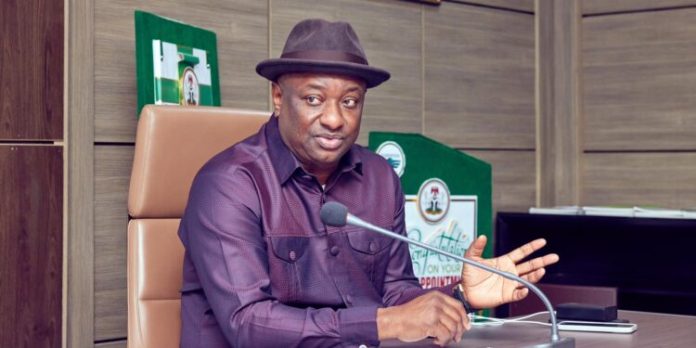
The Association of Nigeria Aviation Professionals (ANAP) has called on the Minister of Aviation and Aerospace Development, Festus Keyamo, to expedite the constitution and inauguration of governing boards for all aviation agencies, warning that the continued delay threatens transparency, accountability, and effective governance in the sector.
ANAP’s General Secretary, AbdulRasaq Saidu, appealed during a media briefing over the weekend in Lagos. While commending the recent inauguration of the Federal Airports Authority of Nigeria (FAAN) board, Saidu stressed that other critical agencies remain without boards, in violation of their establishing Acts.
Last week, Minister Keyamo inaugurated the FAAN board more than six months after its members were appointed by President Bola Tinubu. The board is chaired by Dr Umar Ganduje, with FAAN Managing Director, Olubunmi Kuku, serving as Vice-Chair. Other members include representatives from the Ministries of Justice, Defence, Tourism, and Aviation, as well as experts from the Nigerian College of Aviation Technology and FAAN’s legal department.
Saidu noted that while the inauguration was a welcome development, it should not be an isolated effort.
“We commend the Honourable Minister for constituting the FAAN board, but he must not stop there. Every aviation parastatal requires a functional and legally mandated board to ensure due process, discipline, and oversight,” he said.
He warned that the absence of boards has enabled abuses such as irregular recruitment, contract fraud, and poor governance practices.
“The vacuum left by non-existent boards has been exploited for years to undermine standards. This violates the laws that established these agencies and must be urgently addressed,” Saidu said, urging President Tinubu to fast-track appointments for all aviation agencies.
Saidu also criticised former Aviation Minister, Senator Hadi Sirika, for failing to inaugurate any agency boards during his eight-year tenure, despite having nominations approved by former President Muhammadu Buhari.
“ANAP raised several alarms during Sirika’s time, but our concerns were ignored. Unfortunately, that lapse has extended into the current administration. We cannot continue on this path if we hope to sanitise the aviation sector,” he added.
Saidu reiterated that aviation unions, including ANAP, have long expressed concerns over poor governance structures, which he said compromise transparency, safety, and service delivery in the sector.
He emphasised that the full establishment of agency boards would not only restore credibility to Nigeria’s aviation system but also align with global best practices.
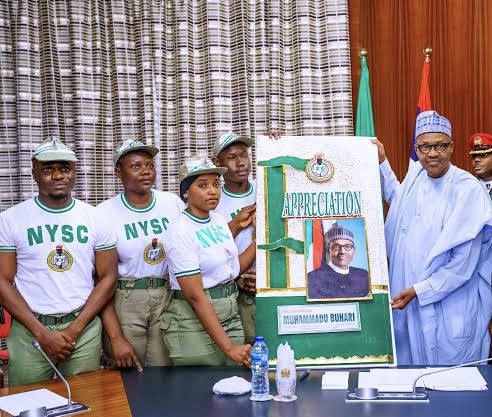
Former President Muhammadu Buhari is gone. Buried. Laid to rest. But somehow, across dusty NYSC camps and noisy parade grounds, his presence still lingers like the smell of wet khaki after morning drills.
Though power has changed hands and Nigeria now looks to a new president for direction, Buhari’s legacy, especially as it relates to the National Youth Service Corps (NYSC), refuses to sit quietly in a history book. It marches on, salutes firmly, and says: “Oga Buhari no dey again, but e remain for this khaki.”
Let’s be clear: Buhari didn’t create NYSC. The scheme was launched in 1973 by General Yakubu Gowon, as a way to heal the wounds of the civil war and force fresh graduates to face the full diversity (and humidity) of Nigeria. But if Gowon birthed the scheme, Buhari was the uncle who made sure it never missed morning devotion.
Even in his first stint as a military Head of State (1983–1985), Buhari made no effort to scrap the scheme. He understood the power of structure and discipline. And to be honest, if there’s any Nigerian government program that screams “discipline, service, and mild suffering,” it’s NYSC. So naturally, it appealed to him.
But it’s in his second coming, as a democratic president from 2015 to 2023, that Buhari truly stitches himself into NYSC’s fabric. This time, the man doesn’t just supervise the scheme from afar, he champions it with military pride and quiet loyalty. From his Daura hometown to Aso Rock, Buhari treats NYSC like a symbol of everything Nigeria should be: diverse, obedient, slightly underpaid, and always present.
Let’s talk numbers. Under Buhari, corps members’ monthly allowance moved from the legendary ₦19,800 to ₦33,000. That moment was so emotional, some corpers fainted, this time not from parade stress but from surprise. The raise was linked to the new minimum wage implementation, but many believed Buhari could have quietly ignored NYSC. Instead, he insisted corpers deserved better. It didn’t buy luxury, but it upgraded lives from garri-only diets to “garri plus egg.” Respect.
Buhari’s love for NYSC wasn’t just in naira and kobo. It was in policy seriousness. Remember the infamous case of former Minister of Finance, Kemi Adeosun? Her NYSC certificate scandal didn’t just cause political chatter, it led to her resignation. In Buhari’s Nigeria, you do NYSC or you don’t do power. No shortcuts. No influence. No “do you know who I am?” The rules applied to everyone, even cabinet members. That was Buhari’s quiet message: NYSC isn’t a casual scheme; it’s a rite of passage.
Then there were moments of heartfelt connection. Buhari would often host corps members during festive periods in Daura, his hometown, handing out cows, rice, and small token allowances. Was it just optics? Maybe. But it made a statement: this man, president or not, never distanced himself from NYSC. He saw them as part of the national fabric, literally and emotionally.
And even when calls rose to scrap NYSC, Buhari stood firm. Insecurity, kidnappings, and poorly maintained camps had many Nigerians asking, “Why are we still doing this?” But Buhari, ever the old-school patriot, held his ground. To him, the scheme represented national unity in its rawest form, a Yoruba corper teaching Hausa kids in Maiduguri, an Igbo girl learning to cook tuwo in Nasarawa. The awkwardness, the discomfort, the culture shock, that was the whole point.
And now, he’s gone. The baton has passed. Nigeria has a new president, new policies in motion, and new promises being made. But for thousands of serving corps members, Buhari still feels present. Every time they receive allawee, every time they chant “NYSC—service and humility!”, and every time they wear that slightly oversized khaki with pride, Buhari’s influence walks beside them.
Even his critics, those who blamed his government for economic hardship or insecurity, acknowledge that his commitment to NYSC was unwavering. While others laughed at the scheme, Buhari stood by it like a protective father at inter-house sports. He didn’t just believe in NYSC; he embodied its core values, discipline, unity, sacrifice, and quiet patriotism.
The emotional part? For many Nigerian youths, NYSC is where adulthood starts. It’s their first time living away from home, managing their own money (or mismanaging it), facing strange cultures, and attending community meetings that start two hours late. And Buhari understood that. He protected the scheme because he believed it builds character, probably the same way military camp builds soldiers.
Today, as we mourn his passing and debate his wider legacy, one thing is sure: his imprint on the NYSC is indelible. His name may no longer appear in government memos, but in every corper’s diary, every parade ground photo, and every “allowee don drop?” group chat, there’s a little piece of Buhari still alive.
So here’s to the man in khaki, even in death. Rest in peace, General Muhammadu Buhari. Nigeria may have buried you, but NYSC will keep wearing your legacy—creased, proud, and slightly tight at the waist.
Goodbye Baba. You may no longer be in power, but your love for service, unity, and dusty camp fields lives on. Rest in khaki.