The pump price of petrol could hit N900 per litre this week as global crude oil prices remain near $70 per barrel and major producers plan to boost supply. This follows a decision by OPEC+ an alliance of OPEC and non-OPEC oil producers to raise output by 547,000 barrels per day in September.
The move, aimed at regaining market share amid concerns over supply disruptions from Russia, may further influence Nigeria’s domestic fuel pricing. Over the weekend, depot prices in Nigeria surged from an average of N820 to N870 per litre. While many filling stations between Lagos and Ogun held prices at N865 to N875, others have already adjusted. Matrix station at Kara displayed N910, while Rainoil in Ibafo sold at N900 per litre.
Data from Petroleumprice.ng showed that companies like Aiteo, Aipec, and Emadeb sold ex-depot petrol at N865 on Sunday. NIPCO, Matrix, Sahara, and Bono priced theirs at N870, while Dangote had the lowest at N858. Others like Fynefield and Sigmund quoted as high as N900.
Independent Petroleum Marketers Association of Nigeria Vice President Hammed Fashola attributed the rising costs to forex volatility and crude oil trends. He urged stakeholders to wait until Monday for clearer pricing direction.
Globally, OPEC+ said its latest decision was driven by strong economic signals and low stock levels. Brent crude ended Friday near $70, rising from a low of $58 in April, boosted by seasonal demand.
The eight-member bloc had started output hikes in April, gradually ramping up production each month. The next OPEC+ meeting is scheduled for September 7, when further decisions on output cuts could be made.
OPEC+ produces nearly half of the world’s oil supply and includes non-OPEC countries like Russia and Kazakhstan.
The Bank of Industry (BOI) has reaffirmed its dedication to boosting small business growth by disbursing ₦900 million to 262 Micro, Small, and Medium Enterprises (MSMEs) in the Federal Capital Territory (FCT) as part of its ongoing ₦75 billion intervention fund.
This disclosure was made during a high-level Presidential Loan Clinic for MSMEs held in Abuja, an event convened by the BOI in collaboration with the Office of the Special Adviser to the President on MSMEs and Job Creation.
BOI Managing Director and CEO, Olasupo Olusi, represented by Mr. Yinka Adegboye, Division Head of Multilaterals, stated that a total of ₦2.9 billion has been approved for 662 businesses in the FCT, with ₦900 million already disbursed to 262 qualifying companies.
Olusi highlighted that while several businesses have received disbursements, others are pending due to incomplete documentation and compliance issues, urging entrepreneurs to resolve these bottlenecks for quicker access.
“Our goal is to ensure that every eligible Nigerian entrepreneur accesses this fund,” Olusi explained. “This initiative goes beyond just loan disbursement; it focuses on capacity building, impact monitoring, and sustainable growth.”
The fund, backed by a presidential directive, aims to create over 75,000 direct jobs and 150,000 indirect jobs across Nigeria while increasing GDP contributions from the MSME sector.
BOI Regional Manager for the North Central region, Nasiru Ozovehe, emphasized that the programme is targeted at formally registered businesses with growth potential. He reiterated that the maximum loan amount per MSME is ₦5 million, and only companies with proper documentation are eligible.
During the clinic, the Special Adviser to the President on MSMEs and Job Creation, Temitola Adekunle-Johnson, stressed that the government’s objective is not merely financial but also structural.
“The goal is to make the money work for your business, promote job creation, and ensure sustainable development. The BOI is directly assisting applicants to overcome documentation challenges and maximize fund utilization,” he said.
A major highlight of the event was a testimony from Damilola Afolabi, CEO of The Ladies Empire, who described how the loan had been pivotal in acquiring equipment, hiring more staff, and expanding operations.
“This intervention came just at the right time. The 9% interest rate, three-year repayment period, and three-month moratorium gave us breathing room,” Afolabi shared.
Participants also received comprehensive updates on loan requirements, monitoring expectations, and progress evaluations. The BOI emphasized that the fund is intended to create a robust MSME ecosystem that contributes significantly to national development, especially considering that Nigeria boasts over 39 million MSMEs, contributing nearly 50% of the GDP and generating more than 80% of employment.
Nigeria’s national women’s basketball team, D’Tigress, have once again written their names into the history books by securing a fifth straight FIBA Women’s Afrobasket championship, defeating Mali in a gripping final showdown.
Under the strategic leadership of coach Rena Wakama, the Nigerian side emerged triumphant at the Palais des Sports de Treichville in Abidjan, Côte d’Ivoire, on Sunday, August 3, 2024.
The win not only cements Nigeria’s standing as the most dominant force in African women’s basketball but also sets a continental record for consecutive titles—five in total. Remarkably, D’Tigress have maintained a decade-long unbeaten run in the competition, with their last loss dating back to October 2, 2015, against Cameroon.
In a tense final, Mali edged the first quarter, leading 26–21, but Nigeria staged a composed comeback to level the game at 41–41 before halftime. The third quarter saw D’Tigress begin to assert their superiority, pushing ahead to 61–56. The fourth quarter was a defensive masterclass by the Nigerians, who limited Mali to just eight points, ultimately sealing a 14-point margin victory.
This victory came on the heels of a hard-fought semi-final clash against Senegal, where D’Tigress relied on a strong fourth-quarter effort to come from behind and book their place in the final.
Coach Wakama, who also led the team to victory in 2023, now boasts two Afrobasket titles in as many attempts, becoming the first woman to coach a team to back-to-back continental titles.
The team’s achievement has sparked celebrations across the nation, with fans and stakeholders hailing their consistency, resilience, and tactical brilliance on the court. Social media was abuzz with congratulatory messages and images of jubilant players proudly displaying their gold medals.
D’Tigress’ dominance not only reflects athletic prowess but also symbolizes the evolution of women’s basketball in Nigeria, driven by a blend of discipline, leadership, and investment in grassroots development.
Surplus liquidity across Nigeria’s financial system has helped sustain low short-term interest rates, with minimal fluctuations recorded in the interbank market during the past week. The Central Bank of Nigeria (CBN) refrained from introducing any major fresh liquidity injections, yet the system remained adequately funded.
Analysts from Cowry Asset Management noted that money market stability was supported by a solid opening position of ₦1.30 trillion in net system liquidity. This cushion helped avert any major funding pressures among financial institutions.
Despite the relatively high system liquidity, the CBN conducted Open Market Operations (OMO) on Monday, offering ₦600 billion in bills. Demand from investors was substantial, and the central bank ultimately raised ₦1.55 trillion, introducing mild upward pressure on funding rates.
Interestingly, even with this liquidity drain, midweek balances climbed back to ₦1.28 trillion, absorbing the ₦185.93 billion outflow from the Debt Management Office (DMO) bond auction. By the week’s end, overall system liquidity rose again to approximately ₦1.30 trillion, with a boost from placements in the apex bank’s Standing Deposit Facility (SDF).
AIICO Capital Limited noted that although surplus funds remained in circulation, some of that liquidity was absorbed via the CBN’s sterilization efforts. According to the investment firm, liquidity levels expanded by approximately ₦261.25 billion, reaching ₦1.61 trillion by the close of the week.
As a result, funding costs experienced marginal changes. The Open Repo (OPR) rate held firm at 26.50%, while the Overnight Lending Rate (O/N) ticked down slightly by 2 basis points to 26.90%, according to trading figures published on the FMDQ platform.
Looking ahead, analysts expect the financial system to retain its current level of liquidity, barring any unexpected funding pressures. However, a total of ₦258.63 billion in maturing treasury bills is set to enter the system next week, which could influence short-term interest rates depending on whether the CBN decides to initiate another OMO auction.
In the interim, the Nigerian money market remains tranquil, showing resilience despite macroeconomic headwinds and regulatory adjustments. Analysts believe that the consistency in short-term benchmark rates, especially in the face of active monetary interventions, highlights the robustness of current liquidity conditions.
In a commanding display of corporate dominance, just 20 publicly listed companies now control a staggering 81.16% of the total market capitalization of the Nigerian Exchange (NGX), as of the close of trading on Friday. These top-tier firms collectively represent a combined valuation of ₦41.385 trillion, solidifying their role as key movers of the Nigerian capital market.
Data independently sourced by BizWatch Nigeria reveals that MTN Nigeria Communications Plc, with a market valuation of ₦10.077 trillion, stands as the most valuable publicly traded entity on the NGX. This places the telecom giant ahead of traditional market heavyweights such as Airtel Africa, Dangote Cement, and BUA Foods.
Meanwhile, Dangote Cement Plc has made notable progress, overtaking Airtel Africa in valuation with its current standing at ₦8.914 trillion. This transition relegates Airtel Africa, which has maintained a leading position for years, to fourth place. Airtel Africa now has a market capitalization of ₦8.683 trillion, largely attributed to the limited activity on its shares due to tightly held ownership.
BUA Foods Plc, representing the consumer goods sector, holds third place with a valuation of ₦8.701 trillion. Analysts suggest the company has further potential for growth, with prospects of climbing higher among the elite NGX firms valued over ₦1 trillion.
Next in line is BUA Cement Plc, riding the momentum of a strong earnings rebound. Its recent market rally has pushed its capitalization to ₦5.01 trillion, placing it as the fifth most valuable company on the local bourse.
Guaranty Trust Holding Company (GTCO) becomes the first financial institution to break into the upper echelons of market valuation, occupying sixth place with a capitalization of ₦3.624 trillion. Analysts point to GTCO’s comparatively lower risk profile and strategic ambition—including a London Stock Exchange listing—as markers of robust governance and long-term vision.
Close behind is Zenith Bank Plc, with its stock closing at ₦3.141 trillion. As a top-tier rival to GTCO, the Ajose Adeogun-headquartered bank continues to maintain investor confidence ahead of its mid-year earnings release. Market observers say Zenith’s commitment to interim dividends remains firm, despite the regulatory costs associated with recent policy shifts.
Geregu Power Plc continues to maintain a stronghold in the power sector with a valuation of ₦2.853 trillion, although its share price has shown limited reaction to earnings reports or broader market changes.
Ranked ninth is Lafarge Africa Plc (WAPCO), rounding off the “cement oligarchy” with a valuation of ₦2.4 trillion. Transcorp Power follows closely in tenth place with the same market value, highlighting the growing influence of energy firms in Nigeria’s capital market.
The World Bank is expected to greenlight a $250 million health intervention loan for Nigeria by September 23, 2025, as part of its third-phase Health Security Programme covering Western and Central Africa.
According to an official appraisal document released by the bank, the loan is designed to strengthen Nigeria’s capacity to prevent, detect, and respond to public health emergencies through improved collaboration, infrastructure, and preparedness.
The funding, to be issued under the International Development Association (IDA) credit line, will be implemented by the Nigeria Centre for Disease Control (NCDC), with the Federal Ministry of Finance acting as borrower.
The document highlights Nigeria’s critical health indicators, noting that the nation records over 800,000 child deaths and 80,000 maternal deaths annually. Life expectancy is pegged at just 54 years, while six of the ten leading causes of death are communicable diseases like malaria, HIV/AIDS, and tuberculosis.
The health sector’s fragility is further compounded by low government spending, standing at just 0.62% of GDP, with per capita expenditure on healthcare around $14, of which less than $3 is allocated to primary care. Consequently, out-of-pocket payments by Nigerians have soared to 76.24%, one of the highest globally.
The World Bank estimates that over 120 million Nigerians lived below the poverty line in 2024. The combination of poverty, weak health infrastructure, and limited disease response capacity paints a worrying picture.
The proposed loan will fund projects such as:
Expansion of emergency operations centres in all 36 states and the FCT
Development of a national warehouse for emergency medical supplies
Enhancement of pharmaceutical regulation and promotion of local drug manufacturing
Strengthening of surveillance systems, both human and animal, through platforms like SORMAS and NADIS
Investment in ICT tools, epidemiological training, and community-level healthcare
The World Bank’s 2023 Joint External Evaluation showed improvement in Nigeria’s health preparedness score (54%, up from 39% in 2017), but highlighted continued weaknesses in legal frameworks, logistics, and subnational response coordination.
To improve performance, the project will also encourage greater participation of women in public health leadership, aiming to correct the gender disparities observed during previous health emergencies such as COVID-19 and Ebola.
The NCDC will lead the implementation through a National Project Coordination Unit, with a Steering Committee comprising health, finance, and environmental ministries. State-level coordination will be led by respective health commissioners, and only states fulfilling key eligibility criteria will qualify for participation.
Meanwhile, the Debt Management Office (DMO) reported that as of March 31, 2025, Nigeria’s debt to the World Bank had climbed to $18.23 billion, accounting for nearly 40% of the nation’s total external debt.
Of this, $16.99 billion comes from the IDA, while $1.24 billion is owed to the International Bank for Reconstruction and Development (IBRD), further highlighting the World Bank’s central role in Nigeria’s external financing portfolio.
Nigeria and Algeria have taken concrete steps toward enhancing their diplomatic ties, following a high-level meeting between Nigeria’s Minister of Foreign Affairs, Ambassador Yusuf Tuggar, and Algeria’s Foreign Minister, Ahmed Attaf.
In a press statement released by Alkasim Abdulkadir, Special Assistant on Media and Communications to the Nigerian Foreign Affairs Minister, it was disclosed that both diplomats engaged in strategic dialogue aimed at deepening cooperation on political, economic, and multilateral fronts.
A key highlight of the meeting was the renewed commitment to revive the Nigeria-Algeria Binational Commission, foster regional synergy, and champion African developmental priorities on the global stage.
Ambassador Tuggar also presided over the foundation laying ceremony for a new chancery building at the Nigerian Embassy in Algiers. The event, which took place at Dely Ibrahim—the Algerian capital’s diplomatic hub—was attended by high-ranking officials, embassy personnel, and members of the Nigerian diaspora in Algeria.
Abdulkadir emphasized the importance of the project, describing it as a vital upgrade to Nigeria’s diplomatic infrastructure. The proposed building will feature sustainable architecture, state-of-the-art security systems, and modernized facilities tailored to improve service delivery and operational efficiency.
“The groundbreaking marks a milestone in projecting Nigeria’s image internationally while also enhancing working conditions for diplomatic personnel,” Abdulkadir stated. He confirmed that the construction will commence immediately and is slated for completion within 18 months as part of the ministry’s comprehensive reform strategy.
MTN Nigeria Plc has surged past the ₦10 trillion market capitalization mark following an impressive earnings release that boosted investor confidence and increased trading activity in the telecom giant’s stock.
This development places MTN Nigeria at the forefront as the highest-valued company on the Nigerian Exchange (NGX), bolstered by its strong performance in the first half (H1) of 2025 and regulatory support for tariff hikes across the industry.
The telecom firm’s stock closed at ₦480 per share last Friday, rising from ₦472 at the end of July. Market data showed 1.485 million MTN Nigeria shares were traded, valued at approximately ₦714 million.
After a challenging 2024, MTN Nigeria recorded a sharp turnaround, reporting a profit of ₦414.86 billion for H1 2025, up from a loss of ₦519.06 billion in the previous year. The robust earnings were driven by strong revenue growth attributed to price increases, expanding data usage, and customer acquisition.
Service revenue rose by 54.6% year-on-year to ₦2.38 trillion, with the data segment contributing 51.7%—up from 47.2% a year earlier. MTN reported that data subscribers grew by 11.8% to 51 million, while average data consumption per user rose 26.3% to 13.26GB.
Voice services also contributed to revenue growth, supported by an expanding user base and customer retention strategies. Meanwhile, operating expenses climbed 18.7% to ₦1.18 trillion, but this increase lagged behind revenue growth, preserving operating margins. Cost savings from new tower lease agreements and a stable exchange rate further supported operational efficiency.
However, net finance costs rose 57.8% to ₦265.33 billion, driven by higher interest expenses and reduced finance income. Notably, foreign exchange losses stood at ₦5.23 billion—significantly lower than the ₦887.68 billion FX loss recorded in H1 2024, reflecting a more stable currency environment.
MTN’s profit before tax hit ₦622.26 billion, compared to a negative figure of ₦751.29 billion in the corresponding period last year. Consequently, earnings per share (EPS) rose to ₦19.8, reversing last year’s loss per share.
Shareholders’ equity also showed marked improvement, with the company narrowing its negative balance from -₦324.57 billion in Q1 2025 to -₦42.45 billion in H1 2025. This is a significant recovery from the -₦458 billion recorded at the end of 2024.
Analysts at CardinalStone Securities have projected that this turnaround could lead to dividend payouts and a potential public share offering. MTN Group President, Ralph Mupita, had previously stated the group’s intention to reduce its shareholding in MTN Nigeria once the company returned to positive equity and resumed dividend payments.
Shares of UAC of Nigeria Plc (UACN) skyrocketed last week, hitting an unprecedented high of ₦88.30 following strong investor interest in its earnings outlook and a recently announced acquisition. Trading data from the Nigerian Exchange (NGX) showed that 3.527 million units of UACN stock exchanged hands, valued at ₦307.83 million.
The company’s market momentum was driven by optimism around its second-quarter 2025 earnings performance and news of its acquisition plans. UACN’s share price had previously stood at ₦54.95 before climbing significantly amid heightened investor enthusiasm.
UACN reported that its Q2 2025 revenue surged by 27% to ₦54.4 billion, primarily due to volume growth in its paints business and strategic pricing adjustments across its subsidiaries. Gross profit rose by 46% to ₦14 billion, with the margin expanding by 321 basis points to 26%.
The company attributed the improvement to efficient pricing strategies and enhanced production processes. It also credited the slower pace of input cost inflation to the implementation of cost optimization strategies introduced in 2024 and a relatively stable Naira.
Operating profit jumped to ₦5.8 billion in Q2 2025 from ₦3.3 billion in Q2 2024. Despite a 30% increase in operating expenses—mainly driven by rising costs in staffing, electricity, transportation, and marketing—UACN maintained a robust profitability profile. Its OPEX-to-sales ratio increased modestly from 16.0% to 16.4%.
However, net finance costs rose to ₦1.5 billion in Q2 2025, reversing the ₦2.7 billion net finance income posted in Q2 2024. This was largely due to higher interest expenses on short-term loans used to support working capital, especially in the Edibles and Feed segment.
A year-on-year comparison was impacted by the absence of a ₦3.5 billion foreign exchange revaluation gain recorded in Q2 2024. However, a profit contribution of ₦1.8 billion from associates like UPDC PLC and gains from property disposals by MDS Logistics helped to bolster overall performance.
Pretax profit for Q2 2025 came in at ₦6.1 billion, up from ₦5.9 billion in the same quarter last year. Adjusting for the exceptional treasury gains of 2024, this represents a 146% year-on-year increase. Net profit rose to ₦4.0 billion with earnings per share at 132 Kobo, compared to 119 Kobo in Q2 2024.
In a strategic move, UACN announced it has entered into a definitive agreement to acquire Chivita|Hollandia, a prominent food and beverage conglomerate in Nigeria. The deal—which remains subject to regulatory clearance—positions UACN to further penetrate the fast-moving consumer goods market. Hollandia leads in evaporated milk and drinking yoghurt, while Chivita dominates the fruit juice space.
Despite a dip in its half-year performance compared to 2024—where pretax profit dropped 25.8% to ₦11.1 billion and net profit fell 23% to ₦7.359 billion—analysts suggest that synergies from the Chivita|Hollandia acquisition could revitalize the company’s profit trajectory in the coming quarters.
You could say July was a flex for Nigeria’s equities market. Not just a casual stretch, but a full-on display of strength—biceps bulging from consumer goods to agro-industrials and cement titans. If you’ve been anywhere near the Nigerian Stock Exchange this past month, you already know: July wasn’t just bullish. It was confident, consistent, and, well…a little showy.
From Nestlé to Presco, from cement giants to printing underdogs, something shifted in the air. Was it better earnings? Rising confidence in macro stability? Maybe just pent-up investor optimism finally finding expression. Whatever it was, the scoreboard doesn’t lie.
There’s something poetic about Nestlé leading the charge. It’s a quiet giant—steady, rarely dramatic. But in July, it roared. A ₦440 gain per share isn’t small change in this space. That’s heavyweight territory.
Investors ran back to Nestlé for the usual reasons: stable demand (people always eat), pricing power, and a solid H1 guidance that signaled the worst might be over. Inflation? Sure. But if anyone knows how to work around rising costs and FX pressure, it’s Nestlé.
Honestly, the message was clear—when uncertainty knocks, you buy staples. And few are more staple than Milo and Maggi.
Presco didn’t need fireworks to impress—it just did what it does best: sell palm oil, earn in FX, and keep margins healthy. Global prices for palm oil stayed high, and Presco cashed in.
Its performance tells a broader story: investors are starting to see agro-industrials not just as seasonal plays, but as robust long-term hedges—especially when global markets get jittery.
And let’s face it, in a country where food security is a hot topic and currency volatility is the norm, firms like Presco carry weight.
3. Okomu Oil Palm Plc: The Silent Climber
Open: ₦790 → Close: ₦1,050 | Gain: ₦260 | +32.91%
If Presco was steady, Okomu was strategic. A ₦260 per share bump speaks volumes. Not flashy, but reliable—kind of like that investor who never says much but always seems to cash out big.
The key here? FX-linked earnings. Plus, low debt and a reputation for profitability make Okomu a safe haven in a stormy market. If July was about confidence, Okomu wore it like cologne.
Cement isn’t sexy, but you’d be a fool to ignore Dangote when the construction sector starts humming. An ₦88.3 gain might seem tame next to the others, but in absolute terms? Massive.
This wasn’t just speculation—it was strategic reallocation. With infrastructure projects picking up and a strong Q2 earnings performance, Dangote reminded everyone: when Nigeria builds, Dangote wins.
5. Lafarge Africa: Out of the Shadows
Open: ₦87.2 → Close: ₦149 | Gain: ₦61.8 | +70.87%
If Dangote is the king, Lafarge is the comeback kid. With a jaw-dropping 70.87% jump, it went from a mid-table player to a headline act.
Behind the rally? Strong earnings, efficient cost management, and a clear strategy for sourcing materials locally. Investors noticed. And rewarded.
Sometimes, all a stock needs is one clean quarter to change the story. For Lafarge, July was the rewrite.
At first glance, Beta Glass looks like the underachiever on this list. But context matters.
In a sector dealing with capital expenditure pressures and shifting packaging demand, a near-12% gain signals resilience. Investors are betting on Nigeria’s manufacturing revival—and Beta is quietly riding the wave.
7. BUA Cement: Reclaiming Ground
Open: ₦95.4 → Close: ₦135 | Gain: ₦39.6 | +41.51%
BUA’s rally was part catch-up, part anticipation. After a tough 2024, this bounce suggests investors believe the worst is over.
Construction activity is rising, and BUA sits right at the heart of it. Plus, the company’s capacity expansion plans mean it could leapfrog competitors if execution stays tight.
If this were a boxing match, July was BUA’s first clean jab after months of dodging hits.
Now this was a surprise. UACN almost doubled its price—and no, it wasn’t just a meme stock moment.
There’s real work happening behind the scenes: restructuring, better asset leverage, and growth in both food and real estate arms. This wasn’t noise. It was a signal. Investors finally heard it.
Funny how the exchange itself becomes one of the biggest winners. But with rising trade volumes and strong corporate results across the board, NGX Group’s own stock got a performance boost.
It’s a classic case of “a rising tide lifts all boats”—except this time, the tide was the boat.
10. Cadbury Nigeria: Sweet Returns
Open: ₦41.5 → Close: ₦68 | Gain: ₦26.5 | +63.86%
Cadbury’s gain wasn’t just market sentiment—it was a bet on fundamentals.
Investors are buying into the idea that FMCGs, when run efficiently, can weather storms. Cadbury’s margin improvements and supply chain tweaks are finally paying off. And people still love their Bournvita.
It’s the kind of performance that reminds you sometimes the sweetest victories are quiet.
So…What’s the Big Picture?
Sure, each of these stocks has its own story. But together? They tell a tale of recovery, confidence, and calculated risk-taking.
We’re seeing a market slowly shaking off the cobwebs of 2024’s FX shocks and inflationary drama. There’s renewed belief in local production, defensive consumer plays, and infrastructure-linked stocks.
It’s not just about who gained. It’s why they gained—and what that says about investor sentiment going forward. For the business-minded? This is a clear nudge: the market is moving again. And in times like these, not playing might be the riskiest play of all.
Final Thought
You don’t need to be a day trader to recognize patterns. Sometimes, just watching where the money’s flowing is enough to tell you the mood of the market. And in July? That mood was unmistakably optimistic. Let’s see what August has in store.
The Central Bank of Nigeria (CBN) has unveiled plans to float N220 billion worth of Nigerian Treasury Bills in a public auction scheduled for Wednesday. The auction will cover three standard tenors — 91, 182, and 364 days.
The modest offer size is expected to draw intense investor interest, particularly for longer-term papers, amid shifting interest rate expectations and growing liquidity in the money market.
The previous auction witnessed steep cuts in yield across all three tenors, reflecting yield normalization and a drop in inflationary pressure. At the time, the CBN offered N290 billion in total, receiving subscriptions of N675.66 billion — significantly down from over N1.33 trillion in the preceding auction.
The 91-day bills were allotted at a reduced rate of 15%, compared to 15.74% previously. The 182-day tenor was allotted at 15.50%, down from 16.20%, while 364-day papers fetched 15.88%, declining from 16.30%.
Fixed income experts suggest that the ongoing moderation in yields, especially at the short end, is likely to continue, backed by surplus liquidity and fewer available instruments.
With disinflation trends and macroeconomic stability gaining ground, analysts expect the secondary market for T-bills to remain buoyant. The upcoming auction could see further tapering of yields as demand outpaces supply once again.
The shift also poses implications for the banking sector, where lower treasury yields could weigh on short-term returns. However, this could be offset by increased lending activities and higher asset turnover in the broader financial system.
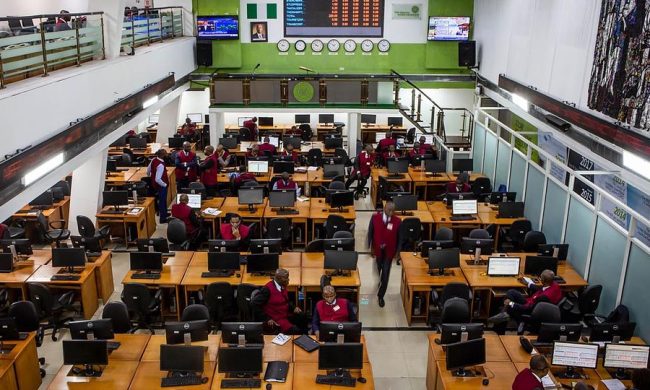
The Nigerian stock market continues its record-setting momentum, with the Nigerian Exchange (NGX) crossing the N89 trillion mark in market capitalization after posting a staggering N4.32 trillion gain in a single week.
Propelled by impressive second-quarter earnings reports and attractive interim dividend declarations, the All-Share Index climbed 5.07% to an all-time high of 141,263.05 points, according to data compiled by Cowry Asset Limited.
The bullish rally, now in its tenth consecutive week, has been fueled by investor confidence across blue-chip sectors including banking, cement, and consumer goods. The market capitalization jumped 5.08% week-on-week to close at N89.37 trillion.
Trading volumes surged to 4.85 billion shares worth N149.75 billion, with the total number of deals rising by 26.4% to 174,265 — reflecting heightened investor participation.
The Industrial Goods Index led the sectoral rally, surging 10.12% on strong demand for DANGOTE CEMENT, BUA CEMENT, and LAFARGE AFRICA. The Banking Index followed with a 3.49% gain, lifted by performance optimism around UBA, WEMABANK, and ZENITHBANK.
Consumer Goods posted a 2.72% gain, while Insurance (-1.22%) and Oil & Gas (-0.48%) were the only lagging sectors, affected by profit-taking and declining momentum.
UACN emerged as the week’s top performer with a massive 115.9% return. Other high flyers included ACADEMY (78.3%), ABCTRANS (65.8%), EUNISELL (62.2%), and LAFARGE AFRICA (61.1%).
With a year-to-date return now standing at 37.25%, analysts forecast that investor appetite will remain strong as key earnings from Tier-1 banks are yet to be released. Cowry Asset advises market participants to prioritise stocks with strong fundamentals and dividend potential.
In a bold leadership shakeup, Dangote Petroleum Refinery and Petrochemicals has appointed David Bird as its new Chief Executive Officer, effective July 2025 — a move designed to sharpen its commercial edge and operational scale.
The appointment marks a pivotal moment for Africa’s largest single-train refinery, signaling a strategic shift as the $19 billion facility enters full-scale commercial deployment.
Bird brings over 20 years of experience from Shell, where he developed expertise in asset optimisation, energy infrastructure, and downstream profitability. His track record spans integrated energy systems across multiple regions and market conditions.
As Dangote’s new CEO, Bird is tasked with increasing capacity utilisation, improving operational efficiency, and expanding product distribution — particularly through cost-effective Compressed Natural Gas (CNG) transport systems. This distribution model is expected to reduce logistics costs while boosting fuel accessibility nationwide.
Located in the Lekki Free Trade Zone, the 650,000 bpd facility is central to Nigeria’s energy independence ambitions. Bird’s leadership will likely fast-track efforts toward profitability, especially through refined product exports and a streamlined domestic supply chain.
Significantly, the refinery is also eyeing a landmark IPO on the Nigerian Exchange (NGX). The planned listing, expected post-operational stabilisation, could position Dangote Refinery as one of the most valuable publicly traded companies in West Africa.
By aligning with government goals for industrial growth and capital market expansion, the refinery is set to become a cornerstone of Nigeria’s economic transformation. With Bird at the helm, Dangote Refinery is moving from infrastructure delivery to market dominance.
Nigeria’s external reserves have witnessed a notable increase of $2.15 billion within 30 days, as the country continues to attract stronger foreign inflows and benefit from increased oil output.
According to the latest figures from the Central Bank of Nigeria (CBN), the nation’s gross external reserves rose to $39.359 billion as of July 30, up from $37.210 billion recorded at the end of June 2025.
The significant rise in reserves comes despite a more cautious approach by the CBN towards foreign exchange interventions during the month. Analysts believe that rising oil production, combined with renewed investor interest in Nigerian assets, especially from foreign portfolio investors, have bolstered the country’s reserve position.
Experts also point to the possibility of stronger remittance inflows and other external sources as factors expected to maintain the upward trend in reserve growth. With a healthier buffer, the CBN is better positioned to support the FX market when necessary.
A former presidential aspirant of the All Progressives Congress, Nicolas Felix, has downplayed the recently formed opposition coalition under the African Democratic Congress, insisting it poses no threat to President Bola Tinubu’s 2027 re-election bid.
Felix made this known on Thursday in Suleja while distributing free fuel to residents as part of his community outreach. He expressed strong confidence in Tinubu’s re-election, predicting a landslide win with no fewer than 15 million votes.
Reacting to the coalition which includes notable figures like former Vice President Atiku Abubakar, Labour Party’s Peter Obi, and APC’s Rotimi Amaechi — Felix said the alliance lacks cohesion and a clear agenda.
“In a democracy, you must have opposition. We are not threatened,” he said. “Let them coalesce. They will gather and scatter. They have nothing to offer. Their motive is not pure.”
Felix highlighted recent government initiatives such as the NELFund student grant as proof of Tinubu’s impactful leadership, citing the ₦100 billion disbursed to 600,000 students. “These students will vote. Their families will vote. So we are excited. Come 2027, it is going to be a walkover for us,” he said.
On his community outreach, Felix said the free fuel distribution aligns with the president’s Renewed Hope Agenda and aims to ease the burden on low-income earners like Okada and Keke riders.
“We are just giving back to the people. This is not political. It’s about putting smiles on their faces,” he added.
Also speaking at the event, APC Deputy National Women Leader, Zainab Ibrahim, urged lawmakers to fast-track the Special Seats Bill before the National Assembly. She described the bill as a game changer for women’s representation in politics.
She also highlighted the historic ₦100 billion budgetary allocation to the Ministry of Women Affairs, assuring that Nigerian women will rally behind President Tinubu in the next general election.
The Smithsonian’s National Museum of American History has removed content referencing Donald Trump’s two impeachments from its presidential exhibit, drawing scrutiny over possible political influence behind the decision.
The museum confirmed to CNN on Thursday that the move followed an internal review of “legacy content,” part of a broader update of longstanding displays. The change, first reported by The Washington Post, erased temporary panels that were installed in 2021 to reflect Trump’s impeachment history.
Those panels, which covered Trump’s 2019 and 2021 impeachments, were initially placed over the museum’s long-standing American Presidency exhibit last updated in 2008. The exhibit previously featured the impeachment histories of Andrew Johnson, Richard Nixon (who resigned before impeachment), and Bill Clinton.
Trump remains the only U.S. president to be impeached twice: first in 2019 for allegedly soliciting Ukraine to influence the 2020 election, and again in 2021 for inciting the January 6 Capitol attack. He was acquitted by the Senate both times.
The museum explained that the Trump-focused panel, labeled “Case under redesign (history happens)”*, was intended as a short-term response to ongoing events and had stayed longer than planned. It was quietly taken down in July 2025.
However, critics point to Trump’s earlier executive order seen as an attempt to influence cultural institutions like the Smithsonian—as a possible reason for the change. The order pushed for revisions in how American history, including controversial topics such as racism and Trump’s own presidency, is presented to the public.
The Smithsonian, in its statement, pledged that a future redesign of the exhibit would include references to all presidential impeachments. No timeline for that update was provided.
A spokesperson for the Trump-aligned administration commented on the decision, criticizing what they called “divisive, DEI exhibits” and expressed support for displays that promote “American greatness.” The statement reflects broader efforts by Trump to reshape cultural narratives through political pressure on institutions ranging from museums to sports and the arts.
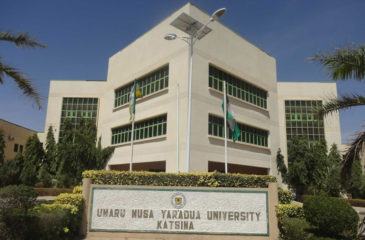
Umaru Musa Yar’adua University (UMYU), Katsina, has expelled 57 students over their involvement in various forms of examination malpractice. The disciplinary action was approved by the university’s Senate during its 125th Regular Meeting, following recommendations from the Central Examination Misconduct Committee.
A statement released Saturday by the Head of Information and Protocol, Hajiya Fatima Sanda, confirmed the decision, noting that investigations were carried out across multiple faculties before sanctions were issued.
In addition to the expulsions, five students were rusticated for two semesters covering the 2024/2025 academic session, with their examination results annulled. Two other students received formal written warnings, which will remain on their permanent academic records.
The university reiterated its zero-tolerance stance on examination misconduct, stating that the sanctions are meant to uphold academic integrity and serve as a warning to others.
“UMYU is fully committed to preserving the sanctity of its academic processes and will not hesitate to apply strict penalties to deter violations,” the statement read.
Students were advised to strictly follow academic guidelines and steer clear of all forms of malpractice, with a warning that future breaches will attract equally firm disciplinary measures.
KPMG has advised Nigerian banks and financial institutions to fast-track their preparedness for the rollout of open banking, expected to launch nationwide in August 2025. The call was made in its latest report, Modernising Core Banking Systems: Navigating Challenges to Achieve Resilient Transformation, released Thursday. The document reflects insights from the 2025 KPMG Core Banking Modernisation Summit and outlines strategic recommendations for financial players navigating the shift to open banking.
Open banking allows customers to authorise their banks to share financial data with third parties—such as fintech firms, neobanks, or other banks—via secure Application Programming Interfaces (APIs), enabling more personalised and customer-centric products.
KPMG described open banking as a “powerful catalyst” driving innovation, collaboration, and financial inclusion in Nigeria’s banking landscape. It noted that open APIs are already being used to power solutions such as virtual accounts, digital card management, payment rail integrations, and merchant gateways, thereby enhancing access and efficiency.
“Open banking is paving the way for financial services innovation through ecosystem collaboration and partnerships,” KPMG stated, warning that traditional institutions must act quickly to modernise their core infrastructure to keep pace with regulatory timelines and evolving customer expectations.
According to the firm, legacy banking systems can no longer meet the demand for speed, flexibility, and digital-first services. It urged banks to rethink their technology strategy in order to remain competitive against emerging digital-native challengers.
KPMG further emphasised that the successful rollout of open banking will depend on banks’ ability to ensure API readiness, adapt operations for third-party service integration, and address data governance and security issues.
Beyond improved customer service, the report highlighted that open banking could deepen financial inclusion by leveraging alternative data sources such as mobile usage and utility payments to better serve underserved communities.
The Central Bank of Nigeria (CBN) had issued a regulatory framework for open banking in 2021 and confirmed plans to officially launch the initiative by August 2025.
A new report has revealed that many Nigerian families, particularly in Lagos, are facing growing financial pressure as rents now consume between 50 and 70 percent of their monthly income.
The findings, published in the State of Lagos Housing Market Report, Volume 3, highlight a deepening housing crisis marked by stagnant wages, unregulated rent hikes, rising land prices, and limited access to affordable housing.
“Wages remain stagnant while rents consume 50 to 70 percent of income, increasing sharply, reducing affordability, and making home ownership unattainable,” the report stated.
It also noted that speculative land buying, costly and complex legalisation processes, and a mortgage system that excludes most residents are worsening the situation.
According to the publication by the Roland Igbinoba Real Foundation for Housing and Urban Development, developers are more inclined to build luxury apartments due to higher returns, while there are little to no incentives to invest in low-cost housing.
Respondents interviewed during the study described a pattern of arbitrary rent increases and a growing number of informal settlements, with residents forced to live far from their workplaces, incurring higher transportation costs and enduring long commuting hours.
“Affordable housing is far from jobs, leading to high commuting costs and long hours. Low-cost homes often lack basic services and infrastructure, compromising livability,” the report added.
It further identified inflation and soaring building material costs as major barriers to new developments, especially for small and mid-scale builders who typically serve middle-income earners.
“Speculation has driven up land prices even in remote areas, deterring genuine homebuilders. This behaviour inflates land values artificially and pushes ownership further out of reach for average citizens,” the report observed.
The 3rd edition of the State of Lagos Housing Market report builds on earlier versions released in 2009 and 2016. It underscores the need for urgent reforms and policy intervention to make housing more accessible and affordable in Nigeria’s commercial capital.
The Nigerian Aviation Handling Company (NAHCO) Plc has posted an impressive 166.7 percent growth in net profit after tax, reaching ₦8.88 billion for the first half of 2025, up from ₦3.33 billion in the same period of 2024.
The company’s half-year financials, released on the Nigerian Exchange (NGX), also showed a 102.06 percent increase in group revenue to ₦32.33 billion, compared to ₦16 billion in H1 2024, underlining its strong financial momentum.
Gross profit rose by 117.73 percent to ₦19.16 billion, up from ₦8.80 billion, while operating profit climbed by 126.9 percent to ₦11.64 billion. Profit before tax surged by 148.21 percent to ₦11.79 billion, supported by effective cost management. Earnings per share also jumped from ₦1.71 to ₦4.55.
Operating profit margin: increased from 32.06% to 36%
Pre-tax profit margin: improved from 29.7% to 36.5%
Return on total assets: grew from 7.09% to 20.14%
Return on equity: jumped to 51.09% from 16.59%
These results build on the company’s strong full-year 2024 performance, where it recorded an 88.5 percent rise in revenue to ₦53.54 billion and a 115.4 percent increase in pre-tax profit to ₦18.70 billion.
Commenting on the half-year performance, Chairman of the Board, Seinde Fadeni, attributed the results to the successful execution of a five-year growth strategy aimed at expanding group revenue to over ₦300 billion. He noted that the company is undergoing a strategic transformation driven by diversification, technological innovation, and improved employee welfare, including a 50 percent salary raise and performance-based incentives.
“Our forward-looking investments—such as the launch of a hotel business, expansion of the commodities export unit, and deployment of Oracle ERP and HCM platforms—underscore NAHCO’s commitment to operational excellence and value creation,” Fadeni stated.
Group Managing Director, Olumuyiwa Olumekun, reiterated NAHCO’s strategic shift from a conventional ground handling firm to a fully diversified logistics group. “We are embracing digital transformation, sustainability, and aggressive business development as part of our evolution,” he said.
He also reaffirmed the company’s commitment to shareholders and stakeholders, assuring them of sustained growth and service excellence.
Further reinforcing its industry leadership, NAHCO recently received the Industry Champions Award from the Nigerian Civil Aviation Authority (NCAA), recognising its outstanding performance in governance, profitability, and aviation services. The company also launched Nigeria’s first Export Packaging and Processing Centre in Lagos to strengthen the global competitiveness of local products.
As NAHCO charts its course toward becoming a major logistics powerhouse, its first-half results position it as one of Nigeria’s most dynamic and forward-thinking service providers in the aviation and logistics sectors.