The Nigerian naira recorded a mixed performance across official and parallel markets this week, even as the country’s external reserves climbed closer to the $40 billion mark amid sustained foreign exchange inflows.
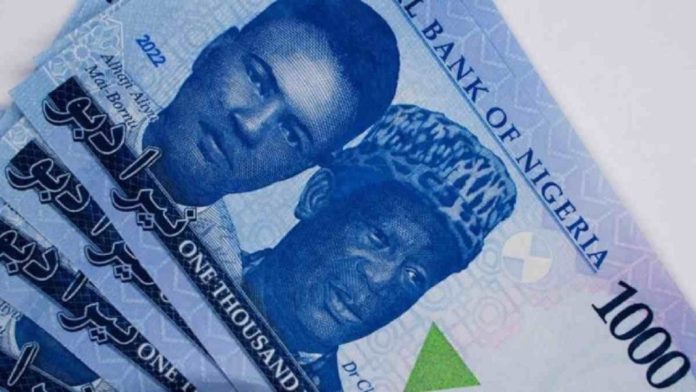
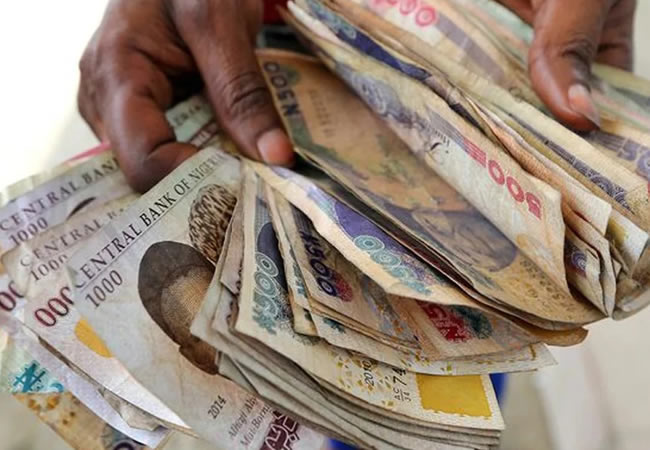
Data from the Central Bank of Nigeria (CBN) released on Wednesday showed that the naira weakened slightly at the official window, closing at ₦1,534.43 per dollar, compared to ₦1,533.10 on Tuesday. During intraday trading, the currency hit a high of ₦1,537.25, reflecting reduced liquidity in the absence of direct CBN intervention.
The local currency closed at ₦1,537 to the dollar, up from ₦1,533.50 in the previous session, even as FX inflows from open market operations helped ease some pressure on the market.
Despite its limited involvement in the official market in recent weeks, the CBN appears to be maintaining a level of stability without large-scale dollar sales to banks and authorized dealers. In the parallel market, however, the naira appreciated to ₦1,535 per dollar, supported by intermittent supply and cautious demand.
Volatility in the black market continues, fueled by seasonal demand, particularly from travelers seeking personal travel allowance (PTA). Banks have also reported a surge in PTA applications, further straining informal supply channels.
Nigeria’s gross external reserves rose to $39.814 billion as of Monday, driven by continued FX inflows that have persisted since the previous month. With oil prices relatively stable, analysts believe reserves could surpass the $40 billion threshold this week—bolstering the CBN’s capacity to manage currency pressures.
Looking ahead, analysts note that market direction in August will depend on key variables including oil prices, central bank FX strategies, and global investor sentiment. While stronger reserves and tight monetary policy could support stability, downside risks remain from potential declines in oil prices and broader global uncertainty.
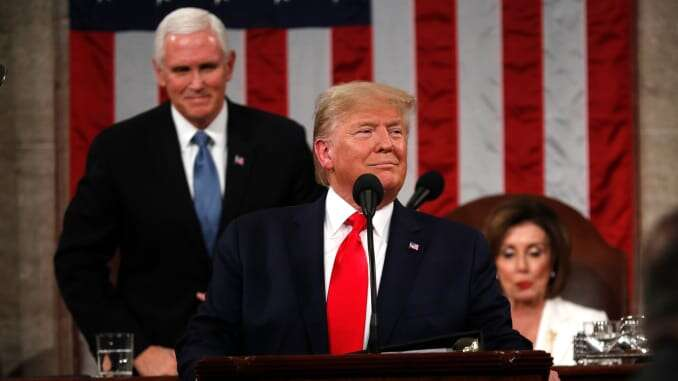
Oil prices fell to an eight-week low following comments from former U.S. President Donald Trump suggesting progress in talks with Moscow, which cast doubt over the likelihood of new U.S. sanctions on Russia. Brent crude declined by 95 cents to $66.69 per barrel, while U.S. West Texas Intermediate (WTI) dropped 97 cents to $64.19.
In the precious metals market, gold prices eased as investors booked profits after recent gains. Spot gold dipped 0.39% to $3,368.01 per ounce, while U.S. gold futures fell 0.22% to $3,430.52. Market sentiment remains cautious as attention turns to Trump’s upcoming Federal Reserve nominations, the newly imposed U.S. tariff on India, and ongoing diplomatic developments between Russia and Ukraine.
Football fans are set for weeks of thrilling grassroots action as the third edition of the annual 1XBET Football Competition kicks off on August 12, with N20 million prize money at stake for the winning team.
At a colourful draw ceremony held on Wednesday at the Radisson Blu Hotel in Ikeja, Lagos, 20 teams were officially unveiled to compete in this year’s edition, following a rigorous screening process that saw 450 teams initially register for the tournament.
Out of the pool of applicants, 64 teams were selected by the technical committee, which further pruned the number down to 16 through two knockout preliminary rounds. The top four teams from last year’s tournament were then added to bring the final lineup to 20.
Tournament Director and former Super Eagles midfielder, Waidi Akanni, who conducted the live draw, expressed delight at the massive turnout and enthusiasm shown by teams across the country.
“I am so excited. It was a tough task picking the eventual qualifiers for the draw,” Akanni said. “We apologise to those who didn’t make it and encourage them to try again next year. We thank 1XBET for creating this platform and excitement for grassroots football in Nigeria.”
Akanni was assisted during the draw by sports broadcaster Segun Agbede, with the tournament organisers promising a bigger and better competition this year.
The group stage draw produced four competitive groups:
Group A: Community Gunners FC, 36 Lions FC, Colin Edwin FC, Africano FC, Nath Boys FC
Group B: Ikorodu City FC, Emaljus FC, G-Innovation FC, Young Strikers FC, ECAS FC
Group C: Emiloju FC, Joseph Dosu FC, Utility Sports FC, Soccer Cardinals FC, ISGAT FC
Group D: Bethel Sporting (defending champions), Divine Praise FC, Brighton FC, Vinno Energy, Inspire Sports Academy
The group matches will kick off at the Inspire Sports Academy on August 12, with the grand finale scheduled for October 16 at the Mobolaji Johnson Arena, Onikan, Lagos.
The event drew the presence of several former Nigerian internationals, including Victor Agali, Godwin Opara, Fatai Amao, and Wasiu Ipaye, who commended the organisers for investing in grassroots football development.
As the countdown begins, all eyes will be on the 20 teams as they jostle for glory, bragging rights, and the N20 million top prize.
African finance and development leaders have called for bold, Africa-led action to lower the cost of capital and unlock long-term prosperity across the continent. The call came during the Financing Africa Forward Summit held in Johannesburg on August 6, 2025.
The event, co-hosted by Standard Bank and Africa Practice in partnership with the ONE Campaign and the African Peer Review Mechanism (APRM), brought together key stakeholders to explore transformative financial solutions. Discussions centered on how African nations can reduce their reliance on expensive debt and shift toward sustainable, self-determined development financing.
Participants expressed concern over the crippling borrowing costs African countries face. Data shared at the Summit showed that African issuers pay up to 500% more for capital market loans than they would for loans from Multilateral Development Banks. With external debt servicing expected to hit $89 billion in 2024, many nations are spending more on repayments than they receive in development assistance.
To reverse the trend, attendees proposed a set of actionable reforms to be implemented over the next 12 to 36 months. These include:
Advocating for reforms in the global financial system to improve fairness and African influence in setting international standards.
Strengthening domestic financial governance by building institutional capacity, improving strategic investments, and increasing development spending.
Enhancing data quality and financial research transparency to shift global perceptions.
Running evidence-based campaigns to recast Africa as an investment destination rather than a region defined by risk and dependence.
Standard Bank CEO Sim Tshabalala stressed the importance of seizing the moment, stating: “This is not just about building roads and bridges, it is about building opportunity, resilience, and prosperity.”
Africa Practice CEO Marcus Courage compared the situation to a rigged climb. “Some nations get harnesses, while African countries must climb with weighted vests,” he said.
Dr Misheck Mutize of APRM echoed the urgency, warning global institutions not to dismiss Africa’s call for reform. “If they remain fixated on short-term benefits, they may soon find themselves irrelevant,” he said.
Didi Okonkwo Nwuneli, CEO of the ONE Campaign, emphasized that “affordable capital is a lifeline for Africa, not a luxury.”
The summit concluded with a strong consensus on creating a more just and enabling global financial system—one that reflects Africa’s vast potential and reduces the continent’s vulnerability to exploitative financing models.
Amnesty International Nigeria has condemned the arrest and continued detention of human rights activist and Sahara Reporters publisher Omoyele Sowore, describing the action as arbitrary and politically motivated. The organisation has called for his immediate and unconditional release.
Sowore was detained on Wednesday after arriving at the Force Headquarters in Abuja to honour a police invitation. The invitation followed an investigation by the Inspector General of Police Monitoring Unit, which alleges that Sowore is being probed for forgery and inciting public disturbance.
In a statement issued late Wednesday on its official X account, Amnesty International criticised the detention as another instance of targeted harassment and intimidation by the Nigerian Police against peaceful critics and dissenters.
The organisation stated that Sowore’s arrest was based on what it described as bogus charges and called on authorities to respect his rights to freedom of expression and peaceful assembly. It also accused the government of using the justice system to suppress critical voices.
“Nigerian authorities must immediately and unconditionally release Sowore and drop all bogus and politically motivated charges against him,” the statement said. “Authorities should listen to critics instead of seeking to gag them through outright abuse of power.”
Amnesty International recalled that it had declared Sowore a Prisoner of Conscience in November 2019 following his earlier detention. The group noted that since 2019, he has faced multiple arbitrary detentions and what it described as unfair trials for exercising his rights.
The latest detention has sparked widespread criticism online, with hashtags such as #FreeSoworeNow and #RevolutionNow trending across social media platforms as calls for his release intensify.
Amid efforts to tackle energy poverty and accelerate Africa’s energy transition, ministers, regulators, oil companies, and other stakeholders convened at the 2025 Nigeria Annual International Conference and Exhibition (NAICE) in Lagos. The theme, “Building a Sustainable Energy Future: Leveraging Technology, Supply Chain, Human Resources and Policy,” aimed to align strategies across the value chain.
Key participants included Petroleum Ministers Heineken Lokpobiri (Oil) and Ekperikpe Ekpo (Gas); regulators Gbenga Komolafe and Farouk Ahmed; and NNPC CEO Bayo Ojulari, who addressed the summit virtually.
Minister Lokpobiri underscored the need for innovation in Nigeria’s energy sector, emphasizing how technologies such as AI-driven exploration and non-invasive survey methods can improve efficiency, reduce environmental impact, and lower costs. He also urged EPC firms that exited the Nigerian market to return, citing reforms under the Petroleum Industry Act that make the sector more attractive to investors.
Oba Saka Matemilola, the Olowu of Owu, called for cohesive policy frameworks to support sector growth. In response, Gbenga Komolafe highlighted 21 new upstream regulations aimed at enabling investment, strengthening local supply chains, and building technical capacity. He also announced initiatives such as cluster development for marginal oil and gas fields and Nigeria’s recent bump in production to 1.78 million barrels per day.
Farouk Ahmed stressed the central role of affordable, clean energy in realizing Nigeria’s $1 trillion economy goal by 2030. He cited policy clarity, integrated infrastructure, and local innovation as critical to attracting investment and expanding industrial sectors.
Minister Ekpo emphasized gas utilization, asserting that digital tools are key to optimizing the gas value chain. He outlined efforts to develop local manufacturing capacity, enforce domestic supply obligations, and strengthen workforce diversity and skills through youth and gender inclusion.
Collectively, the summit produced a united narrative: overcoming energy poverty requires not just policy, but coordinated action technology adoption, regulatory reform, and private-public collaboration. Representatives emphasized that Nigeria is poised to bridge the gap between potential and prosperity if it sustains this alignment.
The National Publicity Secretary of the Petroleum Products and Retail Owners Association of Nigeria, Joseph Obele, has criticised the Nigerian National Petroleum Company Limited’s decision to retain ownership of the Port Harcourt Refining Company, calling for its immediate privatisation.
Speaking as a Port Harcourt community stakeholder, Obele expressed concern over the NNPC’s recent announcement ruling out the refinery’s sale. He said the decision contradicts the nation’s interest, citing a history of inefficiency, corruption, and mismanagement within the company.
“This isn’t good news. NNPC’s plan to keep the Port Harcourt refinery while proposing to sell the ones in Warri and Kaduna is concerning. Their track record is well-documented consistent failures, fuel scarcity, and mismanagement,” Obele said.
He argued that private firms have historically shown more responsiveness to host communities and deliver better operational outcomes, using Indorama Petrochemical as an example.
Obele highlighted the potential benefits of privatisation, including increased efficiency, job creation, accountability, reduced corruption, and community development. He urged President Bola Tinubu to reverse the NNPC’s decision and support the sale of the refinery.
“We’re ready to receive any private investor with full cooperation. This will not only benefit our community but contribute to the nation’s economic growth,” he added.
Last week, NNPC reaffirmed its stance against the refinery’s sale, stating that technical and financial reviews supported continued in-house rehabilitation. Group Chief Executive Officer Bayo Ojulari said privatisation could lead to further value erosion.
The Port Harcourt refinery, which underwent shutdown for maintenance in May, remains closed two months later. Meanwhile, Dangote Group President Aliko Dangote recently expressed doubts about the viability of Nigeria’s state-owned refineries, noting they had consumed up to $18 billion with little return.
The Nigerian naira showed mixed performance across foreign exchange markets this week, as the country’s gross external reserves climbed toward the $40 billion mark on sustained inflows.
Data released by the Central Bank of Nigeria (CBN) on Wednesday revealed that the naira depreciated at the official window, closing at ₦1534.43 per dollar, compared to ₦1533.10 on Tuesday. The intraday spot rate peaked at ₦1537.25 amidst limited CBN intervention, indicating restrained dollar supply in recent sessions.
Conversely, the parallel market saw a slight appreciation in the naira to ₦1535 per dollar, buoyed by intermittent inflows and strong demand from travelers seeking personal travel allowances. Dealers said seasonal pressure continues to influence the black market, although liquidity has improved in recent weeks.
Despite reduced CBN activity, analysts note a level of stability has been maintained, thanks in part to stronger external reserves and ongoing policy tightening. As of Monday, gross reserves stood at $39.814 billion, putting the apex bank in a firmer position to defend the naira should volatility increase.
The outlook for the naira remains linked to global oil prices, the CBN’s forex strategy, and broader market sentiment. However, analysts warn that potential risks from falling oil prices and geopolitical developments could affect stability.
Global oil markets were also jittery this week, with Brent crude falling to $66.69 per barrel and West Texas Intermediate dropping to $64.19 amid renewed uncertainty over U.S. sanctions on Russia. The comments from former President Donald Trump about possible progress with Moscow rattled energy traders.
Gold prices also retreated after recent gains, with spot gold slipping by 0.39% to $3,368.01 per ounce, while U.S. futures edged down 0.22% to $3,430.52. Investors are awaiting signals from the White House ahead of upcoming Federal Reserve nominations and potential tariff actions targeting India.
Global oil prices climbed on Wednesday after former US President Donald Trump threatened to impose higher tariffs on India for buying discounted oil from Russia.
Brent crude rose 0.74% to $67.97 per barrel, while US benchmark WTI gained 0.72% to $65.04. The jump followed Trump’s statement accusing India of profiting from Russian oil sales amid the ongoing war in Ukraine.
“They don’t care how many people in Ukraine are being killed by the Russian War Machine,” Trump wrote on Truth Social, vowing to “substantially raise” tariffs on India.
The threat came ahead of a key August 8 deadline Trump set for Russia to agree to a ceasefire deal. His special envoy, Steve Witkoff, has arrived in Moscow for talks, with a possible meeting with President Putin on the table.
In addition to the geopolitical tensions, US crude inventories dropped by 4.2 million barrels last week, signaling rising demand. Official figures from the US Energy Information Administration are expected later.
Meanwhile, OPEC+ announced that eight member countries will increase output by 547,000 barrels per day in September as part of efforts to regain global market share.
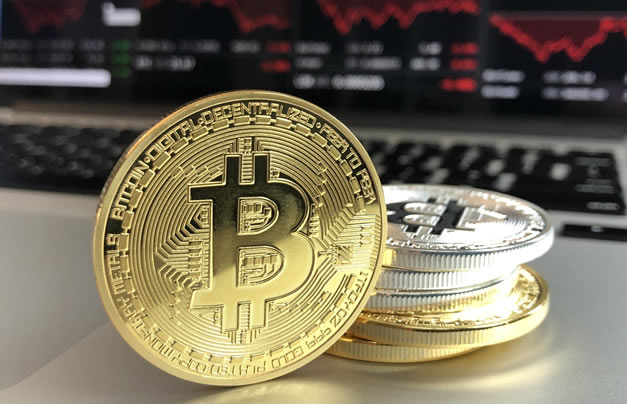
Bitcoin hovered around the $114,000 level on Wednesday as the broader cryptocurrency market recorded mixed performance, signaling a possible cooling of the recent rally.
Data from CoinMarketCap showed Bitcoin (BTCUSD) gained 0.02% in the past hour but was down 0.01% on the day. Analysts described this as a consolidation phase following last month’s surge that pushed the asset to an all-time high above $123,000.
Ethereum (ETH) rose marginally by 0.01% to $3,640, while XRP dropped 0.05% to $2.95 after failing to break above the $3.00 resistance. Solana (SOL) edged up 0.06%, buoyed by the global release of Solana Mobile’s new Web3 smartphone, the Seeker. Dogecoin (DOGE) fell below key support levels, retreating under $0.20 amid bearish sentiment.
Despite the recent pullback, market watchers see potential for a rebound, citing expectations that the US Federal Reserve could cut interest rates in September. Lower rates typically benefit riskier assets like cryptocurrencies.
Ethereum remains under pressure near the $4,000 mark despite rising reserves of $10.16 billion and 19 straight days of inflows into spot ETH ETFs. Altcoins remain volatile, with sporadic gains failing to sustain momentum.
Crypto analysts suggest the market is entering a period of wait-and-see, with top assets consolidating and investors watching for stronger catalysts to revive momentum.
The 29th Annual Conference of the League of Airport and Aviation Correspondents (LAAC) is scheduled to hold this Thursday in Lagos, with a sharp focus on aviation financing in Nigeria.
Themed ‘Aviation Financing in Nigeria: The Risks, Opportunities, and Prospects’, the conference will bring together top industry stakeholders, policymakers, and financial experts for in-depth discussions on sustainable funding models for the sector.
In a statement, Conference Committee Chairman Wole Shadare confirmed that renowned economist and Managing Director of Financial Derivatives Company, Mr. Bismarck Rewane, will deliver a keynote address. Rewane is expected to provide macroeconomic insights and outline strategies for attracting sustainable investments into the aviation space.
Also expected to deliver a keynote is aviation economist Dr. Gabriel Olowo, who will speak on air transport economics and industry dynamics.
The conference will feature the Minister of Aviation and Aerospace Development, Mr. Festus Keyamo, as Special Guest of Honour, while the Director-General of Civil Aviation, Capt. Chris Najomo, will deliver a goodwill message on behalf of the Nigerian Civil Aviation Authority (NCAA).
The Managing Director of the Asset Management Corporation of Nigeria (AMCON), Mr. Gbenga Alade, will also be in attendance.
A high-powered panel discussion will include industry experts such as Dr. Alex Nwuba, Chairman of the Aircraft Owners and Pilots Association; Mr. Chris Aligbe, former General Manager of Nigeria Airways; Dr. Thomas Ogungbangbe, CEO of CITA Energies Ltd; and Capt. Roland Iyayi, CEO of TopBrass Aviation, among others.
The event is poised to deliver actionable recommendations for boosting investor confidence, strengthening policy frameworks, and unlocking new funding channels for Nigeria’s aviation sector.
U.S. President Donald Trump on Wednesday signed an executive order imposing an additional 25% tariff on Indian imports in response to New Delhi’s continued purchase of Russian oil — a key revenue stream for Moscow’s war in Ukraine.
The new tariff, which takes effect in three weeks, comes on top of an earlier 25% duty set to be enforced on Thursday. While the order broadens the scope of U.S. trade actions against India, it maintains exemptions for certain categories, including steel, aluminum, and some pharmaceuticals, which are covered under separate sector-specific trade policies.
The United States has announced a new visa policy requiring citizens of Malawi and Zambia to post a refundable $15,000 bond when applying for tourist or business visas. The 12-month pilot programme, unveiled by the U.S. State Department, is aimed at curbing visa overstays and tightening screening procedures.
According to the department’s notice published Tuesday, the policy targets applicants from countries with high overstay rates or where vetting information is deemed insufficient. The bond will be returned once the visitor departs the U.S. within the authorised period.
Officials indicated that the measure could soon extend to citizens of other nations with similar immigration patterns. Data from the U.S. Department of Homeland Security in 2023 showed overstay rates of 14% for Malawian and 11% for Zambian visitors. Other countries with higher overstay rates include Haiti (31%), Myanmar (27%), and Yemen (20%).
Zambia’s Foreign Minister, Mulambo Haimbe, confirmed that discussions with U.S. authorities are underway to better understand the policy’s implications and explore possible resolutions.
The new visa bond is part of broader immigration reforms under President Donald Trump’s administration. Since returning to office in January, Trump has signed multiple executive orders aimed at reducing illegal immigration and tightening entry requirements.
His administration has also imposed travel bans on nationals from 12 countries, restricted entry for several others, revoked student visas, and carried out detentions on college campuses—moves often criticised as heavy-handed. While U.S. officials say the actions target individuals whose presence is considered contrary to national interests, immigration lawyers report that even minor legal infractions have led to cancellations and detentions.
Critics argue that recent visa actions also appear to disproportionately affect individuals involved in pro-Palestinian activism or advocacy.
Equity investors gained approximately ₦574 billion on Tuesday as bullish sentiment continued to dominate the Nigerian Exchange (NGX). The persistent rally, driven by value-hunting and a wave of interim dividend announcements, reflects strong investor appetite amid ongoing earnings releases.
The NGX All-Share Index (ASI) climbed 0.64% to close at 144,074.23 points, pushing the year-to-date return to 40.87%. Market capitalisation rose in tandem, adding ₦583.74 billion to settle at ₦91.73 trillion.
The gains were powered by increased demand for mid- to large-cap stocks such as BUA Cement (+10.00%), Sterling Financial (+9.93%), Unilever (+7.38%), and Oando (+5.69%). Other notable performers included ETI (+4.41%), UACN (+2.99%), NAHCO (+1.93%), Fidelity Bank (+1.42%), Transcorp (+1.40%), Aradel Holdings (+1.17%), VFD Group (+0.75%), and Wema Bank (+0.40%).
Analysts attributed the sustained rally to investors rotating funds from fixed-income instruments into equities, seeking higher returns amid renewed confidence in market fundamentals.
Trading activity also saw a boost, with total volume rising 24.13% and total value up 14.29%. Investors traded 1.01 billion units worth ₦22.25 billion across 38,481 deals.
AIICO topped the volume chart, accounting for 9.47% of shares traded, followed by Universal Insurance (8.51%), Linkage Assurance (6.24%), Fidelity Bank (5.77%), and Veritas Kapital (4.89%). In value terms, GTCO led the board, contributing 17.22% of total traded value.
Top gainers for the day included AIICO, BUA Cement, Mutual Benefits, Neimeth, Enamelware, and Sunu Assurance—all with a 10.00% gain. Others were SterlingNG (+9.93%), Veritas Kapital (+9.87%), Abbey Mortgage Bank (+9.87%), John Holt (+9.85%), and Cornerstone Insurance (+9.79%).
Meanwhile, 21 stocks recorded losses. LivingTrust was the top laggard, shedding 9.86%. Other losers included Mecure (-9.20%), Cadbury (-7.35%), First HoldCo (-4.76%), Tantalizer (-3.82%), and Lafarge Africa (-1.68%).
The market breadth remained strongly positive, with 52 gainers and 21 decliners.
Sector performance was largely upbeat: Insurance (+7.51%), Industrial Goods (+3.35%), Oil & Gas (+0.91%), and Commodities (+0.20%) closed in the green. However, the Banking (-0.86%) and Consumer Goods (-0.43%) sectors recorded slight declines.
The naira slipped against the U.S. dollar at both the official and parallel markets on Tuesday, as increased foreign exchange (FX) demand—coupled with limited dollar supply—put pressure on the local currency.
At the Central Bank of Nigeria’s (CBN) official exchange window, the naira depreciated slightly to ₦1,533.10/$1, down from ₦1,531.95/$1 at the previous close. The decline came amid a lull in fresh dollar injections into the market, despite ongoing inflows from foreign portfolio investors and exporters.
The USD/NGN pair traded within a narrow band of ₦1,532.00 to ₦1,534.00 at the official window, with analysts forecasting that the naira may remain within this range in the short term, supported by current FX liquidity levels.
Market analysts also noted a moderate uptick in demand for dollars from corporate entities settling offshore obligations, contributing to the mild depreciation at the Nigerian Foreign Exchange Market (NFEM).
In the parallel market, the naira fell more sharply, dropping to ₦1,550/$1 from ₦1,510/$1, driven by rising demand from individuals—particularly those preparing for holidays abroad. The widening gap between official and unofficial rates highlights continued FX pressure in the informal segment.
Meanwhile, global oil prices dipped on Tuesday, as increased supply from OPEC+ and concerns over weakening global demand overshadowed geopolitical tensions stemming from U.S. President Donald Trump’s threat to impose tariffs on India over its Russian oil imports.
Brent crude fell by $1.17 to $67.59 per barrel, while U.S. West Texas Intermediate (WTI) also declined by $1.17 to $65.12 per barrel.
On the commodities front, gold prices climbed to near two-week highs, buoyed by growing market expectations of a potential U.S. interest rate cut. Investors are also closely watching for President Trump’s upcoming decision on Federal Reserve appointments. Spot gold rose by 0.2% to $3,380.08 per ounce, while gold futures settled at $3,433.77.
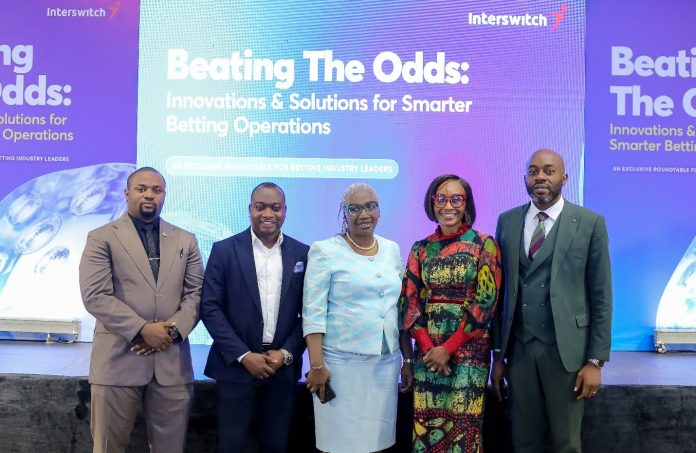
L–R: Faruq Hassan, Manager, Strategy and Global Engagement, Lagos State Lottery and Gaming Authority; Olawale Akanbi, Divisional Head, Growth Marketing (Merchant and Ecosystem), Interswitch; Adetoun Adeyemi, Director, Legal, Lagos State Lottery and Gaming Authority; Oremeyi Akah, Chief Customer Officer, Interswitch; and Osasere Atohengbe, Vice President, Sales and Account Management, Interswitch, at the Bookmakers Breakfast Meeting hosted by Interswitch, held recently at the Radisson Blu Hotel, Victoria Island, Lagos.
As part of its ongoing drive to optimise financial transactions across key sectors, Interswitch, one of Africa’s leading integrated payments and digital commerce companies, is transforming Nigeria’s gaming landscape with the introduction of a bespoke suite of payment and collection solutions. Unveiled at an exclusive industry event themed “Beating the Odds: Innovation and Solutions for Smarter Betting Operations,” the new offerings are tailored to optimise payment flows, simplify collections, enable instant payouts, and personalise the player experience through reliable, tech-driven processes.
Hosted at the Radisson Blu Hotel, Victoria Island, Lagos, the session convened key stakeholders, regulators, and operators from across the gaming ecosystem, all seeking smarter, more efficient ways to serve Nigeria’s fast-growing digital-first consumer base.
With a deep understanding of the unique challenges and opportunities in the gaming sector, Interswitch’s integrated solutions are designed to boost operational efficiency, streamline collections, and improve customer satisfaction through seamless transactions, faster payouts, and personalised rewards.
In his welcome address, Osasere Atohengbe, Vice President, Sales and Account Management, Interswitch, reaffirmed the company’s commitment to empowering businesses with intelligent and scalable solutions. He said:
“At Interswitch, our mission is to enable businesses with the right tools to thrive. We see technology as a powerful enabler, not just for gaming operators, but also for the players who expect fast, secure, and frictionless experiences. With our integrated suite of payment and collection solutions, we’re helping gaming platforms simplify backend operations, from reconciliation and payouts to collections and tracking, ultimately unlocking greater value and scalability in today’s competitive market.”
Delivering the keynote address, Adetoun Adeyemi, Director of Legal, Lagos State Lotteries and Gaming Authority, who represented Bashir Are, Chief Executive Officer, Lagos State Lotteries and Authority, lauded the initiative and emphasised its potential to transforming the entire gaming ecosystem:
“We are truly excited about the potential of Interswitch’s Integrated Solutions Suite to significantly impact the gaming industry. These innovations will not only provide operators with smarter, more efficient tools but also empower us, as regulators, to foster a transparent, compliant, and well-structured ecosystem. This initiative supports our collective goal of building a responsible and well-structured gaming industry in Lagos State.”
At the core of the offering is the Interswitch Payment Gateway, which facilitates seamless, real-time payments across a wide range of channels, including cards, bank transfers, USSD, Quickteller, Google Pay, OPay, and more, via a single, unified integration. This simplifies onboarding and transaction processing for operators while elevating the payment experience for end-users across touchpoints.
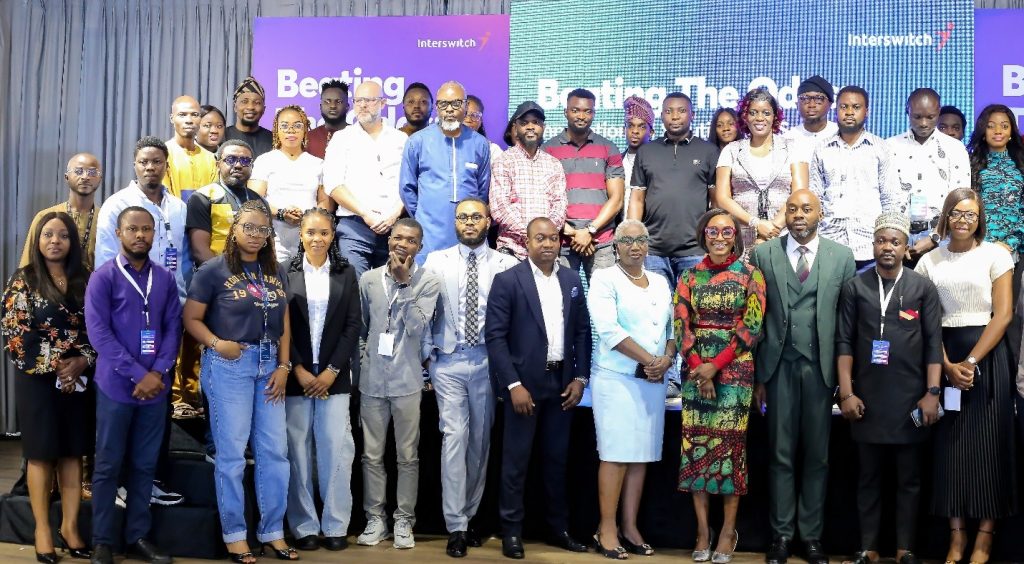
A cross-section of bookmakers and gaming operators in Nigeria at the Bookmakers Breakfast Meeting hosted by Interswitch, held recently at the Radisson Blu Hotel, Victoria Island, Lagos.
Also featured is the Interswitch collections platform, Paydirect, a multi-channel collection platform that allows operators to accept payments through online platforms, physical bank branches, agent networks, and Point-of-Sale (POS) terminals. All transactions are consolidated into a centralised dashboard, enabling simplified tracking, real-time monitoring, and error-free reconciliation.
To support real-time disbursements, the Quickteller-powered funds transfer service allows operators to instantly pay winnings or transfer funds to bank accounts across Nigeria. This not only fosters trust but also improves player satisfaction by ensuring timely settlements. Also integral to the suite of solutions is the Static Virtual Account (Pay with Transfer) feature, which assigns unique virtual account numbers to individual customers. This innovation eliminates referencing errors, simplifies deposit identification, and enables automated reconciliation, giving operators greater visibility, control, and accuracy in managing inflows.
Beyond payments, Interswitch showcased an expanded portfolio of business-enabling solutions designed to drive operational efficiency, enhance customer engagement, and improve user experience for gaming operators. The Interswitch Corporate 360 (IC360) platform was highlighted as a comprehensive tool that consolidates financial operations, covering everything from tax compliance and vendor payments to real-time account visibility and ERP integration, helping operators streamline processes and reduce redundancy.
In addition, Interswitch’s Enterprise Rewards Solution offers a digital rewards platform that incentivises customer behaviour with instant airtime, data, vouchers, and other perks, backed by intelligent analytics for targeted engagement. The USSD and offline solutions ensure uninterrupted access to gaming services even without internet connectivity, reducing transaction drop-offs, while the Salary Lending Solution provides employees of partner firms with quick, short-term salary advances via Quickteller.
Complementing these offerings, the broader suite also incorporates advanced tools such as Digital Escrow Services for secure transactions, Fraud Management Systems to mitigate risks, and API Integration Tools that enable seamless incorporation of Interswitch’s capabilities into operators’ existing infrastructure. Together, these solutions underscore Interswitch’s commitment to delivering not only smarter payments but also comprehensive business enablement for gaming operators.
Through its combination of cutting-edge payment solutions and a wide array of operational tools, Interswitch is redefining the future of Nigeria’s gaming industry. With smarter, tech-enabled operations, the company is empowering gaming operators to enhance compliance, increase efficiency, and build deeper relationships with customers.
By leading conversations on smarter payment solutions and enabling tech-powered growth in gaming, Interswitch is reinforcing its role as a trusted partner in shaping the future of digital financial services, not only in Nigeria but across Africa.
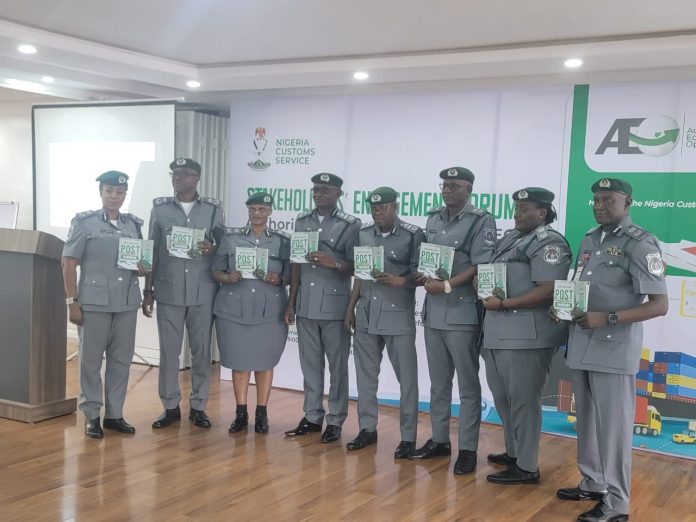
The Nigeria Customs Service (NCS) has called on importers, exporters, and other key players in the trade value chain to embrace the Authorized Economic Operator (AEO) Programme, a globally recognised system that promises faster clearance, fewer inspections, and a more secure and transparent supply chain.
At a stakeholders’ engagement forum held at BON Hotel, Ikeja, Lagos, the Comptroller-General of Customs, Bashir Adeniyi, MFR, through the Assistant Comptroller-General of Customs and Coordinator of Zone A, Charles Orbih, reiterated the Service’s commitment to transitioning from the current Fast Track Scheme to the AEO framework by the end of 2025.
He described the shift as a “paradigm change from gatekeeping to partnership” and a strategic reform that supports trade facilitation, enhances national competitiveness, and aligns Nigeria with global trade standards under the World Customs Organization (WCO) SAFE Framework.
“For over a decade, the Fast Track Scheme offered benefits to compliant importers, but lacked the legal and structural backing needed to respond to evolving trade dynamics, the AEO Programme is a more robust and risk-based system that rewards consistent compliance.” Orbih said.
The AEO initiative, which was piloted in April 2024 and officially launched in February 2025, targets businesses that demonstrate high levels of Customs and tax compliance. These businesses enjoy priority treatment, faster cargo release, and improved dispute resolution, among other benefits.
A recent Time Release Study by the NCS revealed that AEO-certified businesses now experience an average clearance time of just 43 hours, compared to significantly longer durations for non-certified operators.
“This is not just theory, this is impact. Less time at the port means reduced costs and improved efficiency for businesses, adding that the reform helps Nigeria meet its obligations under the World Trade Organization’s Trade Facilitation Agreement.”
To further strengthen the programme, the Service has introduced Post Clearance Audit (PCA) reforms. According to the Assistant Comptroller-General in charge of PCA, Zanna Chiroma, the PCA Unit now operates under the direct supervision of the Comptroller-General’s office. This move, he noted, is aimed at reinforcing audit-based controls that allow for smoother trade operations.
Chiroma said the PCA Unit has been fully restructured, with an appointed ACG and two Comptrollers in charge of administration and operations respectively. “We now conduct risk-based and comprehensive audits, including onsite verifications, empowered by the new NCS Act,” he noted.
He stressed that existing Fast Track beneficiaries must apply afresh via the AEO portal—aeo.nigeriatradehub.gov.ng—before the 31st December 2025 deadline when the current scheme will be phased out.
Speaking also, the Chief Superintendent of Customs, Jerry Attah, emphasised that the audit reforms are not meant to impede trade, but to reinforce trust and responsibility among validated traders. He noted that the PCA approach now focuses more on post-clearance verification at the trader’s location, allowing smooth cargo flow at the ports.
Attah said: “This is a move away from invasive inspections to strategic reviews based on data. Our aim is to build a trusted network of economic operators whose commitment to compliance is rewarded, not punished.”
Again, the forum, AEO Lead Officer, CSC Nnenna Awa, highlighted the importance of industry-wide adoption of the programme.
She described the AEO scheme as a win-win for both Customs and businesses, noting that the transition provides an opportunity to institutionalise accountability and transparency in Nigeria’s import-export processes.
“The AEO programme gives us an international identity. It helps Nigerian businesses gain global trust and unlocks benefits such as Mutual Recognition Agreements with other countries, now is the time for traders to step forward, get validated, and enjoy smoother, faster processes.” she said.
Awa added that the NCS is actively building digital infrastructure, expanding inter-agency cooperation, and deploying well-trained validation teams to ensure a seamless transition.
In a goodwill message, the Director-General of the Manufacturers Association of Nigeria (MAN), Segun Ajayi, represented by Sunday Okpe, applauded the Nigeria Customs Service for its consistent stakeholder engagement.
He affirmed that the transition is a welcome development for the manufacturing sector.
However, he urged the NCS to address operational overlaps with other security agencies that could undermine the programme’s objectives.
“One of the limitations we are faced with is the interference of the maritime police, this transition, there must be clear boundaries. Police should not do the work of Customs, just as Customs don’t get involved in police duties.” Okpe said.
Leading Nigerian investment firm, CSL Stockbrokers, has spotlighted 10 high-performing equities with promising upside potential for 2025. The selections span major sectors including banking, telecoms, FMCG, and industrials. Here’s an in-depth look at these stocks and what makes them attractive to investors.
Access Holdings Plc, Nigeria’s largest financial services conglomerate by asset base, stands out as a strong buy for investors, backed by solid financial health and a strategic expansion model. The company’s Capital Adequacy Ratio (CAR) was reported at 20.46% in FY 2024, well above regulatory requirements.
Its Q1 2025 cost of risk remained low at 0.8%, though analysts anticipate a marginal increase with the expiration of the regulatory forbearance window. With an attractive price-to-book ratio of 0.40x and a stellar 29.6% annualised return on average equity, Access Holdings continues to meet the Central Bank of Nigeria’s single obligor limit and is on track to comply with all regulatory provisions by mid-2025.
SEO Focus Keyphrase:Access Holdings stock analysis
GTCO’s transformation into a diversified holding company has amplified its revenue streams across banking, pensions, asset management, and payments. The group boasts an impressive capital adequacy ratio of 39.3%, with asset quality remaining strong – evidenced by a Q1 2025 cost of risk at 1.7% and a 5.2% non-performing loan (NPL) ratio.
GTCO operates with one of the lowest cost-to-income ratios in Nigeria’s financial sector (28.1% in Q1 2025). Its strong corporate governance, consistent dividend policy, and recent listing on the London Stock Exchange elevate its appeal to global investors.
SEO Focus Keyphrase:GTCO stock outlook
Wema Bank Plc (WEMABANK) – Not Rated
Wema Bank has emerged as a notable Tier-2 bank with impressive year-on-year performance. The bank’s H1 2025 results show a 64.76% rise in interest income to ₦240.66 billion and a 229.12% surge in pre-tax profit to ₦100.60 billion, highlighting operational efficiency and momentum in earnings.
SEO Focus Keyphrase:Wema Bank profit growth 2025
Lafarge Africa Plc (WAPCO) – BUY | Target Price: ₦199.14
Lafarge Africa (WAPCO) continues to gain from strong cement demand and strategic cost optimization. The company reported a 328.3% year-on-year increase in pre-tax profit to ₦199.74 billion in H1 2025. Its EV/EBITDA valuation of 6.30x remains significantly lower than the industry average of 10.30x, suggesting ample growth headroom.
Cadbury Nigeria Plc has made substantial operational gains through effective cost control and optimization of its balance sheet. The company posted a 50.2% increase in revenue to ₦77.25 billion and a 204.7% growth in pre-tax profit to ₦14.54 billion in H1 2025. Its valuation remains attractive at 8.8x EV/EBITDA.
Nestle Nigeria sustained its performance momentum from late 2024 into the first half of 2025, driven by increased consumer demand and tight cost control. Revenue grew by 42.8% year-on-year to ₦581.12 billion, while pre-tax profit soared by 135% to ₦88.40 billion. Nestle trades at a compelling EV/EBITDA of 8.1x, below both local and EMEA averages.
SEO Focus Keyphrase:Nestle Nigeria stock performance
Airtel Africa Plc (AIRTELAFR) – BUY | Target Price: ₦3,230.33
Airtel Africa has benefitted significantly from tariff increases across major African markets, contributing to a 22.4% jump in Q1 2026 revenue to US$1.42 billion. Pre-tax profit also spiked by 268.9% to US$273 million. Cost-cutting measures and efforts to localize debt have further strengthened its financial standing.
SEO Focus Keyphrase:Airtel Africa earnings forecast
MTN Nigeria has seen a turnaround in profitability due to recent tariff hikes and strategic renegotiation of tower lease agreements. The company posted revenue growth of 54.5% year-on-year to ₦2.38 trillion and swung from a ₦751.29 billion loss in H1 2024 to a ₦622.26 billion pre-tax profit in H1 2025.
SEO Focus Keyphrase:MTN Nigeria profit rebound
Nigerian Aviation Handling Company Plc (NAHCO) – Not Rated
NAHCO’s performance continues to be boosted by the resurgence in air travel and rising cargo traffic. In H1 2025, the company reported a 111.41% increase in revenue to ₦32.33 billion and a 96.07% jump in pre-tax profit to ₦11.79 billion, reflecting its diversified growth strategy and improved operational efficiency.
SEO Focus Keyphrase:NAHCO stock growth potential
Custodian Investment Plc (CUSTODIAN) – Not Rated
Custodian Investment Plc’s strong showing in H1 2025 includes a 50.2% rise in gross revenue to ₦124.28 billion and a 17.8% increase in post-tax profit to ₦26.39 billion. With diverse interests across insurance, pensions, and real estate, the group projects gross revenue of ₦175.81 billion and profit of ₦49.41 billion by Q3 2025. It trades at a price-to-book ratio of 1.72x—undervalued against the EMEA peer average of 1.96x.
Welcome to the unpredictable, chaotic, and emotionally charged house of Big Brother Naija Season 10/10. If the title gave you the illusion of perfection, think again. This season is already off to a fiery start, fueled by a cocktail of ambition, drama, and temptation.
The Queens Arrive First
Biggie flipped the script this time, rolling out the red carpet exclusively for 15 bold, beautiful, and unapologetically powerful women. From career powerhouses to mothers and firecrackers, the house welcomed Gigi Jasmine, Zita, Big Soso, Sultana, Mide, Dede, Doris, Joanna, Isabella, Imisi, Thelmac, Ibifubara, Sabrina, Tracy, and Ivatar.
From the second they crossed that threshold, it was clear: every woman came armed with intent—some to strategize, some to stir, and others to conquer. No one was playing safe.
A Ruthless Twist: The Prize Must Be Earned
Host Ebuka Obi-Uchendu wasted no time delivering a shocker. This season’s N150 million grand prize won’t be handed over—it must be earned. Housemates will accumulate money weekly, and only the most active, committed players will rise to the top. Lazy housemates? Forget food, forget comfort.
And then came the HOH Challenger Twist: becoming Head of House isn’t enough. You’ll have to defend that position in a second round challenge against your closest competitors. The game just got tighter.
Other Game-Changing Twists:
The Red Phone: Pick it up if you dare—gifts or games await.
Most Influential Housemate: A mix of peer votes and Biggie’s judgment. Popularity is power.
Tree of Trinkets: Its purpose is still a mystery, but it may shape nominations.
Cracks Appear Early
Within hours, tension surfaced. Sabrina, who hinted at royal bloodlines, refused to reveal her age, prompting a sarcastic but pointed jab from Isabella. Ibifubara tried to mediate, but the line had already been drawn.
Doris proposed an audacious plan: ignore the men once they entered. Was it feminist solidarity or a game of power? Isabella didn’t buy into it, branding herself a “guys’ girl.”
The following morning, Big Soso sparked a rebellion: no one touches the kitchen unless they help. Isabella opted out. Fault lines began to form.
The Boys Are In
On Sunday, the boys marched in: Koyin, Danboskid, Bright Morgan, Rooboy, Faith, Kaybobo, Denari, Kayikunmi, Victory, Jason Jae, Kola, Otega, Kuture, and Mensan.
That anti-men pact? Forgotten in seconds.
But peace was never an option.
Chaos in the Kitchen and Clashing Egos
By Day 2, accusations of food hoarding echoed through the house. Isabella and Imisi pointed fingers. Jason Jae, newly minted Head of House, assigned kitchen duties to Big Soso and Otega, triggering another round of backlash.
Rooboy sowed confusion by pretending not to have introduced himself, gaining undeserved attention—except from Kaybobo, who saw right through it.
Meanwhile, hunger led Dede to confide in Ibifubara: “I’m starving.” The food war had begun in earnest.
Sabrina vs Dede: A Brewing Storm
Sabrina’s disinterest in aligning with Isabella turned into open disdain for Dede. She began quietly sowing seeds of discord, accusing Dede of elitism in hushed tones to Kola. It’s looking like a villain arc in the making.
Water Woes Between Rooboy and Kuture
A bizarre quarrel unfolded when Rooboy accused Kuture of denying him water while he was choking. Kuture insisted he helped. Tension brewed, and only half-hearted peace was restored.
Disgust Sparks Domestic Drama
In a disgusting discovery, Gigi found what appeared to be a used tampon in the trash alongside raw egg remains. She launched into full-on cleaning mode. Sultana joined her, but Ivatar’s cold reaction sparked a loud confrontation. Insults flew.
Sultana went on a PR tour, defending her actions and dragging Ivatar’s name.
Tears, Tactics, and Vulnerability
Koyin broke down while speaking about his mother. Was it genuine grief or a clever play for sympathy? Opinions differ, but the moment drew tears and attention.
Later, a heated argument between Koyin and Kaybobo escalated tensions. Once again, Koyin emerged with comfort and support—was it strategy or sensitivity?
Love Sparks and Loose Sheets
Victory openly pursued Gigi Jasmine—cuddles, whispers, possible kisses. That didn’t last, as Victory’s heart seemed to drift.
Danboskid cuddled under the sheets with Zita.
Kola is smitten with Dede. Jason Jae is quietly forming a connection with her too.
Kayikunmi and Mide appear joined at the hip.
And Imisi? She’s already getting massages from Kaybobo.
The Gossip Council is in Session
Sultana, Doris, Kola, Otega, and Sabrina gathered like clockwork, roasting Dede and plotting futures. Rooboy tossed in a juicy theory: Gigi has eyes for Kayikunmi and is just playing Victory.
Fight Club, BBNaija Edition
You’ve got:
Kaybobo vs Mensan
Ivatar vs Otega (Round 1)
Rooboy vs Jason Jae
Ivatar vs Sabrina (and Otega again)
Saturday Night Party: Sensual and Scandalous
In a hidden party room behind the HOH throne, the housemates dropped their guards—and some of their clothes. No sponsors, no filters, just raw energy.
Otega got intimate with Ibifubara, leaving Sabrina fuming.
Kola floated among Dede, Doris, and the dance floor.
Victory and Gigi? Possibly kissed. Definitely sneaked off.
But the crown for most scandalous goes to Kayikunmi, who declared loyalty to Mide, then kissed Isabella with reckless passion. What followed was an adult-rated closet moment involving nipple tape and whispered promises.
No Evictions Yet, But War Has Begun
Though no one was sent packing in Week 1, the emotional, social, and strategic battles are well underway. Nominations have already drawn lines in the sand. Housemates are choosing sides, forging alliances, and pulling triggers.
If this is just the beginning, buckle up. BBNaija 10/10 might just live up to its name in chaos, controversy, and cutthroat competition.
A Russian missile strike on Wednesday ignited a deadly fire at a holiday camp in Ukraine’s central Zaporizhzhia region, killing two people and injuring at least 12 others, including four children, local officials confirmed.
Images released by emergency services showed firefighters battling flames in single-storey cottages, with bodies and bloodstains visible at the scene.
The Zaporizhzhia region, partially occupied by Russian forces and split by active front lines, has faced a surge in attacks in recent weeks. Ukrainian President Volodymyr Zelensky condemned the strike, calling it senseless and aimed at terrorising civilians.
“There’s no military sense in this attack. It’s just cruelty to scare people,” Zelensky said in a social media post, noting that hundreds were left without electricity following additional strikes in the south.
Elsewhere, a separate Russian attack killed a man born in 1959 in Pokrovsk, a key logistics hub in the Donetsk region, which Moscow also claims to have annexed.
Russia, which launched its full-scale invasion of Ukraine in February 2022, has yet to comment on the latest strikes. Moscow has consistently denied targeting civilian infrastructure.
Welcome to another spicy edition of Thursday Chronicles, where we unwrap life’s biggest questions like gala, chew them like chin chin, and swallow with laughter, facts, and one bottle of emotional minerals. If you’ve ever been in love, out of love, confused about love, or currently sending ‘good morning’ texts to three people — sit tight, this one’s for you.
In this economy, with fuel at ₦900 per litre, data finishing before the video loads, and Nigeria testing your mental strength daily, you begin to wonder, “Is love still enough?”
Once upon a time, all it took was butterflies in your belly, long midnight calls, and a mixtape from Style Plus. You would stand under the sun just to see your person. You would text “I miss you” with reckless abandon. You would save money for Valentine’s gift three months in advance, even if you were broke. Love made sense. It was sweet, warm, and affordable.
Now? Love is still sweet, but the price tag is heavy.
It starts with dates. Back then, an outing to Mr. Biggs was romantic. Now, if someone says, “Let’s go out,” your brain automatically starts calculating transport, food, soft drink, shawarma, and Uber surge. One date and your account is on life support. So, many people just say, “Come over”, not because they’re unserious, but because going out requires spiritual and financial preparation.
Then there’s the wedding dream. Every young couple wants that cute proposal, the beautiful photoshoot, a trending hashtag, and the big wedding with jollof rice that makes people cry tears of joy. But have you seen wedding vendors’ prices in 2025? Makeup artists are charging like you’re marrying into Buckingham Palace. One small engagement ring now costs enough to feed a family of six for a month. And don’t even get me started on aso-ebi, ₦45,000 for lace you may never wear again.
Love is no longer just about feelings. It’s about goals. Compatibility. Vision. Timing. A lot of people now say, “I can’t date potential,” and they mean it. Because emotions alone can’t fuel a car or pay rent. You can’t cuddle forever when your landlord is outside knocking. “I love you” is sweet, but “I paid the bills” sounds better after a long day.
Relationships in 2025 are complex. You’re dealing with distance, distractions, pressure, and sometimes, bad advice from TikTok. People are now breaking up over who should text first, who should pay the bill, and whose love language doesn’t align. Before, love was about compromise. Now, it’s about “If it’s not giving, I’m leaving.” We want perfection in a partner, when we ourselves are a work in progress.
Technology has also added wahala. One wrong emoji can end a whole relationship. You see your partner commenting “🔥🔥🔥” under someone’s post, and your chest tightens. You spend hours decoding their followers list like a detective. And if you mistakenly post a soft launch of your partner, be ready for anonymous DMs saying “Be careful o.” Love used to be a journey. Now it feels like a reality show with too many plot twists.
Yet, deep down, most people still want real love. We still want those morning texts that make us smile. We still want someone to pray for us, someone to gist with, someone who’ll hold us when the world feels heavy. We want loyalty, attention, and peace — even if we act unbothered on social media.
So, is love still enough?
Honestly, love is powerful. But in 2025, it needs support. Love needs communication, maturity, sacrifice, patience, prayer, and yes, money. Not excessive riches, but enough stability to take care of each other. Enough understanding to stay even when things aren’t rosy. Enough sense to know when to talk and when to stay silent.
Love should not be struggle, but it also shouldn’t be lazy. You can’t just say “I love you” and disappear when challenges come. You can’t love someone and be emotionally unavailable. In this day and age, love that lasts is not just found, it is built.
It is built in long conversations, in helping each other grow, in choosing to stay when everything else says walk away. It is in little gestures, buying suya on your way home, saving data for late-night calls, holding hands even when you’re tired. Love in 2025 still exists. It just requires more than vibes.
And if you’re single, don’t worry. Love isn’t a race. Everyone’s timing is different. It’s better to be alone and whole than to be in a relationship that drains you. Your soft, stable, beautiful love story is still valid, even if it’s taking time. In the meantime, love yourself deeply. That’s the relationship that sets the standard.
Thanks for reading another warm bowl of reality on Thursday Chronicles. Whether you’re in love, recovering from love, waiting for love, or avoiding love like Lagos traffic, remember this: Love is still worth it. But add sense, savings, and self-respect to the recipe.
Catch you next Thursday, same time, same cruise, same honesty, same confusion about adulthood. Until then, love smart, love slow, and don’t forget: red flags don’t change colour with marriage.