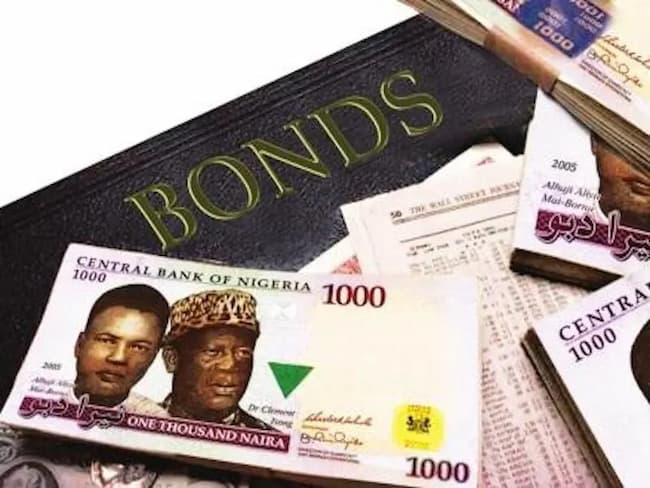
Nigerian government bonds came under pressure last week as yields climbed 12 basis points (bps) to 16.5%, driven by profit-taking and investor repositioning ahead of key inflation data expected this week.
Market watchers expect inflation to ease due to the rebasing of the Consumer Price Index (CPI), which could further influence bond yields in the medium term. Analysts at Cordros Capital noted that yields increased in the short (+24 bps) and mid (+2 bps) segments, while the long end remained flat.
The largest yield jumps came from the MAR-2027 (+33 bps) and APR-2032 (+46 bps) instruments. Early in the week, selling pressure targeted short- to mid-tenor bonds, including FGN 2029, FGN 2032, and FGN 2034. However, selective buying emerged midweek, particularly in FGN 2035s, which saw yields drop by 29 bps.
Despite intermittent rallies, market sentiment remains cautious, influenced by tight system liquidity and the Debt Management Office’s (DMO) ongoing efforts to manage borrowing costs.
Afrobeat superstar David Adeleke, popularly known as Davido, stunned guests at his white wedding ceremony in Miami on Sunday by gifting his wife, Chioma, a dazzling Richard Mille wristwatch worth $300,000.
This exquisite timepiece marks the second Richard Mille watch Chioma has received from Davido, who previously showered her with luxury Birkin bags and another Richard Mille watch on her birthday in 2023.
The lavish white wedding followed the couple’s traditional ceremony in Lagos in June 2024 and their court wedding in March 2023, drawing wide attention and excitement from fans.
Social media has been abuzz with pictures and videos capturing the opulence of the celebration, as admirers continue to share their enthusiasm for the glamorous event.
The Federal Inland Revenue Service (FIRS) has launched a national e-invoicing and electronic fiscal system (EFS) aimed at streamlining tax compliance, improving transparency, and ensuring real-time visibility into commercial transactions. FIRS Executive Chairman, Dr. Zacch Adedeji, announced the rollout in a statement issued by his Special Adviser on Media, Dare Adekanmbi, on Sunday in Abuja. The system went live on August 1, following a successful pilot phase that began in November 2024.
The first phase targets large taxpayers — companies with an annual turnover of ₦5 billion and above. Within two weeks of launch, over 1,000 firms, representing 20% of the 5,000 eligible companies, have begun integrating with the FIRS MBS platform. All large taxpayers must complete onboarding by November 1, 2025.
MTN Nigeria became the first company to transmit live e-invoices to FIRS, marking the official start of the regime. Huawei Nigeria and IHS Nigeria have also concluded test transmissions. Service providers, accredited in collaboration with the National Information Technology Development Agency (NITDA), will act as System Integrators and Access Point Providers to support onboarding and invoice transmission.
Acknowledging operational challenges faced by some companies, Adedeji said the deadline for compliance has been extended by three months to November 1. The FIRS team will continue to hold webinars, workshops, and town hall meetings to ensure a smooth transition.
The EFS will be deployed in phases, with medium and emerging taxpayers to follow. It is designed to align with global best practices, curb tax evasion, and support the Nigeria Revenue Services Reform Act by harmonising revenue reporting and creating a single source of truth for government earnings.
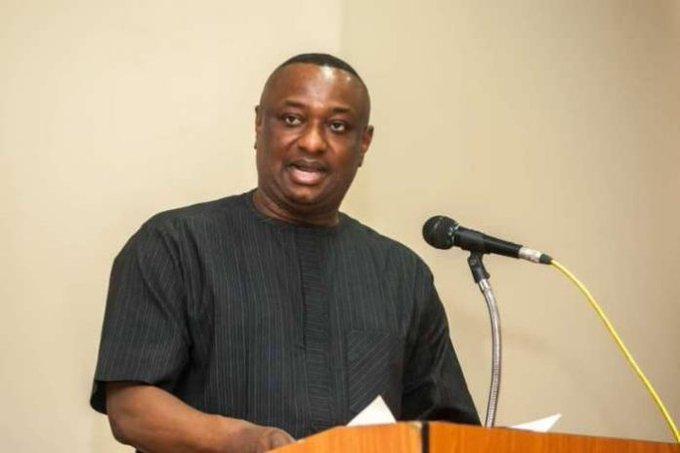
The Minister of Aviation and Aerospace Development, Festus Keyamo, has announced the suspension of a nationwide strike planned by aviation unions, which was set to begin on Monday, August 11, 2025.
In a statement posted on his official X account on Sunday, Keyamo confirmed that the industrial action had been shelved following government intervention.
“We are happy to announce that, after our intervention, the planned strike by the aviation unions due to commence tomorrow has been shelved,” the minister stated.
The unions involved include the National Union of Air Transport Employees (NUATE), Air Transport Services Senior Staff Association of Nigeria (ATSSSAN), Association of Nigeria Aviation Professionals (ANAP), and the Amalgamated Union of Public Corporations, Civil Service Technical and Recreational Services Employees (AUCPTRE).
Keyamo attributed the breakthrough to his longstanding relationship with labour leaders, saying he has maintained constructive engagement with union representatives to address long-standing sector challenges.
In a joint statement on August 8, the unions recalled issuing a fresh strike notice after earlier demands for improved remuneration were not met. The planned action was to begin at 5 a.m. on August 11, potentially grounding domestic and international flights nationwide.
However, the unions said the strike had been deferred in light of “positive developments” following discussions with the ministry and the Nigerian Airspace Management Agency (NAMA).
These developments include the release of a “no objection” letter from the Budget Office to the National Incomes, Salaries and Wages Commission, as well as assurances from NAMA management that the reviewed salary structure would be implemented with August salaries.
“Based on the above, and in order to demonstrate good faith, our unions have taken the decision to defer the strike action… pending the state of affairs at the end of August 2025,” the statement read.
The unions urged all NAMA staff to remain hopeful and engaged as negotiations continue.
The strike threat had stemmed from delays in implementing a revised salary structure, which the unions argue is overdue given rising living costs and operational pressures.
Global crude oil prices closed the week ending August 8 lower, as market jitters over U.S. trade tariffs and easing geopolitical risks overshadowed gains from falling inventories and hopes of a potential Federal Reserve rate cut.
On Friday, Brent crude settled at $66.59 per barrel, representing a 3.9% drop from last week’s $69.27 close. Likewise, West Texas Intermediate (WTI) fell to $63.58 per barrel, down 3% from $65.55 the previous week.
Oil prices initially climbed after eight OPEC+ members — including Saudi Arabia, Russia, Iraq, the UAE, Kuwait, Kazakhstan, Algeria, and Oman — announced a collective production increase of 547,000 barrels per day for September, continuing the phased reversal of 2.2 million bpd in voluntary cuts that began in April.
The rally was further supported by expectations that the Fed could lower interest rates in September. San Francisco Fed President Mary Daly hinted at an impending cut, citing weakening U.S. labour market data and muted inflationary pressures despite tariffs.
By midweek, oil extended gains as U.S. President Donald Trump threatened new tariffs on India over its imports of Russian crude. The market reacted again on Thursday after Trump signed a decree imposing a 25% tariff on certain Indian imports, effective in 21 days, with exemptions during a transition period.
Data from the U.S. Energy Information Administration (EIA) added further support, showing a 3 million-barrel drawdown in crude stockpiles and a 30,000 bpd drop in domestic output.
However, prices reversed on Friday amid reports of potential peace talks between Trump and Russian President Vladimir Putin to end the war in Ukraine. If confirmed, the meeting would be the first in-person dialogue between U.S. and Russian leaders since June 2021, when Joe Biden met Putin in Geneva.
Money market rates ended last week on a mixed note as the Central Bank of Nigeria (CBN) withdrew ₦2.3 trillion from the banking system via Open Market Operations (OMO) and Treasury bill auctions to curb excess liquidity.
Despite inflows from maturing OMO bills (₦600 billion) and Treasury bills (₦258 billion), much of the liquidity was sterilised at the auctions, leaving banks with a volatile funding profile. Liquidity fell to a deficit of ₦1.61 trillion midweek before recovering to a ₦750.3 billion surplus by Friday.
The Nigerian Interbank Offered Rate (NIBOR) rose across all maturities, signalling increased short-term funding pressure. The Open Buy Back (OPR) rate was steady at 26.50%, while the Overnight (O/N) rate inched up to 27.00%.
Analysts expect funding rates to remain relatively stable barring any major liquidity shocks, although tight monetary conditions continue to influence interbank market trends.
For all its chaos, Lagos has a magnetic pull. The traffic might test your patience, the noise might drain your energy, but somehow, the city keeps you hooked. It’s the business capital, the entertainment hub, the city that never quite sits still. Yet, for all its vibrance, sometimes you just need a break — a proper breather away from the boardrooms, the client calls, and yes, even your favorite coffee spot in Victoria Island.
When people think “weekend in Lagos,” they tend to land on the obvious: Lekki Beach. It’s fine — sun, sand, and the occasional live band — but truth be told, Lagos has far more in its weekend arsenal. Some of these places don’t just give you an escape; they make you feel like you’ve crossed state lines, even though you haven’t. And if you time it right, you can return to work on Monday with your inbox still under control and your peace of mind intact.
Let’s take a look at some gems that quietly exist outside the usual tourist chatter.
1. Omu Resort, Epe — The “Close Enough Yet Far Enough” Escape
The magic of Omu Resort lies in its ability to make you forget you’re still in Lagos State. Tucked away in Epe, it blends nature with a surprisingly wide spread of activities. One minute you’re feeding antelopes at the mini zoo, the next you’re testing your reflexes on the go-kart track, or paddling along in a kayak that gently rocks with the current.
It’s not just for families with restless kids; it’s just as fitting for couples craving a playful day or even a solo wanderer who wants a recharge without boarding a flight. And here’s a pro tip for the return trip — stop by Epe’s bustling fish and fruit markets. Nothing beats the satisfaction of bargaining for a basket of fresh prawns after a day of fun.
2. La Campagne Tropicana, Ibeju-Lekki — Where Lagos Meets the Tropics
Some would argue it’s no longer “hidden,” but La Campagne Tropicana still doesn’t draw the maddening crowds you’ll find at Elegushi or Oniru. What you get here is a curated blend of African luxury — think thatched beachfront huts, open fires crackling under the stars, and drums that seem to beat in sync with the waves.
It’s the kind of place where palm wine tastes richer, probably because you’re sipping it barefoot with sand between your toes. If your week has been a blur of strategy meetings and late-night spreadsheets, this is where you can unplug — really unplug — without guilt. And yes, the Wi-Fi works if you must send that “urgent” email, but let’s be honest, your boss will survive until Monday.
3. Whispering Palms, Badagry — The Gentle Break Your Mind Craves
Badagry has a slower heartbeat, and Whispering Palms is right in rhythm with it. Here, the wind carries a softness you didn’t realize you missed. You’ll find yourself lazily sipping coconut water under swaying palms, occasionally looking up to watch the lagoon shimmer.
But beyond relaxation, there’s history here. A short trip to the Badagry Slave Museum will stir something deeper — a reminder that travel can be more than leisure; it can be a lesson. Back at the resort, you might rent a bicycle to trace quiet trails or take a boat ride across the lagoon. The atmosphere has a way of untangling knots in your mind you didn’t know were there.
4. Epe Mangrove Tour & Fish Market — An Adventure in Slow Motion
This isn’t your polished resort getaway, and that’s exactly its charm. Picture this: you’re in a wooden canoe, gliding through narrow mangrove channels while fishermen cast nets with practiced precision. The air smells faintly of salt and fresh catch.
Once you’ve had your fill of nature’s stillness, you head to the Epe Fish Market, where bargaining is practically a sport. From giant snappers to crayfish, the spread is a seafood lover’s dream. Pair this with a night in a nearby guesthouse or Airbnb, and you’ve got yourself a weekend that feeds both your soul and your appetite.
5. Ibadan — The “Not Lagos” Lagos Escape
Now, hear me out. Yes, Ibadan. It’s not the obvious choice, but that’s part of the appeal. A two-hour drive (on a good day) lands you in a city that’s equal parts history and low-key modern charm. And yes, the Amala is worth the trip alone — that’s just a fact.
Beyond the food, there’s Agodi Gardens with its lush greenery, the IITA Forest Reserve for nature walks, and Ventura Mall if you’re craving air-conditioned retail therapy. Then there’s Bower’s Tower, where a panoramic view of the city will have you reaching for your camera. Best part? It’s refreshingly affordable compared to a typical Lagos weekend splurge.
Why These Spots Work for the Lagos Professional
Here’s the thing — as a business-minded Lagosian, your downtime is currency. You don’t want to waste it on destinations that feel like more work than rest. These locations tick the boxes:
Accessibility: All are within a few hours of the city, meaning you can leave after work on Friday and still get a full Saturday.
Variety: From adrenaline-pumping go-karts to meditative lagoon views, there’s something for every mood.
Value: None require breaking the bank — unless you start buying seafood like you’re stocking a restaurant.
Connection: Whether to nature, history, or just better versions of yourself, these trips give you more than just Instagram photos.
Making the Most of Your Weekend Escape
A quick weekend trip only works if you plan just enough to avoid stress, but not so much that it feels like a corporate retreat.
Leave work at work — or at least in a neat corner of your mind.
Pack light — a small bag keeps you nimble, especially if you’re taking public transport or boats.
Book ahead — Lagos might surprise you with last-minute price hikes or fully booked resorts.
Budget for spontaneity — that unexpected boat ride or fish feast will be worth it.
Escaping Lagos doesn’t have to mean catching a flight or blocking a week out of your calendar. Sometimes, the best way to recharge is to spend 48 hours in a place that changes your pace, your view, and maybe your mood.
By Sunday night, when you’re heading back into the city lights, you’ll realize something: the trick isn’t just to “get away.” It’s to return with a piece of where you’ve been — the calm of Badagry, the thrill of Epe, or the flavors of Ibadan — and let it quietly shape how you handle the week ahead.
First dates can be exciting — a mix of hope, nerves, and curiosity. But if you’re looking for a long-term, marriage-minded partner, you don’t have to wait months to find out if he’s serious. In fact, there are clear signs he won’t marry you from the first date if you know what to look for.
This isn’t about being overly critical; it’s about spotting dating red flags on the first date that save you from wasting months — or even years — with someone who doesn’t share your relationship goals.
1. He Doesn’t Ask About Your Future Plans
If marriage is in your life plan, but he avoids any talk about the future, that’s one of the first date clues he’s not the one. A man who is marriage-minded will want to know your life goals to see if they align with his.
2. He Only Talks About Himself
One of the easiest ways to tell if he’s not serious is when the conversation is one-sided. If you leave the date knowing his favorite football team, his pet’s name, and his childhood stories — but he knows nothing about you — he’s not focused on building a real connection.
3. He Says He’s “Not Looking for Anything Serious”
This might be the biggest red flag of all. If he says it, believe him. You’re not going to change his mind, no matter how amazing you are.
4. He Flirts With Others While You’re There
If his eyes are wandering on the first date, it’s unlikely he’ll ever be loyal in a committed marriage. Marriage-minded men signs include making you feel like the only woman in the room.
5. He Avoids Emotional Topics
Men who want a long-term partner aren’t afraid to talk about feelings, family, or future dreams. If your date keeps everything light and surface-level, he may just be looking for something casual.
6. He Has a Negative View of Marriage
If he jokes about marriage being “a trap” or “the end of freedom,” take it seriously. It’s one of the strongest first date clues he’s not the one.
7. He’s Glued to His Phone
If he’s texting, scrolling, or taking calls during the date, it’s not just rude — it’s a sign you’re not his priority. A man who’s truly interested will give you his undivided attention.
8. He Makes Zero Effort to Impress You
You don’t need expensive gifts, but effort matters. If he shows up late, dresses sloppily, or didn’t bother to plan anything, he’s not investing in the connection.
9. He Brings Up His Ex — A Lot
Talking about an ex more than once on a first date is a huge clue he’s not ready to move on, let alone settle down.
10. He Doesn’t Ask for a Second Date
Sometimes, the clearest sign is action — or lack of it. If the first date ends without any talk of meeting again, don’t wait around for his call.
Final Thoughts
Spotting the signs he won’t marry you from the first date doesn’t mean you’re being pessimistic — it means you value your time and emotional well-being. The sooner you identify dating red flags on the first date, the sooner you can move toward finding someone who is ready, willing, and excited to build a life with you.
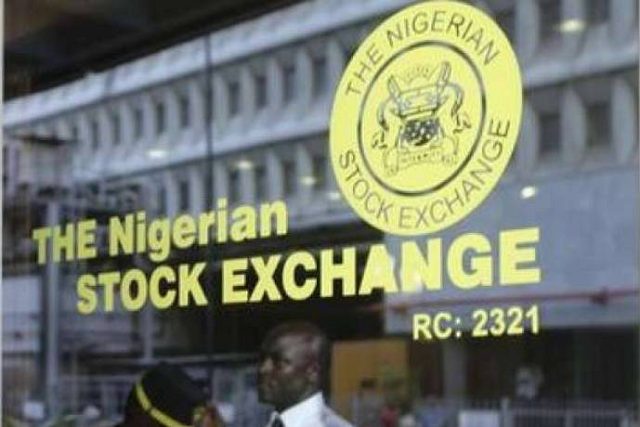
The Nigerian Exchange (NGX) closed last week with a remarkable surge in market value, adding a massive ₦2.84 trillion in four out of five trading sessions, bringing the year-to-date gain to 41.61%. This bullish momentum pushed the All-Share Index (ASI) to an unprecedented level, reflecting strong investor confidence across major sectors.
Analysts attribute the rally to heightened interest in insurance, industrial, and consumer goods stocks, particularly after the official signing of the Nigerian Insurance Act into law. According to market intelligence from Cowry Asset Management, the new legislation has spurred optimism over industry reforms and recapitalisation prospects, prompting strategic portfolio rebalancing by both institutional and retail investors.
The NGX’s All-Share Index rose 3.18% week-on-week, closing at 145,754.91 points, having reached a record high of 146,570.71 points during intraday trading. Market capitalisation jumped from ₦89.37 trillion to ₦92.21 trillion, supported by a market breadth that saw 66 gainers against 41 losers.
Trading volume rocketed by 79.8% to 8.72 billion shares, suggesting strong participation, although transaction value dipped 10.5% to ₦134.04 billion — a sign that investors were also targeting mid-cap and penny stocks. The number of executed deals increased by 3.24% to 179,908.
Sector performance showed that four out of six key indices closed positive. The insurance sector led with an extraordinary 41% gain, fuelled by sharp price appreciation in Mutual Benefits Assurance (+60.4%), AIICO Insurance (+59.8%), ROYALEX (+59.3%), SOVRENINS (+59.1%), and CORNERSTONE (+54.5%). Industrial goods followed with an 8.73% gain, driven by Dangote Cement and BUA Cement, while consumer goods advanced 8.27%, led by BUA Foods, GUINNESS, and ELLAH LAKES.
Oil & Gas posted a marginal 0.17% rise, while the commodities and banking sectors slipped by 2.33% and 0.75% respectively, dragged by sell-offs in TOTAL, PRESCO, ZENITHBANK, FIDELITYBANK, and ACCESSCORP.
Looking ahead, market analysts predict a mixed but largely optimistic outlook, with the insurance, consumer goods, and industrial sectors likely to dominate trading activity.
Nigeria’s non-oil exports reached $3.225 billion in the first half of 2025, representing a 19.59% increase from $2.696 billion in the same period of 2024, according to the Nigerian Export Promotion Council (NEPC).
DG Nonye Ayeni revealed in Abuja that export volumes also rose to 4.04 million metric tonnes from 3.83 million metric tonnes in H1 2024. She recalled that in Q1 2025, non-oil exports were valued at $1.791 billion, up 24.75% from $1.436 billion in Q1 2024, with volume growth of 24.3%.
A total of 236 distinct products were exported in H1 2025 — up from 202 products in H1 2024 — spanning agriculture, manufacturing, extractives, and semi-processed goods. Notably, cocoa beans led exports with 34.88% of total value, followed by urea/fertiliser at 17.65%.
Ayeni credited the AfCFTA for expanding market access and reducing tariffs for Nigerian exporters, while NEPC initiatives such as quality and standards training, packaging improvements, and market linkage programmes boosted product visibility and earnings.
She affirmed the council’s commitment to collaborating with the Ministry of Industry, Trade, and Investment to further increase export volume and value under President Bola Tinubu’s Renewed Hope Agenda.
BUA Foods Plc has overtaken MTN Nigeria and Dangote Cement to become the most valuable listed company on the Nigerian Exchange (NGX), reaching a market capitalisation of ₦10.35 trillion.
The surge was driven by increased activity in the consumer goods index, with investors betting on BUA Foods’ ability to sustain earnings growth. However, like other billionaire-controlled companies, the majority of shares remain tightly held.
BUA Group Chairman Abdulsamad Rabiu owns 89.85% of the company directly and 2.78% indirectly, while Rabiu Abdulsamad Isyaku holds 2.63%. The firm’s free float stands at 5.02% or ₦390.44 billion, meeting NGX Main Board requirements.
Meanwhile, MTN Nigeria’s market value slipped to ₦9.66 trillion from its recent ₦10.077 trillion high as post-earnings profit-taking set in. Dangote Cement Plc followed closely with a valuation of ₦9.736 trillion, its highest in 52 weeks, buoyed by strong H1 earnings.
Market data shows Dangote Industries Limited controls 87.28% of Dangote Cement, with Stanbic IBTC Nominees holding 5.43% and other insiders owning 2.5%, leaving a free float of 4.79%. Airtel Africa Plc remained at ₦8.683 trillion, with its closely held structure keeping the stock relatively stagnant despite earnings reports.
The Dangote Petroleum Refinery has dismissed widespread rumours suggesting that it has halted operations, assuring Nigerians and industry stakeholders that its production and distribution activities remain fully operational.
In a statement issued by Group Chief Branding and Communications Officer, Anthony Chiejina, the refinery clarified that there has been no interruption to truck loading or production schedules.
“The Dangote Petroleum Refinery is operating at full capacity. There has been no shutdown or suspension of truck loading activities,” the statement affirmed.
The refinery also explained that the periodic sale of Residual Catalytic Oil (RCO) is a routine aspect of its operations, often involving bulk transactions, hence the recent tender for fuel oil sales.
Management confirmed that the facility continues to deliver over 40 million litres of Premium Motor Spirit (PMS) daily, alongside steady volumes of Automotive Gas Oil (AGO), commonly known as diesel.
“As the largest single-train refinery in the world, our advanced predictive and preventive maintenance protocols ensure uninterrupted output. Routine maintenance does not affect fuel supply,” the statement added.
Challenging those spreading misinformation, the refinery invited potential buyers to place orders for 40 million litres of PMS daily and 15 million litres of diesel daily for the next three months.
It further reiterated its commitment to Nigeria’s energy security and transparency, urging the public to disregard what it described as unfounded claims from individuals with vested interests in importing substandard fuel under the guise of domestic shortages.
The Nigerian naira recorded minimal movement in the currency market last week as the Central Bank of Nigeria (CBN) executed two key interventions: clearing all outstanding FX forward obligations and supplying additional dollars to authorised dealer banks.
At the official window, the naira appreciated slightly by 0.01% week-on-week, closing at N1,533.56 per US dollar, compared to N1,533.73 the previous week, according to CBN spot rate data. Analysts say the clearance of FX forwards boosted investor confidence and improved supply prospects despite global headwinds.
The parallel market told a different story, with the naira depreciating by 0.52% to an average of N1,545/$1, driven by increased dollar demand from businesses and individuals amid market illiquidity.
Cordros Capital reported that the CBN injected $150 million into the market through dealer banks, helping to stabilise supply. AIICO Capital projected short-term stability in the naira’s performance, citing ongoing policy adjustments by the CBN.
Global factors weighed on sentiment, with Brent crude dropping over 4% to $66.8 per barrel and WTI falling 4.6% to $64.1. Nigeria’s Bonny Light crude slipped 3.28% to $70.74 per barrel on weaker demand expectations and anticipated supply increases from OPEC+.
On the domestic front, Nigeria’s external reserves grew by 1.56% week-on-week to $40.16 billion, providing a buffer against currency volatility.
Market watchers expect the naira to maintain its marginal gains at the official market, backed by CBN interventions, while global oil market uncertainty remains a key risk factor.
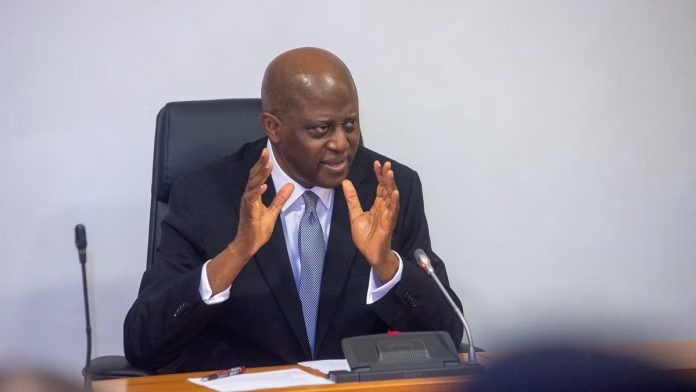
The Central Bank of Nigeria (CBN) has announced the conclusion of a comprehensive forensic review into foreign exchange transactions conducted under the Retail Secondary Market Intervention Sales (RSMIS) scheme, officially bringing the matter to a close.
The apex bank revealed that the audit, which spanned 18 months, was carried out in partnership with authorised dealer banks and global audit giant Deloitte. The investigation covered all unresolved and undelivered FX forward contracts.
FX forward contracts allow market participants to secure an agreed exchange rate today for foreign currency transactions set to occur at a future date. They are widely used by importers, exporters, and businesses to mitigate currency volatility.
In a statement on its website, the CBN declared there would be no further review or reopening of the audit process, describing such actions as inefficient and counterproductive.
“The findings meet procedural fairness standards. The case of undelivered forward contracts is concluded and closed,” the statement read.
According to the bank, Deloitte served as an independent forensic specialist, ensuring the review adhered to transparency and due process. The primary objectives of the audit were to authenticate undelivered contracts, ensure compliance with regulatory requirements, safeguard Nigeria’s foreign reserves, and promote market discipline.
The CBN emphasised that the exercise aligned with its statutory obligation to protect public financial resources, especially when previous activities fell below expected standards.
While confirming readiness to settle all legitimate FX obligations that meet market criteria, the bank urged financial institutions and their clients to maintain proper documentation, adhere to forex regulations, and submit only genuine transactions for settlement.
Additionally, the CBN disclosed that it is evaluating legal measures against entities found to have violated established rules during the audit period. Possible sanctions could range from civil and administrative penalties to criminal prosecution, in collaboration with law enforcement agencies.
The review, initiated by CBN Governor Olayemi Cardoso in 2023, was part of broader reforms aimed at boosting transparency and accountability in Nigeria’s foreign exchange management framework.
Twenty-one companies now boast market valuations above ₦1 trillion on the Nigerian Exchange (NGX), cementing their positions among the market’s elite. The latest valuation rankings show BUA Foods Plc topping the list at ₦10.348 trillion, displacing MTN Nigeria from the number one spot after a stellar Q2 earnings performance.
MTN Nigeria follows closely at ₦9.66 trillion, while Dangote Cement ranks third at ₦9.736 trillion after its share buyback reduced its outstanding shares. Airtel Africa holds the fourth position at ₦8.683 trillion, while BUA Cement rounds off the top five with ₦5.709 trillion, supported by strong earnings recovery.
Among financial institutions, Guaranty Trust Holding Company (GTCO) leads at ₦3.642 trillion, followed by Zenith Bank at ₦3.065 trillion. In the power sector, Geregu Power, backed by billionaire Femi Otedola, is worth ₦2.85 trillion.
Other heavyweights include Lafarge Africa (₦2.343 trillion), Nigerian Breweries (₦2.308 trillion), International Breweries (₦2.26 trillion), Aradel Holdings (₦2.259 trillion), and Transcorp Power (₦2.16 trillion).
UBA closed at ₦1.994 trillion, Transcorp Hotels at ₦1.685 trillion, and Stanbic IBTC at ₦1.606 trillion. Consumer goods giant Nestle Nigeria is valued at ₦1.5 trillion, while agricultural players Presco Plc and Okomu Oil stand at ₦1.48 trillion and ₦1 trillion respectively.
Access Holdings and First Holdco are valued at ₦1.44 trillion and ₦1.38 trillion respectively, while Fidelity Bank rounds off the list at ₦1.059 trillion despite facing legal headwinds.
The first eviction night of the highly anticipated Big Brother Naija Season 10, tagged 10/10, has seen two housemates bid farewell to the competition.
Danboskid became the first contestant to be evicted for the night, marking his exit as the second male housemate to leave since the show began. His journey started as the second male to enter the BBNaija house during the second opening night. Shortly after, show host Ebuka Obi-Uchendu announced the departure of Ibifubara, the second eviction of the evening.
Following the double eviction, the number of contestants in the house has now reduced from 29 to 27.
Aside from the tension-filled evictions, Ebuka’s outfit became a trending topic on social media and within the BBNaija fan community. Drawing inspiration from Nollywood veteran Chinedu Ikedieze — best known as one-half of the iconic Aki and Pawpaw duo — Ebuka stepped out in a striking royal blue three-piece ensemble. The sharply tailored suit featured a long, structured overcoat, a crisp white shirt, and a black leather belt for contrast. Completing the statement look were a matching blue fedora, dark sunglasses for a touch of mystique, and classic black shoes.
Sharing the inspiration behind his attire, Ebuka posted:
“Inspired by pop culture icon Chinedu Ikedieze. Veteran actor, comedian, and one half of the legendary Aki and Pawpaw. Undisputed Nollywood royalty and global meme factory. Boss!!!”
Ebuka’s styling for the double eviction night aligns with his recent fashion streak this season, where he has paid homage to Nigerian entertainment icons including King Sunny Ade, Oliver De Coque, and Prince Nico Mbarga. All outfits have been creatively interpreted and tailored by Nigerian fashion house ATAFO.
This season, Ebuka has continued to spotlight Nigerian fashion designers, blending modern tailoring with cultural influences, and turning each eviction night into a celebration of style and heritage.
The Nigerian equities market wrapped up the trading week on August 8, 2025, on a strong bullish note, marking its 11th straight week of gains. The All-Share Index (ASI) surged by 4,491.86 points to close at 145,754.91, representing a robust 3.18% increase from the previous week’s opening figure of 141,263.05.
The rally was largely fueled by a significant upswing in the insurance sector, which outperformed all other sectors on the Nigerian Exchange (NGX).
Trading activity intensified, with weekly transaction volume climbing sharply to 7.7 billion shares, up from 4.8 billion in the prior week. This momentum also pushed the total market capitalization higher, reaching N92.2 trillion from N89.37 trillion, edging closer to the historic N100 trillion mark.
Market breadth leaned positive, as 66 stocks posted gains compared to 54 in the previous week, while 41 equities declined and 39 remained unchanged.
Trading Week Overview
The week began with strong upward momentum on Monday, delivering the bulk of the weekly gains as the ASI breached the 144,000-point threshold. Steady advances continued into midweek, with the index crossing the 145,000 mark on Wednesday and touching 146,000 on Thursday. However, a mild pullback on Friday ended a 22-day winning streak, settling the index at 145,754.
Index Performance
NGX Premium Index: Gained 0.62%, buoyed by a 9.22% rise in Dangote Cement, although other heavyweight losses limited the upside.
NGX Main Board Index: Rose 4.64%.
NGX 30 Index: Advanced 2.74%.
Sectoral Highlights
Insurance: NGX Insurance Index surged 41%, leading all sectoral gains.
Industrial Goods: Rose 8.73%, driven by notable advances in BUA Cement (+13.92%), Dangote Cement (+9.22%), Chemical & Allied Products (+10.45%), Meyer (+10.00%), and Berger Paints (+8.70%).
Consumer Goods: Climbed 8.27%, supported by BUA Foods (+18.93%), Champion Breweries (+15.19%), and Unilever (+6.98%).
Oil and Gas: Gained 0.17%, aided by Oando (+5.46%).
Banking: Declined 0.75% as profit-taking weighed on tier-one lenders.
Top Gainers
Mutual Benefits Assurance Plc: +60.44%
AIICO Insurance Plc: +59.82%
Royal Exchange Plc: +59.33% (N2.39)
Sovereign Trust Insurance Plc: +59.06% (N2.72)
Cornerstone Insurance Plc: +54.46% (N6.41)
Universal Insurance Plc: +52.78% (N1.10)
Regency Assurance Plc: +51.19% (N1.27)
Veritas Kapital Assurance Plc: +51.08% (N2.10)
Coronation Insurance Plc: +46.52% (N3.37)
International Energy Insurance Plc: +46.48% (N3.12)
Top Losers
LivingTrust Mortgage Bank Plc: -24.13%
Academy Press Plc: -18.18%
The Initiates Plc: -12.73% (N12.00)
UPDC REIT: -11.76% (N8.25)
Legend Internet Plc: -11.72% (N5.65)
Dangote Sugar Refinery Plc: -10.05% (N59.50)
Transcorp Power Plc: -10.00% (N288.00)
UH REIT: -10.00% (N57.60)
Austin Laz & Company Plc: -9.83% (N2.11)
PZ Cussons Nigeria Plc: -9.77% (N38.80)
Corporate Actions
Key corporate events included:
International Breweries released Q2 earnings.
Sterling Bank disclosed three director share purchases.
United Capital hosted its half-year earnings call.
Oando announced a new company secretary — its first change in 14 years.
Outlook
With the ASI firmly above the 145,000 mark, analysts expect bullish sentiment to persist in the near term. However, mild corrections could occur if profit-taking pressure intensifies, particularly in large-cap stocks.
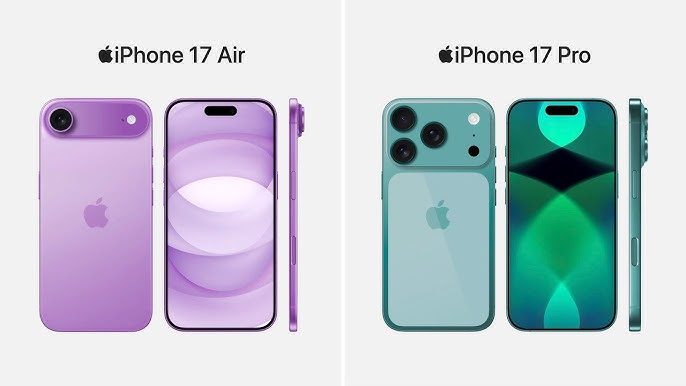
Apple is preparing to unveil its latest smartphone lineup in September 2025, with the anticipated iPhone 17, iPhone 17 Pro, iPhone 17 Pro Max, and a new ultra-slim variant unofficially dubbed the iPhone 17 Air. The reveal will be accompanied by the debut of the Apple Watch Series 10, the Apple Watch Ultra 3 — rumored to feature the largest display yet — and potentially the third-generation Apple Watch SE and new AirPods Pro 3.
Industry insiders suggest Apple will announce the event around Tuesday, August 26, at approximately 8 a.m. Pacific Time. The actual keynote is expected to be held two weeks later at the 1,000-seat Steve Jobs Theater in Cupertino, California.
Keynote Date & Time
Current projections point to Tuesday, September 9, 2025, as the most likely date, aligning with Apple’s traditional Tuesday launches. The event is set for 10 a.m. Pacific (1 p.m. Eastern, 6 p.m. U.K.). Although alternate dates that week remain possible, earlier scheduling is considered unlikely due to Labor Day and the IFA Berlin tech show.
Reports from leakers and tech journalists, including sources from German carriers, reinforce the September 9 projection, though Apple has yet to make any official announcement.
By midday Pacific Time, the keynote is expected to conclude, with Apple revealing full product names, features, and pricing details for all devices.
Pre-Order Window
Pre-orders are projected to open on Friday, September 12, beginning at 5 a.m. Pacific (8 a.m. Eastern, 1 p.m. U.K.). As in past years, Apple may allow customers to pre-select their preferred model, color, and storage a day prior to secure a faster checkout.
While all models are expected to be announced together, staggered release dates are possible — a strategy Apple has used before. For example, in 2018, the iPhone XR was launched weeks after the iPhone Xs and Xs Max. Similar delays occurred with the iPhone 12 mini and iPhone 12 Pro Max.
Review Embargo Lift
Tech media reviews are anticipated to drop between Tuesday, September 16, and Wednesday, September 17, likely at 6 a.m. Pacific (9 a.m. Eastern, 2 p.m. U.K.), once Apple’s review embargo lifts.
Official Release Date
The iPhone 17 lineup is expected to hit stores and begin shipping on Friday, September 19, 2025, at 7 a.m. local time in participating markets.
Week 6 pool results 2025: Football pools results, live football pool result today, pool result today saturday matches, pool results for this week, british and aussie pool result, football pools results and fixtures, pools panel results today, pool panel results and live score pool result today. We publish half-time results first of its kind.
Week 6 Pool Results: Football pools results for this week 6 2025 are published on this website immediately after full-time confirmation of live score results. We also publish the outcome of postponed matches by the football pools panel at half-time as decided by the football pools. This week’s Week 6 Pool Results are made available in partnership with Bizwatch Nigeria. Stay tuned for reliable and accurate updates throughout the week.
WEEK: 6; SEASON: UK 2025/2026; DATE: 09-August-2025
Week 7 pool results 2025: Football pools results, live football pool result today, pool result today saturday matches, pool results for this week, british and aussie pool result, football pools results and fixtures, pools panel results today, pool panel results and live score pool result today. We publish half-time results first of its kind.
Week 7 Pool Results: Football pools results for this week 7 2025 are published on this website immediately after full-time confirmation of live score results. We also publish the outcome of postponed matches by the football pools panel at half-time as decided by the football pools. This week’s Week 7 Pool Results are made available in partnership with Bizwatch Nigeria. Stay tuned for reliable and accurate updates throughout the week.
WEEK: 7; SEASON: UK 2025/2026; DATE: 16-August-2025