





Key points
- U.S. President Donald Trump declared the interim peace agreement with Iran “over,” dismissing prospects for further negotiations.
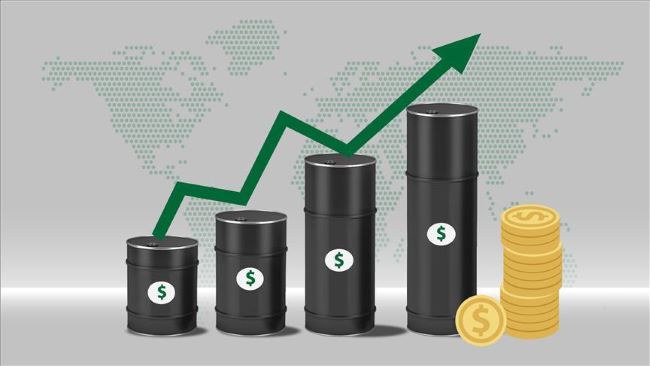
- Brent crude and West Texas Intermediate (WTI) prices surged by more than six per cent following Trump’s remarks and renewed military strikes.
- Fresh hostilities, tighter sanctions on Iranian oil exports, and fears over the Strait of Hormuz have renewed concerns about global energy supply and fuel prices.
Main Story
Global oil prices surged by more than six per cent on Wednesday after U.S. President Donald Trump declared that the interim peace agreement between the United States and Iran was effectively over, raising fresh concerns over geopolitical stability and global crude oil supplies.
Speaking during the NATO leaders’ summit, Trump said he no longer intended to engage with the Iranian government, signalling a dramatic shift from the diplomatic efforts initiated only weeks earlier.
Following the comments, global benchmark crude prices rallied sharply. West Texas Intermediate (WTI) crude rose 6.22 per cent to $74.82 per barrel, while Brent crude climbed 6.36 per cent to $78.88 per barrel, reflecting market fears of renewed supply disruptions.
The latest developments come barely weeks after Washington and Tehran signed an interim peace agreement in mid-June aimed at ending months of hostilities while creating a framework for negotiations on unresolved issues, including Iran’s nuclear programme.
However, the fragile truce has rapidly deteriorated following a fresh escalation in military operations.
Overnight, the United States reportedly launched strikes on more than 80 targets across Iran, including air defence systems, command centres and coastal radar installations.
Iran’s Islamic Revolutionary Guard Corps responded by announcing attacks on military bases in Kuwait and Bahrain, while Kuwaiti authorities said their air defence systems intercepted incoming missiles and drones.
Iranian Parliament Speaker Mohammad Bagher Ghalibaf also rejected U.S. pressure, insisting that Tehran would not yield to what he described as intimidation.
The renewed crisis has also coincided with Washington’s decision to reverse its earlier sanctions waiver that temporarily permitted Iran to resume crude oil exports as part of ongoing diplomatic negotiations.
Industry data compiled by Bloomberg using Vortexa shipping information indicate that about 63 million barrels of Iranian crude remain stranded aboard tankers due to renewed sanctions and uncertainty over buyers.
Most of the vessels are reportedly positioned in the Persian Gulf and Asian waters, with several yet to secure confirmed destinations.
The Issues
The collapse of diplomatic engagement between the United States and Iran raises several economic and geopolitical concerns, including:
Renewed instability in the Middle East and heightened military confrontation.
Increased risks to global crude oil supplies, particularly through the Strait of Hormuz, a key shipping route for more than 20 per cent of global oil exports.
Greater volatility in international oil markets with potential inflationary consequences.
Possible upward pressure on fuel prices in oil-importing countries and downstream petroleum markets, including Nigeria.
Continued uncertainty surrounding Iranian crude exports following the reinstatement of U.S. sanctions.
What’s Being Said
Donald Trump, U.S. President
“It’s a very interesting question. To me, I think it’s over. I don’t want to deal with them. They’re scum. They’re sick people. They’re led by sick people.”
“As far as I’m concerned, it’s just a waste of time dealing with them.”
Mohammad Bagher Ghalibaf, Speaker of Iran’s Parliament
“The era of bullying and extortion is over.”
What’s Next
Market analysts are expected to closely monitor further military developments between the United States and Iran, as well as any diplomatic interventions by international stakeholders seeking to de-escalate tensions.
Attention will also focus on the Strait of Hormuz, where any disruption to shipping could trigger another sharp increase in global oil prices.
For Nigeria, policymakers and industry regulators are expected to continue monitoring international crude prices amid efforts to sustain recent reductions in domestic petrol prices through engagements with refiners, marketers and other stakeholders.
Bottom Line
The apparent collapse of the U.S.-Iran interim peace agreement has reignited geopolitical uncertainty in the Middle East, triggering a sharp rally in global oil prices and renewing concerns over energy security, inflation and fuel costs across international markets.