








Key Points
- NIMASA conducted a coordinated maritime security operation, code-named Blue-Green, across key operational areas in Lagos.
- The operation deployed Deep Blue assets, maritime security units and intelligence capabilities to identify and inspect vessels of interest.
- Inspections covered statutory certification, cargo and voyage documentation, surcharge obligations and cabotage compliance.
- Director-General Dr Dayo Mobereola said Blue-Green would become a recurring intelligence-led enforcement model.
- NIMASA plans to expand similar operations to Port Harcourt, Calabar and Warri, subject to operational readiness and intelligence priorities.
Main Story
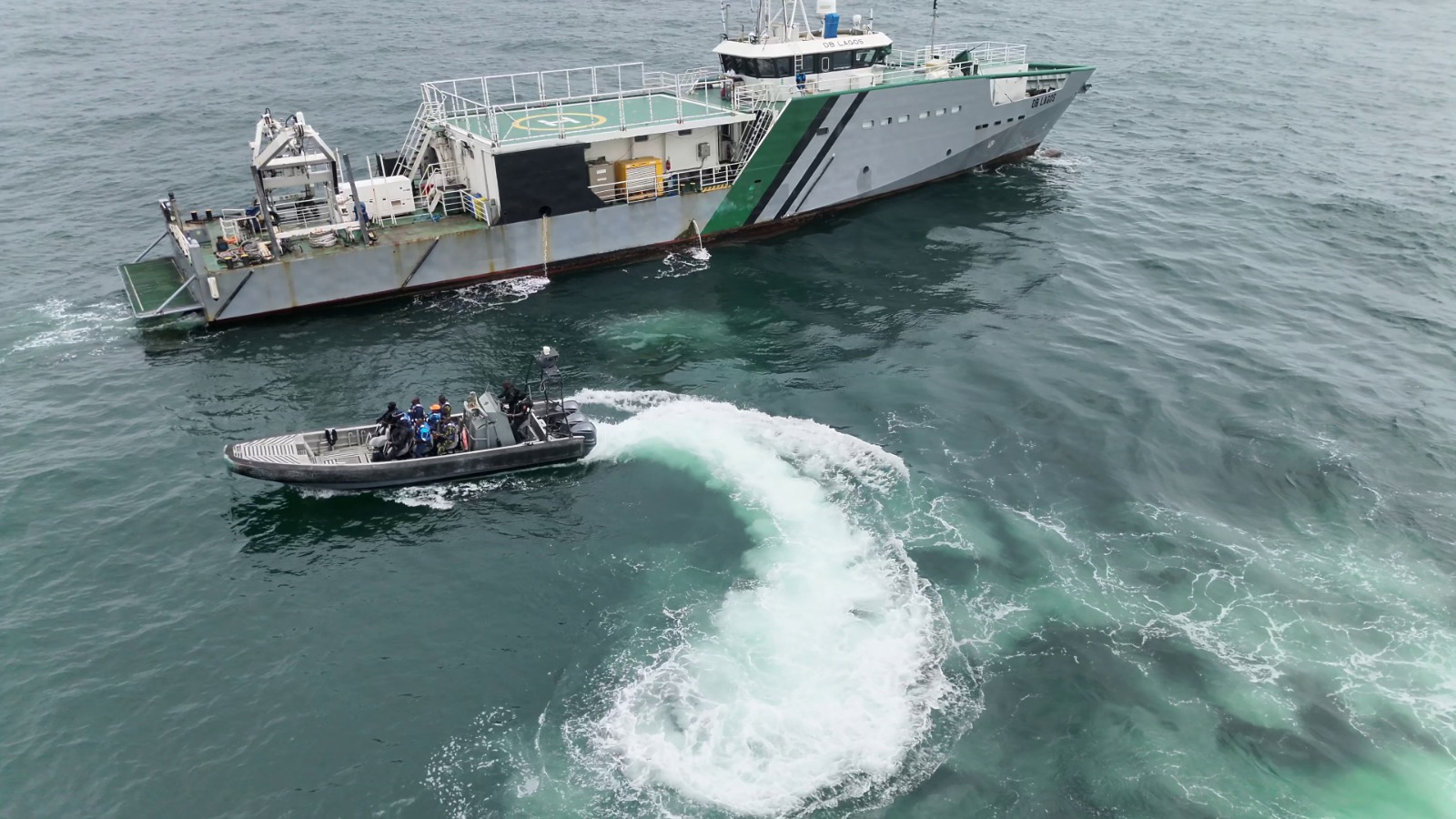
The Nigerian Maritime Administration and Safety Agency (NIMASA) has conducted a coordinated maritime security enforcement operation in Lagos, deploying assets of the Integrated National Security and Waterways Protection Infrastructure, known as the Deep Blue Project, alongside relevant maritime security units to strengthen compliance across key maritime areas.
The operation, code-named Blue-Green, combined intelligence gathering, analysis and target development with coordinated enforcement at sea. It also featured a specialised intelligence capability within the NIMASA Deep Blue and Command, Control, Communications, Computers and Intelligence System (C4i), designed to improve the identification, assessment and prioritisation of vessels of interest.
According to the agency, the capability enabled more focused target selection and provided real-time intelligence support to enforcement teams during the operation.
During the exercise, several vessels were boarded and inspected for document verification and compliance screening. The inspections covered statutory certification, cargo and voyage documentation, surcharge obligations and compliance with cabotage requirements.
Speaking on the operation, NIMASA Director-General, Dr Dayo Mobereola, said the agency would institutionalise Blue-Green as a recurring intelligence-led enforcement model following the outcome of the exercise.
He explained that the agency would progressively extend similar operations to other maritime regions, including Port Harcourt, Calabar and Warri, in line with operational readiness and intelligence priorities.
Mobereola added that deploying multiple enforcement platforms was intended to deter individuals and groups with criminal intentions within the maritime domain. He also expressed satisfaction with the level of cooperation received from the armed forces during the operation.
The exercise highlighted the role of intelligence coordination and inter-agency collaboration in strengthening maritime security and improving regulatory compliance. By integrating intelligence capabilities with Deep Blue maritime assets, NIMASA aims to establish a more structured approach to identifying potential violations and directing enforcement resources towards areas of concern.
The Issues
Maritime security and regulatory compliance remain important to the protection of Nigeria’s waterways, the safety of maritime operations and the integrity of the country’s shipping industry.
Non-compliance with statutory certification, documentation, surcharge and cabotage requirements can undermine regulatory oversight and affect government revenue. Effective enforcement therefore requires the ability to identify vessels of interest, verify compliance and respond to potential violations using credible intelligence.
The deployment of specialised intelligence systems alongside maritime enforcement assets also highlights the importance of coordination among agencies responsible for securing Nigeria’s maritime domain. Sustained cooperation can improve operational effectiveness while helping enforcement teams focus their resources on identified risks.
What’s Being Said
NIMASA Director-General, Dr Dayo Mobereola, said:
“Following the outcome of the operation, we at NIMASA will formalise Blue-Green as a recurring intelligence-led enforcement model and progressively expand similar operations to other maritime regions, including Port Harcourt, Calabar and Warri, in line with operational readiness and intelligence priorities.”
On the deployment of multiple enforcement platforms, he added:
“This deployment of multiple enforcement platforms is to serve as deterrent to anybody with criminal intentions. We are glad with the level of cooperation from the armed forces.”
What’s Next
NIMASA plans to formalise Blue-Green as a recurring enforcement model and progressively extend the initiative to Port Harcourt, Calabar and Warri. The expansion will depend on operational readiness and intelligence priorities.
The agency is also expected to continue integrating its intelligence systems, Deep Blue assets and relevant maritime security units to strengthen vessel screening, regulatory compliance and enforcement across Nigeria’s maritime domain.
Bottom Line
NIMASA’s Blue-Green operation signals a move towards more coordinated, intelligence-led maritime enforcement. By combining specialised intelligence capabilities with maritime security assets and inter-agency cooperation, the agency aims to strengthen regulatory compliance, deter maritime violations and support more effective oversight of Nigeria’s waterways.












 has conducted a coordinated maritime security enforcement operation ...)