







By Emmanuella Opara | November 1st 2026
KEY POINTS
- Portuguese riot police arrested 13 people during early morning raids on protest camps in Lisbon and Porto.
- Police said 13 officers were injured, with eight taken to hospital, while protest organisers reported more than 68 civilian injuries across the two cities.
- The demonstrations were organised over rising housing costs, soaring rents and low wages.
- Protesters are opposing government plans to ease evictions and remove rent caps on new leases.
MAIN STORY
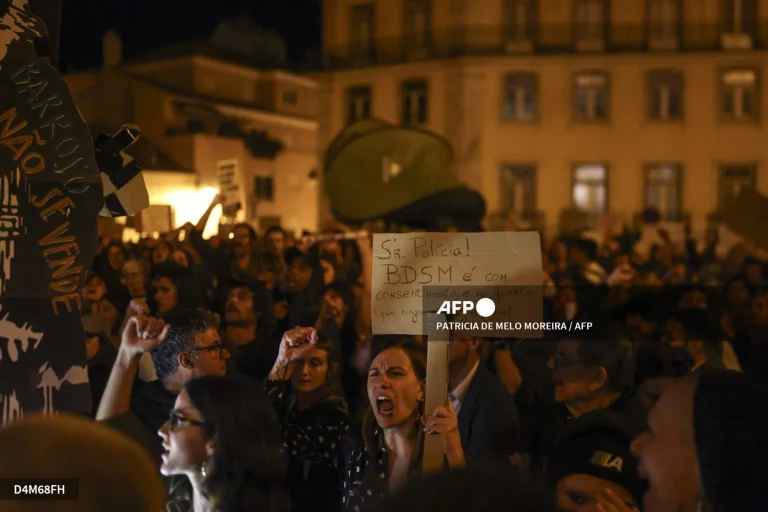
Thirteen people have been arrested following clashes between police and housing protesters in Portugal, after officers moved to dismantle protest camps in Lisbon and Porto early on Sunday.
Riot police, some accompanied by dogs, stormed the camps at about 4:30 am in Rossio Square in Lisbon and Dom Joao I Square in Porto, using batons as they moved against demonstrators.
The confrontations reportedly left dozens of people injured, with police and protest organisers giving different accounts of the casualties.
Police said six people were arrested in Lisbon and seven in Porto for refusing orders to disperse. It also reported that 13 officers were injured, eight of whom were taken to hospital.
In Porto, police said three plain-clothes officers monitoring the demonstration were assaulted after being identified by a group of protesters. One of the officers reportedly displayed his firearm to deter further attacks.
The police statement said an unspecified number of civilians were also injured during the operation, which it described as having been conducted with rigour, balance and respect for citizens’ rights.
However, organisers in Porto reported that 38 people were injured, including three seriously, while organisers in Lisbon said more than 30 people sustained injuries.
The activist group Acampada Lisboa announced another rally in the capital for 5:00 pm on Sunday in response to the police operation. In a social media statement accompanied by photographs of injured demonstrators, the group said it would not be silenced.
Some protesters carried red carnations, a symbol associated with Portugal’s 1974 revolution, which ended nearly five decades of dictatorship.
Police said they seized 69 tents in Lisbon and 30 in Porto during the operation. The camps had been established late on Saturday following peaceful marches against rising housing costs in both cities.
The latest confrontation followed repeated police operations to dismantle encampments that have emerged across Lisbon and Porto in recent weeks.
After similar camps were cleared the previous weekend, Amnesty International expressed concern over what it described as the excessive and disproportionate use of force by police.
A lawyer representing protesters at the Lisbon camps, Ricardo Sa Fernandes, said he would file a criminal complaint against Interior Minister Luis Neves and the national police chief, accusing them of abuse of power.
“This is a dark night in the history of Portuguese democracy. This is absolutely intolerable and has crossed all limits,” Sa Fernandes told reporters outside a police station in Lisbon.
Neves defended the police response, maintaining that the encampments must end and warning that officers would use force when necessary to restore public order.
He also expressed sadness over the latest confrontation, saying nobody took pleasure in the outcome.
The protests are directed at government proposals to ease eviction rules and remove rent caps on new leases. Demonstrators argue that the measures could increase housing costs and leave tenants more exposed.
Prime Minister Luis Montenegro has acknowledged that property prices have doubled over the past decade. However, he blamed previous left-wing governments for failing to build enough homes and pursuing what he described as an overly permissive migration policy.
The Portuguese demonstrations have drawn inspiration from a similar housing movement in neighbouring Spain, where protest camps have remained in central Madrid and other cities for weeks.
THE ISSUES
Portugal’s housing crisis has become a source of public discontent, with protesters linking rising rents and property prices to low wages and growing difficulties in securing affordable accommodation.
The dispute has also developed into a confrontation over the government’s proposed housing policies. Protesters fear that easing eviction rules and removing rent caps on new leases could worsen conditions for tenants.
The police response has added another dimension to the crisis, with protest organisers alleging excessive force while authorities maintain that officers acted to restore public order.
WHAT’S BEING SAID
“We will not be silenced,” Acampada Lisboa said in a statement posted on social media.
“This is a dark night in the history of Portuguese democracy. This is absolutely intolerable and has crossed all limits,” Ricardo Sa Fernandes, a lawyer representing protesters, said.
“I feel deep sadness about what happened again last night. Nobody takes any pleasure in seeing this outcome,” Luis Neves, Portugal’s Interior Minister, said.
WHAT’S NEXT
Acampada Lisboa called a fresh demonstration in Lisbon for Sunday evening following the police operation. Sa Fernandes also announced plans to file a criminal complaint against the Interior Minister and national police chief.
The dispute over eviction rules and rent controls is expected to remain central to the protests as demonstrators continue to oppose the government’s proposed housing measures.
BOTTOM LINE
The arrest of 13 protesters and reports of dozens injured have intensified tensions over Portugal’s housing crisis, turning demonstrations against rising living costs into a wider dispute over government policy and police conduct.