




BizWatch Analysis | March 2026
For two decades, Nigerian banks have been outgunned on their own continent – too small to compete, too thin to lend at scale. A tiered recapitalisation architecture, strict capital definitions, and deliberate pairing with macro reform have changed that equation. With N4.05 trillion raised and 20 banks already compliant, the CBN has engineered something that will outlast the moment it was made.
Key points
- The CBN’s two-year banking recapitalisation exercise concludes on March 31, 2026 – Capital thresholds are tiered: N500 billion for internationally licensed banks, N200 billion for national banks, N50 billion for regional and merchant banks, and N10–N20 billion for non-interest banks – the CBN expects total capital raised to exceed N5 trillion by the deadline.
- Before this recapitalisation, Nigeria’s largest banks held Tier 1 capital well below a fifth of South Africa’s Standard Bank. The new N500 billion threshold for internationally licensed banks closes that gap materially and puts Nigerian institutions within meaningful range of continental peers for the first time.
- The policy architecture is the masterstroke: a tiered license structure, a strict qualifying capital definition limited to paid-up share capital and share premium only, and deliberate sequencing alongside FX reform and reserves accumulation. This is not a blunt consolidation, it is precision engineering.
- Foreign investors have contributed $706.84 million (N1.15 trillion, or 28.33%) of the total, a signal of renewed international confidence in Nigerian banking that the CBN says vindicates its reform approach.
- The exercise mirrors but significantly surpasses in scale and complexity the landmark 2004 Soludo consolidation, which collapsed 89 fragile banks into 25 stronger ones and unlocked the credit expansion that financed Nigeria’s post-2005 growth surge – The Cardoso recapitalisation is building the system that will finance the next generation of transformational infrastructure – at a continental, not merely national, scale.
- This recapitalisation is the reform most likely to outlast the Tinubu administration and define Cardoso’s CBN tenure as transformational. With gross external reserves at a 13-year high of $50.4 billion and S&P Global confirming that nine of ten rated Nigerian banks already meet the new thresholds, the macro scaffolding around the recapitalisation is the strongest supportive context any CBN reform has ever enjoyed.
What is actually happening
The Central Bank of Nigeria’s banking sector recapitalisation programme launched via circular on March 28, 2024 is entering its final weeks. The exercise, which gave banks a 24-month window to meet significantly higher minimum capital requirements based on their license category, has its compliance deadline on March 31, 2026. With four weeks remaining as of this writing, the numbers are on track.
CBN Governor Olayemi Cardoso disclosed at the conclusion of the 304th Monetary Policy Committee meeting on February 24, 2026, that 20 of the 33 banks participating in the programme have fully met their new capital thresholds. A further 13 institutions are at advanced stages of compliance and are expected to conclude within the timeframe. Total verified and approved capital raised stands at N4.05 trillion as of February 19, nearly double the N2.4 trillion reported as of April 2025, and on course to breach N5 trillion by the deadline.
The capital requirements are tiered by license category and operational scope. Commercially licensed banks seeking international authorisation must hold a minimum of N500 billion in paid-up share capital. National commercial banks must meet N200 billion, regional commercial and merchant banks N50 billion, and national and regional non-interest banks N20 billion and N10 billion respectively. Critically, the CBN has specified that qualifying capital must consist of paid-up share capital and share premium only – not retained earnings or revaluation reserves, a tighter definition than the 2004 exercise that forces banks to genuinely raise fresh money rather than recategorise existing resources.
Compliance snapshot (Feb 19, 2026): 20 banks fully compliant | 13 banks at advanced stage | N4.05 trillion verified capital raised
Domestic vs. foreign split: N2.90 trillion (71.67%) domestic | $706.84 million / N1.15 trillion (28.33%) foreign
Total expected by deadline: N5 trillion+ across all 33 participating institutions
Deadline: March 31, 2026 – described by Cardoso as non-negotiable
Why this was necessary: The currency erosion problem
To understand why the CBN moved when it did, it is important to grasp the silent erosion that had already occurred. The Soludo consolidation of 2004 set the minimum capital requirement at N25 billion, a figure that at the time was equivalent to approximately $200 million and was among the more demanding thresholds in sub-Saharan Africa. Nigerian banks mobilised, merged, and emerged stronger.
Two decades of naira depreciation, however, quietly hollowed out that achievement. By 2024, N25 billion was equivalent to approximately $18 million, a fraction of what it once represented in dollar terms. Nigerian banks that were adequately capitalised in 2005 had, through no fault of their own operations, become undercapitalised relative to the scale of the economy they were being asked to finance. The CBN was not imposing a new burden; it was correcting a slow-motion erosion.
The new thresholds reset the floor meaningfully. At N500 billion for international banks, the standard is now genuinely ambitious and positions Nigeria’s largest lenders closer to the Basel III capital adequacy benchmarks that define global banking resilience. Most Nigerian banks were previously holding Tier 1 capital well below a fifth of South Africa’s Standard Bank, whose Tier 1 capital base stands at approximately $12.5 billion. The recapitalisation changes that comparison.
What the CBN hopes to achieve: Three layered objectives
Objective 1: Shock resilience
The most immediate objective is defensive. Nigerian banks have navigated an exceptionally turbulent macroeconomic environment since 2020 – COVID-19 disruptions, commodity price swings, double-digit inflation, two significant naira devaluations, and rising non-performing loan pressures. Larger capital buffers mean banks can absorb losses without threatening depositor funds or systemic stability. The non-performing loan ratio remains within the CBN’s 5% prudential benchmark as of the latest reporting period, but that discipline is easier to maintain when capital cushions are thick. The recapitalisation makes the system structurally less fragile at exactly the moment when global economic risks, including the unfolding Strait of Hormuz crisis are rising.
Objective 2: Credit expansion to the real economy
The more ambitious objective is offensive. Nigeria’s credit to the private sector as a percentage of GDP stood at only 14.1% as recently as 2022, compared to a BRICS average of 90.7% and a global developing market average that far exceeds Nigeria’s figure. In blunt terms, Nigerian banks have historically been too small, too risk-averse, and too focused on government securities and short-tenor FX plays to finance the kind of large-ticket infrastructure, industrial, and agricultural projects that a growing economy requires.
The CBN’s deputy governor for economic policy, Dr. Muhammad Abdullahi, made the ambition explicit: the recapitalisation was designed to build banks capable of supporting Nigeria’s drive towards a trillion-dollar economy through credit to SMEs and businesses at competitive rates. The single borrower limit under Nigerian banking regulations is set at 35% of a bank’s shareholders’ funds. Bigger capital means bigger permissible loan sizes. A bank with N500 billion in capital can legally lend N175 billion to a single borrower – a figure that opens doors to project finance for power plants, refineries, and highway concessions that were previously beyond domestic banking reach.
Objective 3: Restoring global investor confidence
The third objective is reputational. Nigeria’s banking sector has carried legacy trust deficits from the 2008–2009 banking crisis, which required government intervention through the Asset Management Corporation of Nigeria (AMCON) and saw several banks taken over or restructured. The recapitalisation, combined with the CBN’s broader reforms – FX market unification, clearing the $7 billion FX obligation backlog, and reserves accumulation – is a deliberate signal to international capital that Nigerian banking is being rebuilt on durable foundations.
Cardoso has been candid about this dimension. He noted that when he met with international investors ahead of the programme, they expressed strong interest in Nigerian banking. The $706.84 million in foreign participation that has now materialised is the validation of those conversations. For a country that has struggled to attract sustained foreign direct investment beyond oil and gas, a nearly $707 million foreign capital inflow into its banking sector is a meaningful data point.
The Soludo parallel: What history tells us
The 2004 banking consolidation under then-CBN Governor Charles Soludo remains one of the most consequential single policy decisions in Nigeria’s economic history. When Soludo announced in July 2004 that the minimum capital requirement would rise from N2 billion to N25 billion within 18 months, many observers considered the target fanciful. He held the deadline, and the banking sector transformed.
The 89 fragile, highly concentrated, and largely undercapitalised banks that existed before the exercise were consolidated into 25 stronger institutions. The effect on credit was dramatic: total bank credit to the economy rose from approximately $8.2 billion before the consolidation to $55.99 billion by February 2009. Banking sector market capitalisation leapt from 24% to nearly 50% of the Nigerian Stock Exchange. And crucially, the enlarged banks generated the domestic lending capacity that made large-scale private infrastructure projects viable – including, two decades later, the $5.5 billion domestic loan that financed the Dangote Refinery.
Cardoso’s exercise is built deliberately in that tradition but is structurally more sophisticated. The 2024 programme’s tiered license architecture – differentiating between international, national, regional, and non-interest banking creates a more granular sector structure than the blunter 2004 consolidation. The stricter definition of qualifying capital (paid-up share capital and share premium only, not reserves) is also tighter, ensuring that the N5 trillion being raised represents real new money rather than accounting reclassification.
But the 2004 analogy also carries a warning. The Soludo consolidation created larger banks, but corporate governance failures, regulatory arbitrage, and concentrated exposure to equity and oil sector lending contributed to a banking crisis just four years later in 2008–2009, requiring AMCON to absorb over N5 trillion in toxic assets. Institutions that survived one consolidation – Skye Bank, Heritage Bank, Union Bank subsequently failed or required rescue in the decade that followed. Scale, without discipline, is not stability.
What is boosting confidence: Five indicators
1. The pace of compliance has been orderly, not panicked
In July 2025, eight banks had fully met the new requirements. By September, the number had risen to 14. By November, 16 institutions had crossed the line. By February 24, 2026, the count stood at 20. That is a steady, accelerating trajectory – not a last-minute scramble. Banks have used a mix of rights issues, public offers, private placements, and strategic mergers to meet their targets, reflecting a functioning capital market rather than a dysfunctional one.
2. The tier-one banks have not just complied, they have exceeded
Access Bank raised N351 billion through a rights issue, pushing its total capital to N602.8 billion – exceeding the N500 billion international threshold by over N100 billion. Zenith Bank raised over N350 billion through a combination of rights issues and public offers, lifting its capital to N614 billion. First HoldCo, parent of First Bank, reached the N500 billion target through a rights issue, private placement, and the sale of its merchant banking subsidiary. These are not minimally compliant institutions – they are over-capitalised, which provides additional buffer against unexpected shocks.
3. Independent validation from S&P Global
Third-party confirmation has arrived from one of the world’s leading credit rating agencies. S&P Global Ratings assessed that nine of Nigeria’s ten rated commercial banks – institutions collectively accounting for roughly 80% of total banking system assets, already meet the new capital requirements. That validation from an institution with no political stake in the outcome matters considerably for the international investor community.
4. Foreign reserves at a 13-year high
The recapitalisation does not exist in isolation. The broader macro environment that Cardoso has assembled around it is the strongest supportive context that any CBN recapitalisation has enjoyed. Gross external reserves stood at $50.4 billion as of mid-February 2026 – the highest figure in 13 years, providing import cover of 9.68 months for goods and services. A rising reserves position signals FX stability, reduces currency risk for foreign investors entering Nigerian banking, and gives the CBN operational room to manage any post-deadline volatility among the 13 banks still finalising compliance.
5. Capital markets participation reflects genuine confidence
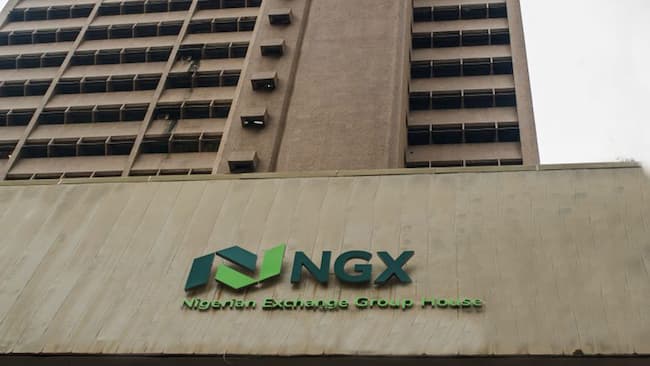
The recapitalisation has driven significant activity on the Nigerian Exchange Group. Rights issues, public offers, and private placements have brought millions of new retail and institutional investors into bank shareholdings. The CBN governor observed that what the capital market has already done through the bank recapitalisation process demonstrates that Nigeria’s market is strong. That is not a trivial observation: a capital market that can absorb N4.05 trillion in bank equity issuance within two years, while also supporting the Dangote Refinery IPO preparations – is a structurally different market from the one that existed a decade ago.
The 13 banks still finalising: What happens next
With 13 institutions yet to complete compliance, the final weeks of the exercise will determine whether the programme ends cleanly or with regulatory turbulence. Cardoso has been consistently clear: the March 31 deadline is non-negotiable. The CBN has also been equally clear about the consequences of non-compliance: license downgrades to a lower operational category, or where appropriate, facilitated mergers and acquisitions.
Some of the 13 are understood to be in quiet merger conversations, replicating the consolidation logic of 2004. Others are finalising investor funding rounds. The institutions currently under formal CBN regulatory intervention face a specific sequencing challenge – their legal and structural situations require resolution before standard recapitalisation can proceed, and Cardoso has acknowledged this publicly, reassuring depositors that their funds remain secure under close regulatory oversight.
For customers and businesses banking with the 13, the practical disruption is expected to be minimal. In a merger or license downgrade scenario, operations continue, deposits are protected, and branding changes happen gradually. The more significant impact falls on shareholders, who may face dilution or restructuring terms that do not favour incumbent equity holders.
Will this be a lasting legacy? The honest assessment
The case for yes
On structural grounds, the case for lasting legacy is strong. Nigeria will emerge from March 31, 2026 with a banking sector that is more capitalised than at any point in its history – at a scale that finally brings it within meaningful comparison distance of South African and Kenyan banking peers. The N5 trillion capital base, the foreign investor participation, and the tiered architecture are durable features that survive any change of government or CBN leadership.
The macro pairing makes this recapitalisation different from its predecessors. Soludo did his consolidation in a broadly stable naira environment. Cardoso has done his in the aftermath of the most significant FX reform in decades, with reserves at a 13-year high, the current account in surplus, diaspora remittances rising, and non-oil exports growing. Banks recapitalising into a more stable macro environment have a better structural context for actually deploying that capital productively.
And there is a Dangote dimension to the legacy argument that is rarely made explicit. The 2004 Soludo consolidation created the banking system that, twenty years later, could lend $5.5 billion to build the Dangote Refinery. The Cardoso recapitalisation is creating the banking system that will, twenty years from now, finance the next generation of infrastructure. The legacy of structural financial reform is long-dated. Those who judge it are not in the same room as those who build it.
The case for caution
The counterargument is equally serious and grounded in Nigerian banking history. The 2004 consolidation produced bigger banks but did not produce meaningfully cheaper or more accessible credit to the real economy. Nigeria’s credit to private sector as a percentage of GDP barely moved in the years following Soludo’s reform and remained far below developing world averages. Banks deployed their expanded capital into government securities, FX trading, equity speculation, and short-tenor high-margin lending – not into the agriculture, manufacturing, and infrastructure lending that the reform was intended to unlock.
The risk of repetition is real. If Nigeria’s recapitalised banks deploy their N5 trillion capital base into Federal Government securities (currently yielding attractive risk-free returns above 20%), interbank placements, and consumer credit at high margins, the macroeconomic impact of the exercise will be far smaller than the headline numbers suggest. Capital is a necessary condition for expanded lending – it is not a sufficient one. SMEs will still face the structural barriers of collateral requirements, documentation burdens, short loan tenors, and interest rates that make most productive investment economically unviable.
Whether Cardoso’s CBN pairs the recapitalisation with the regulatory incentive architecture needed to redirect bank behaviour, through loan-to-deposit ratio requirements, sector-specific credit mandates, or development finance institution partnerships – will determine whether March 31, 2026 is remembered as the date Nigerian banking changed, or merely the date it got larger.
What’s Being Said
Olayemi Cardoso, CBN Governor, on the strategic rationale:
“The MPC reiterated the strategic importance of the recapitalisation exercise and urged the Bank to ensure its successful completion. This would reinforce financial system resilience and enhance the sector’s capacity to support sustainable economic growth.”
Cardoso, on foreign investor participation:
“Several MPCs ago, I mentioned that when I met with members of the investor community abroad, they had a very strong interest in investing in the banks. I’m glad that this has come out in a positive way.”
Cardoso, on Nigeria’s external reserves:
“The gross reserves, as of the middle of February, is about $50.4 billion, which is the highest figure that we’ve had in 13 years.”
Dr. Muhammad Abdullahi, CBN Deputy Governor for Economic Policy, on the trillion-dollar economy link:
“The major focus is on how to ensure that we have stronger banks that can support our drive towards a trillion-dollar economy. The only way to get there is through credit to SMEs, to businesses that require funding at good rates.”
Euromoney, on the 2004 Soludo consolidation’s lasting impact – a benchmark the Cardoso exercise must now meet:
“Nigeria’s banking sector appears to have turned a corner in its rehabilitation – though considerable work remains on efficiencies from mergers and corporate governance.”
What’s next
- March 31, 2026: The compliance deadline. Banks not meeting their thresholds face licence downgrades or CBN-facilitated mergers. Cardoso has described this deadline as non-negotiable.
- The 13 remaining banks must conclude capital-raising exercises or merger negotiations within weeks. Any institution requiring regulatory intervention after the deadline will face a structured process under close CBN oversight.
- Post-deadline, attention shifts from capital adequacy to capital deployment. The CBN’s supervisory posture on how banks use their expanded balance sheets – particularly the ratio of credit to government securities vs. private sector lending –will be the true test of whether the exercise achieves its economic objectives.
- The Dangote Refinery IPO, expected in mid-2026, will be the first major post-recapitalisation test of whether newly capitalised banks can anchor a transformational domestic equity offering of the scale that the listing represents.
- S&P Global and Moody’s are expected to review Nigerian bank credit ratings in the second quarter of 2026 in light of the completed recapitalisation. Upgrades would materially reduce borrowing costs for Nigerian banks in international capital markets and expand their ability to raise foreign-currency funding.
- The National Assembly’s review of the AMCON wind-down framework is directly relevant: the legacy toxic assets that AMCON holds from the 2009 crisis must be resolved cleanly before the recapitalised banking sector can operate without legacy overhang.
The bottom line
The CBN’s banking recapitalisation is structurally on track, technically credible, and almost certain to conclude successfully by March 31. Cardoso will have done what he set out to do: raise Nigeria’s banking capital base to N5 trillion, bring in nearly $707 million in foreign investment, and create institutions large enough to finance a $1 trillion economy in theory. Whether it becomes a lasting legacy or a well-executed technical milestone depends on what happens in the lending books of these banks over the next five years – and that story has barely begun. The Soludo consolidation financed the Dangote Refinery. The Cardoso recapitalisation needs to finance the next twenty Dangotes. That is the measure. March 31 is not the finish line. It is the starting gun.