







By Emmanuella Opara | October 29th 2026
KEY POINTS
- Nigerian-American engineer and entrepreneur Yinka Ogunbiyi has demonstrated HaloBraid, a robotic device designed to speed up hair braiding.
- The company says the device can complete individual braids up to five times faster than manual braiding.
- Stylists still section the hair and start each braid by hand, while the device handles the repetitive weaving process.
- HaloBraid raised $7m in seed funding in a round led by Seven Seven Six and reportedly has more than 7,000 salons on its waiting list.
- The company plans to introduce the technology through a phased rollout involving selected stylists and salons.
MAIN STORY
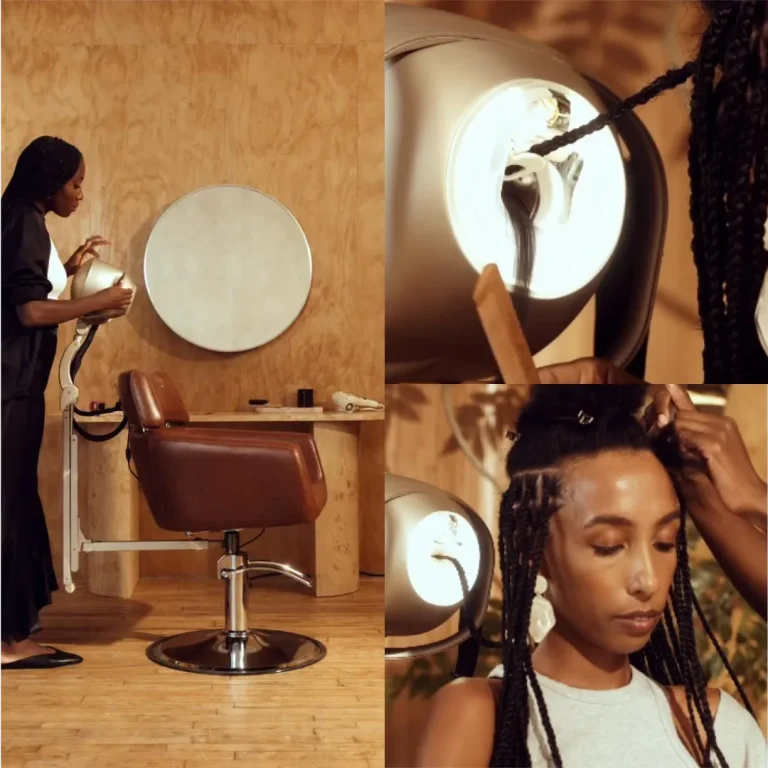
Nigerian-American engineer and entrepreneur Yinka Ogunbiyi has unveiled a demonstration of HaloBraid, a robotic hair-braiding device designed to reduce the time and physical effort required to complete braiding appointments.
Ogunbiyi shared the demonstration on the company’s Instagram account on Wednesday, providing an initial look at how the technology assists professional hairstylists with the repetitive process of weaving individual braids.
According to HaloBraid, the device can complete individual braids up to five times faster than manual braiding, although the overall time saved during an appointment depends on the hairstyle and the stylist’s workflow.
The technology is designed to assist rather than replace hairstylists. Professionals still section the hair and begin each braid manually before feeding it into the device, which handles the repetitive weaving. The stylist then completes the braid.
The company says the system could help stylists serve more customers by reducing the time spent on individual braids while allowing them to retain control over the finished hairstyle.
The idea for HaloBraid emerged during the COVID-19 pandemic after Ogunbiyi spent four days braiding her own hair. She subsequently partnered with co-founder David Afolabi to develop the technology, which is intended to address the lengthy appointments and repetitive hand movements associated with professional hair braiding.
In July, the startup reportedly raised $7m in seed funding in a round led by Seven Seven Six, the venture capital firm founded by Reddit co-founder Alexis Ohanian. The company also reported that more than 7,000 salons had joined its waiting list.
HaloBraid plans to introduce the device through a phased rollout involving selected stylists and salons. The company has not provided a full rollout timetable in the information available.
THE ISSUES
Hair braiding can require hours of repetitive manual work, particularly for elaborate styles. By automating part of the weaving process, HaloBraid aims to reduce the time and physical strain involved while allowing professional stylists to remain responsible for preparing and finishing each braid.
The device’s claimed speed advantage could help salons manage appointments more efficiently and potentially serve more customers. However, the time saved across a complete hairstyle will depend on factors such as the style being created and how the stylist incorporates the device into their work.
The company’s waiting list and seed funding indicate interest in the technology, but its wider impact will depend on how well the device performs in everyday salon settings and how readily professional stylists adopt it.
WHAT’S BEING SAID
“Meet HaloBraid. The first ever look at the viral hair braid assist device,” HaloBraid wrote in the caption accompanying its demonstration video.
“Each braid is started by hand, and finished by Halo, empowering stylists to double their business,” the company stated.
WHAT’S NEXT
HaloBraid says it will begin introducing the device through a phased rollout involving selected hairstylists and salons. Wider adoption will depend on the device’s performance in professional settings and its ability to deliver time savings across different braiding styles.
BOTTOM LINE
HaloBraid is seeking to automate one of the most time-consuming parts of hair braiding without removing the hairstylist from the process. If the device delivers its promised efficiency, it could change how salons manage lengthy appointments, although its practical impact will become clearer as the technology reaches more professionals.