Key points
- Nigeria plans to reach 209,000 megawatts of solar power generation by 2050, with 53 large-scale projects valued at $11 billion currently tracked by IIR.
- The Rural Electrification Agency is deploying over 1,300 solar mini-grids and off-grid power systems backed by $750 million in public funds.
- The initiative includes 250 interconnected mini-grids designed to feed power directly into the national grid and reduce diesel dependence.
- Nigeria added 803MW of solar capacity in 2025, bringing its total installed solar footprint to approximately 1,019MW.
- Renewables currently make up 23 percent of Nigeria’s energy mix, with targets set for 30 percent by 2030 and 82 percent by 2050.
Main Story
Nigeria is targeting a massive expansion of its electricity infrastructure, outlining a long-term strategy to achieve 209,000 megawatts of solar power generation capacity by 2050.
According to a report by IIR, this ambition is supported by 53 large-scale renewable solar power projects, currently valued at approximately $11 billion, which are being tracked across the country to diversify the national energy mix and expand electricity access.
Alongside utility-scale infrastructure, the Federal Government is driving decentralized electrification through the Rural Electrification Agency (REA). Under a nationwide program, the REA is deploying more than 1,300 solar mini-grids and off-grid power systems across rural and underserved areas.
The initiative features 250 interconnected mini-grids built to supply electricity directly into the national grid, stabilizing the power supply and reducing heavy reliance on fossil-fuel generators. Funded by $750 million in public capital, the project is structured to attract an additional $1.1 billion in private sector investment. According to the Global Solar Council, Nigeria added 803MW of solar capacity in 2025 alone, pushing its total installed solar capacity to about 1,019MW.
REA Managing Director Abba Aliyu described the rollout as a landmark intervention, identifying it as the largest publicly funded renewable electricity project globally. Aliyu noted that the structured Distributed Access through Renewable Energy Scale-up (DARES) program, which is supported by the World Bank, aims to displace over 250,000 diesel generators nationwide.
The overarching strategy is designed to provide electricity to 17.5 million Nigerians representing 20 percent of the population within three years, positioning the country as Africa’s renewable energy hub.
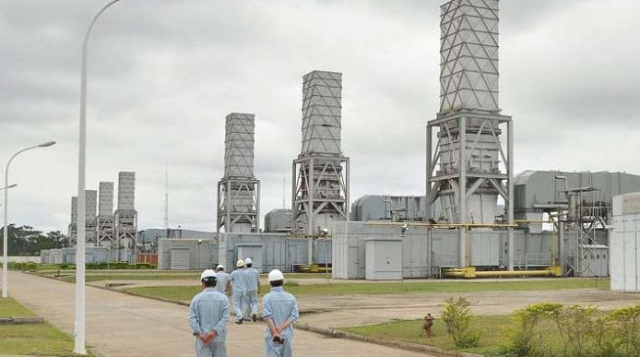
While gas-fired thermal plants continue to serve as Nigeria’s dominant power source, renewable energy now accounts for roughly 23 percent of the energy mix, primarily driven by hydropower and existing solar installations. This domestic acceleration aligns with the broader World Bank-backed Mission 300 initiative, which aims to connect 300 million Africans to electricity by 2030 and has already delivered power to 44 million people since January 2025.
To meet its long-term energy transition and net-zero 2060 commitments, the Federal Government has mandated a 30 percent renewable energy contribution by 2030, scaling up to 82 percent by 2050, with solar projected to provide the vast majority of future capacity growth.
The Issues
- Successfully mobilizing the targeted $1.1 billion in private sector matching funds to fully deploy the 1,350 planned mini-grids.
- Integrating 250 interconnected mini-grids into the existing national grid structure without creating technical stabilization bottlenecks.
- Displacing more than 250,000 deep-rooted diesel generators across rural and commercial hubs through clean energy alternatives.
What’s Being Said
- Highlighting the global scale of the ongoing rural electrification drive, REA Managing Director Abba Aliyu stated: “For the first time, we are witnessing the implementation of the biggest publicly funded renewable electricity project in the entire world. It is a $750m project that will catalyse $1.1bn in private sector funding to deploy 1,350 mini-grids across the country.”
- Emphasizing the economic strategy of the presidency, Aliyu added: “For the first time in the history of the country, the Federal Government is positioning the renewable energy sector of the Nigerian economy as the alternative source of electricity in the country. It’s the easiest and most economically viable means of powering the country, and we have an abundance of renewable energy sources. President Bola Tinubu is positioning Nigeria now to be the renewable hub of Africa, and there is a structured programme which will see 17.5 million Nigerians (20 per cent of the population) provided with electricity in just three years,”
What’s Next
- The REA will continue processing its $750 million public fund allocation to accelerate the deployment of the remaining solar mini-grid units.
- Private investors and development finance groups will finalize funding agreements to cover the projected $1.1 billion private capital requirements.
- Engineers will begin connecting the first batch of the 250 designated interconnected mini-grids into the national electricity grid.
Bottom Line
Backed by a $750 million public fund and $11 billion in tracked large-scale investments, Nigeria is accelerating its clean energy transition with plans to deploy over 1,300 mini-grids and achieve 209,000MW of solar capacity by 2050 to systematically replace diesel self-generation.