Key points
- Nigeria attracted $2.4 billion in small-scale solar investment in 2025, making it Africa’s largest distributed solar market.
- Sub-Saharan Africa secured $13.5 billion in renewable energy investment, marking the third straight year above the $12 billion mark.
- BloombergNEF says 99% of Nigeria’s renewable energy investment went into small-scale solar due to financing challenges facing utility-scale projects.
- Nigeria’s 27% benchmark interest rate continues to limit local financing for large renewable energy developments.
- BNEF projects Nigeria’s installed electricity capacity will rise from 20GW to 30GW by 2030, with renewables accounting for 30% of the energy mix.
Main Story
Nigeria has emerged as Africa’s largest small-scale solar market after attracting $2.4 billion in distributed solar investments in 2025, as households and businesses increasingly turn to renewable energy to offset unreliable electricity supply and rising energy costs.
The latest Sub-Saharan Africa Clean Energy Market Outlook by BloombergNEF (BNEF) showed that the country led the continent’s small-scale solar market, while the wider Sub-Saharan African renewable energy sector attracted $13.5 billion in investment last year, extending a three-year streak of annual clean energy inflows above $12 billion.
According to the report, investment across the region is increasingly shifting away from large utility-scale renewable projects towards decentralised solar systems serving homes, businesses and commercial users.
Although total renewable energy investment declined slightly from $13.8 billion recorded in 2024, BNEF said the market remained resilient as demand for distributed energy solutions accelerated.
Solar energy accounted for $10.9 billion, or more than 80% of total renewable energy investment across Sub-Saharan Africa in 2025, making it the region’s dominant clean energy technology.
BNEF attributed much of the growth to the rapid expansion of the small-scale solar segment, where investment more than doubled from $3.4 billion in 2024 to $8.5 billion in 2025.
Nigeria accounted for the largest share of that market with $2.4 billion, ahead of South Africa ($1.5 billion) and Kenya ($840 million).
The report noted that more than 99% of Nigeria’s renewable energy investment in 2025 was directed towards small-scale solar systems, reflecting investors’ preference for decentralised projects that are easier to finance than large grid-connected power plants.
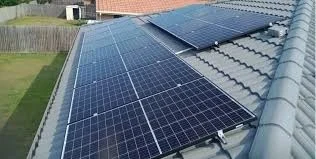
According to BNEF, Nigeria’s growing adoption of rooftop solar systems and battery storage reflects increasing demand for reliable electricity as businesses and households seek alternatives to diesel generators amid persistent grid instability and rising fuel costs.
Driving the Numbers
Investment data highlights the growing shift towards decentralised renewable energy across Africa.
Sub-Saharan Africa attracted $13.5 billion in renewable energy investment in 2025.
Solar energy accounted for $10.9 billion, representing more than 80% of total investment.
Small-scale solar investment more than doubled from $3.4 billion in 2024 to $8.5 billion in 2025.
Nigeria led Africa’s small-scale solar market with $2.4 billion in investment.
South Africa followed with $1.5 billion, while Kenya attracted $840 million.
Between 2023 and 2025, South Africa remained Africa’s largest overall renewable energy market with $20.4 billion, followed by Nigeria ($5.4 billion) and Kenya ($4.3 billion).
Utility-scale renewable investment across Sub-Saharan Africa declined to $4.3 billion in 2025 from $5.1 billion a year earlier.
BNEF also projects Nigeria’s installed electricity capacity to increase from approximately 20GW today to 30GW by 2030, with renewable energy accounting for about 30% of total installed generation capacity.
The report forecasts cumulative solar capacity will expand from 2.4GW in 2026 to 7.8GW by 2030, before reaching 16.2GW by 2035.
The Issues
Despite Nigeria’s emergence as Africa’s leading distributed solar market, financing remains one of the biggest obstacles to scaling utility-sized renewable energy projects.
BNEF said the Central Bank of Nigeria’s 27% benchmark interest rate has made local-currency borrowing prohibitively expensive for capital-intensive renewable energy developments, forcing developers to rely heavily on foreign investors and development finance institutions.
The report also noted that weak off-taker creditworthiness, limited access to affordable financing and policy uncertainties continue to constrain large-scale renewable energy investments.
However, these same challenges are accelerating the adoption of decentralised energy systems, as businesses increasingly install solar-plus-storage solutions to reduce dependence on the national grid and diesel generators.
What’s Being Said
BloombergNEF said solar has become the preferred renewable energy technology across Sub-Saharan Africa, driven by rising electricity costs, unreliable grid supply and growing demand for backup power.
According to the report, Nigeria’s renewable energy market is undergoing a structural shift towards distributed solar because smaller projects are easier to finance than utility-scale developments.
BNEF also noted that Nigeria’s long-term renewable energy potential remains significant, given its large population, expanding electricity demand and considerable room for grid expansion.
The report further stated that Nigeria’s economy is expected to grow by more than 4% annually through 2028, supported largely by the services sector and increased refining activities, including output from the Dangote Refinery.
What’s Next
Analysts expect investment in Nigeria’s distributed solar market to remain strong as electricity supply challenges and high fuel prices continue to encourage businesses and households to adopt renewable energy solutions.
However, expanding utility-scale renewable generation will likely depend on improved access to affordable financing, stronger electricity market reforms and policies that enhance investor confidence.
The report also expects Sub-Saharan Africa to play a growing role in global renewable energy supply chains, noting that the region’s share of China’s solar exports doubled from 5% in 2025 to 10% by the first quarter of 2026.
Bottom Line
Nigeria’s emergence as Africa’s largest small-scale solar market underscores the country’s rapid shift towards decentralised clean energy as businesses seek reliable alternatives to an unreliable national grid. While high interest rates continue to constrain large-scale renewable projects, strong demand for distributed solar is positioning Nigeria as one of the continent’s fastest-growing clean energy markets.