




Key Points
- Former ECOWAS Commission president calls for credible and inclusive elections.
- Gambian lawmaker says stronger internal party democracy is vital to democratic governance.
- Panelists urge political actors to prioritise national stability over partisan interests.
- Judiciary urged to provide credible avenue for resolving electoral disputes.
Main Story
African political leaders have been urged to strengthen democracy by promoting internal party democracy and ensuring that elections are transparent, credible and inclusive.
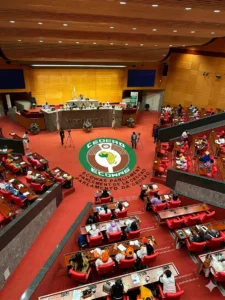
Former President of the ECOWAS Commission, Kadré Ouédraogo, and Gambian parliamentarian Fatoumatta Njai made the call on Tuesday at the 2026 Goodluck Jonathan Foundation (GJF) Democracy Dialogue in Bauchi.
The dialogue, organised around the theme, “Beyond Elections: Can Political Parties and the Judiciary Save African Democracy?”, examined the roles of political parties and judicial institutions in sustaining democratic governance.
Ouédraogo said the legitimacy of representative government depended largely on the credibility of the electoral process.
He urged political parties and election management bodies to work towards elections that would allow citizens to freely choose their leaders.
The former ECOWAS official also advised political actors to place national peace and stability above personal and partisan interests.
He said parties challenging election results should provide credible evidence to support their claims and use established legal channels for seeking redress.
According to him, the judiciary has a responsibility to objectively determine electoral disputes and validate results where appropriate.
Njai, however, focused on the internal structures of political parties, arguing that many African parties only become active shortly before elections.
She said parties that lacked sustained organisation and membership development would struggle to establish and promote democratic values.
The Gambian lawmaker cited Senegal’s 2024 elections as an example of how established political structures could withstand significant political challenges.
Njai also drew from her experience as an independent candidate in The Gambia after challenging her party’s decision to align with the former ruling establishment.
She said she pursued the matter through the courts but eventually contested independently because the judicial process did not conclude before the election.
According to her, the outcome demonstrated the importance of allowing voters to make the final choice through a credible electoral process.
Njai said political parties must practise democracy within their own structures before they could effectively contribute to protecting democracy at the national, regional and continental levels.
The Issues
Democratic governance in Africa continues to depend on the credibility of elections, the strength of political institutions and the ability of parties to practise democratic principles internally. The panelists identified weak internal party structures and disputed election outcomes as areas requiring greater attention.
What’s Being Said
“There can be no sustainable democracy without transparent and credible elections.” – Kadré Ouédraogo, former President, ECOWAS Commission
“Political parties must exercise internal democracy before they can aim to protect national, continental, regional and global democracy.” – Fatoumatta Njai, Gambian parliamentarian
“Parties must support their grievances with tangible and compelling evidence.” – Kadré Ouédraogo, former President, ECOWAS Commission
What’s Next
Political parties and electoral stakeholders are expected to strengthen internal democratic processes, improve electoral credibility and use established judicial mechanisms to resolve disputes.
Bottom Line
The panelists argued that protecting African democracy requires more than holding elections. Stronger internal party democracy, credible elections, evidence-based electoral challenges and impartial judicial processes are necessary to sustain public confidence in democratic governance.