









KEY POINTS
- NESREA says industrial clustering can reduce emissions and operating costs.
- Agency calls for greater access to international green financing for cleaner technologies.
- Experts urge businesses to adopt recycling, reuse, recovery and other circular economy practices.
MAIN STORY
The National Environmental Standards and Regulations Enforcement Agency (NESREA) has urged industries to adopt industrial clustering and explore green financing as part of efforts to reduce pollution and promote sustainable production.
Mrs Angela Iwobi, South South Zonal Director of NESREA, made the call on Tuesday at a national workshop in Port Harcourt organised by the agency in collaboration with Accappocco Global Services Nigeria Ltd.
The workshop, which brought together companies and stakeholders from six South South states, focused on Health, Safety and Environment, Circular Economy and Environmental Sustainability.
Iwobi said the programme was designed to strengthen engagement between the regulator and industries while improving knowledge and collaboration on environmental practices.
She said NESREA continued to monitor compliance through facility inspections and follow up visits, during which the agency assessed production processes, identified environmental deficiencies and provided technical guidance on corrective measures.
According to her, companies receive written directives and timelines for addressing identified deficiencies after inspections, while subsequent visits are conducted to determine whether the required measures have been implemented.
Iwobi warned that companies that repeatedly fail to comply with environmental requirements could face enforcement action, including the involvement of security agencies.
She also said NESREA monitored sand mining activities in collaboration with relevant government agencies and miners’ associations.
According to her, Environmental Impact Assessment reports and other environmental documentation remained important in determining whether mining operators were managing their activities and waste responsibly.
Beyond regulatory enforcement, Iwobi urged industries to consider shared infrastructure through industrial clusters, particularly for companies with similar production processes.
She said shared facilities, including alternative energy systems, could reduce industries’ dependence on generators and consequently lower emissions.
Iwobi also called for stronger government support to help businesses access international green funds and other financing opportunities.
She said access to such funding could enable industries to invest in cleaner technologies and develop more sustainable production systems.
Prof. John Oyedepo, an expert in Applied Remote Sensing and Geospatial Techniques, urged manufacturers and consumers to incorporate circular economy principles into production and consumption.
He identified recycling, reuse and recovery of materials as important ways to reduce waste and environmental degradation.
Oyedepo said materials discarded as waste by one company could potentially serve as inputs for another, reducing the need for fresh resource extraction and limiting pollution.
He added that circular production could ease pressure on natural resources while supporting more sustainable industrial activity.
Prof. Adewale Taiwo of the Department of Environmental Management and Toxicology, Federal University of Agriculture, Abeokuta, also raised concerns about the effect of climate change on aquatic ecosystems.
Taiwo said rising temperatures were changing natural environments and threatening the sustainability of aquatic ecosystems.
The experts called for stronger environmental stewardship, Extended Producer Responsibility and sustainable production practices to reduce pollution, protect natural resources and safeguard public health.
THE ISSUES
- Industrial clustering could allow businesses with similar operations to share infrastructure rather than independently providing every supporting facility. Iwobi said shared alternative energy systems could also help reduce reliance on generators and associated emissions.
- Access to finance remains relevant to the transition towards cleaner production. NESREA is seeking greater government support for businesses to access international green funds that can finance cleaner technologies and sustainable production systems.
- Circular economy practices can reduce the amount of material sent to waste by keeping resources in use for longer. Recycling, reuse and recovery can also reduce demand for new raw materials and the environmental pressure associated with extraction.
- Environmental compliance remains a regulatory responsibility for industries and mining operators. NESREA’s inspection process includes identifying deficiencies, issuing directives and returning to facilities to assess implementation, with enforcement measures available for persistent non compliance.
- Climate related changes also have implications for natural ecosystems. Rising temperatures are affecting aquatic environments, highlighting the connection between industrial sustainability, environmental protection and public health.
WHAT’S BEING SAID
“Shared infrastructure, including alternative energy systems, could reduce dependence on generators and help lower emissions from industrial activities.” – Angela Iwobi, South South Zonal Director, NESREA
“Materials considered waste by one company could serve as raw materials for another, reducing resource extraction and pollution.” – John Oyedepo, Applied Remote Sensing and Geospatial Techniques expert
WHAT’S NEXT
NESREA is expected to continue facility inspections and follow up visits to monitor compliance with environmental standards, while industries are being encouraged to adopt cleaner technologies and sustainable production practices.
BOTTOM LINE
NESREA is pushing industries to combine stronger environmental compliance with practical measures such as shared infrastructure, green financing and circular production. The agency says these approaches can help reduce pollution while supporting more sustainable industrial activity.


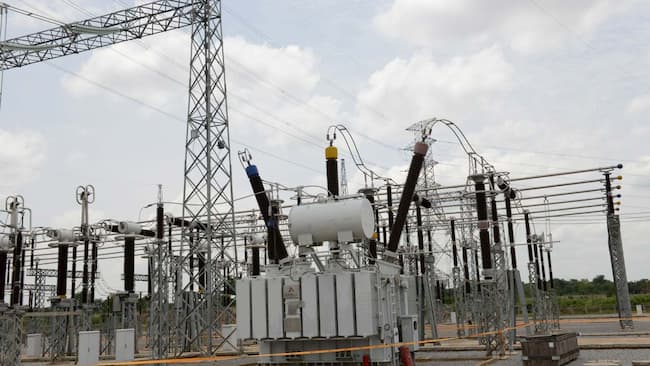








 has urged industries to adopt industrial ...)