






Key points
- Naira depreciates to N1,355/$ amid sustained foreign exchange pressures.
- External reserves decline slightly to $48.48 billion, limiting intervention capacity.
- Global geopolitical tensions strengthen the U.S. dollar, impacting emerging markets.
Main story
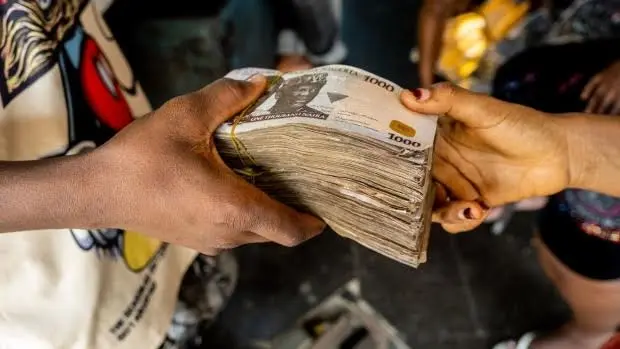
The Nigerian currency came under renewed pressure on Thursday, weakening to N1,355/$ in the foreign exchange market, as external reserves declined and global uncertainties weighed on emerging economies.
Data from the Central Bank of Nigeria (CBN) showed the naira depreciated from N1,348.1/$ recorded on Wednesday, extending a gradual downward trend observed in recent trading sessions.
Intraday figures indicated that the currency traded between N1,350/$ and N1,355.8/$, with an average rate of N1,354.19/$. A total of 46 interbank deals were recorded during the session.
A week earlier, the naira had closed at N1,341.01/$, highlighting persistent pressure in the foreign exchange market driven by demand-supply imbalances.
Meanwhile, Nigeria’s external reserves declined to $48.48 billion from $48.54 billion recorded earlier in the week, signalling a reduced buffer for sustained intervention in the FX market.
The issues
The depreciation reflects ongoing structural challenges, including high demand for foreign exchange, limited dollar supply, and declining reserves. These pressures are compounded by global economic uncertainty, which continues to influence capital flows and currency stability.
What’s being said
Analysts attribute the recent weakness to both domestic and external factors. Globally, heightened geopolitical tensions—particularly around the Strait of Hormuz—have increased demand for the U.S. dollar as a safe-haven currency.
This has strengthened the dollar against major and emerging market currencies, including the euro, British pound, Japanese yen, and currencies such as the Philippine peso, Malaysian ringgit, and Indian rupee.
However, the Governor of the Central Bank of Nigeria, Olayemi Cardoso, downplayed concerns over the decline in reserves, stating that fluctuations should not be overinterpreted.
Cardoso emphasised that the focus should remain on broader macroeconomic stability rather than short-term movements in reserve figures.
What’s next
The CBN projects that Nigeria’s external reserves could rise to $51 billion by the end of 2026, supported by oil revenues, improved FX inflows, and ongoing economic reforms.
Market observers will continue to monitor global oil prices, geopolitical developments, and domestic policy measures as key determinants of the naira’s trajectory.
Bottom line
The naira’s recent depreciation underscores the fragile balance between domestic economic pressures and global market forces, with sustained stability hinging on stronger FX inflows and effective policy interventions.