





Key Points
- The Society for Medical Physiology of Nigeria has urged physiologists to adopt artificial intelligence and strengthen local medical research.
- Experts say research reflecting Nigerians’ genetic diversity, lifestyles, nutrition and environment could improve healthcare outcomes.
- The society introduced an inter-university physiology quiz competition to improve medical students’ knowledge and encourage collaboration.
- Researchers have been encouraged to strengthen laboratory facilities, embrace digital learning and mentor young scientists.
- The four-day conference is holding from October 27 to October 30 at Yakubu Gowon University in Abuja, in collaboration with the University of Jos.
Main Story
The Society for Medical Physiology of Nigeria (SMPN) has called on physiologists across the country to embrace artificial intelligence (AI), strengthen local research and improve medical education to address Nigeria’s healthcare challenges.
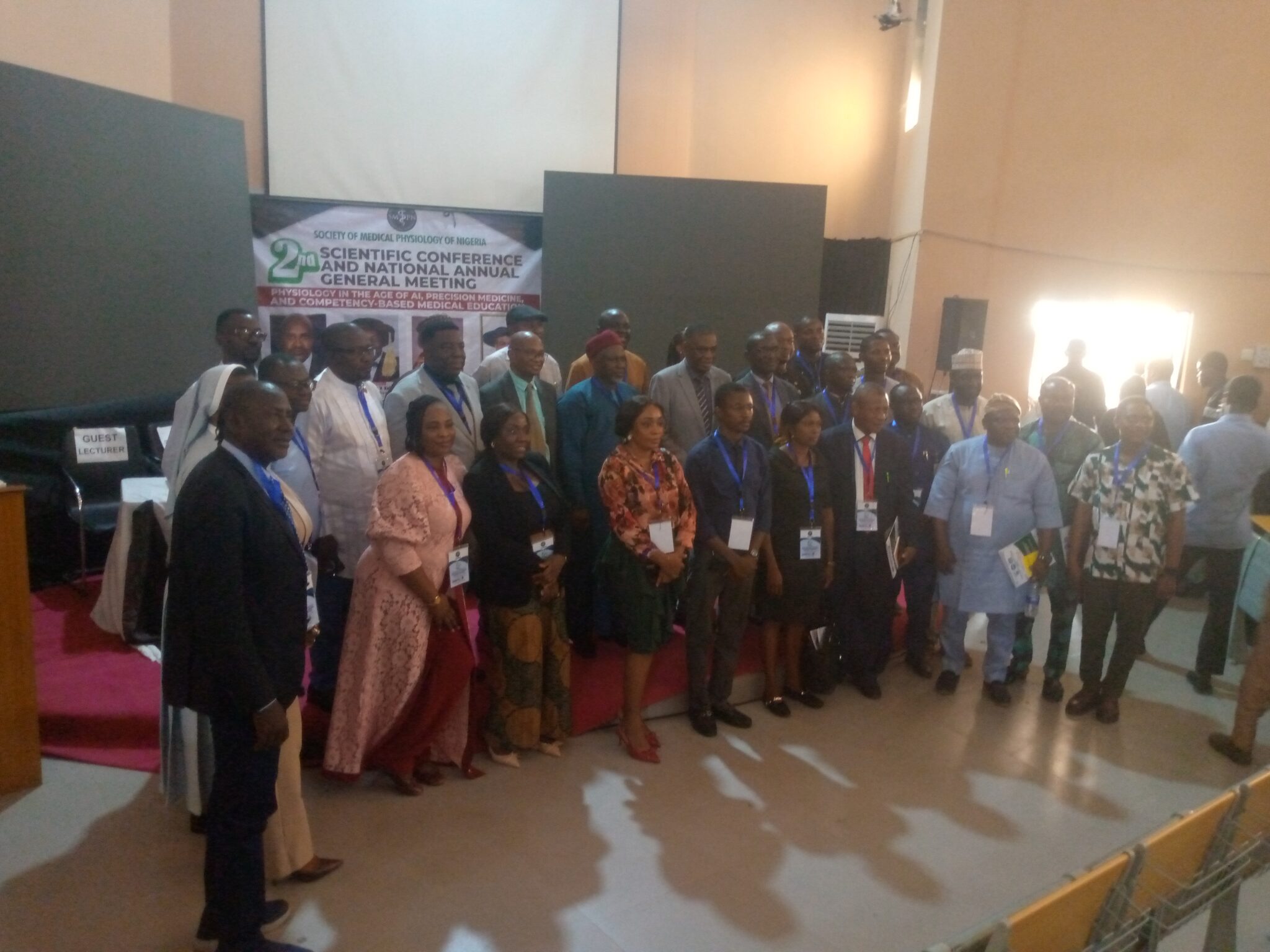
The society’s president, Prof. Olorunshola Kolawole, made the call on Wednesday at its second Scientific Conference and National Annual General Meeting in Abuja.
The conference, themed “Physiology in the Age of AI, Precision Medicine and Competency-Based Medical Education,” brings together researchers, lecturers, medical students and other professionals to discuss developments in physiology and their implications for healthcare.
Kolawole said the meeting was designed to encourage research collaboration, improve academic development and promote advances in clinical and molecular physiology.
He disclosed that about 20 research abstracts had been submitted and peer-reviewed for presentation, providing participants with opportunities to share findings and improve research quality in universities and laboratories.
The society also introduced an inter-university physiology quiz competition for medical students for the first time. According to Kolawole, the initiative is intended to deepen students’ understanding of physiology, encourage interaction among medical schools and build lasting academic relationships.
He expressed hope that the competition would become a national programme involving more institutions.
The Issues
Physiology, the study of how the human body functions, provides an important foundation for understanding diseases and developing effective treatments.
However, improving healthcare in Nigeria requires research that reflects the country’s population, including its genetic diversity, dietary habits, lifestyles and environmental conditions.
Research findings from other countries may not always fully explain health challenges affecting Nigerians. This makes locally relevant studies important for developing suitable prevention strategies, treatments and health policies.
Artificial intelligence, computational physiology and advanced imaging offer new ways to analyse biological processes and accelerate scientific discovery. However, researchers need appropriate facilities, reliable data and adequate training to use these technologies effectively.
What’s Being Said
Prof. Samuel Asala, a professor of anatomy and forensic anthropology and Deputy Vice-Chancellor of Paul Odili College of Medicine, Margaret Lawrence University, Abuja, said physiology research could help improve disease prevention, health policies and patient outcomes.
He urged universities and research institutions to invest in research facilities, encourage interdisciplinary collaboration and create more opportunities for young scientists.
Asala also stressed the importance of practical laboratory experience, improved teaching methods, curriculum development and digital learning resources.
He called on senior academics to mentor younger researchers and urged the society to strengthen partnerships among universities, hospitals, government agencies, research institutions and private organisations.
He further emphasised research ethics, scientific integrity and responsible data management.
Meanwhile, Prof. Samuel Odeh, Chairman of the Local Organising Committee, described the conference as an opportunity for researchers, lecturers and students to exchange ideas, develop practical skills and establish collaborations.
He said emerging technologies could improve scientific discovery and learning but must be used without compromising scientific standards or a proper understanding of human physiology.
Kolawole also encouraged researchers to submit their work to the Annals of Medical and Translational Physiology, the society’s open-access, peer-reviewed journal.
What’s Next
The conference, jointly hosted by Yakubu Gowon University, formerly the University of Abuja, and the University of Jos, runs from October 27 to October 30, with activities taking place at the Abuja institution.
Discussions include reclaiming the medical identity of physiology and examining fluid homeostasis in fertility.
The society is expected to use the meeting to encourage further collaboration, improve student engagement and promote research that can be applied to Nigeria’s healthcare needs.
Bottom Line
Embracing AI could create new opportunities for Nigerian medical research, but technology alone will not solve the country’s healthcare challenges.
Investment in laboratories, quality medical education, local research and mentorship will be equally important. By combining scientific innovation with a stronger understanding of the Nigerian population, physiologists can help develop better approaches to disease prevention, diagnosis and treatment.