Key points
- LOTUS Bank is collaborating with the Presidential Initiative on Compressed Natural Gas and Electric Vehicle (Pi-CNG and EV) to expand green mobility infrastructure.
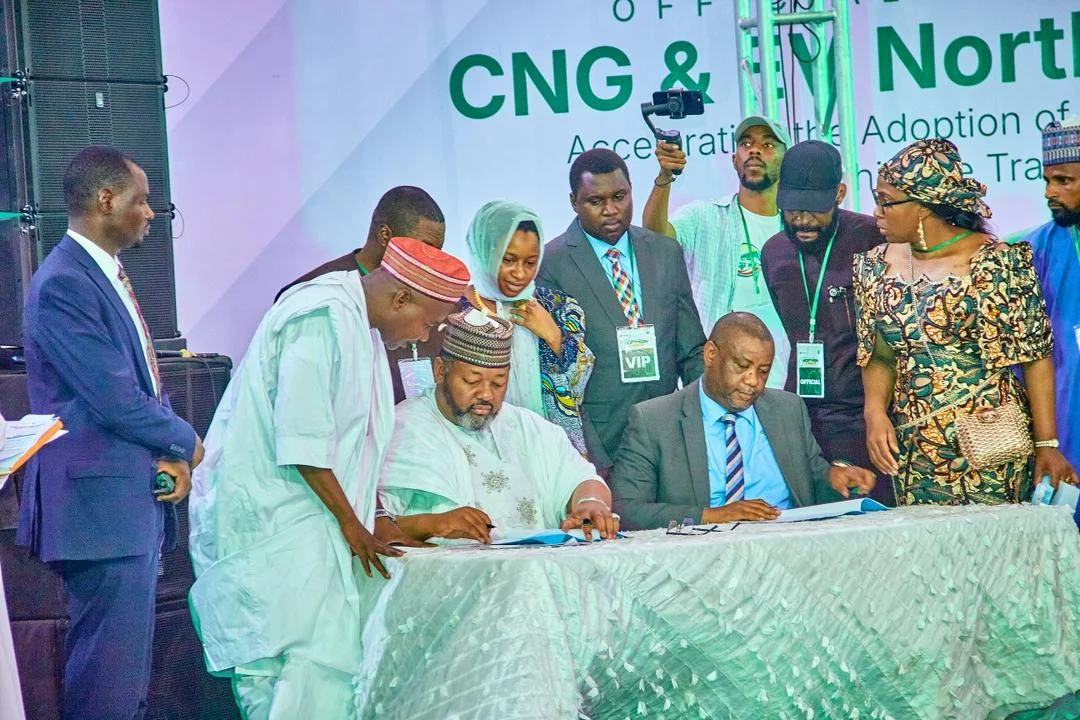
- The agreement was finalized in Kano during the official inauguration of the Northern Corridor of the CNG and EV Programme.
- The partnership focuses on delivering structured financing solutions across the CNG value chain, fleet conversions, and clean mobility asset acquisition.
- LOTUS Bank previously executed a N100 billion renewable energy financing initiative in partnership with the Rural Electrification Agency.
- Deputy Chief of Staff to the President, Ibrahim Hadeja, described the initiative as a critical economic strategy to lower transport costs and enhance energy security.
Main Story
LOTUS Bank has partnered with the Presidential Initiative on Compressed Natural Gas and Electric Vehicle to accelerate the adoption of cleaner and more affordable mobility alternatives across the country.
The Managing Director of the non-interest bank, Dr Isiaka Ajani-Lawal, disclosed this in a statement issued in Abuja on Monday, noting that the collaboration would focus on expanding CNG and EV infrastructure nationwide.
The agreement was finalized during the formal inauguration of the Northern Corridor of the Compressed Natural Gas and Electric Vehicle Programme in Kano.
The report indicated that the bank is actively designing tailored financial products to support the entire green mobility value chain, including integrated energy hubs, fleet conversion, and asset acquisition for institutional participants.
Ajani-Lawal explained that the partnership aligns with the bank’s ethical financing framework and follows its previous signature of a N100 billion renewable energy financing agreement with the Rural Electrification Agency.
Deputy Chief of Staff to the President, Ibrahim Hadeja, who represented Vice President Kashim Shettima at the launch, affirmed that the strategy is vital to lowering national transportation costs and strengthening energy independence.
The Issues
- Securing widespread adoption of CNG and electric vehicles requires high upfront capital for refueling and charging stations, presenting a major infrastructure bottleneck across the northern transport corridors.
- Local transport operators face high conversion costs to switch traditional combustion engines to dual-fuel or pure electric systems without sustained, low-cost credit facilities.
- Ensuring long-term viability for green mobility assets depends heavily on stabilizing domestic gas pricing structures and expanding the capacity of the national electricity grid.
What’s Being Said
- “At LOTUS bank, we believe sustainable finance must go beyond banking transactions to creating meaningful impact within communities and sectors critical to national growth,” Dr Isiaka Ajani-Lawal stated.
- “Our collaboration with Pi-CNG and EV reflects our commitment to ethical financing, infrastructure development, energy transition and inclusive economic growth,” Ajani-Lawal added in the statement.
- “We are proud to support initiatives that provide affordable alternatives capable of improving livelihoods while advancing Nigeria’s sustainability objectives,” the Managing Director emphasized.
- Representing the Vice President, Deputy Chief of Staff Ibrahim Hadeja noted that the initiative was “a critical economic strategy aimed at reducing transportation costs, strengthening energy security and improving the lives of citizens.”
What’s Next
- LOTUS Bank will roll out specialized non-interest credit facilities targeted at corporate fleet owners and logistics firms looking to convert their vehicles to CNG.
- Project developers will begin constructing integrated energy hubs and refueling points along the newly commissioned Northern Corridor.
- The Pi-CNG and EV team will expand their sensitization campaigns to technical workshops and transport unions to build local capacity for vehicle maintenance and conversion safety.
Bottom Line
The partnership between LOTUS Bank and the presidential initiative introduces essential ethical financing into Nigeria’s green transport switch, offering the capital necessary to build out a functional nationwide refueling and charging network.