





KEY POINTS
- J.P. Morgan plans to open a merchant bank in Nigeria before the end of 2026, subject to regulatory approval.
- The proposal follows engagement with the Central Bank of Nigeria and Nigerian financial market institutions.
- Nigeria’s banking recapitalisation exercise raised ₦4.65 trillion, with 33 banks cleared by the CBN as of April 1, 2026.
- The bank’s licensing decision, capitalisation and launch timeline remain key milestones to watch.
MAIN STORY
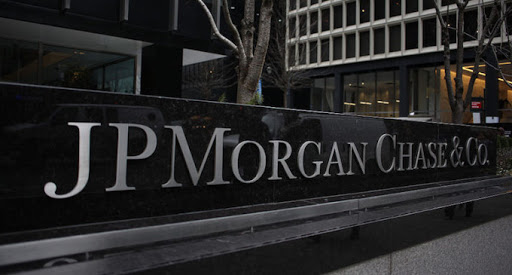
J.P. Morgan plans to establish a merchant bank in Nigeria before the end of 2026, subject to regulatory approval, as the global financial institution moves to expand its presence in the country’s banking and capital markets.
Dapo Olagunju, Managing Director of J.P. Morgan West Africa, disclosed the plan at the Nigeria-Asia Financial Connectivity Dialogue in Singapore, according to Nairametrics. The event was convened by the Central Bank of Nigeria (CBN) in collaboration with J.P. Morgan, Nigerian Exchange Group (NGX) and FMDQ Group.
The proposed entry would deepen the bank’s engagement with Nigerian businesses and capital market participants. However, the year-end target remains conditional on securing the necessary regulatory approvals.
The announcement follows plans reported in March 2025 to convert J.P. Morgan’s Lagos representative office into a licensed operation. Proshare, citing Africa Intelligence in an April 2025 report, said the bank intended to apply to the CBN for a merchant banking licence, potentially allowing it to provide services including dollar lending to large companies, alongside advisory and asset management activities.
J.P. Morgan has maintained a representative office in Lagos since the 1980s. A licensed merchant banking operation would give the institution a more direct role in Nigeria’s financial system, although the scope of its eventual activities will depend on the licence granted and the conditions attached to it.
The proposed expansion comes amid changes in Nigeria’s financial and investment environment. The CBN concluded its banking recapitalisation exercise on April 1, 2026, with 33 banks cleared and ₦4.65 trillion raised, according to the supplied material.
Nigeria has also attracted substantial investor demand for its international debt. The Federal Government’s November 2025 Eurobond recorded a peak order book exceeding $13 billion, while Nigeria returned to FTSE Russell’s Frontier Market classification on September 21, 2026.
These developments provide context for J.P. Morgan’s proposed expansion, although they do not by themselves establish the reasons behind the bank’s investment decision.
The bank’s engagement with Nigerian authorities has developed over several years. J.P. Morgan Chief Executive Jamie Dimon met CBN Governor Olayemi Cardoso during a visit to Nigeria in October 2024. In January 2025, a delegation led by Olagunju met Wale Edun, then Minister of Finance and Coordinating Minister of the Economy, in Abuja.
J.P. Morgan also co-organised the CBN’s Nigeria Investment Agenda forum at Nasdaq MarketSite in New York on April 17, 2025, ahead of the IMF and World Bank Spring Meetings. During that period, Nigeria’s Debt Management Office confirmed that discussions were under way concerning the country’s potential return to J.P. Morgan’s local-currency emerging market bond index.
A licensed entity would place J.P. Morgan among international and pan-African financial institutions operating under CBN banking licences, including Citibank Nigeria, Standard Chartered and Rand Merchant Bank. Media reports note that Goldman Sachs does not appear on the CBN’s list of licensed banks and has been involved in Nigeria’s sovereign debt market as a joint bookrunner on Eurobond transactions.
THE ISSUES
The proposed entry could expand the range of financial services available to large Nigerian businesses seeking international financing, transaction advice and access to global capital markets. Its practical significance will depend on the products the bank is authorised to offer and the clients it ultimately serves.
The regulatory process is a central consideration. Proshare has identified the CBN’s licensing decision, the entity’s capitalisation against the stated ₦50 billion minimum for merchant banks and the timing of the launch as milestones to monitor. The proposed year-end opening should therefore be treated as a target rather than a confirmed launch date.
The move also comes after Nigeria’s banking recapitalisation exercise, which has required lenders to strengthen their capital positions. However, the amount raised across the banking sector does not establish how much J.P. Morgan itself would invest in a Nigerian merchant bank.
WHAT’S BEING SAID
No direct quotations were provided in the source material from Dapo Olagunju or other participants at the Singapore dialogue.
WHAT’S NEXT
The immediate milestones are the CBN’s decision on the proposed licence, confirmation of the operating entity and its capitalisation, and disclosure of the services it intends to provide. These developments will determine whether J.P. Morgan can meet its target of opening the merchant bank before the end of 2026.
BOTTOM LINE
J.P. Morgan is targeting a Nigerian merchant banking operation before year-end, building on years of engagement with the CBN and government officials. The proposed entry could strengthen access to international financial services for large businesses, but the launch remains dependent on regulatory approval and the completion of the required arrangements.