Key points
- The 20th edition of the Henley Passport Index shows the average passport now provides visa-free access to 108 destinations, up from 58 in 2006.
- The report comes as the Global Peace Index records its lowest level of global peacefulness in two decades.
- Singapore retained the world’s most powerful passport with access to 192 destinations, while the UAE emerged as the biggest climber.
- The report found a strong correlation between peacefulness and passport strength but noted that diplomacy and economic influence also shape mobility.
- Henley & Partners said geopolitical uncertainty is increasingly influencing global mobility and investment decisions.
Main Story
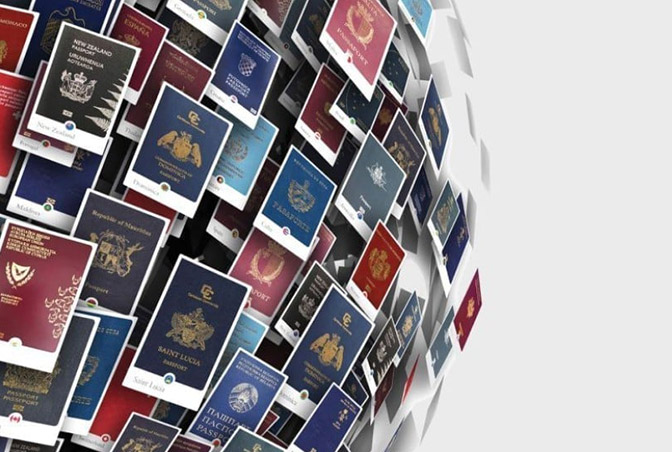
Global mobility has expanded significantly over the past two decades despite rising geopolitical instability, according to the latest Henley Passport Index, which shows that the average passport now offers visa-free or visa-on-arrival access to 108 destinations, compared with just 58 destinations when the index was first launched in 2006.
Released to mark the 20th anniversary of the global passport ranking, the report contrasts the continued growth in international travel freedom with findings from the Global Peace Index, which paints its bleakest picture yet of global security.
According to the report, the world is experiencing the highest number of state-based conflicts since the Second World War, while global peacefulness has declined for the 12th consecutive year. It noted that 119 of the 163 countries assessed are less peaceful than they were in 2008, and 103 countries have been involved in external conflicts over the past five years.
Despite these challenges, Singapore retained its position as the world’s most powerful passport, offering visa-free or visa-on-arrival access to 192 destinations. The United Arab Emirates (UAE) emerged as the biggest mover since January, climbing three places to share second position with Japan and South Korea, each providing access to 188 destinations. The United Kingdom moved up to sixth place, while Canada climbed to seventh. The United States remained in tenth place.
The report also highlighted the UAE’s remarkable rise over the past two decades, noting that its passport has gained 153 additional visa-free destinations, making it the fastest-improving passport in the index’s history.
According to Henley & Partners, the gap between the world’s most and least powerful passports has widened considerably. While Singapore now enjoys access to 192 destinations, Afghanistan, which remains at the bottom of the rankings, offers access to only 22 destinations, creating a record mobility gap of 170 destinations.
The report further observed that the composition of the world’s mobility leaders has shifted over the last 20 years, with Asian countries assuming more prominent positions while the United States and the United Kingdom have slipped from their previous rankings.
Henley & Partners’ analysis also found a strong positive relationship between a country’s level of peacefulness and the strength of its passport. However, it noted that diplomacy, economic influence, regional integration and geopolitical relationships can significantly enhance mobility even for countries with relatively low peace rankings.
The report added that growing geopolitical uncertainty is influencing how governments and wealthy individuals approach international mobility, residency and investment decisions.
The Issues
The report highlights a widening divide in global mobility, with citizens of wealthier and diplomatically influential countries continuing to enjoy significantly greater travel freedom than those from conflict-affected or less influential nations.
It also raises concerns about structural inequalities within the global visa system, particularly for many countries in the Global South, where mobility remains constrained despite improvements in peace and stability.
At the same time, the findings suggest that diplomatic engagement, economic partnerships and regional integration have become increasingly important determinants of passport strength alongside domestic security and peacefulness.
What’s Being Said
Chairman of Henley & Partners and creator of the Henley Passport Index, Dr. Christian H. Kaelin, said:
“Twenty years of data show that passport power is one of the clearest expressions of a country’s geopolitical capital.”
He added that the world’s strongest passports belong to countries viewed as valuable partners for trade, investment, security and international cooperation, making mobility a reflection of global relationships rather than prosperity alone.
Kaelin further noted:
“True wealth is no longer defined solely by financial capital, but by the freedom to choose where they and future generations can live, work, study, invest, and belong.”
What’s Next
Henley & Partners said the findings will inform discussions at its upcoming Safe Haven Forum, where policymakers, investors and global leaders are expected to examine how countries and families can build resilience through diversified residence, citizenship and wealth strategies in an increasingly uncertain geopolitical environment.
The report also suggests that governments seeking to improve their citizens’ global mobility will need to strengthen diplomatic engagement, regional cooperation and international partnerships alongside efforts to enhance domestic peace and stability.
Bottom Line
The latest Henley Passport Index underscores a paradox in today’s world: international mobility continues to expand even as global peace deteriorates. While peaceful societies generally enjoy stronger passports, the report concludes that diplomacy, economic influence and strategic international relationships have become equally important drivers of global mobility.